News

Miro: A New Standard in Responsible Innovation

Miro: A New Standard in Responsible Innovation The Miro monitor arm is setting new benchmarks in sustainability. It offers a high-performance solution without compromising on environmental responsibility. Designed with careful material selection, local sourcing, and longevity in mind, Miro’s responsible approach to design and unique manoeuvrability set it apart from the competition. Sustainable Choices Miro is crafted from energy-efficient materials with a lower carbon impact....

Read more
HSE Advisor

Role Purpose Support in the development, implementation and maintenance of the company’s Health, Safety & Environmental policies, processes, operational procedures, and standards.  Ensuring best practice and championing a continually improving HSE culture within the business. Key Responsibilities Liaise with and provide support to all areas of the business to eliminate, mitigate or reduce identified HSE exposures. Partner with the production management team and team leaders,...

Read more
CMD Ltd LAUNCHES 48-HOUR TURNAROUND ON BETATRAK® RAPID ORDERING SERVICE

CMD Ltd, the specialist in power distribution systems, workstation power and monitor arms, has launched a rapid ordering service for its Betatrak® underfloor powertrack distribution systems and accessories, with a commitment to delivering within 48-hours of an approved purchase order*. The service enables customers to order up to 50 lengths of Standard or Clean Earth (C/E) low noise Betatrak, along with up to 25 feed...

Read more

CMD INVESTS £1/4 MILLION IN NEW MACHINE AS PART OF FACTORY UPGRADE

We have invested in a new £1/4m TRUMPF CNC metal punch as part of an asset renewal strategy for our UK manufacturing capability. The new machine will be used in the production of a wide variety of our power distribution systems and workstation power products at our Rotherham factory. Suitable for handling sheet metal between 0.9mm and 3.0mm thick, the new machine will replace one...

Read more

CMD CATALOGUE PROVIDES TECHNICAL POWER DISTRIBUTION GUIDE

CMD Ltd has released a new catalogue, providing an easy to follow technical guide to our power distribution systems and plug and play desk modules. Detailing CMD’s full range of UK-manufactured power distribution systems and plug and play desk modules, the catalogue will be a helpful source of information to M&E engineers and contractors alike to understand how our power distribution systems connect together and...

Read more

Power Distribution Catalogue
CMD Ltd PLAYS ESSENTIAL ROLE IN ELECTRICAL FIT OUT AT LONDON’S PRESTIGIOUS OFFICE DEVELOPMENT

CMD Ltd, specialist in workplace connectivity and ergonomic solutions, has provided a flexible and high-quality power distribution network for The Ray, a prestigious office development in London’s Farringdon. Well-known for being the former site of The Guardian newspaper, The Ray now stands as an 83,000ft² office development characterised by a modernised warehouse aesthetic, with level two now occupied by a global social media company. The...

Read more

The Ray
CMD plugs in to european opportunity with Schuko Capsule unit launch

CMD Ltd, the specialist in power and connectivity solutions for commercial environments, has launched a Schuko version of its popular fixed format Capsule workstation power module for export to mainland Europe and beyond. A popular on desk power module comprising two sockets and dual USB (type A and C) chargers, CMD’s Capsule unit is already widely specified in the UK as an off-the-shelf workstation power...

Read more

CMD White Schuko Capsule Desk Power Module
CMD LTD EXTENDS MONITOR ARM RANGE WITH THE LAUNCH OF REACH PLUS

CMD Ltd, the specialist in ergonomic and connectivity solutions for commercial interiors, has completed its Reach monitor arm range with the launch of the Reach Plus. Available in single or dual screen options, the Reach Plus has been designed to provide an ideal solution for both single and dual screen workstation configurations, or can be used with next generation of large format curved screens. Suitable...

Read more

CMD Ltd DEMONSTRATES THE ART OF POWER DISTRIBUTION AT THE UNIVERSITY OF WARWICK

CMD Ltd, the specialist in workplace connectivity and ergonomic solutions, has provided Betatrak busbar power distribution and a range of electrical accessories for two major capital investment projects at the University of Warwick. Designed by Fielden Clegg Bradley Studios, the £33 million Faculty of Arts building is a showpiece development comprising four interconnected structures set around a central atrium, which will enable inter-disciplinary collaboration across...

Read more

University of Warwick
CMD BRINGS HARMONY TO COVENTRY UNIVERSITY RESEARCH FACILITIES

CMD Ltd, the specialist in power distribution solutions and workstation power and ergonomics, has provided under desk and on desk power modules for the refurbishment of three Coventry University research buildings. Located on Coventry University Technology Park, a business park designed to encourage collaboration between the university and knowledge-based businesses, the three buildings are being repurposed as office accommodation for university research teams. The refurbishment...

Read more

Coventry University

China Top 10 Type C Laptop Charger Manufacturers

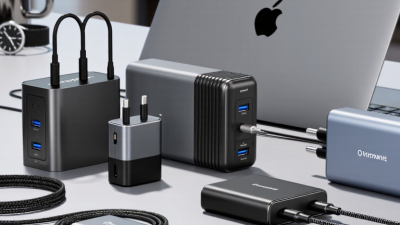
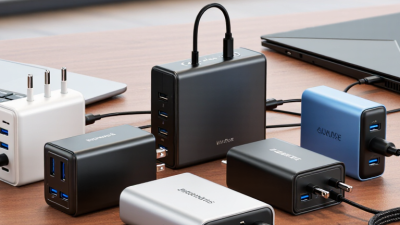
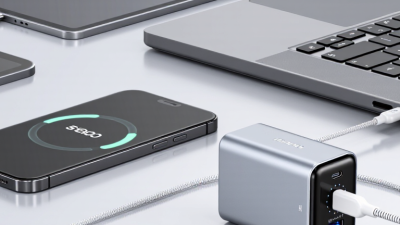
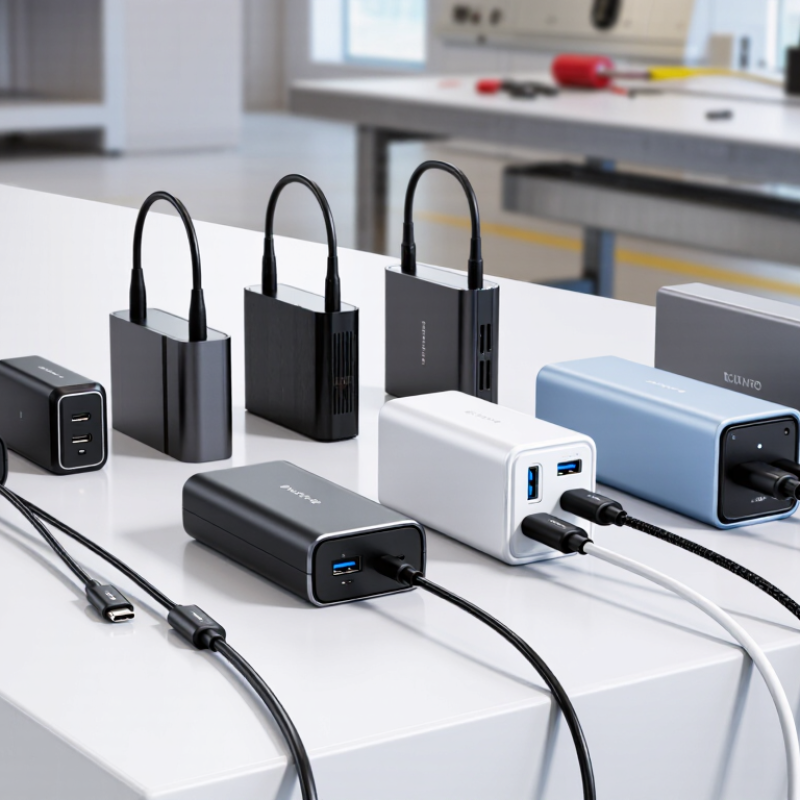
Choosing a type c laptop charger manufacturer in China involves more than comparing prices or browsing polished product photos. Buyers need to understand charging power, connector compatibility, safety testing, production capacity, and communication practices. A charger that looks suitable may still fail to meet a laptop’s requirements. Small details matter. Port output, cable quality, and heat management can affect everyday use.

This guide introduces ten manufacturers for buyers researching China’s charger supply chain. It is not a universal ranking, because the best partner depends on order volume, target market, customization needs, and verification standards. Instead, the companies should be assessed through practical evidence: published product specifications, relevant certifications, factory capabilities, quality-control procedures, and clear responses to technical questions. Ask how the supplier verifies power delivery across supported devices, and whether test records match the exact model being offered.

Samples deserve attention. A sample can reveal connector fit, cable flexibility, labeling, and performance under ordinary use. Still, one sample cannot prove consistent production quality. Request current documents, confirm model numbers, and discuss inspection arrangements before placing a large order. Be cautious when claims are broad but supporting details are scarce. Some product pages leave important questions unanswered, and that is worth acknowledging rather than guessing. The following overview is a starting point for supplier research, not a substitute for independent product checks or a direct conversation with each manufacturer. It aims to help importers, distributors, and procurement teams compare options with clearer questions and more realistic expectations.

China Top 10 Type C Laptop Charger Manufacturers

Understanding Type-C Laptop Chargers and Their Core Technologies

Type-C describes the connector, not the charger’s actual power or capabilities. Inside a laptop charger, a switching circuit converts wall power into regulated DC output. A controller then negotiates voltage and current with the laptop through USB Power Delivery. USB-IF’s 2021 announcement of USB PD 3.1 raised the specification’s maximum power to 240 watts, adding Extended Power Range (EPR). That figure is a ceiling, not a promise: the laptop, charger, and cable must all support the required power profile.

For EPR, the specification supports up to 48 volts and 5 amps. At higher currents, cable capability matters; a suitable electronically marked cable helps devices identify its limits. Some chargers also use programmable power supply (PPS), which adjusts voltage in finer steps. GaN power components can support compact, high-frequency designs, but small size alone says little about performance. Heat still matters. Look for stable output, clear wattage ratings, and protection against overcurrent and overheating.

A 65-watt charger may work well for a thin laptop, yet struggle during heavy workloads if the computer draws more power. Charging speed also depends on the laptop’s input limits and operating state. USB-IF specifications define interoperability targets, not every product’s real-world thermal behavior. That distinction is easy to miss. When comparing designs, check the supported PD profiles, cable rating, and sustained output—not just the largest number printed on the casing.

China Top 10 Type C Laptop Charger Manufacturers - Understanding Type-C Laptop Chargers and Their Core Technologies

The table below summarizes established USB-C laptop-charger technologies and practical evaluation points. It is a technology guide, not a ranking of individual manufacturers or brands.

Technology Area Core Function Technical Fact Why It Matters in Laptop Chargers
USB Power Delivery (SPR) Negotiates charging voltage and current between a USB-C power source and a compatible device. USB PD Standard Power Range supports power levels up to 100 W. Common fixed voltage levels include 5 V, 9 V, 15 V, and 20 V. Determines whether a charger can provide the power profiles accepted by a laptop.
USB PD Extended Power Range (EPR) Extends USB PD beyond the Standard Power Range for higher-power equipment. USB PD 3.1 EPR supports up to 240 W, using voltage levels up to 48 V. EPR operation requires compatible equipment and cabling. Enables USB-C charging for higher-power laptops when the laptop, charger, and cable all support the required EPR profile.
USB-C Cable Current Rating Sets the current a USB-C cable is designed to carry. A cable carrying more than 3 A requires an electronic marker. Cable capability must match the negotiated power and charging standard. A suitable charger may deliver less power than expected if the cable cannot support the required current or voltage.
Programmable Power Supply (PPS) Allows compatible devices and chargers to adjust voltage dynamically within a negotiated range. PPS is an optional USB PD feature; support depends on both the source and the receiving device. Can improve charging control and efficiency in compatible systems, but does not guarantee faster charging for every laptop.
Gallium Nitride (GaN) Switching Devices Use a wide-bandgap semiconductor in the charger’s power-conversion circuitry. GaN devices can support high-frequency switching and may help reduce converter size; the final size and performance depend on the full design. Can help designers create compact chargers, while thermal performance and output capability still require product-level verification.
Power Factor Correction (PFC) Shapes the input current drawn from the AC mains supply. Active PFC is a commonly used power-conversion technique in higher-power AC adapters; its implementation varies by design. Supports better input-current behavior and helps meet applicable electrical and energy requirements.
Isolated AC-DC Conversion Converts mains AC into low-voltage DC while providing electrical isolation. Flyback and resonant converter designs are examples of isolated power-conversion topologies used in AC adapters. Topology affects factors such as efficiency, component count, power density, and thermal design.
Synchronous Rectification Uses controlled switching devices to rectify power on the low-voltage output side. Replacing a rectifier diode with a controlled MOSFET can reduce conduction losses in suitable designs. Lower conversion losses can support improved efficiency and reduced heat, depending on operating conditions.
Electrical Protection Monitors abnormal operating conditions and limits or interrupts output when needed. Common protection functions include over-voltage, over-current, short-circuit, and over-temperature protection. Protection design helps address faults and abnormal use; actual coverage and response depend on implementation.
Thermal and EMI Design Controls heat and limits unwanted electromagnetic interference. Temperature rise and conducted or radiated emissions depend on the complete charger design, enclosure, components, and layout. Reviewing test evidence for the intended market helps assess operating stability and regulatory suitability.

How China's Type-C Laptop Charger Industry Is Structured

China’s Type-C laptop charger industry is better understood as a supply chain than as a row of finished-product factories. Upstream suppliers provide power-control chips, circuit boards, cables, plugs, and molded housings. These parts may come from different regions, so delivery schedules and component consistency can vary. A charger’s compact casing hides many separate decisions.

Manufacturers sit in the middle of this structure. Some focus on design and engineering, while others mainly assemble products to a buyer’s specifications. Their teams check heat, output stability, cable strength, and performance under repeated use. A production sample can look clean on a workbench, yet behave differently after hours of charging. That gap matters. Testing methods and quality records help buyers judge whether a supplier can repeat a result across batches.

Trading firms, distributors, and business buyers connect factories with markets. They often compare customization options, minimum order quantities, lead times, and technical documentation. The structure can be efficient, but it is not always tidy: one supplier may handle design, another assembly, and a third component sourcing. Buyers should ask who controls each stage and how changes are recorded. This practical detail is easy to overlook.

Criteria for Evaluating Chinese Charger Manufacturers

When comparing Chinese Type-C laptop charger manufacturers, begin with engineering evidence, not catalog claims. Ask for test reports covering output stability, temperature rise, ripple, overload protection, and repeated plug-in cycles. USB-IF’s USB Power Delivery 3.1 specification allows up to 240 W through Extended Power Range. That figure makes cable compatibility, thermal design, and accurate power negotiation essential—not optional details. Request test conditions and equipment records, not only a pass certificate.

Check whether the factory can trace components from incoming inspection to finished-unit serial numbers. Review its quality-management procedures, production-line sampling plans, and corrective-action records. A useful audit follows one charger from its component tray to the burn-in rack. Look for clear separation between engineering samples and mass production. Paperwork alone is not enough. A factory tour cannot prove every batch is consistent, so compare records with independent laboratory results and recent shipment samples.

Also assess design support, lead-time realism, and change control. Ask what happens when a power IC or transformer supplier changes. Will the manufacturer repeat safety and performance tests? The answer matters. I would treat unusually low quotations cautiously, especially when testing scope is vague. This judgment is imperfect; price differences can reflect legitimate design choices. Still, transparent specifications and repeatable measurements offer stronger evidence than polished brochures.

Profiles of Ten Type-C Laptop Charger Manufacturers in China

China’s Type-C laptop charger manufacturers differ in scale, engineering focus, and production flexibility. A useful review of ten suppliers should look beyond advertised wattage. It should compare power-delivery support, temperature control, cable quality, and the consistency of sample units. Small details matter.

The profiles can cover distinct manufacturing strengths: high-volume production, custom circuit design, compact gallium-nitride models, OEM and ODM services, integrated cable assembly, in-house testing, travel-friendly designs, multi-port chargers, mid-range product lines, and small-batch production. These are comparison categories, not guarantees about any supplier. Ask for current specifications, test records, and clear explanations of warranty terms. A polished sample is helpful, but repeated production runs tell a fuller story.

One limitation deserves attention: factory descriptions can make similar capabilities sound unique. Compare measurable details, such as rated output, port behavior under load, and connector durability. Request the same information from each manufacturer, then check whether answers are specific and consistent. Not every supplier will suit every project. Some buyers may also underestimate communication delays or the cost of revising a design. Those points are easy to miss.

China’s Type-C Laptop Charger Manufacturers: USB-C PD Power Benchmarks

A standards-based reference for the maximum power levels available in USB Power Delivery profiles—not a ranking or a claim about individual manufacturers.

USB PD 3.0 Standard Power Range (SPR) supports up to 100 W. USB PD 3.1 Extended Power Range (EPR) adds 140 W, 180 W, and 240 W levels. Actual charger output depends on the product and its supported profiles.

Source: USB-IF, USB Power Delivery Specification, Revision 3.1.

Manufacturing Standards, Certifications, and Export Capabilities of the Industry

Chinese Type-C laptop charger manufacturers are evaluated on more than output capacity. Buyers should check whether each model meets relevant electrical safety requirements, including IEC 62368-1 where applicable. The USB-C port is only part of the picture; power profiles, cable ratings, and device compatibility also need testing. A charger that works with one laptop may not perform identically with another.

Certifications and market access depend on the destination. CE, UKCA, FCC, and RoHS documentation may be relevant, but their scope differs by market and product. Ask for reports tied to the exact model, plus clear labeling and traceable production records. Details matter. A certificate covering a factory does not automatically prove every charger design has passed the same tests.

Export capability shows up in routine work: accurate packing lists, invoices, carton markings, and shipment schedules. Experienced manufacturers can explain how they manage inspections, packaging changes, and production batches. They should also describe how they handle failed samples, rather than promising perfect results. That answer may be less polished, but more useful. Documentation can lag behind a product revision, so buyers should verify that report numbers, labels, and shipped specifications still match.