News

Miro: A New Standard in Responsible Innovation

Miro: A New Standard in Responsible Innovation The Miro monitor arm is setting new benchmarks in sustainability. It offers a high-performance solution without compromising on environmental responsibility. Designed with careful material selection, local sourcing, and longevity in mind, Miro’s responsible approach to design and unique manoeuvrability set it apart from the competition. Sustainable Choices Miro is crafted from energy-efficient materials with a lower carbon impact....

Read more
HSE Advisor

Role Purpose Support in the development, implementation and maintenance of the company’s Health, Safety & Environmental policies, processes, operational procedures, and standards.  Ensuring best practice and championing a continually improving HSE culture within the business. Key Responsibilities Liaise with and provide support to all areas of the business to eliminate, mitigate or reduce identified HSE exposures. Partner with the production management team and team leaders,...

Read more
CMD Ltd LAUNCHES 48-HOUR TURNAROUND ON BETATRAK® RAPID ORDERING SERVICE

CMD Ltd, the specialist in power distribution systems, workstation power and monitor arms, has launched a rapid ordering service for its Betatrak® underfloor powertrack distribution systems and accessories, with a commitment to delivering within 48-hours of an approved purchase order*. The service enables customers to order up to 50 lengths of Standard or Clean Earth (C/E) low noise Betatrak, along with up to 25 feed...

Read more

CMD INVESTS £1/4 MILLION IN NEW MACHINE AS PART OF FACTORY UPGRADE

We have invested in a new £1/4m TRUMPF CNC metal punch as part of an asset renewal strategy for our UK manufacturing capability. The new machine will be used in the production of a wide variety of our power distribution systems and workstation power products at our Rotherham factory. Suitable for handling sheet metal between 0.9mm and 3.0mm thick, the new machine will replace one...

Read more

CMD CATALOGUE PROVIDES TECHNICAL POWER DISTRIBUTION GUIDE

CMD Ltd has released a new catalogue, providing an easy to follow technical guide to our power distribution systems and plug and play desk modules. Detailing CMD’s full range of UK-manufactured power distribution systems and plug and play desk modules, the catalogue will be a helpful source of information to M&E engineers and contractors alike to understand how our power distribution systems connect together and...

Read more

Power Distribution Catalogue
CMD Ltd PLAYS ESSENTIAL ROLE IN ELECTRICAL FIT OUT AT LONDON’S PRESTIGIOUS OFFICE DEVELOPMENT

CMD Ltd, specialist in workplace connectivity and ergonomic solutions, has provided a flexible and high-quality power distribution network for The Ray, a prestigious office development in London’s Farringdon. Well-known for being the former site of The Guardian newspaper, The Ray now stands as an 83,000ft² office development characterised by a modernised warehouse aesthetic, with level two now occupied by a global social media company. The...

Read more

The Ray
CMD plugs in to european opportunity with Schuko Capsule unit launch

CMD Ltd, the specialist in power and connectivity solutions for commercial environments, has launched a Schuko version of its popular fixed format Capsule workstation power module for export to mainland Europe and beyond. A popular on desk power module comprising two sockets and dual USB (type A and C) chargers, CMD’s Capsule unit is already widely specified in the UK as an off-the-shelf workstation power...

Read more

CMD White Schuko Capsule Desk Power Module
CMD LTD EXTENDS MONITOR ARM RANGE WITH THE LAUNCH OF REACH PLUS

CMD Ltd, the specialist in ergonomic and connectivity solutions for commercial interiors, has completed its Reach monitor arm range with the launch of the Reach Plus. Available in single or dual screen options, the Reach Plus has been designed to provide an ideal solution for both single and dual screen workstation configurations, or can be used with next generation of large format curved screens. Suitable...

Read more

CMD Ltd DEMONSTRATES THE ART OF POWER DISTRIBUTION AT THE UNIVERSITY OF WARWICK

CMD Ltd, the specialist in workplace connectivity and ergonomic solutions, has provided Betatrak busbar power distribution and a range of electrical accessories for two major capital investment projects at the University of Warwick. Designed by Fielden Clegg Bradley Studios, the £33 million Faculty of Arts building is a showpiece development comprising four interconnected structures set around a central atrium, which will enable inter-disciplinary collaboration across...

Read more

University of Warwick
CMD BRINGS HARMONY TO COVENTRY UNIVERSITY RESEARCH FACILITIES

CMD Ltd, the specialist in power distribution solutions and workstation power and ergonomics, has provided under desk and on desk power modules for the refurbishment of three Coventry University research buildings. Located on Coventry University Technology Park, a business park designed to encourage collaboration between the university and knowledge-based businesses, the three buildings are being repurposed as office accommodation for university research teams. The refurbishment...

Read more

Coventry University

What Is a Power Delivery Fast Charger and How Does It Work?

A power delivery fast charger is more than a small plug with a high wattage label. It is a charging system built around USB Power Delivery, or USB PD, a communication protocol between a charger and a connected device. Before delivering substantial power, the charger and device exchange information. They negotiate a suitable voltage and current. The process resembles a brief, electronic conversation.

Jeff Ravencraft, a USB-IF leader and long-time USB technology specialist, describes the standard this way: “USB Power Delivery provides a flexible and scalable power delivery architecture.” That idea matters in daily use. A compatible charger may power a phone, tablet, laptop, monitor, or handheld console. It can adjust output instead of sending maximum power blindly. The cable also matters. Some cables support higher power levels, while others restrict performance.

The label can mislead.

A 100-watt power delivery fast charger will not force 100 watts into every device. The device requests what it can safely accept, and the charger responds within its supported limits. Newer systems may use Programmable Power Supply, which allows finer voltage adjustments and can reduce charging heat. However, charging speed depends on battery condition, temperature, cable quality, device design, and software controls.

This guide explains how the negotiation works, why wattage ratings differ, and how to choose a reliable charger. It also acknowledges an important limitation: fast charging is not always the best choice. Maximum speed may create more heat, and real-world results can vary. Understanding those imperfect details helps buyers judge performance beyond packaging claims.

What Is a Power Delivery Fast Charger and How Does It Work?

Power Delivery Fast Charger: Definition and Core Purpose

Power Delivery Fast Charger: Definition and Core Purpose

A Power Delivery fast charger is a charging system that uses a communication protocol to deliver suitable electrical power. It commonly works through a modern reversible connector, but the connector alone does not guarantee fast charging. The charger and device exchange information before increasing power. They negotiate voltage and current based on the device’s limits. This process helps a phone, tablet, or laptop receive energy more efficiently than basic charging methods.

The core purpose is controlled power delivery, not simply higher wattage. A charger may offer several power levels, while the connected device requests only what it can safely use. For example, a small device may accept a modest current, while a laptop needs more sustained power. Protection features can monitor temperature, voltage, and current during charging. In daily use, this may mean a quicker battery boost during a short lunch break. It can also reduce the need to carry separate chargers.

The term “fast charger” is sometimes used too loosely. Actual speed depends on the device, cable, battery temperature, and charging stage. A high-power adapter cannot make every device charge instantly. I have also found that charging may slow near full capacity, which can seem disappointing but protects the battery. Cable quality matters more than many users expect. A compatible cable with the correct power rating helps maintain stable performance. Without it, the setup may work, yet deliver less power than expected.

How USB Power Delivery Negotiates Charging Power

A USB Power Delivery fast charger is a controlled power source, not simply a higher-wattage adapter. The USB Implementers Forum’s USB PD 3.1 specification raises the maximum possible power to 240 watts, compared with 100 watts under earlier Extended Power Range limits. Actual charging remains lower when the device, cable, or temperature system cannot support that level.

The negotiation begins through the USB-C configuration channel. The charger announces its available Power Data Objects, such as 5, 9, 15, or 20 volts. The connected device reviews these options and requests a suitable voltage and current combination. The charger then accepts, rejects, or adjusts that request before delivering power. A new contract is created only after both sides agree.

Programmable Power Supply can refine this process. It allows smaller voltage changes, helping a device reduce heat near full charge. The charger may provide 8.7 volts instead of jumping directly to 9 volts. Small differences matter.

The USB-IF compliance framework also requires testing for signaling, electrical behavior, and protection functions. However, certification does not guarantee identical charging speed in every situation. Battery temperature, cable resistance, firmware limits, and battery age still influence performance. That detail is often overlooked. A wattage label describes capability, not a permanent charging result. In practice, safe negotiation is a moving conversation, not a one-time switch.

What Is a Power Delivery Fast Charger and How Does It Work? - How USB Power Delivery Negotiates Charging Power

Data Dimension Typical Value or Range How It Works in USB Power Delivery Practical Importance
Charging protocol USB Power Delivery (USB PD) The power source and connected device exchange digital messages to determine a suitable voltage and current. Enables faster and more controlled charging than basic USB power arrangements.
Initial default power Up to 5 V before negotiation A USB PD source begins with a safe default voltage while waiting for the device to identify its power requirements. Helps prevent excessive voltage from being applied before communication is established.
Common fixed voltage options 5 V, 9 V, 15 V, and 20 V The source advertises fixed power profiles, and the sink requests one of the compatible profiles. Allows phones, tablets, laptops, and accessories to select different power levels.
Typical current limit Up to 5 A with suitable cable and equipment The negotiated current cannot exceed the capability advertised by the source, sink, and cable. Supports higher power while maintaining electrical and thermal limits.
Power calculation Power (W) = Voltage (V) × Current (A) For example, 9 V × 2 A equals 18 W, while 20 V × 3.25 A equals 65 W. Provides a simple way to compare charger output with device charging requirements.
USB PD power range From low-power accessories to as much as 240 W under the latest extended-power specification Higher-power operation can use increased voltage, current, or both, provided that all connected components support it. Makes one protocol suitable for a broad range of USB-C equipment.
Power Data Objects (PDOs) Fixed or adjustable power profiles The source communicates its available PDOs; the sink evaluates them and sends a power request. Creates a structured negotiation process instead of relying on a single universal output.
Programmable Power Supply (PPS) Adjustable voltage, commonly in small increments A compatible device can request voltage adjustments repeatedly during charging rather than selecting only one fixed level. Can improve charging efficiency and reduce conversion losses in compatible devices.
Communication channel USB Type-C Configuration Channel (CC) USB PD control messages are transmitted over the CC communication path in a USB-C connection. Allows the connector to detect roles, orientation, and power capabilities.
Power roles Source, Sink, or Dual-Role Power The source provides power, the sink consumes power, and a dual-role device can potentially change roles. Supports flexible connections such as charging between compatible portable devices.
Cable capability Standard or electronically marked high-current cable For higher-current operation, the source can identify whether the cable is rated for the requested current. Prevents a high-power request from exceeding the cable's safe specification.
Negotiation sequence Advertise → Request → Accept → Power transition The source advertises capabilities, the sink requests a profile, the source accepts it, and the voltage changes after the transition message. Provides an orderly handoff from default power to negotiated fast charging.
Example negotiated profiles 5 V × 3 A = 15 W
9 V × 2 A = 18 W
15 V × 3 A = 45 W
20 V × 3.25 A = 65 W
The device selects a profile that does not exceed its own charging circuitry, battery limits, or thermal budget. Illustrates why the same charger can deliver different power levels to different devices.
Protection mechanisms Over-voltage, over-current, short-circuit, and thermal protection The charger and device monitor operating conditions and can reduce or stop power when an unsafe condition is detected. Improves safety and helps protect the charger, cable, device, and battery.
Main charging constraint The lowest-rated component determines the practical limit Actual charging power is limited by the source, device, cable, connector, and thermal conditions. A high-wattage charger does not automatically make every device charge at that wattage.

Key Components Inside a Power Delivery Fast Charger

What Is a Power Delivery Fast Charger and How Does It Work?

Key Components Inside a Power Delivery Fast Charger

A Power Delivery fast charger converts wall power into controlled, negotiable DC output. The process starts at the AC input stage. A fuse limits fault energy, while an NTC thermistor reduces the starting surge. A bridge rectifier then changes alternating current into pulsing DC. Small, but critical.

The power-factor-correction circuit smooths that current and reduces wasted reactive power. A switching MOSFET rapidly drives a high-frequency transformer. This transformer provides isolation and changes the voltage level. On the output side, synchronous rectifiers and capacitors produce cleaner DC power. The USB Implementers Forum’s Power Delivery Specification Revision 3.1 permits negotiated output up to 240 watts. That ceiling requires careful thermal and electrical control, not merely a larger adapter.

A PD controller communicates with the connected device through the configuration channel. It checks requested voltage, current, cable capability, and protection limits. A feedback loop adjusts switching behavior when the load changes. Temperature sensors can reduce power before components become dangerously hot. The IEA’s Global EV Outlook 2024 reported nearly 14 million electric car sales in 2023, increasing pressure on compact, efficient power electronics. Yet efficiency figures can mislead. They may describe one test point, not every load condition. In practical testing, heat, cable resistance, and standby consumption still matter. This is where many simplified explanations fail.

Charging Speeds, Device Compatibility, and Safety Features

What Is a Power Delivery Fast Charger and How Does It Work?

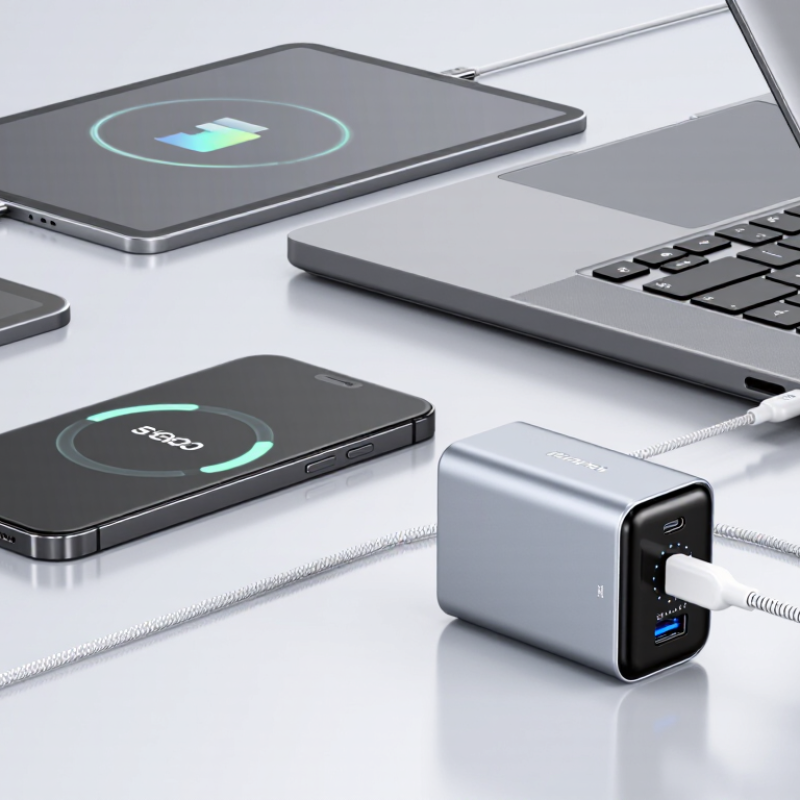
A Power Delivery fast charger uses a USB-C connection to negotiate the safest suitable power level. It does not force maximum power into every device. Instead, the charger and device communicate before charging begins. A phone may request 18W, while a tablet or laptop may accept 45W or more. Charging speed also depends on battery level, device temperature, and the cable’s power rating. A nearly full battery naturally slows down.

Compatibility is more than matching the plug. The device must support Power Delivery, and the cable must handle the required wattage. A weak or damaged cable can reduce speed, create heat, or interrupt charging. Some devices charge quickly only within a specific power range. Real-world results can be less predictable than package claims. Room temperature matters. So does using the device during charging.

Tips: Check the charger’s output profile and the cable rating before buying. Keep ports clean and avoid charging under pillows or blankets. Safety systems can limit current, prevent overvoltage, and stop charging during excessive heat. Still, protection is not an excuse for poor habits. Replace cracked cables, use dry equipment, and unplug chargers that become unusually hot. A charger may feel warm during normal use, but sharp heat or a burning smell needs attention.

What Is a Power Delivery Fast Charger and How Does It Work?

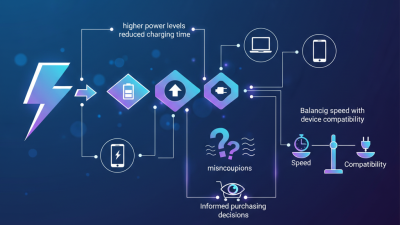
USB Power Delivery (USB PD) chargers negotiate voltage and current with a compatible device instead of supplying maximum power automatically. The device requests the power level it can safely use, while the charger and cable must also support that level.

How to read the chart: USB PD power is calculated as voltage multiplied by current. Standard Power Range profiles extend up to 100 W, while Extended Power Range profiles can reach 240 W. A phone, tablet, or laptop will draw only the power it supports, so a higher-rated charger does not force excess power into the device.

How to Choose the Right Power Delivery Fast Charger

Choosing a Power Delivery fast charger starts with your device, not the largest wattage label. USB-IF’s Power Delivery 3.1 specification supports up to 240W, but most phones negotiate far less. A 30W charger may suit a phone, while many tablets need 45W or more. Check the device manual and its maximum input rating.

Look for a certified USB-C charger with clear Power Delivery support. USB-IF certification can improve compatibility, although certification does not guarantee the best thermal design. The charger should also provide the correct voltage profiles, such as 5V, 9V, or 15V. A higher wattage rating does not force extra power into your device. The device requests what it can safely use. Keep this detail in mind.

Cable choice matters too. For outputs above 60W, use a cable rated for 5A and the required power level. USB-IF’s USB Power Delivery guidance distinguishes cable capabilities, so a weak cable can limit charging. IDC reported approximately 1.17 billion smartphones shipped globally in 2023, showing why charger compatibility affects a massive user base. Still, market statistics cannot replace hands-on checks. Feel the adapter after twenty minutes. Excessive heat deserves attention. Multi-port models also divide power when several devices connect, and their labels can be confusing. I would compare each port’s output table, warranty, safety testing, and return policy before buying. A smaller charger may be convenient, but compact designs sometimes sacrifice cooling. That trade-off is easy to overlook.