News

Miro: A New Standard in Responsible Innovation

Miro: A New Standard in Responsible Innovation The Miro monitor arm is setting new benchmarks in sustainability. It offers a high-performance solution without compromising on environmental responsibility. Designed with careful material selection, local sourcing, and longevity in mind, Miro’s responsible approach to design and unique manoeuvrability set it apart from the competition. Sustainable Choices Miro is crafted from energy-efficient materials with a lower carbon impact....

Read more
HSE Advisor

Role Purpose Support in the development, implementation and maintenance of the company’s Health, Safety & Environmental policies, processes, operational procedures, and standards.  Ensuring best practice and championing a continually improving HSE culture within the business. Key Responsibilities Liaise with and provide support to all areas of the business to eliminate, mitigate or reduce identified HSE exposures. Partner with the production management team and team leaders,...

Read more
CMD Ltd LAUNCHES 48-HOUR TURNAROUND ON BETATRAK® RAPID ORDERING SERVICE

CMD Ltd, the specialist in power distribution systems, workstation power and monitor arms, has launched a rapid ordering service for its Betatrak® underfloor powertrack distribution systems and accessories, with a commitment to delivering within 48-hours of an approved purchase order*. The service enables customers to order up to 50 lengths of Standard or Clean Earth (C/E) low noise Betatrak, along with up to 25 feed...

Read more

CMD INVESTS £1/4 MILLION IN NEW MACHINE AS PART OF FACTORY UPGRADE

We have invested in a new £1/4m TRUMPF CNC metal punch as part of an asset renewal strategy for our UK manufacturing capability. The new machine will be used in the production of a wide variety of our power distribution systems and workstation power products at our Rotherham factory. Suitable for handling sheet metal between 0.9mm and 3.0mm thick, the new machine will replace one...

Read more

CMD CATALOGUE PROVIDES TECHNICAL POWER DISTRIBUTION GUIDE

CMD Ltd has released a new catalogue, providing an easy to follow technical guide to our power distribution systems and plug and play desk modules. Detailing CMD’s full range of UK-manufactured power distribution systems and plug and play desk modules, the catalogue will be a helpful source of information to M&E engineers and contractors alike to understand how our power distribution systems connect together and...

Read more

Power Distribution Catalogue
CMD Ltd PLAYS ESSENTIAL ROLE IN ELECTRICAL FIT OUT AT LONDON’S PRESTIGIOUS OFFICE DEVELOPMENT

CMD Ltd, specialist in workplace connectivity and ergonomic solutions, has provided a flexible and high-quality power distribution network for The Ray, a prestigious office development in London’s Farringdon. Well-known for being the former site of The Guardian newspaper, The Ray now stands as an 83,000ft² office development characterised by a modernised warehouse aesthetic, with level two now occupied by a global social media company. The...

Read more

The Ray
CMD plugs in to european opportunity with Schuko Capsule unit launch

CMD Ltd, the specialist in power and connectivity solutions for commercial environments, has launched a Schuko version of its popular fixed format Capsule workstation power module for export to mainland Europe and beyond. A popular on desk power module comprising two sockets and dual USB (type A and C) chargers, CMD’s Capsule unit is already widely specified in the UK as an off-the-shelf workstation power...

Read more

CMD White Schuko Capsule Desk Power Module
CMD LTD EXTENDS MONITOR ARM RANGE WITH THE LAUNCH OF REACH PLUS

CMD Ltd, the specialist in ergonomic and connectivity solutions for commercial interiors, has completed its Reach monitor arm range with the launch of the Reach Plus. Available in single or dual screen options, the Reach Plus has been designed to provide an ideal solution for both single and dual screen workstation configurations, or can be used with next generation of large format curved screens. Suitable...

Read more

CMD Ltd DEMONSTRATES THE ART OF POWER DISTRIBUTION AT THE UNIVERSITY OF WARWICK

CMD Ltd, the specialist in workplace connectivity and ergonomic solutions, has provided Betatrak busbar power distribution and a range of electrical accessories for two major capital investment projects at the University of Warwick. Designed by Fielden Clegg Bradley Studios, the £33 million Faculty of Arts building is a showpiece development comprising four interconnected structures set around a central atrium, which will enable inter-disciplinary collaboration across...

Read more

University of Warwick
CMD BRINGS HARMONY TO COVENTRY UNIVERSITY RESEARCH FACILITIES

CMD Ltd, the specialist in power distribution solutions and workstation power and ergonomics, has provided under desk and on desk power modules for the refurbishment of three Coventry University research buildings. Located on Coventry University Technology Park, a business park designed to encourage collaboration between the university and knowledge-based businesses, the three buildings are being repurposed as office accommodation for university research teams. The refurbishment...

Read more

Coventry University

China Top C Fast Charger Manufacturers and Suppliers

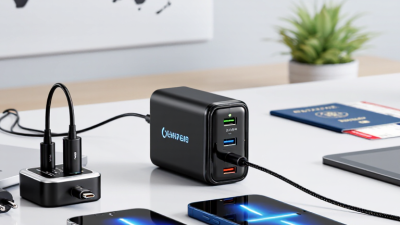
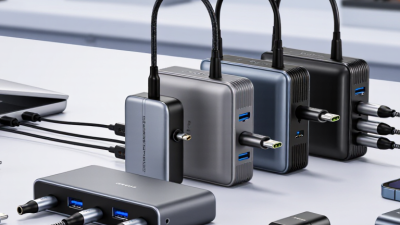
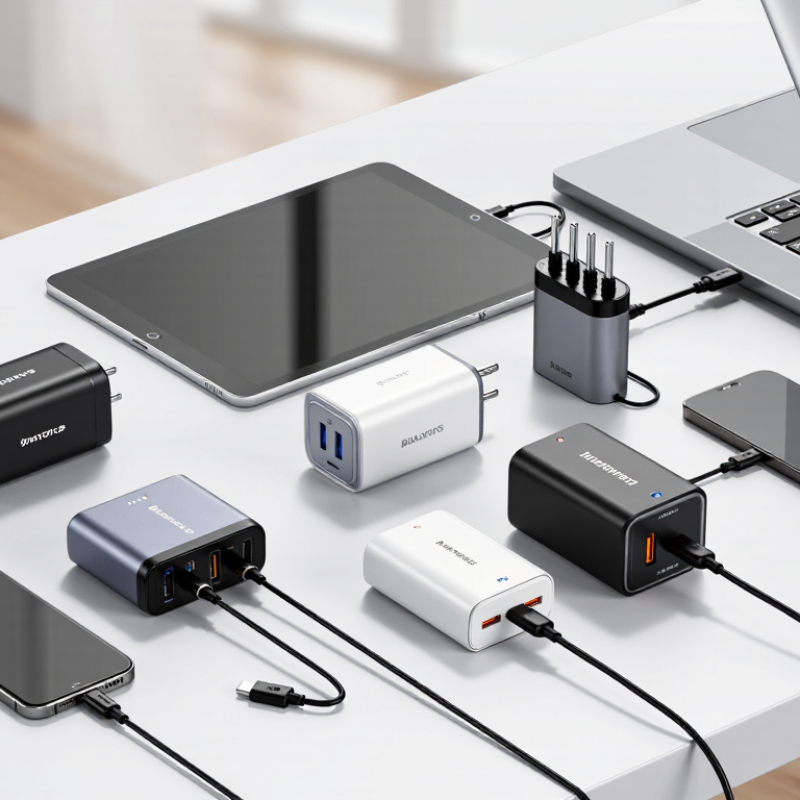
China’s USB-C charging sector serves a large and changing device market. IDC’s Worldwide Quarterly Mobile Phone Tracker reported 1.24 billion smartphone shipments in 2024, up 6.4% year over year. That figure does not measure charger sales. It does show why reliable, compact charging accessories remain commercially relevant. For buyers comparing China’s top c fast charger manufacturers and suppliers, headline wattage alone tells little.

USB-IF’s USB Power Delivery 3.1 specification supports power delivery up to 240 watts over USB-C, when compatible chargers, cables, and devices are used. That is a technical ceiling, not a promise that every phone charges at that rate. Check supported protocols, output profiles, thermal performance, and protection features. Ask suppliers for test reports, component traceability, and clear warranty terms. A charger that stays cool beside a laptop matters more than a dramatic number printed on its box.

Details matter. A lot.

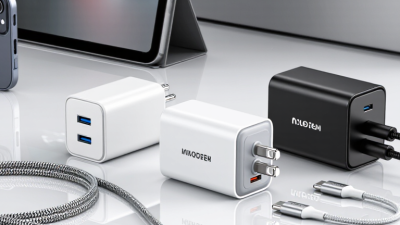
Factory audits and sample testing can reveal differences hidden by similar product photos: loose folding plugs, noisy output, or poor heat dissipation under sustained load. These checks do not guarantee every production unit will perform identically. They do make supplier comparisons more evidence-based. China offers broad manufacturing capacity, but product quality and documentation vary. Treat claims as claims until specifications and independent test results support them. That caution is useful, if less exciting than a wattage chart.

China Top C Fast Charger Manufacturers and Suppliers

USB-C Fast Chargers Explained: USB PD 3.1 Delivers Up to 240 W

USB-C Power Delivery 3.1 raises the maximum charging power to 240 watts through Extended Power Range. It can reach that level using a 48-volt, 5-amp profile. That is a ceiling, not a promise. The charger, device, and cable must all support compatible power profiles. A laptop may also draw less as its battery fills or its temperature rises.

For a 240-watt setup, the cable needs a suitable 5-amp rating and electronic marking. Not every cable qualifies. Check the supplier’s specifications rather than judging by connector shape or thickness. The charger should also include overcurrent, overvoltage, and temperature protections. When comparing manufacturers and suppliers, ask for test documentation and details about production consistency. Clear answers matter.

In everyday use, a high-power charger can make a noticeable difference when a compatible workstation laptop is nearly empty. Yet peak output may last only under suitable conditions. I would check the device’s supported input profile before choosing a charger; the largest number on a product sheet can mislead. A practical test is to monitor charging performance during a normal work session, not just for a few minutes.

China’s Charger Makers: GaN Technology and 100–240 V AC Input

China’s USB-C fast-charger manufacturers and suppliers increasingly use gallium nitride, or GaN, to build compact power adapters. GaN components can switch efficiently, helping reduce charger size when the circuit and thermal design are well engineered. A small case still needs careful heat management. During evaluation, buyers should check rated output, supported charging protocols, and performance under sustained load—not just the wattage printed on a product sheet.

A 100–240 V AC input range allows a charger to operate across many common mains voltages. It does not make every wall plug compatible, nor does it guarantee identical output under every condition. Buyers should confirm plug type, frequency rating, and required certifications for their destination market. Simple detail, often overlooked.

Manufacturers may test samples for temperature rise, output stability, and protection against overcurrent or short circuits. Ask for current test reports and clear specifications, then compare them with independent inspection results where practical. Supplier documentation can be helpful, but it is not a substitute for verification. One imperfect point in sourcing is that samples may differ from later production, so ongoing quality checks matter. A cool-running charger on a desk tells only part of the story.

China’s Charger Makers: GaN Technology and 100–240 V AC Input

Typical nominal mains voltage varies by market. Many USB-C chargers are designed for a 100–240 V AC input range, which can cover these examples; always check the input rating printed on the specific charger. GaN describes a semiconductor technology and does not, by itself, determine a charger’s input-voltage range.

Key Supplier Criteria: 5 A Cables, E-Markers, and PPS Support

When comparing China-based C fast charger manufacturers and suppliers, look beyond the wattage printed on a carton. Ask whether the included USB-C cable supports 5 A and contains an e-marker. This chip identifies cable capabilities during power negotiation; without suitable identification, a device may limit charging current. Request test records for the charger and cable as a matched set. A neat specification sheet is useful, but it cannot show how a connector behaves after repeated plugging.

Check the cable’s stated current rating, length, and temperature performance under load. A thick cable may feel reassuring, yet construction details and measured results matter more. Ask suppliers how they verify voltage drop and connector heating during sustained charging. Small differences show up. PPS support is another practical criterion: it lets compatible devices request adjustable voltage and current, rather than relying only on fixed power steps. Confirm the charger’s PPS range and current limits, then compare them with the devices your customers actually use. Support on paper does not guarantee compatibility with every phone.

A careful supplier should provide clear test conditions, traceable product specifications, and answers about production consistency. Ask whether samples from later batches are checked against the approved sample. This sounds routine, but it is often missed. I would also test a sample with a compatible device while monitoring charging stability and connector warmth. Results can vary with the cable, device, and ambient temperature, so avoid treating one quick test as proof. Some details may still be unclear; record them before placing a large order.

OEM and ODM Capabilities: Prototyping, Production, and Customization

For buyers comparing China’s USB-C fast charger manufacturers and suppliers, OEM and ODM work begins with a clear product brief. Specify output profiles, port count, enclosure size, plug type, target market, and intended device range. A capable engineering team can translate those needs into circuit layouts, thermal plans, and enclosure drawings. Test the first sample under realistic loads, including repeated plug-in cycles. Small details matter. Connector temperature, cable clearance, and housing fit can reveal issues early.

With OEM production, buyers may supply the design while the factory handles tooling, assembly, and inspection. ODM projects usually involve deeper collaboration, from selecting components to refining the product’s shape and performance.

Not every first prototype will be right. That is useful feedback, not a reason to rush production. Ask for clear revision records and agreed sample criteria.

Before a larger run, a pilot batch can help verify assembly consistency, labeling, and packaging. Request test documentation for relevant electrical and thermal checks, and confirm how production units will be sampled. Customization adds value only when changes remain measurable and repeatable. A new casing color is simple; changing power delivery requirements can affect heat, component selection, and testing. Define those trade-offs together.

Safety and Compliance: IEC 62368-1 and China’s GB 4943.1-2022

For China-facing USB-C fast chargers, IEC 62368-1 and GB 4943.1-2022 are practical safety benchmarks, not interchangeable paperwork. Both use a hazard-based approach: identify electrical, thermal, and fire risks, then verify safeguards. GB 4943.1-2022 took effect on August 1, 2023. Its requirements and national deviations should be checked separately when preparing test reports and market documentation.

Bench testing should reflect real use. Engineers examine insulation, clearances, enclosure temperatures, abnormal operation, and protection against output faults. USB-IF’s USB Power Delivery 3.1 specification supports power levels up to 240 W, raising the importance of thermal design and control across higher-power charging profiles. A cool exterior is not enough. Small details matter. Suppliers should retain traceable component records and test evidence, rather than relying on a certificate alone.

The scale of electronic waste adds another reason to scrutinize product quality. The Global E-waste Monitor 2024 reports that the world generated 62 million tonnes of e-waste in 2022; only 22.3% was formally collected and recycled. That figure does not measure charger failures, but it highlights the cost of short-lived electronics. Ask manufacturers how they validate heat management, production consistency, and safeguards after design changes. Documentation can look complete. It may still leave questions about the tested configuration.