News

Miro: A New Standard in Responsible Innovation

Miro: A New Standard in Responsible Innovation The Miro monitor arm is setting new benchmarks in sustainability. It offers a high-performance solution without compromising on environmental responsibility. Designed with careful material selection, local sourcing, and longevity in mind, Miro’s responsible approach to design and unique manoeuvrability set it apart from the competition. Sustainable Choices Miro is crafted from energy-efficient materials with a lower carbon impact....

Read more
HSE Advisor

Role Purpose Support in the development, implementation and maintenance of the company’s Health, Safety & Environmental policies, processes, operational procedures, and standards.  Ensuring best practice and championing a continually improving HSE culture within the business. Key Responsibilities Liaise with and provide support to all areas of the business to eliminate, mitigate or reduce identified HSE exposures. Partner with the production management team and team leaders,...

Read more
CMD Ltd LAUNCHES 48-HOUR TURNAROUND ON BETATRAK® RAPID ORDERING SERVICE

CMD Ltd, the specialist in power distribution systems, workstation power and monitor arms, has launched a rapid ordering service for its Betatrak® underfloor powertrack distribution systems and accessories, with a commitment to delivering within 48-hours of an approved purchase order*. The service enables customers to order up to 50 lengths of Standard or Clean Earth (C/E) low noise Betatrak, along with up to 25 feed...

Read more

CMD INVESTS £1/4 MILLION IN NEW MACHINE AS PART OF FACTORY UPGRADE

We have invested in a new £1/4m TRUMPF CNC metal punch as part of an asset renewal strategy for our UK manufacturing capability. The new machine will be used in the production of a wide variety of our power distribution systems and workstation power products at our Rotherham factory. Suitable for handling sheet metal between 0.9mm and 3.0mm thick, the new machine will replace one...

Read more

CMD CATALOGUE PROVIDES TECHNICAL POWER DISTRIBUTION GUIDE

CMD Ltd has released a new catalogue, providing an easy to follow technical guide to our power distribution systems and plug and play desk modules. Detailing CMD’s full range of UK-manufactured power distribution systems and plug and play desk modules, the catalogue will be a helpful source of information to M&E engineers and contractors alike to understand how our power distribution systems connect together and...

Read more

Power Distribution Catalogue
CMD Ltd PLAYS ESSENTIAL ROLE IN ELECTRICAL FIT OUT AT LONDON’S PRESTIGIOUS OFFICE DEVELOPMENT

CMD Ltd, specialist in workplace connectivity and ergonomic solutions, has provided a flexible and high-quality power distribution network for The Ray, a prestigious office development in London’s Farringdon. Well-known for being the former site of The Guardian newspaper, The Ray now stands as an 83,000ft² office development characterised by a modernised warehouse aesthetic, with level two now occupied by a global social media company. The...

Read more

The Ray
CMD plugs in to european opportunity with Schuko Capsule unit launch

CMD Ltd, the specialist in power and connectivity solutions for commercial environments, has launched a Schuko version of its popular fixed format Capsule workstation power module for export to mainland Europe and beyond. A popular on desk power module comprising two sockets and dual USB (type A and C) chargers, CMD’s Capsule unit is already widely specified in the UK as an off-the-shelf workstation power...

Read more

CMD White Schuko Capsule Desk Power Module
CMD LTD EXTENDS MONITOR ARM RANGE WITH THE LAUNCH OF REACH PLUS

CMD Ltd, the specialist in ergonomic and connectivity solutions for commercial interiors, has completed its Reach monitor arm range with the launch of the Reach Plus. Available in single or dual screen options, the Reach Plus has been designed to provide an ideal solution for both single and dual screen workstation configurations, or can be used with next generation of large format curved screens. Suitable...

Read more

CMD Ltd DEMONSTRATES THE ART OF POWER DISTRIBUTION AT THE UNIVERSITY OF WARWICK

CMD Ltd, the specialist in workplace connectivity and ergonomic solutions, has provided Betatrak busbar power distribution and a range of electrical accessories for two major capital investment projects at the University of Warwick. Designed by Fielden Clegg Bradley Studios, the £33 million Faculty of Arts building is a showpiece development comprising four interconnected structures set around a central atrium, which will enable inter-disciplinary collaboration across...

Read more

University of Warwick
CMD BRINGS HARMONY TO COVENTRY UNIVERSITY RESEARCH FACILITIES

CMD Ltd, the specialist in power distribution solutions and workstation power and ergonomics, has provided under desk and on desk power modules for the refurbishment of three Coventry University research buildings. Located on Coventry University Technology Park, a business park designed to encourage collaboration between the university and knowledge-based businesses, the three buildings are being repurposed as office accommodation for university research teams. The refurbishment...

Read more

Coventry University

How to Choose the Right Plug Socket for Global Buyers?

Choosing the right plug socket is a technical decision, not a packaging detail. Global buyers must match voltage, frequency, current rating, plug geometry, grounding, and certification requirements. The Tracking SDG 7: The Energy Progress Report 2024 reported that about 685 million people still lacked electricity in 2022. This uneven infrastructure makes regional product selection especially important. A socket designed for one market may perform poorly elsewhere.

Demand is also changing. Grand View Research’s Electrical Plugs and Sockets Market Report 2024–2030 identifies residential construction, commercial facilities, and electrical upgrades as major growth areas. However, market growth does not remove technical risks. IEC 60083 provides reference configurations for domestic plugs and socket outlets, while IEC 60884-1 addresses safety requirements for household and similar equipment. National standards can still add different testing, marking, and approval conditions. Buyers should never treat an international symbol as automatic approval.

Practical sourcing begins with the destination country. Confirm the local voltage and frequency first. Check the required plug type and grounding method. Request test reports, conformity documents, material specifications, and factory inspection records. Examine the product physically, too. Loose terminals, weak shutters, or brittle plastic can reveal problems before shipment. Packaging matters when products cross humid ports and hot warehouses. A neat specification sheet can still hide a poor design. That deserves reflection.

Reliable suppliers explain limitations clearly. They do not promise universal compatibility without evidence. This guide examines how to compare a plug socket across safety, performance, certification, durability, and total landed cost. The goal is simple: safer purchasing decisions, fewer returns, and more dependable use in real environments.

How to Choose the Right Plug Socket for Global Buyers?

Understanding Plug Socket Types, Standards, and Regional Differences

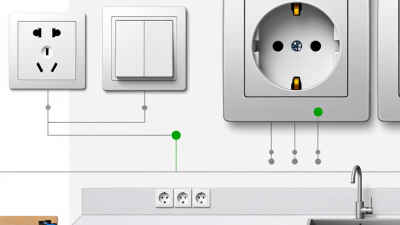
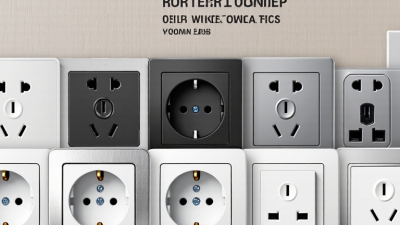
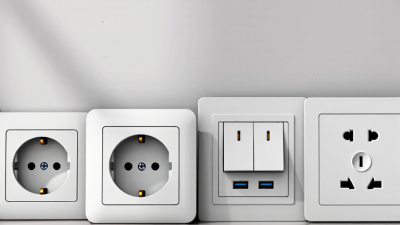
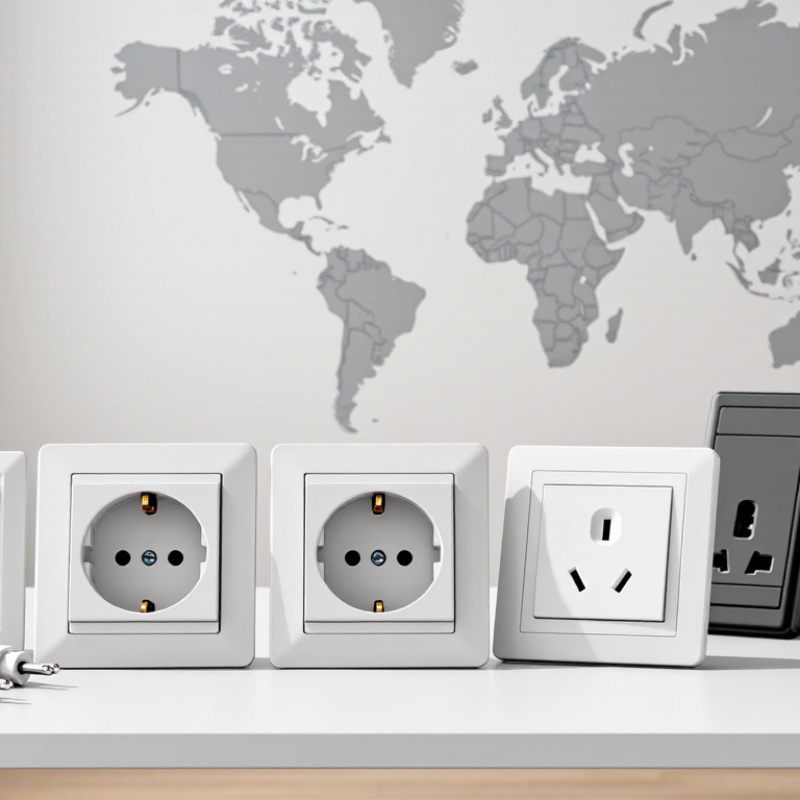
Choosing a plug socket starts with the local standard, not appearance. The International Electrotechnical Commission’s World Plugs reference identifies 15 widely used plug configurations worldwide. Types A and B are common in North America, while Types C, E, and F appear across many European markets. The United Kingdom, Australia, and several Asian markets use different systems. Fit is not enough.

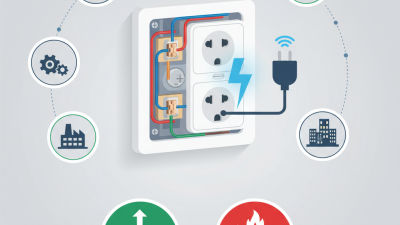
Voltage and frequency create greater risks. Many regions use 220–240 V at 50 Hz, while North America commonly uses 100–127 V at 60 Hz, according to the U.S. International Trade Administration’s country electricity guidance. A socket rated for the wrong voltage can cause overheating, equipment failure, or fire. The IEC 60884-1 standard also provides safety requirements for household plugs and socket-outlets, including construction, testing, and protection against electric shock.

In procurement audits, I check the socket’s pin layout, rated voltage, current, earthing method, shutter design, and certification route. A universal socket may accept several plugs, but it can weaken mechanical stability and child protection. This is where my first checklist was too simple. Regional rules may also require different tests or markings. Ask for current test reports, not old certificates. Confirm the destination country, installation environment, and appliance load before approving a design. A neat universal answer is tempting. It is often wrong.

Checking Voltage, Frequency, and Electrical Compatibility

Choosing a plug socket for global buyers requires more than matching pin shapes. The electrical rating must fit the destination supply. Check voltage in volts, frequency in hertz, and maximum current in amperes. A socket marked 100–250 V may accept broad voltage, but the connected appliance may not. A travel adapter changes plug shape. It usually does not convert voltage or frequency. That distinction prevents expensive mistakes.

In practical product checks, compare the socket rating with the appliance nameplate and destination grid. A 120 V appliance connected to 230 V can overheat quickly. A 230 V appliance on 120 V may start weakly or fail to start. Frequency also matters for motors, clocks, pumps, and transformers. A motor designed for 50 Hz may behave differently on a 60 Hz supply. Check whether the appliance supports both frequencies. Do not ignore grounding. Confirm protective-earth continuity, suitable pin design, and the socket’s current rating.

For bulk orders, request reliable laboratory test reports and verify local electrical requirements. Check the plug type, voltage, frequency, current, grounding, and moisture protection where necessary. Test a sample under realistic load. Packaging is not proof. I once treated a universal socket as universally compatible. That assumption was too broad. Mechanical fit did not prove safe electrical contact. A loose connection became warm after extended use. If specifications remain unclear, pause the order and ask for measured data.

Matching Socket Features to Installation and Usage Requirements

How to Choose the Right Plug Socket for Global Buyers?

Matching Socket Features to Installation and Usage Requirements

Choosing a plug socket starts with the installation environment, not its appearance. Check the local voltage, frequency, current rating, and grounding method. A socket designed for a dry bedroom may fail in a workshop or covered outdoor area. Moisture, dust, heat, and frequent plugging require stronger protection.

Mounting details also matter. Confirm the back box depth, terminal layout, cable size, and fixing method before ordering. A shallow box can crush wires behind the socket. Loose terminals may create heat over time. For bathrooms, kitchens, and utility rooms, consider suitable ingress protection and protective covers. Child-safe shutters can reduce accidental contact, but they must operate smoothly.

Use cases should guide every feature. A desk socket may need USB charging, while a workshop socket needs durable contacts and reliable earthing. High-load equipment requires a matching current rating and properly sized cables. Never judge capacity by socket appearance alone. That mistake is surprisingly common. Check the product test records, installation instructions, and required national conformity marks. Local electrical rules may differ, even between nearby markets.

A practical review should include real conditions. Test access with gloves, inspect screw terminals, and measure clearance around the faceplate. One detail is easy to miss: some plugs sit tightly against furniture. Rechecking the layout can prevent installation changes later. Qualified electricians should handle final connections and safety verification.

How to Choose the Right Plug Socket for Global Buyers?

Matching socket features to installation and usage requirements

Socket selection should match the destination market’s nominal voltage, frequency, and plug configuration. Confirm local electrical codes, grounding requirements, IP protection, and installation conditions before specifying the final socket.

Evaluating Safety Certifications, Materials, and Product Quality

How to Choose the Right Plug Socket for Global Buyers?

Safety certification should be the first filter, not a decorative mark on the package. Check whether the socket meets the destination market’s current electrical standards. Ask for a valid certificate, test report, and certificate number. Then verify those details through the issuing organization’s public records. A printed logo alone proves very little. Requirements may differ for voltage, frequency, grounding, shutters, and child protection.

Material selection affects safety and service life. Look for flame-retardant, heat-resistant housing materials with stable dimensions. Weak plastic may discolor, crack, or soften near warm terminals. Copper or brass contacts should provide firm pressure without excessive resistance. Inspect the plug fit by hand. It should feel secure, not loose or painfully tight. Good strain relief also prevents cable movement from reaching the terminals.

Product quality is easier to judge through evidence than promises. Request samples from regular production, not specially prepared units. Check terminal screws, contact alignment, surface finish, and insulation thickness. Ask for endurance, temperature-rise, pull, and insertion tests. Independent inspection can reveal defects missed during visual checks. Still, no checklist is perfect. A socket may pass one inspection and fail after rough shipping or careless installation. That uncomfortable possibility deserves attention. Track batch numbers and keep inspection records for later comparison.

Comparing Suppliers, Customization Options, and Total Purchase Costs

Choosing a plug socket supplier requires more than comparing unit prices. I check the socket standard, rated voltage, current, contact material, and test documentation. IEC 60884-1 is a useful reference for household plugs and socket-outlets. A supplier should explain which tests apply to the target market.

Customization changes the purchase equation. Color, logo, shutter design, cable length, packaging, and tooling can increase minimum order quantities. Ask for a sample before approving mass production. In my experience, a low mold charge may hide expensive engineering revisions. Request a clear breakdown of tooling, testing, packaging, freight, duties, inspection, and payment fees. UNCTAD’s Review of Maritime Transport reports that ships carry over 80% of global merchandise trade by volume. Freight disruption can therefore affect the final cost quickly. The cheapest quotation is often a misleading victory.

Tips: Compare at least three suppliers using the same specification sheet. Confirm production capacity, audit history, lead time, warranty terms, and corrective-action procedures. Calculate landed cost per usable socket, not per factory unit. Include rejected samples and spare parts. Keep evidence.

Reports from the World Bank’s 2023 Logistics Performance Index show meaningful differences in customs and delivery performance between trading locations. That difference can outweigh a small factory-price advantage. I would also review certificates independently, because documents can be incomplete or outdated. A careful buyer may still make mistakes. That is why staged orders, third-party inspection, and written acceptance criteria matter.