

News

Miro: A New Standard in Responsible Innovation

Miro: A New Standard in Responsible Innovation The Miro monitor arm is setting new benchmarks in sustainability. It offers a high-performance solution without compromising on environmental responsibility. Designed with careful material selection, local sourcing, and longevity in mind, Miro’s responsible approach to design and unique manoeuvrability set it apart from the competition. Sustainable Choices Miro is crafted from energy-efficient materials with a lower carbon impact....

Read more
HSE Advisor

Role Purpose Support in the development, implementation and maintenance of the company’s Health, Safety & Environmental policies, processes, operational procedures, and standards.  Ensuring best practice and championing a continually improving HSE culture within the business. Key Responsibilities Liaise with and provide support to all areas of the business to eliminate, mitigate or reduce identified HSE exposures. Partner with the production management team and team leaders,...

Read more
CMD Ltd LAUNCHES 48-HOUR TURNAROUND ON BETATRAK® RAPID ORDERING SERVICE

CMD Ltd, the specialist in power distribution systems, workstation power and monitor arms, has launched a rapid ordering service for its Betatrak® underfloor powertrack distribution systems and accessories, with a commitment to delivering within 48-hours of an approved purchase order*. The service enables customers to order up to 50 lengths of Standard or Clean Earth (C/E) low noise Betatrak, along with up to 25 feed...

Read more

CMD INVESTS £1/4 MILLION IN NEW MACHINE AS PART OF FACTORY UPGRADE

We have invested in a new £1/4m TRUMPF CNC metal punch as part of an asset renewal strategy for our UK manufacturing capability. The new machine will be used in the production of a wide variety of our power distribution systems and workstation power products at our Rotherham factory. Suitable for handling sheet metal between 0.9mm and 3.0mm thick, the new machine will replace one...

Read more

CMD CATALOGUE PROVIDES TECHNICAL POWER DISTRIBUTION GUIDE

CMD Ltd has released a new catalogue, providing an easy to follow technical guide to our power distribution systems and plug and play desk modules. Detailing CMD’s full range of UK-manufactured power distribution systems and plug and play desk modules, the catalogue will be a helpful source of information to M&E engineers and contractors alike to understand how our power distribution systems connect together and...

Read more

Power Distribution Catalogue
CMD Ltd PLAYS ESSENTIAL ROLE IN ELECTRICAL FIT OUT AT LONDON’S PRESTIGIOUS OFFICE DEVELOPMENT

CMD Ltd, specialist in workplace connectivity and ergonomic solutions, has provided a flexible and high-quality power distribution network for The Ray, a prestigious office development in London’s Farringdon. Well-known for being the former site of The Guardian newspaper, The Ray now stands as an 83,000ft² office development characterised by a modernised warehouse aesthetic, with level two now occupied by a global social media company. The...

Read more

The Ray
CMD plugs in to european opportunity with Schuko Capsule unit launch

CMD Ltd, the specialist in power and connectivity solutions for commercial environments, has launched a Schuko version of its popular fixed format Capsule workstation power module for export to mainland Europe and beyond. A popular on desk power module comprising two sockets and dual USB (type A and C) chargers, CMD’s Capsule unit is already widely specified in the UK as an off-the-shelf workstation power...

Read more

CMD White Schuko Capsule Desk Power Module
CMD LTD EXTENDS MONITOR ARM RANGE WITH THE LAUNCH OF REACH PLUS

CMD Ltd, the specialist in ergonomic and connectivity solutions for commercial interiors, has completed its Reach monitor arm range with the launch of the Reach Plus. Available in single or dual screen options, the Reach Plus has been designed to provide an ideal solution for both single and dual screen workstation configurations, or can be used with next generation of large format curved screens. Suitable...

Read more

CMD Ltd DEMONSTRATES THE ART OF POWER DISTRIBUTION AT THE UNIVERSITY OF WARWICK

CMD Ltd, the specialist in workplace connectivity and ergonomic solutions, has provided Betatrak busbar power distribution and a range of electrical accessories for two major capital investment projects at the University of Warwick. Designed by Fielden Clegg Bradley Studios, the £33 million Faculty of Arts building is a showpiece development comprising four interconnected structures set around a central atrium, which will enable inter-disciplinary collaboration across...

Read more

University of Warwick
CMD BRINGS HARMONY TO COVENTRY UNIVERSITY RESEARCH FACILITIES

CMD Ltd, the specialist in power distribution solutions and workstation power and ergonomics, has provided under desk and on desk power modules for the refurbishment of three Coventry University research buildings. Located on Coventry University Technology Park, a business park designed to encourage collaboration between the university and knowledge-based businesses, the three buildings are being repurposed as office accommodation for university research teams. The refurbishment...

Read more

Coventry University

Why Choose a Vintage Shoe Cabinet for Your Home?

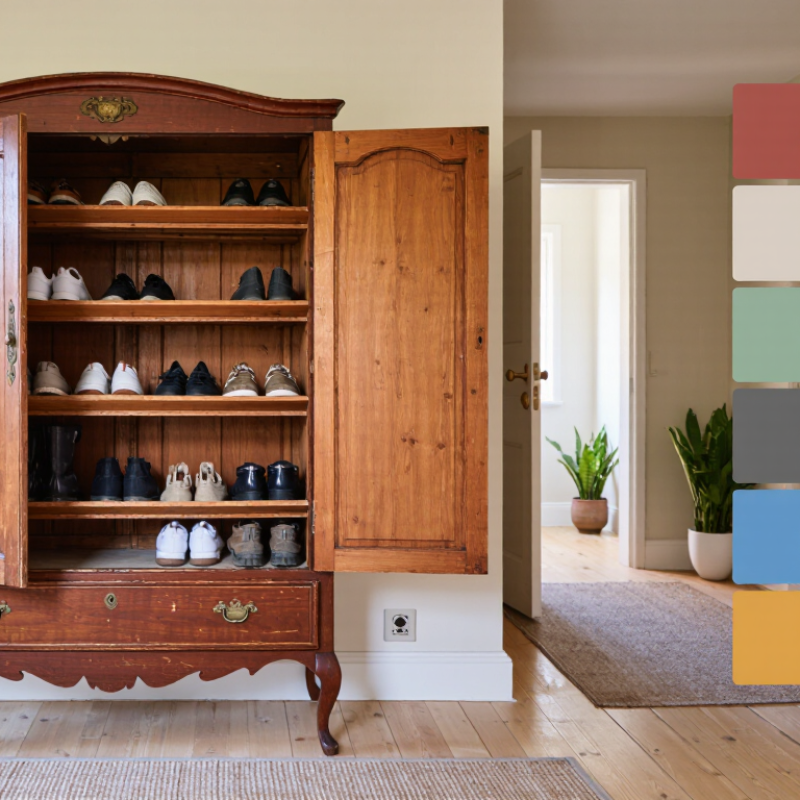
A hallway often reveals how a home works: shoes gather beside the door, while narrow walkways make mornings feel rushed. A Vintage Shoe Cabinet can give that daily clutter a defined place, while adding the warmth of aged wood, shaped legs, or antique-style hardware. It is practical furniture, but also a visible part of the room.

The 2024 Houzz & Home Study reported a median U.S. renovation spend of $24,000 in 2023. The study does not measure shoe storage specifically, so that figure should not be treated as evidence of demand for vintage cabinets. It does, however, show that homeowners continue to invest in their spaces. For buyers, the more useful questions are personal: How many pairs need storing? Is the entryway well ventilated? Will the cabinet’s depth leave enough room to pass comfortably?

Details matter. Measure the wall, check door clearance, and inspect joints, hinges, and the cabinet’s base before buying. Older finishes may show scratches or uneven color; those marks can add character, but they may also need careful cleaning or repair. A cabinet with adjustable shelves can accommodate boots and changing footwear, while ventilated panels may help air circulate. Small choices count.

Not every vintage piece fits every home. That deserves thought. Choosing carefully can turn an awkward corner into useful storage without making the entryway feel crowded. A Vintage Shoe Cabinet is most successful when its condition, dimensions, and style suit the way people actually use the space.

Why Choose a Vintage Shoe Cabinet for Your Home?

What Defines a Vintage Shoe Cabinet?

A vintage shoe cabinet is more than a new cabinet with an aged finish. In interiors, “vintage” commonly describes a piece around 20 years old or older, though sellers may use the term differently. Look for signs of genuine age: softened edges, small variations in the wood grain, and hardware that shows honest wear. These details should feel consistent, not artificially distressed. Age alone proves little.

Its purpose still matters. A useful cabinet has shelves deep enough for everyday shoes, doors that open without scraping, and some airflow to limit trapped odors. Check the back panel, hinges, and feet; a slight wobble can become a daily annoyance. Measure your entryway and your largest shoes before buying. The fit is easy to overlook. The U.S. Environmental Protection Agency’s 2018 Advancing Sustainable Materials Management report estimated that Americans generated 12.1 million tons of furniture and furnishings waste that year. That figure covers furniture broadly, not shoe cabinets specifically, but it gives reuse practical context. Choosing a sound older piece can keep usable material in service, though restoration may take more effort than expected.

How Vintage Shoe Cabinets Combine Storage and Design

Why Choose a Vintage Shoe Cabinet for Your Home?

How Vintage Shoe Cabinets Combine Storage and Design

A vintage shoe cabinet can make an entryway feel considered, not crowded. Its shallow profile keeps shoes near the door while preserving walking space. Look for ventilated doors, sturdy shelves, and a top surface for keys or a small lamp. Worn wood, aged brass pulls, and softened edges add texture that new furniture can struggle to imitate. Yet vintage does not always mean functional. Check shelf height and cabinet depth against the shoes your household actually wears.

Design also shapes how a room is experienced. In its 2023 Profile of Home Staging, the National Association of Realtors reported a useful signal. 81% of buyers’ agents said staging helped buyers visualize a property as their future home. This finding is not specific to shoe cabinets, but it supports a practical point: visible order can help an entry feel welcoming. Choose a restrained finish that anchors the space without making storage the main attraction. Measure the door swing, too. A beautiful cabinet that blocks the hallway is still a poor fit.

Tips: Outline the cabinet’s footprint on the floor and test the walkway before buying. Check for musty odors, loose joints, and uneven shelves. Leave room for air circulation, especially after rainy days. Sometimes the right piece needs a small repair. That is part of the charm—and part of the work.

Why Choose a Vintage Shoe Cabinet?

Vintage-inspired cabinets can pair practical shoe storage with a warm, furniture-like look. This chart shows how adding a usable shelf can increase estimated capacity.

How to read this: Estimates assume a 100 cm-wide cabinet and 25 cm of shelf width per pair, or four pairs per shelf. Actual capacity varies with shoe size, shelf depth, and cabinet design.

Practical Benefits of Choosing a Vintage Shoe Cabinet

Why Choose a Vintage Shoe Cabinet for Your Home?

Practical Benefits of Choosing a Vintage Shoe Cabinet

A vintage shoe cabinet can turn a busy entryway into a more orderly, usable space. Closed doors keep shoes out of sight, while a slim profile may fit beside a front door or under a coat rack. Measure the cabinet and your largest shoes before buying; older pieces can have narrow shelves or shallow interiors. A little measuring saves frustration.

The right cabinet also gives everyday footwear a dedicated home, reducing pairs scattered across the floor. Look for sturdy hinges, stable legs, and shelves that are easy to wipe clean. Check for musty odors, loose joints, and signs of moisture, especially inside drawers and corners. Small details matter. If the cabinet feels solid, minor scratches may be easier to live with than a poor fit. Some vintage designs have limited airflow, so avoid storing damp shoes inside; let them dry first. A woven basket nearby can hold laces or shoe-care items, though it may add clutter if it is too large. Practicality is not guaranteed by age alone. A cabinet should work for the shoes you actually wear.

Materials, Styles, and Features to Consider

A vintage shoe cabinet can add character while solving a daily entryway problem. Look for solid wood, veneer, or metal, and inspect the cabinet’s back, hinges, and drawer bottoms. Solid wood is repairable, but it may be heavy; veneer can look refined, though chipped edges are harder to disguise. Check the joints. A little wobble matters.

Choose a style that suits the room, not just the photograph. A narrow cabinet with slatted doors can feel lighter in a tight hall, while a deeper piece may hold boots more easily. Measure your shoes and doorway before buying. Also check for ventilation and smooth-opening doors. A worn finish can be charming, but not every scratch deserves a romantic story. The U.S. Environmental Protection Agency’s Advancing Sustainable Materials Management report estimated that furniture and furnishings generated 12.1 million tons of waste in 2018, with 80.1% sent to landfills. Reusing a sturdy cabinet can extend its useful life, though condition still matters.

Tips: Measure the space, then test the doors and shelves. A quick sniff inside can reveal trapped dampness. Add felt pads under the feet to protect wood floors.

How to Match a Vintage Shoe Cabinet to Your Home

Why Choose a Vintage Shoe Cabinet for Your Home?

How to Match a Vintage Shoe Cabinet to Your Home

Start with the space, not the style. Measure the wall, doorway, and walking clearance before choosing a cabinet; older pieces can be deeper than they look. Measure the doorway first. In a narrow hall, a slim cabinet with lift-down compartments keeps shoes tucked away without crowding the path. For a wider entry, a low wooden cabinet can double as a landing spot for keys or a small lamp.

Match undertones rather than chasing an exact furniture set. Warm oak often sits comfortably beside cream walls, woven baskets, and aged brass; darker walnut can anchor pale floors and muted paint. Check the cabinet in your home’s daylight, since varnish can look much more orange near a window. I would not force a perfect match. A little contrast often feels more natural, though too many competing finishes can make a small entry look unsettled.

Budget and durability matter, too. The 2024 U.S. Houzz & Home Study reported a median renovation spend of $24,000 in 2023, up from $22,000 in 2022. That figure covers renovation projects, not shoe cabinets, but it offers useful context: a movable vintage piece may refresh an entry without changing fixed finishes. Inspect hinges, odors, and the cabinet base before buying. A scuffed surface can add character; a musty interior is harder to overlook.