Why Choose a TCU Temperature Controller Machine?
Manufacturers are under growing pressure to improve process stability, energy efficiency, and product consistency. A TCU Temperature Controller Machine addresses these demands by regulating heating and cooling media during molding, extrusion, die casting, and other industrial processes. It can hold a narrow temperature range, even when production conditions change.
Industry research supports this need. MarketsandMarkets identifies industrial temperature control as an expanding market, driven by automation, tighter quality requirements, and energy management. Grand View Research also reports continued growth in the broader industrial automation sector, where precise thermal control supports repeatable manufacturing. These findings matter on the factory floor. A fluctuating mold temperature can create warpage, uneven surfaces, longer cycle times, or rejected parts.
The practical value is measurable. Operators can monitor supply and return temperatures, adjust flow rates, and respond before defects spread across a production batch. In many applications, stable thermal transfer also reduces manual intervention and improves equipment utilization. The U.S. Department of Energy emphasizes that better industrial process control can support energy savings, although actual results depend on machine design, insulation, maintenance, and operating conditions.
Still, no controller solves every production problem. Poorly sized pumps, blocked filters, or inaccurate sensors can weaken performance. This is where experience becomes important. Buyers should examine control accuracy, heating capacity, cooling response, communication options, safety protection, and service support. A TCU Temperature Controller Machine is not merely an auxiliary device. It is a process-quality tool, provided its specifications match the application. The decision deserves careful testing, not attractive claims alone.
TCU Temperature Controller Machines Explained: ±0.5°C Process Stability
Why Choose a TCU Temperature Controller Machine?
TCU Temperature Controller Machines Explained: ±0.5°C Process Stability
A TCU temperature controller machine manages heating and cooling through a circulating fluid loop. It keeps process temperatures close to the selected setpoint. In molding, reactors, and laboratory equipment, even small temperature shifts can affect viscosity, cycle time, and product quality. A stable system matters.
A well-designed TCU can maintain temperature stability within ±0.5°C under suitable operating conditions. This performance depends on sensor accuracy, fluid flow, heat exchanger capacity, and control tuning. During operation, the controller reads the process temperature continuously. It then adjusts heating or cooling output before the deviation becomes significant. The result is steadier production and fewer thermal fluctuations.
Practical setup still requires attention. Check the sensor location. A poorly positioned probe may report fluid temperature instead of the actual process temperature. Insulation also reduces heat loss around hoses and connections. I have found that startup settings can create brief overshoot, especially with cold equipment or high-flow fluids. Slower ramping often improves control, but it may extend the warm-up time. That trade-off deserves testing.
Regular calibration supports reliable ±0.5°C performance. Operators should also inspect filters, pumps, fluid levels, and pressure readings. If the process load changes sharply, the controller may need retuning. Stability is not automatic. It is maintained through sound installation, measured results, and careful daily checks.
Temperature Media and Ranges: Water to 160°C, Oil to 350°C
Why Choose a TCU Temperature Controller Machine?
A TCU temperature controller machine gives manufacturers tighter thermal control during molding, reactors, coating, and laboratory testing. The medium matters. Water can reach 160°C, but operation above 100°C requires a pressurized circuit. At 160°C, water’s saturation pressure is about 6.2 bar absolute, according to NIST thermodynamic data. That pressure demands correctly rated pumps, hoses, seals, and safety valves.
Oil supports higher temperatures, commonly up to 350°C, without pressurization like water. However, performance depends on oil type, viscosity, oxidation resistance, and circulation speed. The U.S. Department of Energy’s Industrial Decarbonization Roadmap reports that process heating represents roughly 51% of industrial energy use. Accurate temperature control can therefore reduce overheating, unstable cycles, and wasted energy. ASHRAE guidance also emphasizes fluid properties, equipment selection, and safe operating limits. In practice, a fast response is useful. Still, faster is not always better. Excessive heating rates can damage products or shorten fluid life.
Tips: Match the medium to the process temperature. For water systems, verify pressure ratings at the maximum setpoint. For oil systems, check the supplier’s film temperature, not only the nominal operating temperature. Log supply and return temperatures every cycle. Small drift can reveal fouling, air pockets, or pump wear. Operators sometimes trust the display too much. A calibrated external sensor is worth using during commissioning.
Heat-Load Sizing: Apply Q = ṁCpΔT to Select Flow and Heater Power
Why Choose a TCU Temperature Controller Machine?
Heat-load sizing should begin with Q = ṁCpΔT , not a guessed heater rating. Here, Q is heat duty in kilowatts, ṁ is mass flow in kilograms per second, Cp is specific heat, and ΔT is the temperature rise. For water, Cp is approximately 4.18 kJ/kg·K near room temperature. A flow of 2 m³/h equals about 0.56 kg/s. Raising it from 20°C to 60°C requires roughly 93 kW. That is the working load.
Allow for heat loss.
Insulation quality, piping length, tank walls, and startup time can increase demand. A practical design may add 10–20% capacity, giving approximately 102–112 kW in this example. The U.S. Department of Energy’s Industrial Decarbonization Roadmap identifies process heating as about 51% of manufacturing energy use, showing why accurate sizing matters. Oversizing wastes power and can create unstable temperature swings.
Flow selection also affects control quality. A smaller ΔT needs higher flow for the same heat duty, while a larger ΔT may reduce circulation but increase product temperature gradients. Glycol mixtures require their actual Cp and density, not water values. ASHRAE Handbook data supports checking fluid properties at operating temperature. A TCU can combine circulation, heating, cooling, and feedback control, but calculations still need field verification. Sensors may be poorly placed. Real systems are rarely perfect. Insulation deserves inspection before adding heater capacity.
Control Architecture: PID Sensors, ±1°C Uniformity, and Fast Response
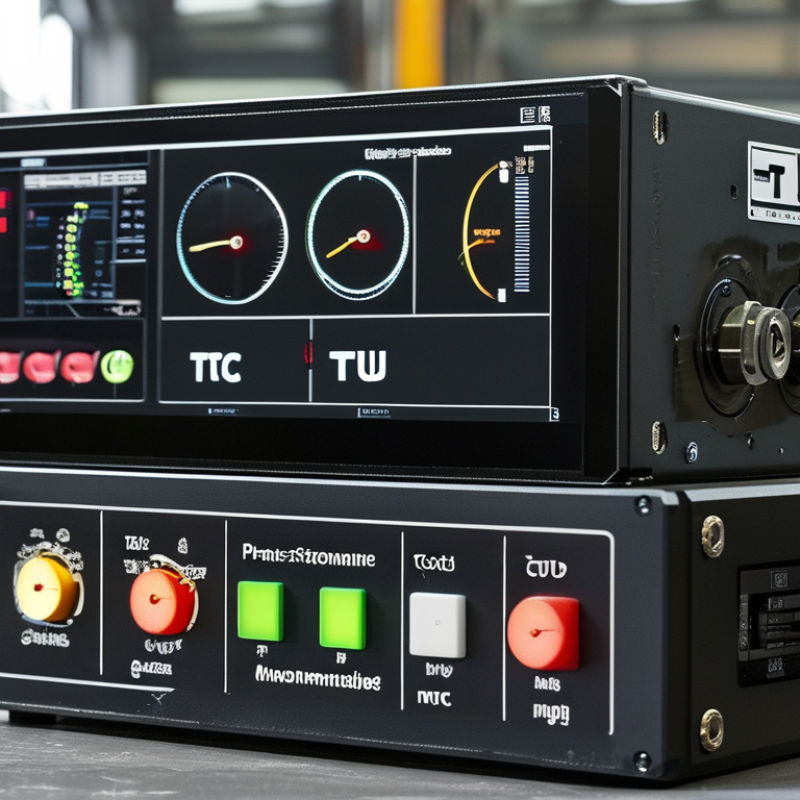
A TCU temperature controller machine earns its place through control architecture, not appearance. In daily operation, stable processing begins with reliable sensors. RTD or thermocouple probes measure supply and return temperatures continuously. The controller compares those readings with the setpoint. Then, a PID algorithm adjusts heating or cooling output. This closed loop limits overshoot and reduces manual correction. Small detail. Sensor placement matters.
During commissioning, technicians should verify each sensor against a calibrated reference. A one-degree error can distort the whole process. With balanced flow and suitable insulation, many systems can maintain approximately ±1°C uniformity across the working circuit. That figure still needs proof under real load. Empty-tank testing is not enough. Fast response also depends on pump capacity, valve action, and heat exchanger design. PID tuning must match these components. Aggressive settings may react quickly, but they can create oscillation.
A useful controller records temperatures, alarms, and response trends. These records help engineers identify drift before process quality changes. I prefer reviewing the graph after start-up, rather than trusting the display alone. It reveals delays that operators may miss. No system is perfect. Ambient changes, fouled surfaces, and uneven tooling can weaken uniformity. Regular calibration and practical retuning remain necessary when operating conditions change.
Safety and Efficiency: IEC 60204-1 Protection and 10–30% Energy Savings
Why Choose a TCU Temperature Controller Machine?
Safety and efficiency are practical reasons to choose a TCU temperature controller machine. In daily operation, temperature fluctuations can damage molds, fluids, seals, and finished parts. A properly designed TCU supports stable heating and cooling through sensors, feedback control, and controlled circulation. It also helps operators detect abnormal pressure, flow, or temperature conditions earlier.
IEC 60204-1 addresses electrical equipment safety for machinery. Its principles include protective bonding, overcurrent protection, emergency stopping, and clear control functions. These features do not remove every risk. Installation quality still matters. Small details matter. Incorrect grounding or poor cable routing can weaken an otherwise strong safety design. A competent technician should verify the machine against the actual plant environment.
Energy performance deserves equal attention. The U.S. Department of Energy’s Industrial Assessment Center case studies frequently identify 10–30% energy-saving opportunities through improved controls, insulation, motor operation, and process optimization. A TCU can reduce wasted heating and cooling by matching output to real thermal demand. The International Energy Agency also continues to identify industrial efficiency and digital control as important energy-saving measures. However, savings depend on operating hours, fluid type, ambient temperature, and maintenance. A 10% claim can fail when pumps run unnecessarily or heat escapes through exposed piping. Measure baseline consumption before purchase, then compare it with verified operating data. Real plants are messier. That is where honest evaluation becomes useful.