Why Choose a Portable Coffee Grinder for Camping?
Why Choose a Portable Coffee Grinder for Camping?
A Portable Coffee Grinder For Camping can make outdoor coffee taste noticeably fresher. Whole beans keep their aroma better than pre-ground coffee during travel. When morning air feels cold, grinding beans beside a tent creates a small, satisfying ritual. You hear the burrs turning. Then, the coffee smells richer.
Coffee expert James Hoffmann has said, “The grinder is the most important piece of coffee equipment.” His point matters outdoors because grind consistency affects extraction, bitterness, and brewing time. A dependable hand grinder lets campers adjust the grind for a pour-over, French press, or compact espresso maker. It also avoids batteries, charging cables, and unnecessary electronic weight.
Small details matter. A steel burr grinder should fit comfortably in one hand. Its adjustment system should remain stable inside a backpack. A sealed container helps protect ground coffee from wind, dust, and accidental moisture. However, portability requires compromise. Some lightweight grinders feel slower when processing darker beans. Others produce uneven particles, especially after repeated use. That can frustrate careful brewers.
It is not perfect.
Personal experience also matters. A camper who values speed may prefer pre-ground coffee. Someone seeking a quiet sunrise may enjoy manual grinding instead. The best choice depends on brewing habits, packing space, and patience. Choosing a Portable Coffee Grinder For Camping means balancing freshness with effort. That balance deserves honest attention before the next trip.
What Is a Portable Coffee Grinder?
Why Choose a Portable Coffee Grinder for Camping?
What Is a Portable Coffee Grinder?
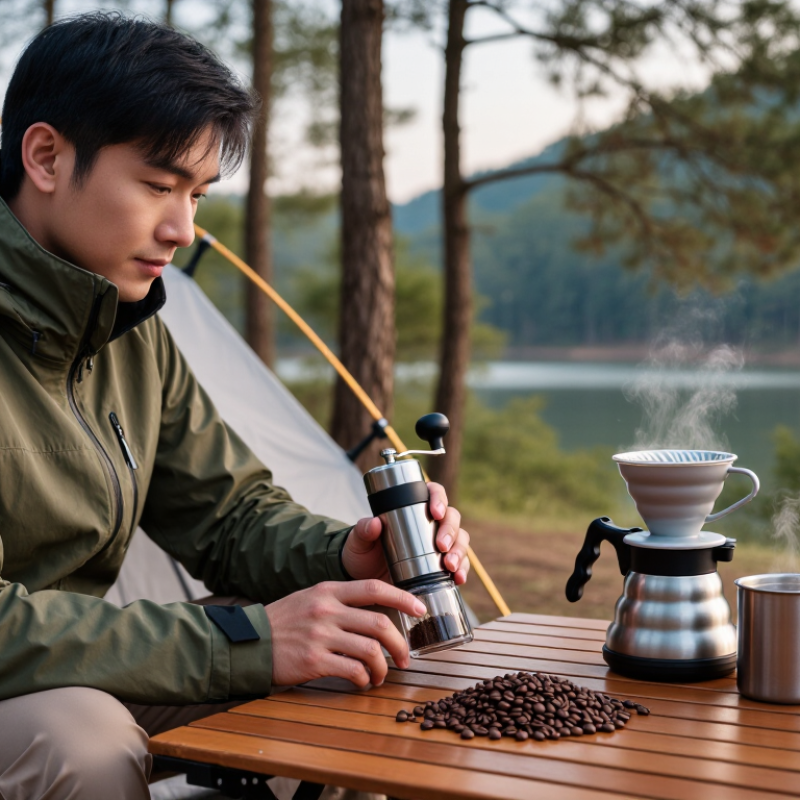
A portable coffee grinder is a compact hand-operated device for grinding whole coffee beans outdoors. It usually contains adjustable burrs, a bean chamber, and a removable grounds container. Unlike blade grinders, burrs crush beans more evenly. That matters when water is heated over a small camping stove.
Most models weigh roughly 300 to 700 grams. They need no battery or electrical outlet. A folding handle fits beside a mug, filter, and fuel canister. I have used one beside a cold campsite table, where fine dust collected around the threads. It was not serious, but it showed why easy cleaning matters. A grinder with clear settings also helps control coarse grounds for a press pot or medium grounds for pour-over brewing.
Coffee remains important during outdoor travel. The National Coffee Association’s Spring 2024 National Coffee Data Trends report found that 67% of American adults drank coffee during the previous day. The Outdoor Industry Association’s 2024 Outdoor Participation Trends Report recorded 175.8 million outdoor participants in 2023. These figures do not prove every camper wants fresh coffee. They do show a large audience for portable brewing equipment.
Fresh grinding can preserve aroma better than carrying pre-ground coffee, especially in warm, humid conditions. Yet portability creates compromises. Small burrs may grind slowly. Hard beans can make the handle uncomfortable. I sometimes choose convenience over perfect extraction, and that is a reasonable camping decision. The best portable grinder is not merely small; it is stable, repairable, and simple to use with cold fingers.
Why Choose a Portable Coffee Grinder for Camping?
What Is a Portable Coffee Grinder?
A portable coffee grinder is a compact manual or battery-powered device designed to grind whole coffee beans away from a kitchen. Manual models are especially useful for camping because they do not require electricity and can produce freshly ground coffee on demand.
The chart shows the coffee dose needed for common camping brew volumes using a 1:16 coffee-to-water ratio. Fresh grinding helps campers adjust the dose and grind size for different brewing methods while keeping equipment compact.
How Portable Grinders Work in Camping Conditions
A portable coffee grinder works by crushing roasted beans between two burrs, rather than slicing them with fast blades. Turning the handle or powering the motor changes the burr distance. Smaller gaps create finer particles, while wider gaps produce a coarser camping grind.
Camping conditions make this simple mechanism less predictable. Cold air can slow battery output, and fine dust may enter adjustment threads. Moisture also causes grounds to cling through static.
I usually grind on a dry cloth and keep the grinder inside a sealed pouch. Manual models remain dependable when charging is impossible, but uneven hand pressure can create inconsistent particles. That weakness matters.
The Specialty Coffee Association recommends about 55 grams of coffee per liter of water and a brewing temperature near 92–96°C. These figures give campers a useful control point. For a 300-milliliter mug, measure roughly 16–17 grams, then adjust the grind until the flow tastes balanced.
A coarse setting suits immersion brewing, while a medium setting works better for many pour-over devices. Wind complicates pouring, and altitude can change boiling behavior.
I sometimes grind too fine at first. It tastes bitter, reminding me that field testing beats confident assumptions. A portable grinder should therefore offer clear adjustment steps, stable burr alignment, and parts that can be brushed clean without tools.
Key Benefits of Grinding Coffee at the Campsite
Grinding coffee at the campsite can make a simple morning feel remarkably fresh. A portable grinder lets you prepare beans immediately before brewing, rather than carrying pre-ground coffee exposed to air. The Specialty Coffee Association explains that grinding dramatically increases coffee’s exposed surface area, accelerating aroma loss and oxidation. Fresh grinding cannot fix poor beans or dirty water. It can, however, protect more flavor during travel.
The habit also supports better control. At camp, I can adjust the grind for a pour-over, press pot, or compact brewer. A consistent grind helps water contact coffee more evenly. The 2024 National Coffee Data Trends report found that 67% of American adults drank coffee during the previous day. Its findings also show that home preparation remains highly common, suggesting strong interest in personal brewing control. Campsite brewing extends that routine outdoors.
Practical details matter. I weigh beans before hiking, brush the burrs afterward, and keep the grinder inside a sealed pouch. Manual grinding is quiet and needs no battery. It also creates a slower, more deliberate morning. I still misjudge the setting sometimes. Wind, cold fingers, and rushed measurements can produce uneven coffee. That imperfection is part of camping, but a simple adjustment usually improves the next cup. According to the SCA’s brewing guidance, repeatable ratios and consistent grind size remain central to reliable extraction, even outside a kitchen.
Features to Consider When Choosing a Camping Grinder
On cold camping mornings, a portable coffee grinder can make fresh coffee feel surprisingly practical. I have used one beside a small stove, with damp hands and limited table space. That experience changed how I judge camping grinders. Weight matters, but control matters more. A compact burr grinder should offer several grind settings for pour-over, press-style coffee, or a small pot. Consistent particles usually produce a cleaner and more balanced cup.
Look for durable materials, especially stainless steel or reinforced aluminum around the grinding mechanism. Plastic can reduce weight, but weak threads may wear quickly. The handle should fold or detach securely without rattling inside a backpack. Check the grip, too. A narrow knob becomes uncomfortable after several minutes of grinding. It should not.
Capacity needs careful thought. A small chamber saves space, yet it may require multiple batches for a group. A clear measurement system helps prevent wasted beans at dawn. Easy cleaning is another practical feature. Coffee dust collects around the burrs, especially after oily beans. A grinder that opens without tools is easier to maintain in camp.
Weather can expose design flaws. Fine sand may enter loose seams, while moisture can encourage corrosion. I once packed a grinder without a protective pouch and found grit in the adjustment ring. That mistake was avoidable. Examine replacement parts, adjustment stability, and the grinder’s tested weight before buying. A slightly heavier model may be worthwhile if it feels steady, repairs easily, and produces repeatable grounds.
How to Use and Maintain a Portable Coffee Grinder Outdoors
Why Choose a Portable Coffee Grinder for Camping?
A portable coffee grinder gives campers better control over freshness and flavor. The National Coffee Association’s 2024 Fall report found that 67% of American adults drank coffee the previous day. Outdoor brewing is clearly more than a niche habit. Whole beans also protect aroma better than pre-ground coffee, especially inside a warm backpack.
The Specialty Coffee Association recommends about 55 grams of coffee per liter of water, with water near 92–96°C.
Use the grinder on a stable surface, not directly on damp soil. Measure beans before grinding to reduce waste. For a pour-over, choose a medium grind and adjust it after tasting. A small scale helps, but a level spoon works when weight matters less than convenience. Keep the grinder steady. Uneven pressure can produce mixed particle sizes. I sometimes grind too coarsely outdoors, then blame the water. That mistake is useful.
Maintenance takes only a few minutes. Brush loose grounds from the burrs after each trip. Wipe the body with a dry cloth, and keep moisture away from internal parts. Do not rinse the grinding chamber unless the manufacturer permits it. Store the grinder in a sealed pouch with a dry packet. Check the adjustment ring before packing, because vibration can change the setting. Inspect the burrs regularly for residue or dull edges. Perfect cleaning is unrealistic at camp. Consistent care is enough.