Why Choose a Gas Brick Oven for Your Business?
A commercial oven is not merely a centerpiece. It shapes ticket times, menu consistency, energy use, and the feel of an open kitchen. For pizzerias, bakeries, and restaurants serving flatbreads, the right oven can turn dough, flame, and stone into a dependable service routine. Picture a busy evening: orders stack up, and every pie needs a consistent bake.
The National Restaurant Association’s 2024 State of the Restaurant Industry report projected U.S. restaurant sales of $1.1 trillion and employment of 15.7 million. These figures describe a large, competitive sector, not a guarantee of profit for any single business. Margins matter. A Gas Brick Oven may provide quick heat recovery and a distinctive flame-baked finish, but results depend on burner design, insulation, ventilation, staff skills, and menu mix. Ask suppliers for documented capacity and fuel-use data. Compare those figures with your own peak-hour order volume. Heat matters, too.
This guide explores where gas-fired brick ovens fit, what they can improve, and what they demand in return. It considers installation space, maintenance access, temperature control, and practical trade-offs between gas and wood. A hot stone looks simple. Running it consistently is not. Performance claims deserve scrutiny, and a showroom demonstration cannot recreate a Friday dinner rush. The best choice should match your menu, workflow, and operating costs—not just the most impressive oven on display.
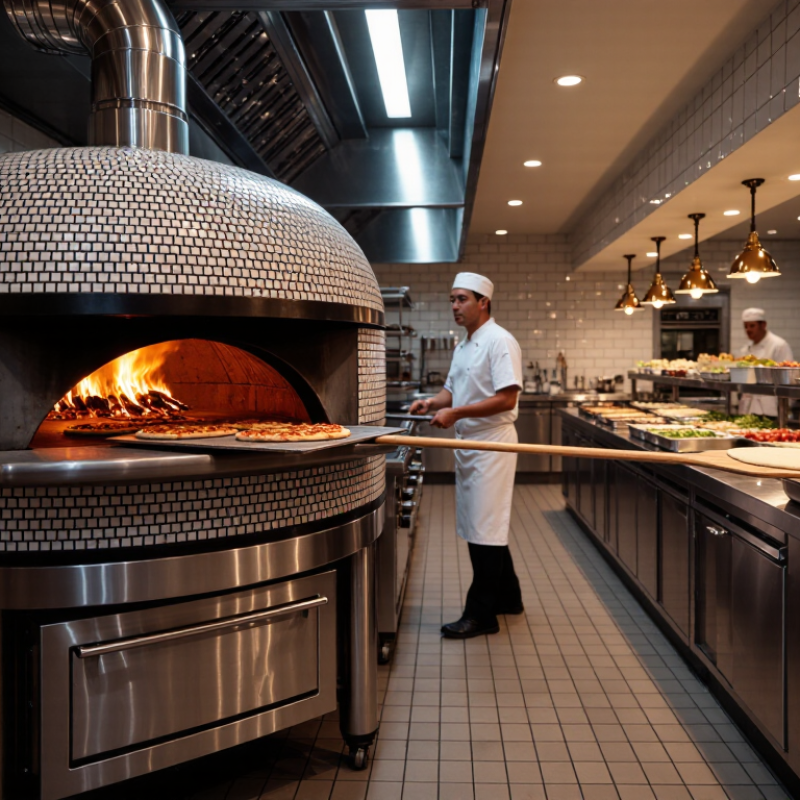
What a Gas Brick Oven Is and How It Works
A gas brick oven combines a gas burner with a chamber lined in dense refractory materials. The burner heats the brick floor and walls, while the flame and hot surfaces cook food through radiant heat. A flue carries combustion gases out and helps maintain airflow. In practice, the operator adjusts the burner, then checks the deck temperature with an oven thermometer; the air can feel hot before the bricks are ready. The first bake is rarely perfect.
Once heated, the masonry stores warmth and releases it gradually. That helps a busy kitchen cook successive pizzas without waiting for a full reheating cycle, though opening the door too often can still drop the temperature. Gas offers adjustable heat, but the oven’s response depends on burner placement, brick thickness, and maintenance. ENERGY STAR reports that certified commercial ovens are about 20% more energy efficient than standard models. That benchmark covers commercial ovens broadly, not every gas brick oven, so compare verified specifications rather than assuming the same savings. Small details matter. A cool patch on the deck can produce a pale crust, even when the flame looks strong.
Why Choose a Gas Brick Oven for Your Business?
A gas brick oven uses a gas burner to heat its masonry floor and dome. The bricks store heat and release it as radiant and conductive heat, helping cook food evenly. Gas provides controllable heat, while the heated masonry supplies the cooking surface.
Typical Cooking Temperature Ranges
Illustrative target ranges in °C. Actual temperatures vary by recipe, oven design, and cooking method.
How Gas Heating Affects Cooking Speed and Temperature Control
A gas-fired brick oven can help a busy kitchen recover heat between orders. Its burner adds heat, while the brick floor stores energy for dough and toppings. When several pizzas go in one after another, that stored warmth matters. Bake times may be shorter, but results depend on oven size, insulation, burner output, and how often the door opens.
Gas heating lets staff adjust the flame during service. Lower it if cheese browns too quickly; raise it when repeated batches cool the chamber. Use a reliable thermometer, and pay attention to the cooking surface, not only the air reading. Air temperature can rebound before the floor does. It is not magic. Hot spots and uneven loading still require attention.
Tips: Preheat fully, then test a small pizza before peak service. Note the flame setting, bake time, and floor temperature. Rotate pies if one side browns faster. Keep a simple log for different doughs and toppings. Check the burner and ventilation regularly, and follow the oven’s operating guidance. Staff may need practice; real kitchens are rarely perfectly consistent.
Why Choose a Gas Brick Oven for Your Business? — How Gas Heating Affects Cooking Speed and Temperature Control | Operating Dimension | How Gas Heating Works | Potential Business Effect |
| Heat adjustment | Burner output can generally be adjusted through the oven’s controls; the exact control method depends on the model. | Staff can change heat input without tending a solid-fuel fire, supporting a more straightforward routine during service. |
| Temperature response | The burner responds to control changes, but the brick or refractory cooking surface heats and cools more gradually because it stores heat. | Flame adjustment does not instantly change the floor temperature. Allow time for the oven to stabilize before judging cooking conditions. |
| Preheating | Preheat time depends on factors such as oven size, refractory mass, burner capacity, starting temperature, and installation. | A gas burner does not eliminate the time needed to heat the cooking surface. Follow the manufacturer’s preheating guidance and verify the floor temperature. |
| Cooking speed | Cooking time is determined by the recipe, food thickness, oven temperature, heat distribution, and loading—not by fuel type alone. | A suitable operating temperature can support fast cooking, but businesses should test menu items in their own oven rather than assume a fixed time advantage. |
| Heat distribution | Burner location and oven design affect the balance of heat across the floor and cooking chamber. | Check for hot and cool areas during commissioning. Positioning or rotating food may be needed for consistent results. |
| Recovery after loading | Recovery depends on the oven’s stored heat, burner capacity, door opening, and the quantity and temperature of food loaded. | For busy periods, monitor cooking-surface temperature and avoid overloading the oven beyond its designed capacity. |
| Operating routine | Gas-fired operation avoids routine solid-fuel loading and ash removal, although cleaning and equipment checks are still required. | This can simplify daily workflows. Staff should follow the oven’s cleaning, inspection, and maintenance instructions. |
| Installation and safety | A gas oven requires an appropriate gas supply, compliant installation, and ventilation suited to the appliance and local requirements. | Confirm utility capacity and applicable codes with qualified professionals before purchase or installation. |
Operational Benefits for Commercial Food Businesses
A gas-fired brick oven can help a commercial kitchen manage heat during a busy service. After preheating, its stone floor holds warmth and cooks pizzas with a crisp base. When orders arrive in quick succession, adjustable gas heat can make temperature recovery easier to manage than tending a live wood fire. Less waiting.
That steadier routine may help staff coordinate toppings, baking, and handoff during a rush. A cook can use a visible temperature gauge and a simple check of the crust, rather than relying only on experience. Results still depend on dough, oven loading, and operator training. The oven will not fix a crowded station or poor prep.
For owners, predictable operation can make shift planning and staff training more straightforward. Gas supply and ventilation requirements should be checked before installation, and burners, stone surfaces, and seals need regular inspection. Small faults matter; uneven heat can slow orders and waste ingredients. There is a trade-off, too: gas offers control, but it still takes practice to balance floor and dome temperatures. A short bake log can help teams spot patterns and adjust settings across different service periods.
Which Business Types Benefit Most from a Gas Brick Oven
Gas brick ovens are a strong fit for pizzerias serving a steady stream of pies. Their heated masonry floor can help cook crisp bases, while gas controls let staff adjust heat during busy shifts. That matters when lunch orders arrive in a rush. The oven still needs skilled operation; turning a pie too late can leave one side darker.
Bakeries and restaurants with bread, flatbreads, or roasted dishes on the menu may benefit too. A brick oven can support several products, but its temperature and cooking surface must match the menu. Hotels and larger food-service kitchens may value its capacity during peak service. Small cafés can use one as well, though the installation cost and space may be hard to justify for a short menu. It is not a fit for every kitchen.
Tips: Track cook times and floor temperatures during service. Test your busiest menu items before committing. Check ventilation, fuel access, cleaning needs, and staff training with qualified installers; I’ve seen these practical details get overlooked.
Key Factors to Assess Before Choosing and Installing One
A gas brick oven can suit a business that needs steady heat and a distinctive baked finish, but capacity must match real demand. Estimate peak-hour orders, not just average daily sales. Check the cooking surface size, burner output, and how quickly the oven recovers heat between batches. A crowded oven can slow service. Measure twice. Also consider whether staff can load and unload food safely during a rush.
Tips: Before committing, sketch the oven’s footprint on the floor. Include space for doors, prep work, and staff movement. Ask the supplier for operating and maintenance details, then compare them with your menu and expected volume.
Installation needs careful planning. Confirm that the building can support the oven’s weight and that the route through doors and corridors is wide enough. Check gas-line capacity, ventilation, flue placement, and required clearances against the oven specifications. A qualified installer should assess the site and connect the appliance. These details are easy to underestimate, especially in an older kitchen. Allow room for routine cleaning and burner access, too; a beautiful oven is less useful when service work requires moving half the kitchen. Thermometer readings and a short trial service can help reveal uneven heat before opening, though one test will not predict every busy shift.









