

News

Miro: A New Standard in Responsible Innovation

Miro: A New Standard in Responsible Innovation The Miro monitor arm is setting new benchmarks in sustainability. It offers a high-performance solution without compromising on environmental responsibility. Designed with careful material selection, local sourcing, and longevity in mind, Miro’s responsible approach to design and unique manoeuvrability set it apart from the competition. Sustainable Choices Miro is crafted from energy-efficient materials with a lower carbon impact....

Read more
HSE Advisor

Role Purpose Support in the development, implementation and maintenance of the company’s Health, Safety & Environmental policies, processes, operational procedures, and standards.  Ensuring best practice and championing a continually improving HSE culture within the business. Key Responsibilities Liaise with and provide support to all areas of the business to eliminate, mitigate or reduce identified HSE exposures. Partner with the production management team and team leaders,...

Read more
CMD Ltd LAUNCHES 48-HOUR TURNAROUND ON BETATRAK® RAPID ORDERING SERVICE

CMD Ltd, the specialist in power distribution systems, workstation power and monitor arms, has launched a rapid ordering service for its Betatrak® underfloor powertrack distribution systems and accessories, with a commitment to delivering within 48-hours of an approved purchase order*. The service enables customers to order up to 50 lengths of Standard or Clean Earth (C/E) low noise Betatrak, along with up to 25 feed...

Read more

CMD INVESTS £1/4 MILLION IN NEW MACHINE AS PART OF FACTORY UPGRADE

We have invested in a new £1/4m TRUMPF CNC metal punch as part of an asset renewal strategy for our UK manufacturing capability. The new machine will be used in the production of a wide variety of our power distribution systems and workstation power products at our Rotherham factory. Suitable for handling sheet metal between 0.9mm and 3.0mm thick, the new machine will replace one...

Read more

CMD CATALOGUE PROVIDES TECHNICAL POWER DISTRIBUTION GUIDE

CMD Ltd has released a new catalogue, providing an easy to follow technical guide to our power distribution systems and plug and play desk modules. Detailing CMD’s full range of UK-manufactured power distribution systems and plug and play desk modules, the catalogue will be a helpful source of information to M&E engineers and contractors alike to understand how our power distribution systems connect together and...

Read more

Power Distribution Catalogue
CMD Ltd PLAYS ESSENTIAL ROLE IN ELECTRICAL FIT OUT AT LONDON’S PRESTIGIOUS OFFICE DEVELOPMENT

CMD Ltd, specialist in workplace connectivity and ergonomic solutions, has provided a flexible and high-quality power distribution network for The Ray, a prestigious office development in London’s Farringdon. Well-known for being the former site of The Guardian newspaper, The Ray now stands as an 83,000ft² office development characterised by a modernised warehouse aesthetic, with level two now occupied by a global social media company. The...

Read more

The Ray
CMD plugs in to european opportunity with Schuko Capsule unit launch

CMD Ltd, the specialist in power and connectivity solutions for commercial environments, has launched a Schuko version of its popular fixed format Capsule workstation power module for export to mainland Europe and beyond. A popular on desk power module comprising two sockets and dual USB (type A and C) chargers, CMD’s Capsule unit is already widely specified in the UK as an off-the-shelf workstation power...

Read more

CMD White Schuko Capsule Desk Power Module
CMD LTD EXTENDS MONITOR ARM RANGE WITH THE LAUNCH OF REACH PLUS

CMD Ltd, the specialist in ergonomic and connectivity solutions for commercial interiors, has completed its Reach monitor arm range with the launch of the Reach Plus. Available in single or dual screen options, the Reach Plus has been designed to provide an ideal solution for both single and dual screen workstation configurations, or can be used with next generation of large format curved screens. Suitable...

Read more

CMD Ltd DEMONSTRATES THE ART OF POWER DISTRIBUTION AT THE UNIVERSITY OF WARWICK

CMD Ltd, the specialist in workplace connectivity and ergonomic solutions, has provided Betatrak busbar power distribution and a range of electrical accessories for two major capital investment projects at the University of Warwick. Designed by Fielden Clegg Bradley Studios, the £33 million Faculty of Arts building is a showpiece development comprising four interconnected structures set around a central atrium, which will enable inter-disciplinary collaboration across...

Read more

University of Warwick
CMD BRINGS HARMONY TO COVENTRY UNIVERSITY RESEARCH FACILITIES

CMD Ltd, the specialist in power distribution solutions and workstation power and ergonomics, has provided under desk and on desk power modules for the refurbishment of three Coventry University research buildings. Located on Coventry University Technology Park, a business park designed to encourage collaboration between the university and knowledge-based businesses, the three buildings are being repurposed as office accommodation for university research teams. The refurbishment...

Read more

Coventry University

Why Choose a CNC Machining Trainer for Your Business?

Choosing a CNC Machining Trainer can strengthen production skills, reduce avoidable errors, and improve confidence on the shop floor. It gives operators a controlled space to practice tool offsets, workholding, feeds, speeds, and program verification before touching valuable material. That matters when one incorrect coordinate can damage a fixture, scrap a part, or stop a production cell.

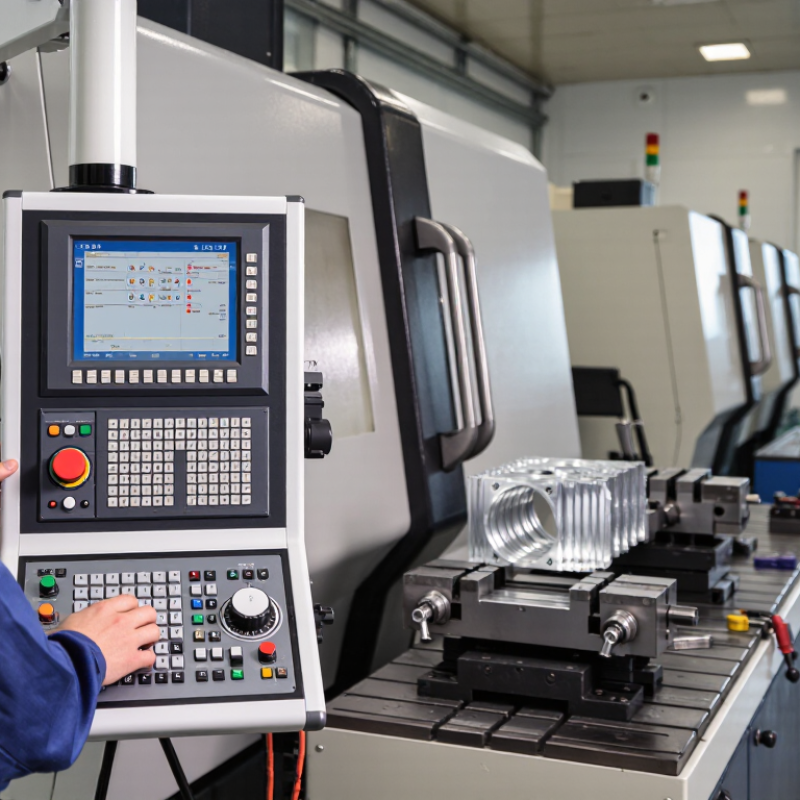
CNC educator Mike Lynch is often associated with a practical training principle: “The machine does exactly what it is told.” That idea remains highly relevant. A capable trainer helps employees understand why a machine responds poorly, rather than encouraging them to memorize button sequences. Learners can simulate a toolpath, inspect a collision warning, and adjust a cutting parameter with less pressure. Small details matter here. A visible vise, a labeled control panel, and realistic aluminum workpieces can make training more memorable.

The business value is not automatic. A trainer cannot replace experienced supervision, accurate work instructions, or disciplined maintenance. It also may not reproduce every vibration, tolerance challenge, or material behavior found in production. That limitation deserves attention. Still, regular practice can shorten onboarding and support safer decision-making. Managers can track cycle planning, setup accuracy, inspection habits, and recovery from common mistakes. The strongest results usually come from combining the CNC Machining Trainer with real process data and coaching from skilled machinists. It is not a magic solution. It is a practical bridge between theory and responsible production.

Why Choose a CNC Machining Trainer for Your Business?

Understanding What a CNC Machining Trainer Does

Why Choose a CNC Machining Trainer for Your Business?

A CNC machining trainer turns machine knowledge into repeatable shop-floor skills. They teach operators how to read drawings, select cutting tools, set work offsets, and inspect finished parts. Their work often begins beside the machine, with a dry run and a careful check of the tool path. This practical approach helps employees understand why a small offset error can ruin an otherwise accurate component. A qualified trainer also explains feeds, speeds, clamping, coolant use, and basic G-code logic. Experience matters here. Classroom theory alone rarely prepares someone for vibration, burrs, or a tool that wears sooner than expected.

Tips: Ask the trainer to use your actual materials, drawings, and inspection tools. Request short practice tasks, such as setting a vise or measuring a bore. Keep training records, but review real production results too.

A useful trainer does more than demonstrate buttons. They watch how employees prepare jobs, identify unsafe habits, and encourage questions before mistakes become expensive. They can help create setup sheets and simple troubleshooting guides for recurring issues. However, one training session cannot solve every production problem. Some lessons may feel too general, especially when machines, materials, and tolerances differ. That limitation deserves honest review. Businesses should measure progress through setup time, scrap levels, inspection results, and operator confidence. The strongest programs leave room for refresher training and thoughtful improvement.

Key Skills Employees Can Learn from CNC Machining Training

A CNC machining trainer helps employees turn technical drawings into accurate, repeatable parts. Training usually begins with machine safety, coordinate systems, tooling, and workholding. Employees learn why a loose fixture can ruin an entire batch. They also practice checking material edges, tool clearance, and emergency stops before cutting.

Reading drawings is a core skill. Trainees interpret dimensions, tolerances, surface finishes, and datum points. They learn to enter offsets and inspect parts with calipers, micrometers, and height gauges. Small errors matter. A measurement of 0.02 millimeters can affect assembly performance. Employees also study basic G-code and understand how feed rates, spindle speed, and depth of cut influence results.

Practical training should include supervised setup and controlled troubleshooting. Employees may identify chatter, tool wear, poor chip evacuation, or incorrect work offsets. They record adjustments instead of guessing. That habit improves traceability and supports reliable production decisions. Training does not create experts overnight. Some learners still need more practice with complex geometries or tight tolerances. That gap deserves attention, not concealment. A capable trainer explains the reason behind each adjustment, checks the finished part, and encourages employees to question unexpected results. This builds skill, judgment, and confidence on the shop floor.

Why Choose a CNC Machining Trainer for Your Business?

Key Skills Employees Can Learn from CNC Machining Training

CNC machining training helps employees build practical capabilities in machine setup, technical drawing interpretation, G-code, CAM software, measurement, and workplace safety. These competency targets reflect common requirements for CNC operator and machinist roles and can be adapted to a company’s internal assessment standards.

How CNC Training Improves Production Accuracy and Efficiency

Why Choose a CNC Machining Trainer for Your Business?

A CNC machining trainer helps operators build accuracy through controlled, repeatable practice. Training covers tool selection, workholding, offsets, feeds, and speed adjustments. These details directly affect surface finish and dimensional stability. On a busy production line, a small offset mistake can create several rejected parts. A trainer teaches operators to check measurements before problems spread. They learn to use calipers, micrometers, and inspection records correctly. This reduces guesswork and supports consistent production quality.

Efficiency improves when operators understand the entire machining process. They can identify unusual vibration, excessive tool wear, or unstable cutting sounds earlier. Faster troubleshooting means less machine downtime. Practical training also reduces unnecessary setup changes and material waste. A strong program should include supervised machine operation and realistic production tasks. Theory alone is not enough. However, training plans are rarely perfect. Some operators may need more practice with programming, while others need help reading technical drawings. Regular feedback reveals these gaps.

Tips: Use sample parts with clear tolerance requirements. Measure each part after machining, then compare the results with the drawing. Ask operators to explain every adjustment. Keep short records of errors, tool life, and cycle time. Review these records weekly. Do not rush the assessment. A faster operator is not always a more efficient one. Safety checks and quality verification should remain part of every training exercise.

Factors to Consider When Choosing a CNC Machining Trainer

Why Choose a CNC Machining Trainer for Your Business?

Factors to Consider When Choosing a CNC Machining Trainer

Choosing a CNC machining trainer affects productivity, safety, and employee confidence. Look for practical shop experience, not only classroom knowledge. A capable trainer should explain tool offsets, workholding, cutting speeds, and inspection methods clearly. They should also understand your machines, materials, and production targets.

Ask how much hands-on practice each learner receives. A polished demonstration can still hide weak teaching. Trainees should set work coordinates, load tools, read drawings, and correct realistic machining errors. Small details matter. Check whether the trainer teaches safe startup routines and explains why mistakes occur. Request references, course outlines, and measurable assessment methods before making a decision.

The best trainer adapts lessons to your team’s skill levels. An operator may need different support than a programmer or supervisor. Consider class size, training hours, travel requirements, and follow-up assistance. Strong trainers review sample parts and recommend improvements without promising unrealistic results. Cost deserves attention, but the cheapest option may create repeat errors and wasted material. Even experienced teams need refreshers. I have seen training plans fail when they focused on machine buttons instead of decision-making. A better program connects every setting to part quality, cycle time, and inspection evidence.

Measuring the Business Value of CNC Machining Training

Why Choose a CNC Machining Trainer for Your Business?

Measuring the Business Value of CNC Machining Training

A CNC machining trainer should be evaluated like any other business investment: through measurable operational change. In a real workshop, value appears in shorter setup times, fewer rejected parts, and safer machine operation. A skilled operator may reduce programming errors before material reaches the cutting stage. That difference can protect expensive stock and keep delivery schedules realistic. It also improves confidence when employees handle unfamiliar materials or complex toolpaths. Still, training is not a magic fix. Poor tooling, unclear drawings, or weak scheduling can limit the results.

Track training value with simple figures. Compare setup time before and after instruction. Record scrap rates, machine downtime, inspection failures, and overtime hours. One practical review may show a 15-minute saving on every setup. Across 120 monthly jobs, that becomes significant capacity. However, some gains are difficult to isolate. Our first estimate might look too optimistic if production volume changes. Review the numbers after 30, 60, and 90 days, then adjust the training plan.

Tips: Set one baseline before training. Use actual shop-floor data. Ask operators what still feels unclear. Refresh skills when new materials, controls, or inspection demands appear. Keep records that supervisors and financial teams can understand. Small improvements often reveal the strongest business case.