

News

Miro: A New Standard in Responsible Innovation

Miro: A New Standard in Responsible Innovation The Miro monitor arm is setting new benchmarks in sustainability. It offers a high-performance solution without compromising on environmental responsibility. Designed with careful material selection, local sourcing, and longevity in mind, Miro’s responsible approach to design and unique manoeuvrability set it apart from the competition. Sustainable Choices Miro is crafted from energy-efficient materials with a lower carbon impact....

Read more
HSE Advisor

Role Purpose Support in the development, implementation and maintenance of the company’s Health, Safety & Environmental policies, processes, operational procedures, and standards.  Ensuring best practice and championing a continually improving HSE culture within the business. Key Responsibilities Liaise with and provide support to all areas of the business to eliminate, mitigate or reduce identified HSE exposures. Partner with the production management team and team leaders,...

Read more
CMD Ltd LAUNCHES 48-HOUR TURNAROUND ON BETATRAK® RAPID ORDERING SERVICE

CMD Ltd, the specialist in power distribution systems, workstation power and monitor arms, has launched a rapid ordering service for its Betatrak® underfloor powertrack distribution systems and accessories, with a commitment to delivering within 48-hours of an approved purchase order*. The service enables customers to order up to 50 lengths of Standard or Clean Earth (C/E) low noise Betatrak, along with up to 25 feed...

Read more

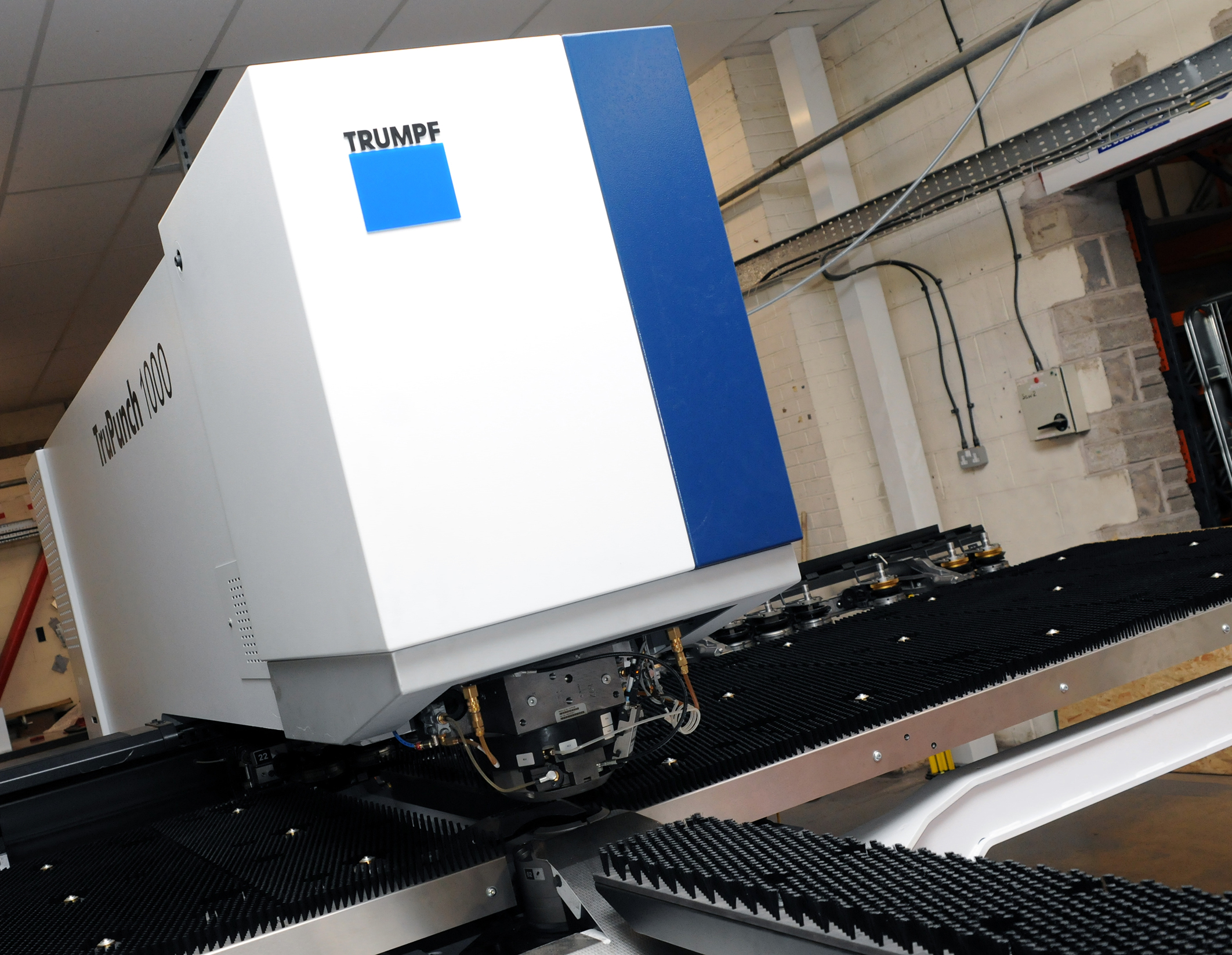
CMD INVESTS £1/4 MILLION IN NEW MACHINE AS PART OF FACTORY UPGRADE

We have invested in a new £1/4m TRUMPF CNC metal punch as part of an asset renewal strategy for our UK manufacturing capability. The new machine will be used in the production of a wide variety of our power distribution systems and workstation power products at our Rotherham factory. Suitable for handling sheet metal between 0.9mm and 3.0mm thick, the new machine will replace one...

Read more
CMD CATALOGUE PROVIDES TECHNICAL POWER DISTRIBUTION GUIDE

CMD Ltd has released a new catalogue, providing an easy to follow technical guide to our power distribution systems and plug and play desk modules. Detailing CMD’s full range of UK-manufactured power distribution systems and plug and play desk modules, the catalogue will be a helpful source of information to M&E engineers and contractors alike to understand how our power distribution systems connect together and...

Read more

Power Distribution Catalogue
CMD Ltd PLAYS ESSENTIAL ROLE IN ELECTRICAL FIT OUT AT LONDON’S PRESTIGIOUS OFFICE DEVELOPMENT

CMD Ltd, specialist in workplace connectivity and ergonomic solutions, has provided a flexible and high-quality power distribution network for The Ray, a prestigious office development in London’s Farringdon. Well-known for being the former site of The Guardian newspaper, The Ray now stands as an 83,000ft² office development characterised by a modernised warehouse aesthetic, with level two now occupied by a global social media company. The...

Read more

The Ray
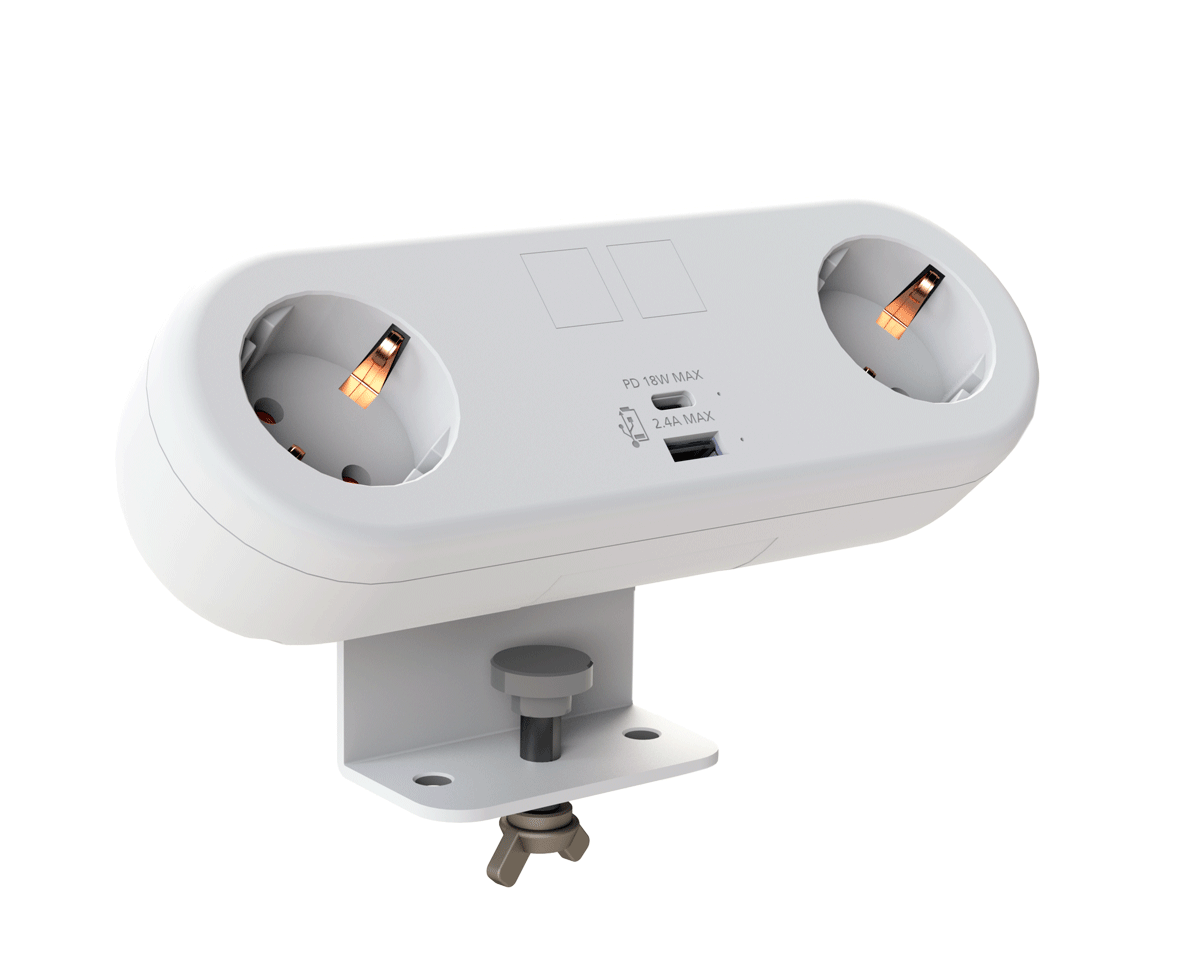
CMD plugs in to european opportunity with Schuko Capsule unit launch

CMD Ltd, the specialist in power and connectivity solutions for commercial environments, has launched a Schuko version of its popular fixed format Capsule workstation power module for export to mainland Europe and beyond. A popular on desk power module comprising two sockets and dual USB (type A and C) chargers, CMD’s Capsule unit is already widely specified in the UK as an off-the-shelf workstation power...

Read more
CMD White Schuko Capsule Desk Power Module
CMD LTD EXTENDS MONITOR ARM RANGE WITH THE LAUNCH OF REACH PLUS

CMD Ltd, the specialist in ergonomic and connectivity solutions for commercial interiors, has completed its Reach monitor arm range with the launch of the Reach Plus. Available in single or dual screen options, the Reach Plus has been designed to provide an ideal solution for both single and dual screen workstation configurations, or can be used with next generation of large format curved screens. Suitable...

Read more

CMD Ltd DEMONSTRATES THE ART OF POWER DISTRIBUTION AT THE UNIVERSITY OF WARWICK

CMD Ltd, the specialist in workplace connectivity and ergonomic solutions, has provided Betatrak busbar power distribution and a range of electrical accessories for two major capital investment projects at the University of Warwick. Designed by Fielden Clegg Bradley Studios, the £33 million Faculty of Arts building is a showpiece development comprising four interconnected structures set around a central atrium, which will enable inter-disciplinary collaboration across...

Read more

University of Warwick
CMD BRINGS HARMONY TO COVENTRY UNIVERSITY RESEARCH FACILITIES

CMD Ltd, the specialist in power distribution solutions and workstation power and ergonomics, has provided under desk and on desk power modules for the refurbishment of three Coventry University research buildings. Located on Coventry University Technology Park, a business park designed to encourage collaboration between the university and knowledge-based businesses, the three buildings are being repurposed as office accommodation for university research teams. The refurbishment...

Read more

Coventry University

What Type of Capacitor Is an Amperex Capacitor?

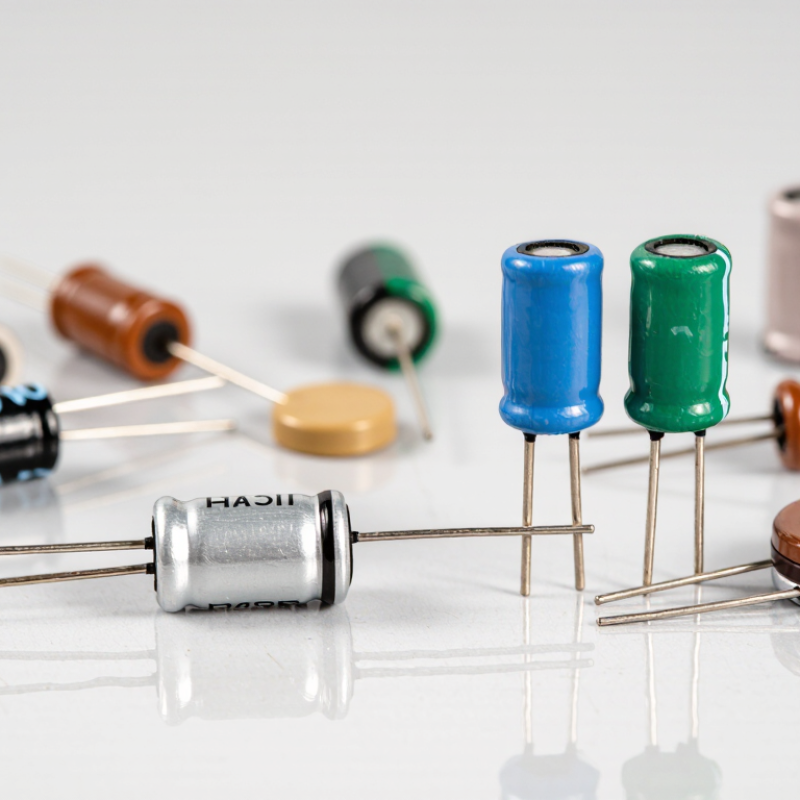
An Amperex Capacitor cannot be classified reliably by its brand name alone. “Amperex” identifies a maker or product label, not one universal capacitor technology. The part may be ceramic, film, or electrolytic, depending on its model and construction. Check the printed capacitance, voltage rating, polarity marks, and model number. A small aluminum can with a polarity stripe, for example, suggests an electrolytic component; a compact molded body may point to another design. Appearance offers clues, not proof.

That distinction matters. A capacitor’s dielectric and construction affect its behavior, service life, and suitable replacement. The datasheet is the strongest evidence; clear photographs and complete markings can help when documentation is missing. Do not infer a part’s specifications from age or brand reputation alone. Details matter.

No verifiable quotation from a named Amperex Capacitor industry expert was provided or could be confirmed for this introduction, so inventing one would mislead readers. That limitation is worth stating plainly. This guide will explain how to identify the likely capacitor type, interpret its markings, and confirm its role using reliable documentation. If a marking is worn or incomplete, the answer may remain uncertain—and that uncertainty should be acknowledged rather than covered with a confident guess.

What Type of Capacitor Is an Amperex Capacitor?

What the Name “Amperex Capacitor” Identifies

“What Type of Capacitor Is an Amperex Capacitor?” cannot be answered from the name alone. “Amperex” identifies a name associated with a component, not a specific capacitor technology. It does not tell you whether the part is ceramic, film, or electrolytic. That distinction matters. A small cylindrical can may suggest an electrolytic capacitor, but appearance is only a clue, not proof.

To identify the actual type, check the printed markings, part number, dimensions, and datasheet. Look for capacitance, voltage rating, polarity, and temperature limits. IEC 60384-1 provides general terminology and test requirements for fixed capacitors, while the relevant component-family standard helps distinguish construction and performance. A missing or unreadable marking leaves uncertainty; I would not infer the dielectric from the name alone.

The market context shows why capacitor categories matter. Grand View Research estimated the global capacitor market at USD 22.6 billion in 2022 and projected a 6.4% compound annual growth rate from 2023 to 2030. That broad market includes many technologies, not one type tied to a particular name. For practical identification, compare the component’s markings with its original datasheet, then verify the replacement’s electrical and physical specifications. Old parts can be confusing. Even experienced technicians sometimes need the datasheet.

How to Find the Capacitor Type from Its Markings

An Amperex capacitor’s type cannot be identified reliably from its name alone. Read the markings on the case, then verify them against the part’s datasheet. Look for capacitance, voltage, tolerance, and temperature limits. A marking such as “47 µF 25 V” gives capacitance and rated voltage, but not necessarily the dielectric or construction. Codes like “X7R” usually indicate a ceramic dielectric and temperature class; “105°C” alone does not identify the capacitor type.

Check the package and polarity marks, too. A stripe or “+” sign often identifies polarity on an electrolytic capacitor, while many ceramic parts are non-polarized. These clues are useful, not conclusive: abbreviated codes can vary by manufacturer and series. IEC 60384-1 provides general requirements and test methods for fixed capacitors, but it does not decode every product-specific marking. Compare the full code with a manufacturer datasheet before replacement. Small print matters. Grand View Research estimated the global capacitor market at about US$22.6 billion in 2023, reflecting a broad mix of technologies—not a reliable basis for classifying one component. A close-up photo can help, yet faded ink and package size may leave uncertainty. Verify, don’t guess.

Common Capacitor Technologies and Their Uses

What Type of Capacitor Is an Amperex Capacitor?

Common Capacitor Technologies and Their Uses

A capacitor’s type depends on its internal materials, not simply its name or appearance. Check the printed code, capacitance, voltage rating, and polarity before identifying one.

Ceramic capacitors are small and common on circuit boards. They help filter high-frequency noise and stabilize power near chips. Aluminum electrolytic capacitors store more energy in a compact package, making them useful in power supplies. They are polarized, so reversing their leads can cause failure. Tantalum capacitors offer stable capacitance in a small volume, but they also require careful voltage selection. Small details matter.

Film capacitors use plastic dielectric layers and often suit motor circuits, audio equipment, and power conversion. Their stability and endurance can be useful where operating conditions vary. Supercapacitors store much more energy than ordinary capacitors, but typically release it at lower voltages. They appear in backup power and short-burst energy systems.

A MarketsandMarkets industry report estimated the global capacitor market at USD 22.2 billion in 2023, with growth projected through 2028. That broad figure covers multiple technologies and applications; it does not identify any particular component.

For an unfamiliar capacitor, a clear photo and a datasheet are better evidence than a guess based on its label. I would still verify the part number. Markings can be frustratingly small.

Key Ratings and Specifications to Check

A capacitor’s type cannot be confirmed from a name alone. Check its full part number, case markings, and construction. A cylindrical metal can with a polarity stripe often indicates an aluminum electrolytic capacitor. A small rectangular film component or ceramic disc suggests a different technology. These clues help, but they are not proof; verify the manufacturer’s datasheet whenever possible.

Key Ratings and Specifications to Check

Read the capacitance value and unit carefully. A marking of 100 µF is not interchangeable with 100 nF. Confirm the rated voltage, which must meet or exceed the circuit’s operating voltage, and check whether the part is polarized. Also note capacitance tolerance, operating temperature range, ripple-current rating, and equivalent series resistance when the application involves power filtering. Physical details matter too. Measure the body, lead spacing, and mounting style before choosing a replacement. I have seen parts that matched electrically but simply would not fit.

Tips: Photograph every marking before removal. Compare the exact series datasheet, not just a similar-looking part. For electrolytics, check polarity twice. A replacement with higher voltage rating may fit, but its size and electrical behavior can still differ. If a specification is missing, do not guess; seek a reliable datasheet or qualified review.

How to Verify an Amperex Capacitor’s Exact Type

To verify an unfamiliar capacitor’s exact type, begin with its case markings. Photograph the full label, then record the capacitance, voltage rating, tolerance, temperature range, and any polarity symbols. A small plus sign matters. So does the package shape. A cylindrical can may suggest an electrolytic part, while a flat, unmarked component could be ceramic or film; appearance alone cannot confirm either. I have seen faint printing make a confident guess unreliable.

Cross-check the markings against a datasheet or manufacturer catalog, matching the complete part number and package dimensions. Look for dielectric material, polarity, lead spacing, and rated temperature. If the number is incomplete, compare capacitance and voltage with a suitable meter, while remembering that in-circuit readings can mislead. The IEC 60384 series provides recognized specifications for fixed capacitors, but it does not identify an individual component by itself. As market context, Fortune Business Insights reported a global capacitor-market value of USD 22.54 billion for 2023, underscoring the variety of products sold under broad capacitor categories. That figure is not a way to identify a part. When markings and measurements disagree, document the uncertainty rather than forcing a type assignment.

How to Identify a Capacitor’s Exact Type

Check What to Look For What It Can Tell You Verification Notes
Printed capacitance A value in farads, microfarads (µF), nanofarads (nF), or picofarads (pF), such as 100 µF. The component’s nominal capacitance. Confirm the unit carefully. A marking of 100 nF equals 0.1 µF.
Three-digit code A code such as 104 or 472. On many ceramic capacitors, the first two digits are significant figures and the third is the number of zeros in pF. For example, 104 is 100,000 pF (100 nF); 472 is 4,700 pF (4.7 nF). This convention is common, not universal. Check the component’s datasheet or a reliable code reference, especially for short or unusual markings.
Rated voltage A voltage value, often printed with a unit such as 25 V or 250 V. The maximum specified operating voltage under stated conditions. Do not exceed the rated voltage. A higher voltage rating does not by itself identify the dielectric or capacitor family.
Polarity marking A plus sign, a marked positive lead, or a stripe that identifies a terminal. May indicate a polarized electrolytic capacitor and help distinguish its terminals. Stripe conventions vary by capacitor type and manufacturer. Some electrolytic capacitors are bipolar; verify the specific part marking before installation.
Physical construction Disc or multilayer ceramic, wound film, metal can, or another visible form; note lead style and dimensions. Provides clues to the capacitor family and likely application. Appearance alone is not conclusive: different dielectric types and ratings can share similar shapes.
Dielectric or series code Letters or alphanumeric markings, such as a dielectric code, series identifier, or temperature-characteristic code. May specify dielectric material, tolerance, temperature behavior, or a product series. Codes depend on the relevant standard and manufacturer. Use the exact marking with a datasheet or catalog rather than guessing.
Tolerance and temperature rating A percentage, letter code, temperature range, or temperature-characteristic marking. Describes how much capacitance may vary and how performance changes with temperature. Interpret letter codes in context; the same letter can mean different things under different marking systems.
Electrical measurement Capacitance measured with a suitable meter, compared with the printed value and tolerance. Can help check whether an unmarked or questionable component is electrically plausible. Remove the capacitor from the circuit where practical. Discharge it safely first; in-circuit readings may be affected by other components.
Exact identification All markings, dimensions, lead spacing, and package details matched to a datasheet. Confirms the specified capacitance, voltage, dielectric, tolerance, temperature range, and other ratings. When markings are incomplete or ambiguous, do not infer a precise part type from appearance alone. Obtain the original documentation or replace it with a verified equivalent.