

News

Miro: A New Standard in Responsible Innovation

Miro: A New Standard in Responsible Innovation The Miro monitor arm is setting new benchmarks in sustainability. It offers a high-performance solution without compromising on environmental responsibility. Designed with careful material selection, local sourcing, and longevity in mind, Miro’s responsible approach to design and unique manoeuvrability set it apart from the competition. Sustainable Choices Miro is crafted from energy-efficient materials with a lower carbon impact....

Read more
HSE Advisor

Role Purpose Support in the development, implementation and maintenance of the company’s Health, Safety & Environmental policies, processes, operational procedures, and standards.  Ensuring best practice and championing a continually improving HSE culture within the business. Key Responsibilities Liaise with and provide support to all areas of the business to eliminate, mitigate or reduce identified HSE exposures. Partner with the production management team and team leaders,...

Read more
CMD Ltd LAUNCHES 48-HOUR TURNAROUND ON BETATRAK® RAPID ORDERING SERVICE

CMD Ltd, the specialist in power distribution systems, workstation power and monitor arms, has launched a rapid ordering service for its Betatrak® underfloor powertrack distribution systems and accessories, with a commitment to delivering within 48-hours of an approved purchase order*. The service enables customers to order up to 50 lengths of Standard or Clean Earth (C/E) low noise Betatrak, along with up to 25 feed...

Read more

CMD INVESTS £1/4 MILLION IN NEW MACHINE AS PART OF FACTORY UPGRADE

We have invested in a new £1/4m TRUMPF CNC metal punch as part of an asset renewal strategy for our UK manufacturing capability. The new machine will be used in the production of a wide variety of our power distribution systems and workstation power products at our Rotherham factory. Suitable for handling sheet metal between 0.9mm and 3.0mm thick, the new machine will replace one...

Read more

CMD CATALOGUE PROVIDES TECHNICAL POWER DISTRIBUTION GUIDE

CMD Ltd has released a new catalogue, providing an easy to follow technical guide to our power distribution systems and plug and play desk modules. Detailing CMD’s full range of UK-manufactured power distribution systems and plug and play desk modules, the catalogue will be a helpful source of information to M&E engineers and contractors alike to understand how our power distribution systems connect together and...

Read more

Power Distribution Catalogue
CMD Ltd PLAYS ESSENTIAL ROLE IN ELECTRICAL FIT OUT AT LONDON’S PRESTIGIOUS OFFICE DEVELOPMENT

CMD Ltd, specialist in workplace connectivity and ergonomic solutions, has provided a flexible and high-quality power distribution network for The Ray, a prestigious office development in London’s Farringdon. Well-known for being the former site of The Guardian newspaper, The Ray now stands as an 83,000ft² office development characterised by a modernised warehouse aesthetic, with level two now occupied by a global social media company. The...

Read more

The Ray
CMD plugs in to european opportunity with Schuko Capsule unit launch

CMD Ltd, the specialist in power and connectivity solutions for commercial environments, has launched a Schuko version of its popular fixed format Capsule workstation power module for export to mainland Europe and beyond. A popular on desk power module comprising two sockets and dual USB (type A and C) chargers, CMD’s Capsule unit is already widely specified in the UK as an off-the-shelf workstation power...

Read more

CMD White Schuko Capsule Desk Power Module
CMD LTD EXTENDS MONITOR ARM RANGE WITH THE LAUNCH OF REACH PLUS

CMD Ltd, the specialist in ergonomic and connectivity solutions for commercial interiors, has completed its Reach monitor arm range with the launch of the Reach Plus. Available in single or dual screen options, the Reach Plus has been designed to provide an ideal solution for both single and dual screen workstation configurations, or can be used with next generation of large format curved screens. Suitable...

Read more

CMD Ltd DEMONSTRATES THE ART OF POWER DISTRIBUTION AT THE UNIVERSITY OF WARWICK

CMD Ltd, the specialist in workplace connectivity and ergonomic solutions, has provided Betatrak busbar power distribution and a range of electrical accessories for two major capital investment projects at the University of Warwick. Designed by Fielden Clegg Bradley Studios, the £33 million Faculty of Arts building is a showpiece development comprising four interconnected structures set around a central atrium, which will enable inter-disciplinary collaboration across...

Read more

University of Warwick
CMD BRINGS HARMONY TO COVENTRY UNIVERSITY RESEARCH FACILITIES

CMD Ltd, the specialist in power distribution solutions and workstation power and ergonomics, has provided under desk and on desk power modules for the refurbishment of three Coventry University research buildings. Located on Coventry University Technology Park, a business park designed to encourage collaboration between the university and knowledge-based businesses, the three buildings are being repurposed as office accommodation for university research teams. The refurbishment...

Read more

Coventry University

What Is the Best Type of Solar Lights for Gardens?

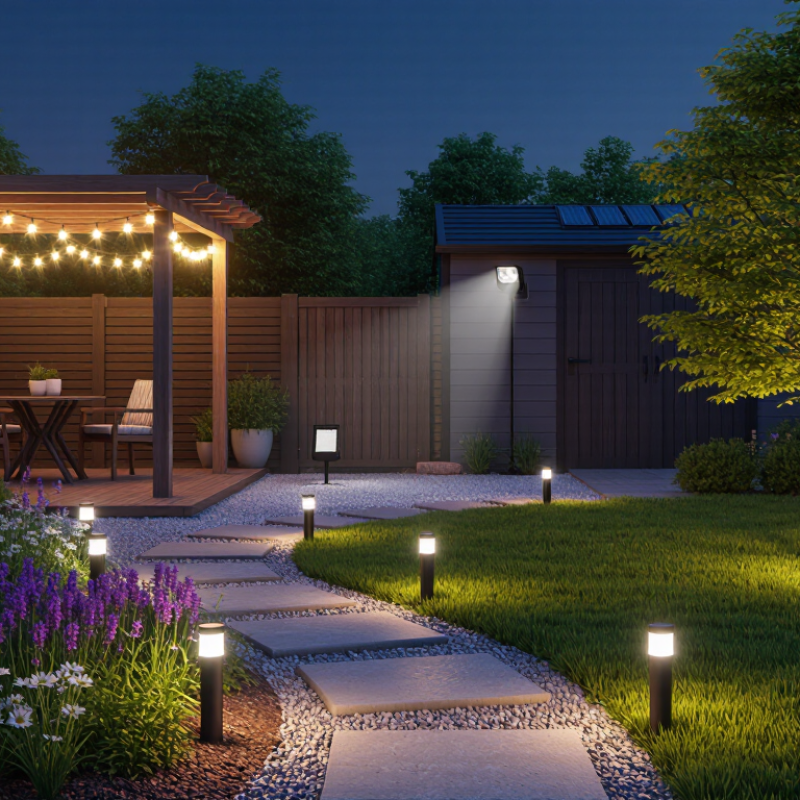
Choosing the best solar lights for a garden depends on more than brightness. The right option must suit the garden’s layout, sunlight, soil, weather, and nighttime purpose. A pathway needs steady, low-glare lighting. A flower bed may benefit from gentle accent lights. Security areas require stronger illumination and wider coverage. One style rarely serves every space well.

Solar lighting consultant James Gallagher explains, “The best garden light is not the brightest one; it is the light that fits the garden’s rhythm.” This view matters when comparing path lights, spotlights, lanterns, string lights, and motion-sensor models. Path lights can guide visitors across uneven paving. Spotlights can highlight a maple tree or stone wall. String lights create warmth around a seating area, but they may offer limited safety lighting. Motion-sensor lights conserve energy near gates and sheds. Small details matter.

In my experience, poor placement causes more disappointment than weak products. A lamp hidden beneath dense leaves may charge poorly. A panel facing a shaded fence may struggle after cloudy days. Battery quality also affects performance during winter. Look for weather-resistant housings, replaceable batteries, efficient LEDs, and adjustable solar panels. Avoid judging a light only by its packaging.

There is no perfect choice.

A useful selection should balance appearance, runtime, brightness, maintenance, and budget. Even then, expectations need adjustment. Solar lights cannot always match wired systems during long, dark nights. However, a thoughtful Solar Lights Garden can still feel safe, welcoming, and carefully designed. The best result comes from testing a few lights before installing many.

What Is the Best Type of Solar Lights for Gardens?

Understanding How Garden Solar Lights Work

What Is the Best Type of Solar Lights for Gardens?

Understanding How Garden Solar Lights Work

Garden solar lights use a small photovoltaic panel to convert daylight into electricity. That energy charges a rechargeable battery inside the housing. After sunset, a light sensor activates the LED automatically. The best type depends on your garden’s purpose, sunlight, soil, and weather exposure. Path lights suit walkways, while spotlights highlight trees or steps. In my experience, panel placement matters more than brightness claims. A shaded panel can leave even a powerful lamp weak by midnight. Solar lighting is simple, but not effortless.

Tips: Place panels where they receive six to eight hours of direct sunlight. Wipe dust and pollen from the panel every few weeks. Keep tall plants from covering it. Check the battery’s stated chemistry and replace it safely when performance declines. Choose sealed, weather-resistant housing for rainy gardens. Warm-white LEDs usually feel gentler around flowers and seating areas. Cool-white light can reveal details, but sometimes looks harsh.

Observe the lights for several nights before changing the layout. Cloudy weather will reduce charging, and winter sunlight may be weaker. That is normal. However, rapid dimming can indicate a worn battery, dirty panel, or poor placement. I once focused too much on lumen output and ignored shadows from a nearby fence. The result looked disappointing. A smaller light in open sunlight performed better. Good garden lighting balances reliable charging, comfortable brightness, and careful positioning.

What Is the Best Type of Solar Lights for Gardens?

Typical operating time after a full day of direct sunlight varies by garden-light type. Pathway and lantern lights generally provide the longest overnight illumination, while string lights use more closely spaced LEDs and may run for fewer hours.

How garden solar lights work: A photovoltaic panel converts sunlight into electricity during the day, a rechargeable battery stores the energy, and a light sensor switches the LEDs on after dark. Actual runtime depends on sunlight, battery capacity, LED brightness, temperature, and shading.

Comparing Solar Light Types for Different Garden Areas

The best solar garden light depends on the area, not the fixture’s advertised brightness. For paths, low bollard lights create gentle pools of light and reduce glare near steps. Choose models with adjustable heads and wide spacing. The U.S. Department of Energy reports that LEDs use at least 75% less energy and can last up to 25 times longer than incandescent bulbs. That efficiency suits small solar panels and nightly garden use.

Flowerbeds need a different approach. Compact stake lights highlight borders, herbs, and textured leaves without overwhelming them. Use warm light, around 2700–3000K, for a softer appearance.

Spotlights work better for trees, sculptures, and walls. Their narrow beams need careful aiming, because one poorly positioned light can expose cables, windows, or neighboring gardens. It looks harsh.

For seating areas, solar string lights add atmosphere, but they rarely provide enough task lighting. Wall-mounted or security-style units offer stronger illumination around gates and sheds. The U.S. Department of Energy recommends considering lumen output, beam angle, operating time, and battery performance rather than relying on wattage alone. In practice, winter clouds and shaded locations can reduce charging substantially. The International Energy Agency’s Renewables 2024 report also shows solar deployment expanding rapidly worldwide, yet garden systems remain highly site-dependent. A brighter unit is not automatically better. I would test one light for several nights before buying many.

Evaluating Brightness, Battery Life, and Weather Resistance

What Is the Best Type of Solar Lights for Gardens?

Choosing garden solar lights depends on more than appearance. Brightness, battery life, and weather resistance determine whether they remain useful after installation. Path lights usually need moderate brightness, while security-focused fixtures require stronger illumination. In my experience, around 20–100 lumens suits walkways without creating harsh glare. Warm light also makes planting beds feel calmer. I once selected very bright lights, but they made the garden look flat and uncomfortable at night.

Battery performance matters during cloudy weeks. Look for rechargeable batteries with sufficient capacity and a replaceable design. A light that shines brilliantly for one evening may disappoint by midnight. Check the stated runtime carefully, because testing conditions often use strong summer sunlight. Winter performance can be weaker. Place panels where leaves, fences, or branches will not block direct sunlight. Even partial shade can reduce charging noticeably.

Tips: Choose fixtures with at least an IP65 rating for exposed areas, and inspect their seals annually. Wipe dust from panels with a soft, damp cloth. Keep lights away from sprinklers when possible. Test one fixture for several nights before buying many. This small trial may reveal poor charging, weak brightness, or awkward placement. Also, avoid judging performance after a single sunny day. Real gardens are messier.

Matching Light Features to Garden Design and Practical Needs

What Is the Best Type of Solar Lights for Gardens?

Matching Light Features to Garden Design and Practical Needs

The best solar garden light depends on your layout, plants, and evening routines. A narrow path usually suits low, shielded lights. They guide footsteps without competing with flowers or windows. For shrubs and small trees, adjustable spotlights create stronger layers. Aim them carefully, because harsh beams can flatten a garden’s natural shape.

In my own garden tests, warm white light looked calmer than bright white light. It also made stone, bark, and foliage appear more natural. Decorative lanterns work well near seating areas, while string lights add softness above patios. However, they can become visually messy when placed near dense planting. Good design often means using fewer lights than expected.

Practical details matter just as much. Choose panels that receive several hours of direct sunlight each day. A shaded corner may need a separate lighting solution. Check the battery capacity, charging time, and weather-resistance rating.

An IP rating can indicate protection from dust and water, but installation still affects durability. Place fixtures above areas that collect water or leaves. I have learned this the hard way.

Some lights looked attractive in summer but performed poorly during short winter days. Consider replaceable batteries, accessible switches, and gentle brightness before choosing appearance alone.

Choosing the Best Solar Lights for Your Garden Setup

Choosing the Best Solar Lights for Your Garden Setup

The best solar garden light depends on your garden’s layout, sunlight, and purpose. Path lights work well along walkways, while spotlights can highlight trees, pots, or textured walls. For seating areas, choose lights with wider illumination and stable mounting. In my experience, placement matters more than brightness. A powerful lamp still disappoints beneath dense branches.

Check the panel’s exposure during the day. Six hours of direct sunlight usually supports more reliable evening performance, though cloudy weather reduces runtime. Warm white light creates a relaxed atmosphere, while cooler light shows details more clearly. Look for weather-resistant housing, replaceable batteries, and adjustable panels. I once placed several lights too close together, and the garden looked cluttered rather than inviting.

Tips: Clean the panels monthly with a soft, damp cloth. Keep plants from shading them. Test one light for several nights before buying more. Leave small gaps between fixtures. Avoid placing lamps where sprinklers constantly strike them. Motion sensors can save energy near sheds or side paths, but they may feel disruptive beside seating. Solar lights are convenient, yet they are not maintenance-free. Batteries age, panels collect dust, and winter daylight can be insufficient. A slightly dimmer setup may be more practical than chasing maximum brightness.

What Is the Best Type of Solar Lights for Gardens? - Choosing the Best Solar Lights for Your Garden Setup

Solar Light Type Best Garden Use Typical Brightness Typical Runtime Installation Main Advantages Important Limitations
Solar Pathway Lights Walkways, borders, steps, and driveways 10–80 lumens per light 6–12 hours after a full charge Push into soil; usually no wiring required Easy to install, improves visibility, and creates consistent edge lighting Needs suitable spacing and direct sunlight; decorative models may provide limited illumination
Solar Spotlights Trees, sculptures, walls, signs, and architectural features 100–300 lumens per light 6–10 hours after a full charge Ground stake or surface mounting, depending on the design Produces focused light and can highlight attractive garden features Requires careful positioning; shaded locations reduce charging performance
Solar Floodlights Patios, entrances, sheds, larger lawns, and security areas 300–1,500+ lumens per light Motion-activated use can extend available operating time Wall or post mounting; some models use a separate solar panel Wide, bright coverage and useful motion detection for safety More visible and less decorative; high brightness requires stronger charging conditions
Solar String Lights Pergolas, fences, balconies, trees, and entertaining areas Usually low-output decorative lighting 6–12 hours after a full charge Attach with clips, hooks, or ties; no mains cable needed Creates a warm atmosphere and is flexible for irregular spaces Not intended for task lighting; long strings may appear dim in low sunlight
Solar Lanterns Tables, seating areas, porches, and decorative focal points 20–100 lumens per lantern 6–12 hours after a full charge Place on a surface or hang from a suitable support Portable, attractive, and suitable for changing garden layouts Usually offers ambient rather than functional lighting
Solar Deck and Step Lights Stairs, decks, retaining walls, and raised garden edges 10–50 lumens per light 6–10 hours after a full charge Screw, adhesive, or clip mounting, depending on the surface Provides low-level guidance lighting and a neat, integrated appearance Requires a suitable mounting surface and may not illuminate large areas
Solar Water-Resistant Garden Lights Flower beds, ponds, fountains, and exposed outdoor locations Varies by design; commonly 10–150 lumens 6–12 hours after a full charge Ground stake, surface placement, or floating installation Suitable for damp outdoor conditions and adds visual interest around water features Water resistance is not the same as permanent submersion; sealing should be checked regularly
Selection guide: Choose pathway lights for everyday guidance, spotlights for highlighting features, floodlights for security, string lights or lanterns for ambiance, and deck or step lights for safer elevation changes. Actual brightness and runtime vary with panel size, battery capacity, weather, season, shade, and operating mode.