

News

Miro: A New Standard in Responsible Innovation

Miro: A New Standard in Responsible Innovation The Miro monitor arm is setting new benchmarks in sustainability. It offers a high-performance solution without compromising on environmental responsibility. Designed with careful material selection, local sourcing, and longevity in mind, Miro’s responsible approach to design and unique manoeuvrability set it apart from the competition. Sustainable Choices Miro is crafted from energy-efficient materials with a lower carbon impact....

Read more
HSE Advisor

Role Purpose Support in the development, implementation and maintenance of the company’s Health, Safety & Environmental policies, processes, operational procedures, and standards.  Ensuring best practice and championing a continually improving HSE culture within the business. Key Responsibilities Liaise with and provide support to all areas of the business to eliminate, mitigate or reduce identified HSE exposures. Partner with the production management team and team leaders,...

Read more
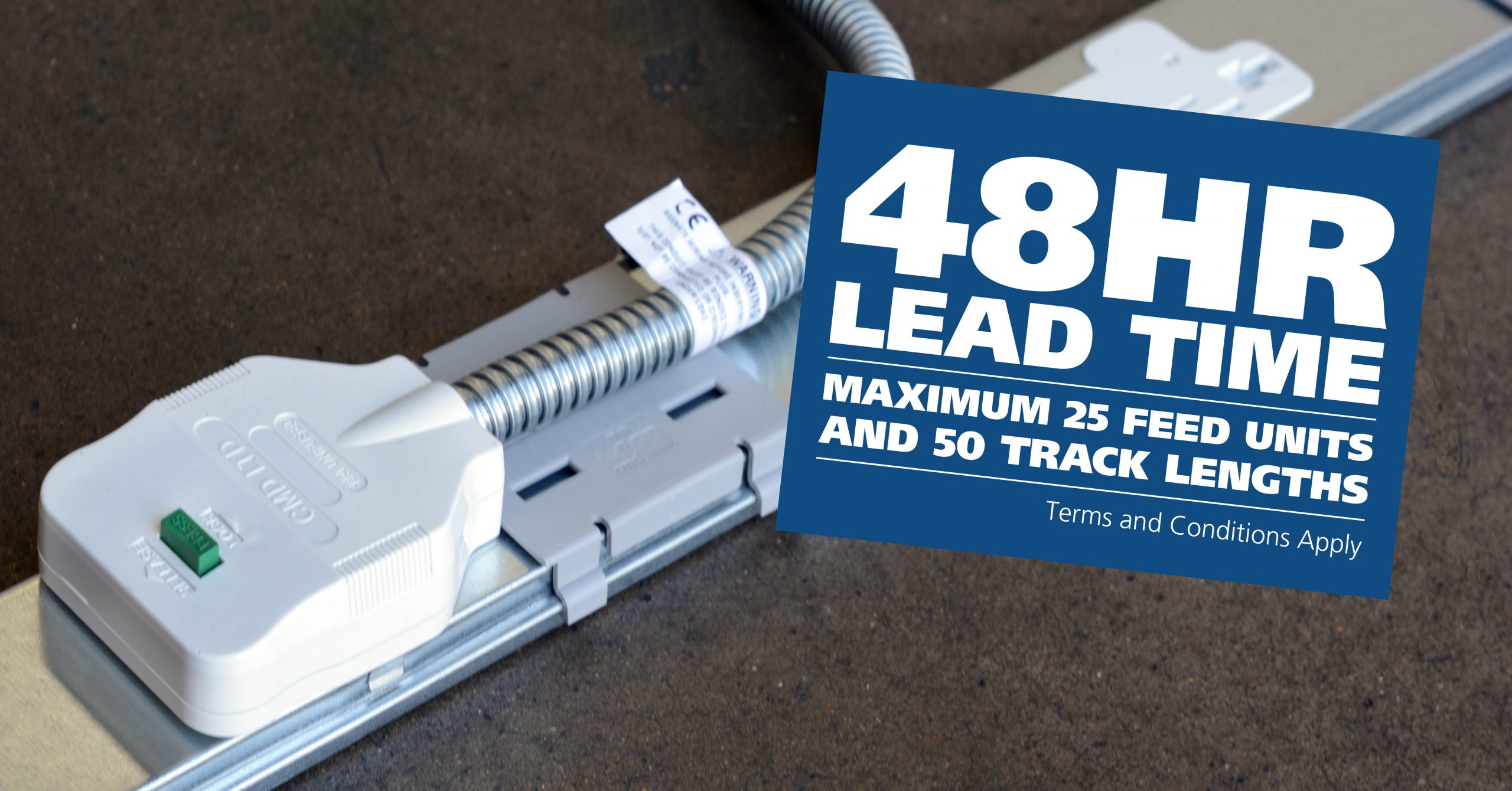
CMD Ltd LAUNCHES 48-HOUR TURNAROUND ON BETATRAK® RAPID ORDERING SERVICE

CMD Ltd, the specialist in power distribution systems, workstation power and monitor arms, has launched a rapid ordering service for its Betatrak® underfloor powertrack distribution systems and accessories, with a commitment to delivering within 48-hours of an approved purchase order*. The service enables customers to order up to 50 lengths of Standard or Clean Earth (C/E) low noise Betatrak, along with up to 25 feed...

Read more
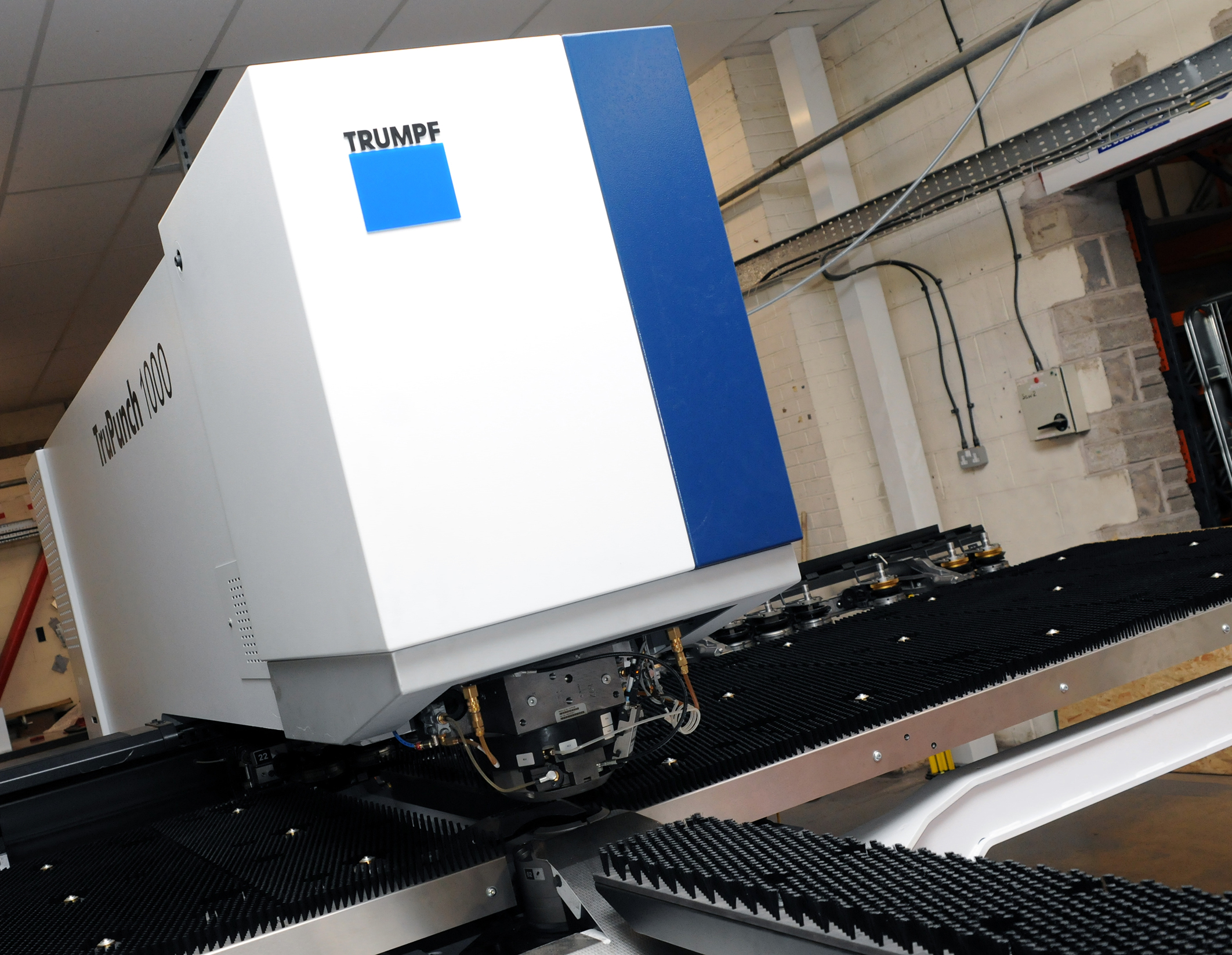
CMD INVESTS £1/4 MILLION IN NEW MACHINE AS PART OF FACTORY UPGRADE

We have invested in a new £1/4m TRUMPF CNC metal punch as part of an asset renewal strategy for our UK manufacturing capability. The new machine will be used in the production of a wide variety of our power distribution systems and workstation power products at our Rotherham factory. Suitable for handling sheet metal between 0.9mm and 3.0mm thick, the new machine will replace one...

Read more
CMD CATALOGUE PROVIDES TECHNICAL POWER DISTRIBUTION GUIDE

CMD Ltd has released a new catalogue, providing an easy to follow technical guide to our power distribution systems and plug and play desk modules. Detailing CMD’s full range of UK-manufactured power distribution systems and plug and play desk modules, the catalogue will be a helpful source of information to M&E engineers and contractors alike to understand how our power distribution systems connect together and...

Read more
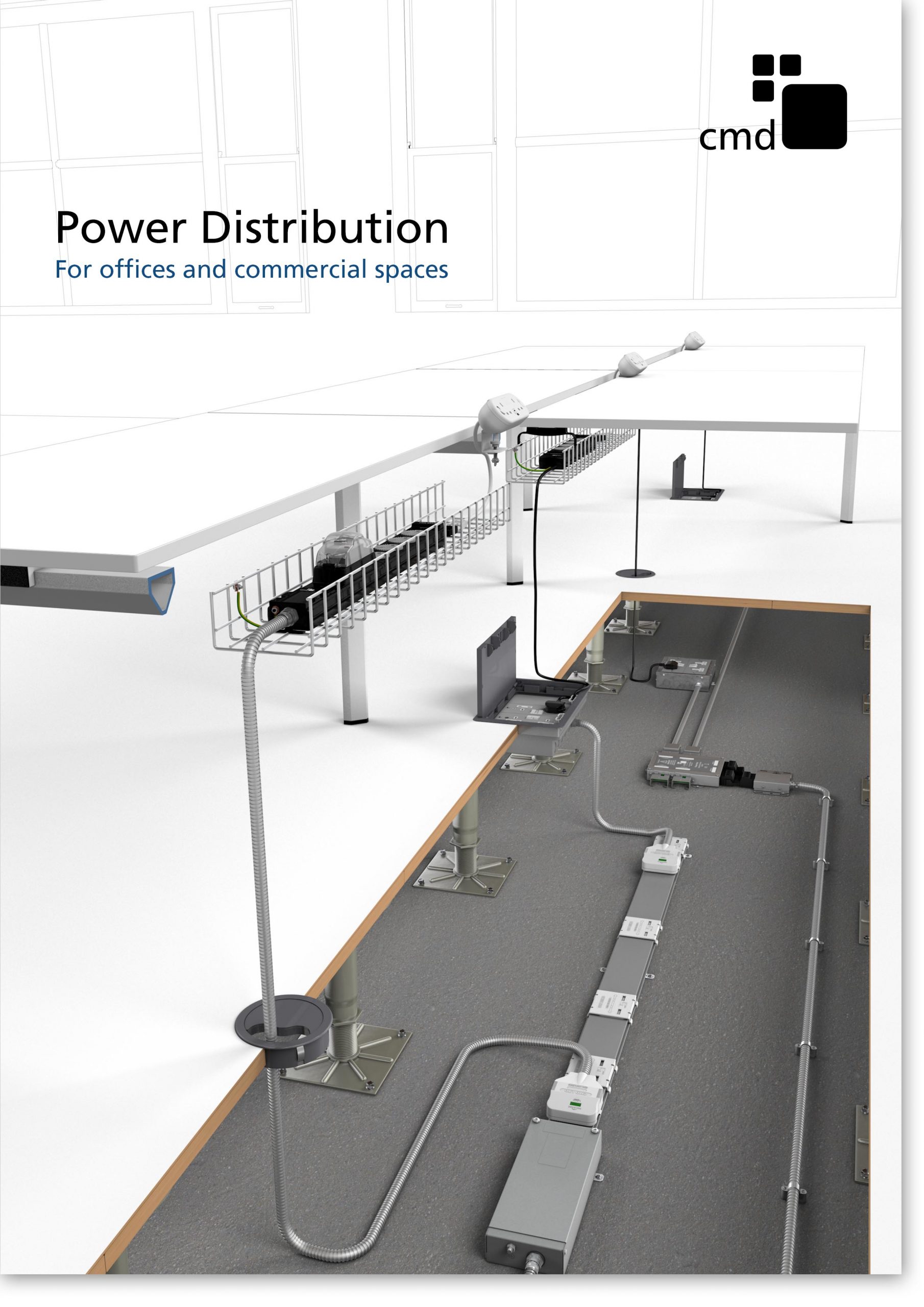
Power Distribution Catalogue
CMD Ltd PLAYS ESSENTIAL ROLE IN ELECTRICAL FIT OUT AT LONDON’S PRESTIGIOUS OFFICE DEVELOPMENT

CMD Ltd, specialist in workplace connectivity and ergonomic solutions, has provided a flexible and high-quality power distribution network for The Ray, a prestigious office development in London’s Farringdon. Well-known for being the former site of The Guardian newspaper, The Ray now stands as an 83,000ft² office development characterised by a modernised warehouse aesthetic, with level two now occupied by a global social media company. The...

Read more

The Ray
CMD plugs in to european opportunity with Schuko Capsule unit launch

CMD Ltd, the specialist in power and connectivity solutions for commercial environments, has launched a Schuko version of its popular fixed format Capsule workstation power module for export to mainland Europe and beyond. A popular on desk power module comprising two sockets and dual USB (type A and C) chargers, CMD’s Capsule unit is already widely specified in the UK as an off-the-shelf workstation power...

Read more
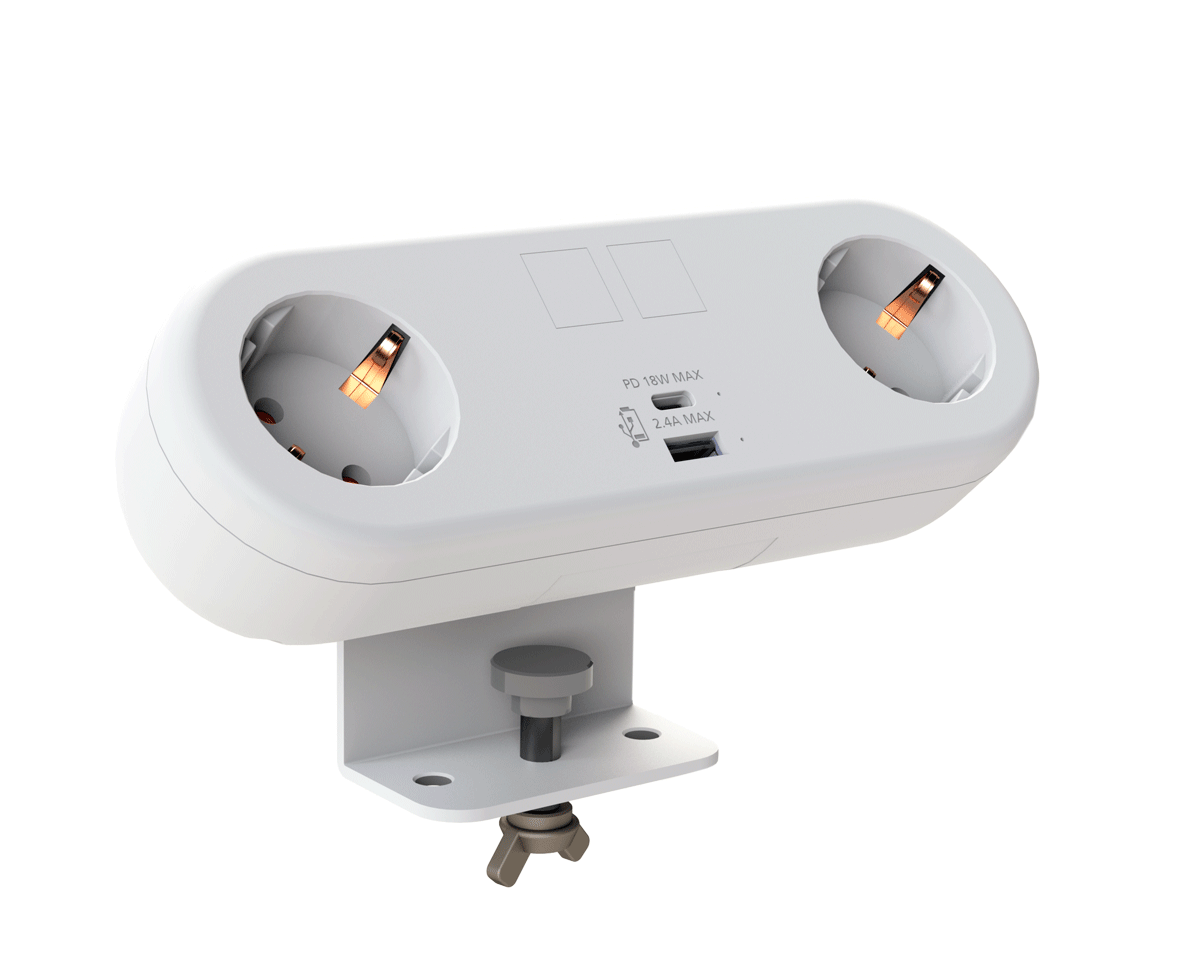
CMD White Schuko Capsule Desk Power Module
CMD LTD EXTENDS MONITOR ARM RANGE WITH THE LAUNCH OF REACH PLUS

CMD Ltd, the specialist in ergonomic and connectivity solutions for commercial interiors, has completed its Reach monitor arm range with the launch of the Reach Plus. Available in single or dual screen options, the Reach Plus has been designed to provide an ideal solution for both single and dual screen workstation configurations, or can be used with next generation of large format curved screens. Suitable...

Read more

CMD Ltd DEMONSTRATES THE ART OF POWER DISTRIBUTION AT THE UNIVERSITY OF WARWICK

CMD Ltd, the specialist in workplace connectivity and ergonomic solutions, has provided Betatrak busbar power distribution and a range of electrical accessories for two major capital investment projects at the University of Warwick. Designed by Fielden Clegg Bradley Studios, the £33 million Faculty of Arts building is a showpiece development comprising four interconnected structures set around a central atrium, which will enable inter-disciplinary collaboration across...

Read more

University of Warwick
CMD BRINGS HARMONY TO COVENTRY UNIVERSITY RESEARCH FACILITIES

CMD Ltd, the specialist in power distribution solutions and workstation power and ergonomics, has provided under desk and on desk power modules for the refurbishment of three Coventry University research buildings. Located on Coventry University Technology Park, a business park designed to encourage collaboration between the university and knowledge-based businesses, the three buildings are being repurposed as office accommodation for university research teams. The refurbishment...

Read more


Coventry University

What Are US Importer of Record Qualification Requirements?

The United States imported approximately $3.3 trillion in goods during 2024, according to the U.S. Census Bureau’s Foreign Trade data. Every shipment therefore carries compliance responsibilities, not merely transportation costs. The company named as importer must identify the goods accurately. It must also support classification, valuation, origin, and admissibility decisions.

US Importer Of Record Qualification is not a single certificate issued by U.S. Customs and Border Protection (CBP). Instead, it reflects practical readiness to meet several connected obligations. CBP’s Importing into the United States guidance emphasizes reasonable care, timely entry information, duty payment, and proper recordkeeping. Importers generally need an importer identification number, often linked to an EIN or CBP-assigned number. They may also need a customs bond, depending on the entry type and transaction value.

The work becomes concrete at the warehouse door. A broker may request a commercial invoice, packing list, product description, country of origin, and supporting permits. The importer remains responsible, even when a licensed broker files the entry. CBP’s Fiscal Year 2024 trade statistics show the scale of enforcement and cargo activity facing the agency. That scale makes weak supplier records risky. It also makes internal review valuable. However, requirements can change by product, entry method, and importer status. Nonresident importers may face additional practical hurdles. No universal checklist fits every business. A careful qualification review should therefore examine corporate identity, financial capacity, product controls, broker arrangements, and five-year record retention. This is where many guides oversimplify. Real compliance is less about possessing one document and more about proving responsible control over each shipment.

What Are US Importer of Record Qualification Requirements?

Who Can Qualify as a U.S. Importer of Record?

Who Can Qualify as a U.S. Importer of Record?

A U.S. Importer of Record can be the owner, purchaser, consignee, or a properly authorized customs broker. The responsible party must provide accurate entry data, classify goods correctly, and pay estimated duties, taxes, and fees.

A foreign company may also act as the importer, but it usually needs a continuous customs bond and a reliable U.S. contact. The exact structure depends on the transaction and entry type.

This role requires more than a name on shipping documents. The importer should maintain records, support declared values, and respond to U.S. Customs and Border Protection inquiries.

CBP reported more than 36 million entry summaries in fiscal year 2023. That volume shows why weak data controls can create costly delays.

The U.S. Census Bureau recorded about 3.17 trillion dollars in goods imports during 2023. Even small classification mistakes can multiply across repeated shipments.

The boundary is not always obvious, especially when sellers, buyers, and logistics providers share responsibilities.

Tips:

Confirm the party with financial ownership before shipment. Check whether a customs bond is required. Keep invoices, packing lists, classifications, and origin records together. A licensed customs broker can help, but the importer remains responsible for the submission. Review the process periodically; practical experience often reveals gaps that written procedures miss.

Core Legal and Business Requirements for Importer of Record Status

What Are US Importer of Record Qualification Requirements?

US Importer of Record (IOR) status is not a single license. It is a continuing legal and business responsibility. An IOR needs a valid importer number, usually an EIN or CBP-assigned number, and a customs bond when required. The company must also maintain a US address, reliable transaction records, and authority to import the goods. A customs broker may file entries, but the IOR remains responsible for accurate declarations. This includes tariff classification, customs value, country of origin, and product admissibility. Under 19 CFR Part 163, import records generally must be retained for five years. Small detail. Big consequence.

Operational controls matter just as much. A practical file should connect the commercial invoice, packing list, purchase order, origin evidence, HTS classification, and entry summary. The WTO’s World Trade Statistical Review 2024 reported approximately 3.17 trillion dollars in US merchandise imports for 2023. That scale increases scrutiny and makes weak documentation expensive. Teams should also review bond coverage, broker powers of attorney, payment procedures, and post-entry correction processes. Many businesses assume the broker carries the entire compliance burden. That assumption is risky. In practice, suppliers may provide incomplete origin details, while internal teams may approve classifications without technical review. A periodic sample audit can expose these gaps before CBP requests supporting records. Qualification is therefore less about paperwork alone and more about proving consistent, documented control.

U.S. Importer of Record Qualification Requirements

A U.S. Importer of Record must be able to identify the importing party, provide accurate entry information, meet customs and admissibility requirements, pay applicable duties and taxes, and retain supporting records. The chart shows the core control areas that generally apply to Importer of Record operations. Customs bonds may be conditional depending on the type and value of the entry.

Reference framework: U.S. Customs regulations under 19 CFR Parts 141, 142, 143, 149, and 163.

Required Registrations, Documents, and Customs Information

What Are US Importer of Record Qualification Requirements?

A U.S. Importer of Record (IOR) needs more than a shipping address. The party must provide a valid IRS Employer Identification Number, Social Security Number, or Customs-assigned identification number. Nonresident importers may also need a customs bond and a qualified U.S. agent. The IOR remains responsible for accurate entry data, product classification, valuation, origin, and payment of duties. According to the U.S. Customs and Border Protection FY 2023 Trade and Travel Report, the agency processed over 36 million formal and informal entries. That scale makes small data errors expensive.

Required registrations depend on the product. Food, medical devices, cosmetics, chemicals, and electronics can involve different federal agencies and permits. An IOR should prepare a commercial invoice, packing list, bill of lading, purchase records, and any required certificates before arrival. The invoice should show the seller, buyer, precise product description, quantity, currency, and country of origin. Vague descriptions create delays.

“Plastic parts” is weak; “injection-molded nylon connector housing” is stronger.

Customs information must also match the shipment. Harmonized tariff classification, customs value, duty treatment, and marking details should remain consistent across documents. The World Trade Organization reported global merchandise trade at roughly US$24 trillion in 2023, showing why reliable import controls matter.

Paperwork is rarely perfect. A careful IOR reviews previous entries, corrects repeated mistakes, and keeps records for the required retention period. The practical gap is often internal communication, not registration itself.

Step-by-Step Process for Becoming an Importer of Record

What Are US Importer of Record Qualification Requirements?

Step-by-Step Process for Becoming an Importer of Record

Becoming a US Importer of Record starts with a legally established business or individual importer. Gather your legal name, physical address, tax identification number, and responsible contact details. Nonresident importers may need an appointed agent and additional documentation. Requirements can vary.

Next, obtain an importer identification number through the appropriate customs registration process. Many businesses use their tax identification number. Confirm this choice before filing entry documents. A customs bond may also be required, especially for formal entries. Select the bond type after reviewing shipment value and frequency.

Prepare accurate product information before the first shipment arrives. Keep commercial invoices, packing lists, bills of lading, purchase records, and origin details together. Determine the correct tariff classification, customs value, and country of origin. Small errors can create large delays.

Do not guess.

Check whether the goods require permits, testing, labeling, or agency review. These obligations depend on the product, not merely the company. Establish written procedures for broker instructions, duty payments, record retention, and post-entry corrections. A licensed customs professional can review classification and filing practices, but the importer remains responsible for submitted information. This distinction is often overlooked.

Maintain records for the required retention period and monitor regulatory updates. The process is not perfectly tidy. Product changes, supplier descriptions, and inconsistent invoices can expose weak controls. A careful pre-shipment review usually costs less than correcting repeated entry problems.

Ongoing Compliance Duties and Importer Responsibilities

What Are US Importer of Record Qualification Requirements?

An Importer of Record must provide accurate entry information and demonstrate reasonable care. This usually requires a valid business identity, a customs bond, and reliable import records. A foreign company may serve as the importer when it meets applicable requirements and appoints an authorized customs representative. The importer remains responsible, even when a broker prepares the entry.

Ongoing compliance begins before shipment. The importer should confirm the tariff classification, customs value, country of origin, and product admissibility. Commercial invoices, packing lists, arrival notices, and supporting records must remain consistent. U.S. Customs may require records for several years, so storing documents only in email creates avoidable risk. Small details matter. A missing unit of measure can change duty calculations.

Importers must review entries after release and correct errors when necessary.

They should monitor duty payments, bond sufficiency, government agency requirements, and changes affecting imported products. Broker instructions should be written and reviewed, not assumed. A monthly sample of entry summaries can reveal repeated classification or valuation problems. In practice, even experienced teams miss discrepancies when product descriptions change faster than internal procedures. That weakness deserves attention. Strong oversight also includes staff training, documented approvals, and a clear process for responding to customs inquiries. A compliant importer does not simply submit entries; it can explain how each decision was made.