

News

Miro: A New Standard in Responsible Innovation

Miro: A New Standard in Responsible Innovation The Miro monitor arm is setting new benchmarks in sustainability. It offers a high-performance solution without compromising on environmental responsibility. Designed with careful material selection, local sourcing, and longevity in mind, Miro’s responsible approach to design and unique manoeuvrability set it apart from the competition. Sustainable Choices Miro is crafted from energy-efficient materials with a lower carbon impact....

Read more
HSE Advisor

Role Purpose Support in the development, implementation and maintenance of the company’s Health, Safety & Environmental policies, processes, operational procedures, and standards.  Ensuring best practice and championing a continually improving HSE culture within the business. Key Responsibilities Liaise with and provide support to all areas of the business to eliminate, mitigate or reduce identified HSE exposures. Partner with the production management team and team leaders,...

Read more
CMD Ltd LAUNCHES 48-HOUR TURNAROUND ON BETATRAK® RAPID ORDERING SERVICE

CMD Ltd, the specialist in power distribution systems, workstation power and monitor arms, has launched a rapid ordering service for its Betatrak® underfloor powertrack distribution systems and accessories, with a commitment to delivering within 48-hours of an approved purchase order*. The service enables customers to order up to 50 lengths of Standard or Clean Earth (C/E) low noise Betatrak, along with up to 25 feed...

Read more

CMD INVESTS £1/4 MILLION IN NEW MACHINE AS PART OF FACTORY UPGRADE

We have invested in a new £1/4m TRUMPF CNC metal punch as part of an asset renewal strategy for our UK manufacturing capability. The new machine will be used in the production of a wide variety of our power distribution systems and workstation power products at our Rotherham factory. Suitable for handling sheet metal between 0.9mm and 3.0mm thick, the new machine will replace one...

Read more

CMD CATALOGUE PROVIDES TECHNICAL POWER DISTRIBUTION GUIDE

CMD Ltd has released a new catalogue, providing an easy to follow technical guide to our power distribution systems and plug and play desk modules. Detailing CMD’s full range of UK-manufactured power distribution systems and plug and play desk modules, the catalogue will be a helpful source of information to M&E engineers and contractors alike to understand how our power distribution systems connect together and...

Read more

Power Distribution Catalogue
CMD Ltd PLAYS ESSENTIAL ROLE IN ELECTRICAL FIT OUT AT LONDON’S PRESTIGIOUS OFFICE DEVELOPMENT

CMD Ltd, specialist in workplace connectivity and ergonomic solutions, has provided a flexible and high-quality power distribution network for The Ray, a prestigious office development in London’s Farringdon. Well-known for being the former site of The Guardian newspaper, The Ray now stands as an 83,000ft² office development characterised by a modernised warehouse aesthetic, with level two now occupied by a global social media company. The...

Read more

The Ray
CMD plugs in to european opportunity with Schuko Capsule unit launch

CMD Ltd, the specialist in power and connectivity solutions for commercial environments, has launched a Schuko version of its popular fixed format Capsule workstation power module for export to mainland Europe and beyond. A popular on desk power module comprising two sockets and dual USB (type A and C) chargers, CMD’s Capsule unit is already widely specified in the UK as an off-the-shelf workstation power...

Read more

CMD White Schuko Capsule Desk Power Module
CMD LTD EXTENDS MONITOR ARM RANGE WITH THE LAUNCH OF REACH PLUS

CMD Ltd, the specialist in ergonomic and connectivity solutions for commercial interiors, has completed its Reach monitor arm range with the launch of the Reach Plus. Available in single or dual screen options, the Reach Plus has been designed to provide an ideal solution for both single and dual screen workstation configurations, or can be used with next generation of large format curved screens. Suitable...

Read more

CMD Ltd DEMONSTRATES THE ART OF POWER DISTRIBUTION AT THE UNIVERSITY OF WARWICK

CMD Ltd, the specialist in workplace connectivity and ergonomic solutions, has provided Betatrak busbar power distribution and a range of electrical accessories for two major capital investment projects at the University of Warwick. Designed by Fielden Clegg Bradley Studios, the £33 million Faculty of Arts building is a showpiece development comprising four interconnected structures set around a central atrium, which will enable inter-disciplinary collaboration across...

Read more

University of Warwick
CMD BRINGS HARMONY TO COVENTRY UNIVERSITY RESEARCH FACILITIES

CMD Ltd, the specialist in power distribution solutions and workstation power and ergonomics, has provided under desk and on desk power modules for the refurbishment of three Coventry University research buildings. Located on Coventry University Technology Park, a business park designed to encourage collaboration between the university and knowledge-based businesses, the three buildings are being repurposed as office accommodation for university research teams. The refurbishment...

Read more

Coventry University

What is a Universal Bone Drill and How Does It Work?

The Universal Bone Drill is a pivotal innovation in orthopedic surgery. It addresses the growing need for precision and efficiency in bone procedures. With an estimated global bone drill market projected to reach $2.7 billion by 2027, this device is becoming increasingly significant. The Universal Bone Drill offers versatility, accommodating various surgical needs.

Surgeons rely on this tool for its ability to enhance accuracy. An effective bone drill reduces the risk of complications during surgeries. However, challenges remain in its operation. Training on the Universal Bone Drill is essential to maximize its benefits. Misuse can lead to injuries, highlighting the importance of educating medical staff.

Patients deserve optimal care. As surgical techniques evolve, the necessity for advanced tools like the Universal Bone Drill is undeniable. Continued research and development are vital for improving safety and performance in orthopedic surgery. Ultimately, embracing this technology could redefine patient outcomes and elevate the standards of medical practice.

What is a Universal Bone Drill and How Does It Work?

What is a Universal Bone Drill?

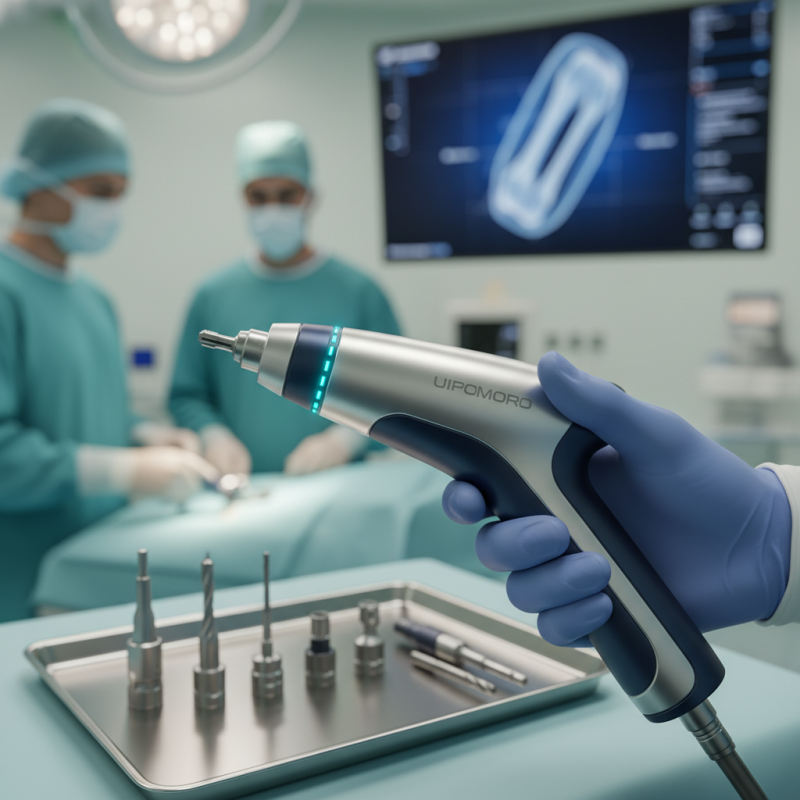
A universal bone drill is a vital surgical tool used in orthopedic procedures. It helps doctors perform precise drilling into bone tissue. This drill can accommodate various attachments for different tasks. This versatility allows it to be used in different surgeries, from joint replacements to fracture repairs.

The mechanism behind a universal bone drill is quite fascinating. It operates with a motor that spins a drill bit at high speeds. Surgeons can control the speed and torque, ensuring safety and accuracy. The drill's ergonomic design enhances the surgeon's grip, minimizing hand fatigue. However, using such tools requires training and experience. Misjudgments can lead to complications. Surgeons must often reflect on their technique to improve.

In practice, the universal bone drill proves to be a double-edged sword. On one hand, it allows for efficient procedures and better patient outcomes. On the other hand, the learning curve can be steep. Inexperienced hands may struggle with this advanced equipment. Constant practice is crucial for mastery. Each surgery is a chance to refine skills and enhance precision.

The History of Bone Drilling Technology

The history of bone drilling technology dates back thousands of years. Early methods relied on simple tools made from stone, wood, or metal. Ancient civilizations used these rudimentary drills for medical procedures. Skilled practitioners drilled into bones to relieve pressure or extract marrow. Techniques evolved slowly, reflecting advancements in material and design.

The introduction of powered drills revolutionized the field in the 19th century. Surgeons embraced electric drills, which provided greater efficiency and accuracy. This innovation reduced the time needed for surgery. However, it also raised concerns about infection and precision, which had to be addressed. Now, universal bone drills combine the principles of past technologies with modern engineering.

Tips: When exploring bone drilling, always prioritize safety. Ensure tools are sterilized before use. Familiarize yourself with each tool's specifications. Understand that practice enhances skill. Reflect on the journey of technology. Improvements can come from even small changes. Your approach may shape future advancements.

What is a Universal Bone Drill and How Does It Work? - The History of Bone Drilling Technology

Dimension Data
Type of Drill Universal Bone Drill
First Introduced Late 19th Century
Common Uses Orthopedic Surgery, Dental Surgery
Power Source Electric, Pneumatic
Drill Speed 1200 - 2500 RPM
Key Features Interchangeable Bits, Ergonomic Design
Material Used Surgical Stainless Steel, High-Strength Plastics
Maintenance Requirements Regular Cleaning, Lubrication

Key Components of a Universal Bone Drill

A Universal Bone Drill is an essential tool in orthopedic surgery. It has several key components that contribute to its efficiency. The motor is a vital element. It provides the necessary power to drill through bone, with speeds reaching over 1,200 RPM. This allows for quick and precise operations. The drill bits are another crucial part. They come in various sizes and shapes, designed for different surgical applications.

Another important component is the handpiece. It connects the motor to the drill bit. Ergonomic design ensures the surgeon can operate the drill comfortably. This reduces fatigue during lengthy procedures. Reports indicate that a well-designed handpiece can improve operability by up to 30%.

The cooling system is often overlooked but is critical. It prevents overheating during surgery. Prolonged drilling can damage both the tool and the patient’s tissue. An efficient cooling mechanism can enhance the lifespan of the drill. Some studies suggest that nearly 25% of drills fail due to inadequate cooling. Each part of the universal bone drill plays a role in its effectiveness and durability. The attention to detail in design can make a significant difference in surgical outcomes.

How a Universal Bone Drill Operates

A Universal Bone Drill is a key instrument in orthopedic surgery. It has a simple design but a significant impact. Surgeons use it for drilling into bones. The drill features different attachments to suit various procedures. This versatility is crucial during surgeries.

When the universal bone drill operates, it uses rotational speed and torque. The surgeon positions the drill precisely on the bone surface. The drill bit rotates and penetrates the bone efficiently. The process requires steady hands and focused eyes. Mistakes can lead to complications, so precision is vital.

Training is essential to master the use of this tool. Surgeons often practice before performing actual procedures. Each operation presents unique challenges. Yet, the universal bone drill remains a trusted ally in the operating room. Understanding how it works helps build confidence in its application. Adjustments in technique may be necessary based on the procedure type.

Applications and Benefits of Using Universal Bone Drills

Universal bone drills are essential tools in modern surgery. Their primary application is in orthopedic procedures. They help to create precise holes in bone tissue. This capability supports various procedures, including installing screws or plates. Surgeons can perform tasks with improved accuracy and efficiency. With their user-friendly design, these drills enhance the surgical experience.

The benefits of using universal bone drills are numerous. First, they reduce operation time significantly. Quick drilling means shorter surgeries and improved recovery for patients. Additionally, these drills minimize trauma to surrounding tissues. This reality leads to less pain and faster healing. However, there are challenges. Improper use can lead to complications. Surgeons must be trained thoroughly to avoid errors. Ultimately, careful training and practice can maximize the benefits of these devices in the operating room.