

News

Miro: A New Standard in Responsible Innovation

Miro: A New Standard in Responsible Innovation The Miro monitor arm is setting new benchmarks in sustainability. It offers a high-performance solution without compromising on environmental responsibility. Designed with careful material selection, local sourcing, and longevity in mind, Miro’s responsible approach to design and unique manoeuvrability set it apart from the competition. Sustainable Choices Miro is crafted from energy-efficient materials with a lower carbon impact....

Read more
HSE Advisor

Role Purpose Support in the development, implementation and maintenance of the company’s Health, Safety & Environmental policies, processes, operational procedures, and standards.  Ensuring best practice and championing a continually improving HSE culture within the business. Key Responsibilities Liaise with and provide support to all areas of the business to eliminate, mitigate or reduce identified HSE exposures. Partner with the production management team and team leaders,...

Read more
CMD Ltd LAUNCHES 48-HOUR TURNAROUND ON BETATRAK® RAPID ORDERING SERVICE

CMD Ltd, the specialist in power distribution systems, workstation power and monitor arms, has launched a rapid ordering service for its Betatrak® underfloor powertrack distribution systems and accessories, with a commitment to delivering within 48-hours of an approved purchase order*. The service enables customers to order up to 50 lengths of Standard or Clean Earth (C/E) low noise Betatrak, along with up to 25 feed...

Read more

CMD INVESTS £1/4 MILLION IN NEW MACHINE AS PART OF FACTORY UPGRADE

We have invested in a new £1/4m TRUMPF CNC metal punch as part of an asset renewal strategy for our UK manufacturing capability. The new machine will be used in the production of a wide variety of our power distribution systems and workstation power products at our Rotherham factory. Suitable for handling sheet metal between 0.9mm and 3.0mm thick, the new machine will replace one...

Read more

CMD CATALOGUE PROVIDES TECHNICAL POWER DISTRIBUTION GUIDE

CMD Ltd has released a new catalogue, providing an easy to follow technical guide to our power distribution systems and plug and play desk modules. Detailing CMD’s full range of UK-manufactured power distribution systems and plug and play desk modules, the catalogue will be a helpful source of information to M&E engineers and contractors alike to understand how our power distribution systems connect together and...

Read more

Power Distribution Catalogue
CMD Ltd PLAYS ESSENTIAL ROLE IN ELECTRICAL FIT OUT AT LONDON’S PRESTIGIOUS OFFICE DEVELOPMENT

CMD Ltd, specialist in workplace connectivity and ergonomic solutions, has provided a flexible and high-quality power distribution network for The Ray, a prestigious office development in London’s Farringdon. Well-known for being the former site of The Guardian newspaper, The Ray now stands as an 83,000ft² office development characterised by a modernised warehouse aesthetic, with level two now occupied by a global social media company. The...

Read more

The Ray
CMD plugs in to european opportunity with Schuko Capsule unit launch

CMD Ltd, the specialist in power and connectivity solutions for commercial environments, has launched a Schuko version of its popular fixed format Capsule workstation power module for export to mainland Europe and beyond. A popular on desk power module comprising two sockets and dual USB (type A and C) chargers, CMD’s Capsule unit is already widely specified in the UK as an off-the-shelf workstation power...

Read more

CMD White Schuko Capsule Desk Power Module
CMD LTD EXTENDS MONITOR ARM RANGE WITH THE LAUNCH OF REACH PLUS

CMD Ltd, the specialist in ergonomic and connectivity solutions for commercial interiors, has completed its Reach monitor arm range with the launch of the Reach Plus. Available in single or dual screen options, the Reach Plus has been designed to provide an ideal solution for both single and dual screen workstation configurations, or can be used with next generation of large format curved screens. Suitable...

Read more

CMD Ltd DEMONSTRATES THE ART OF POWER DISTRIBUTION AT THE UNIVERSITY OF WARWICK

CMD Ltd, the specialist in workplace connectivity and ergonomic solutions, has provided Betatrak busbar power distribution and a range of electrical accessories for two major capital investment projects at the University of Warwick. Designed by Fielden Clegg Bradley Studios, the £33 million Faculty of Arts building is a showpiece development comprising four interconnected structures set around a central atrium, which will enable inter-disciplinary collaboration across...

Read more

University of Warwick
CMD BRINGS HARMONY TO COVENTRY UNIVERSITY RESEARCH FACILITIES

CMD Ltd, the specialist in power distribution solutions and workstation power and ergonomics, has provided under desk and on desk power modules for the refurbishment of three Coventry University research buildings. Located on Coventry University Technology Park, a business park designed to encourage collaboration between the university and knowledge-based businesses, the three buildings are being repurposed as office accommodation for university research teams. The refurbishment...

Read more

Coventry University

Top Transparent Biodegradable Food Film for Sustainable Packaging?

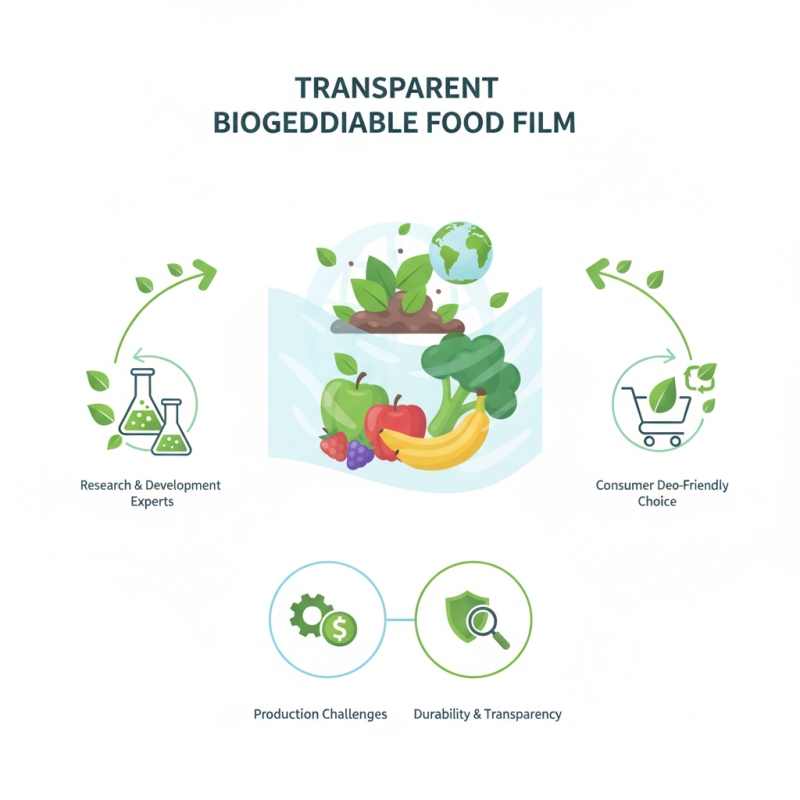
The rise of sustainable packaging has propelled the development of Transparent Biodegradable Food Film. Experts like Dr. Emily Parker, a leader in biodegradable materials, emphasize its importance. She states, "Transparent Biodegradable Food Film represents a breakthrough in reducing plastic waste without sacrificing usability."

This innovative film serves as a promising substitute for traditional plastic wraps. It combines functionality with environmental consciousness. As consumers seek greener alternatives, the demand for eco-friendly options is increasing. Many manufacturers are now exploring the use of natural materials in their products. However, challenges in production efficiency and cost persist.

Additionally, there's a need for continuous improvement in transparency and durability. While the film is effective in preserving food, questions remain about its long-term performance. Achieving the ideal balance between biodegradability and strength requires ongoing research. As the industry evolves, collaboration among scientists, manufacturers, and policymakers will be crucial. The goal is to create a truly sustainable solution that meets both consumer needs and environmental goals.

Top Transparent Biodegradable Food Film for Sustainable Packaging?

The Importance of Sustainable Packaging in the Food Industry

The food industry faces pressing challenges in sustainability. Traditional packaging often contributes to immense waste. Each year, millions of tons of plastic end up in landfills and oceans. This reality prompts a need for better solutions. Transparent biodegradable food film emerges as a sustainable option. It provides visibility, which consumers value while minimizing environmental impact.

Sustainable packaging is crucial for brand integrity. Consumers are increasingly aware of their environmental footprint. They prefer products with responsible sourcing and eco-friendly packaging. Yet, not all biodegradable films are created equal. Some may degrade only under specific conditions, raising questions about their efficacy. These nuances are essential for informed choices. The industry must continue exploring and refining biodegradable options to meet consumer demands and ecological standards. Moving toward a sustainable future requires ongoing commitment and innovation.

What is Transparent Biodegradable Food Film and Its Benefits?

Transparent biodegradable food films are an innovative solution for sustainable packaging. These films are made from natural polymers, making them compostable and environmentally friendly. They offer a clear view of the product inside, enhancing consumer experience. Additionally, their biodegradable nature reduces landfill waste, promoting a cleaner planet.

One major benefit is their ability to extend the shelf life of food. When properly applied, they can help maintain freshness by creating a barrier against moisture and oxygen. This can significantly reduce food waste, which is a pressing issue in today's society. Moreover, the films can break down naturally, transforming back into organic matter without leaving harmful residues.

Tips for choosing transparent biodegradable food films include checking for certifications and understanding their composting requirements. Look for films that can break down in home composting systems. This ensures they are convenient and accessible for consumers. Pay attention to thickness; thinner films might be more biodegradable but could compromise durability. Always consider the balance between sustainability and functionality in your packaging choices. Remember, finding the right product might take time and experimentation.

Key Materials Used in Manufacturing Biodegradable Food Films

Biodegradable food films are gaining popularity due to their environmental benefits. These films are made from natural materials that decompose without harming nature. Understanding the key materials used in their production can help consumers make informed choices.

Common materials include starch, cellulose, and proteins. Starch-based films are derived from crops like corn and potatoes. They provide flexibility and moisture control. Cellulose films, made from plant fibers, offer excellent barrier properties against oxygen. Protein films, often derived from soy or milk, are effective in preserving food freshness.

Tips: When selecting biodegradable films, check for certifications. Look for labels that confirm compostability. Proper disposal methods matter for effective degradation. Not all biodegradable films decompose under standard landfill conditions.

Innovation is vital in improving these materials. While many have great potential, some still require better performance. Research is ongoing to enhance durability and effectiveness. As technology evolves, the future of sustainable packaging may depend on this progress.

Comparative Analysis: Traditional Food Films vs. Biodegradable Alternatives

The shift toward biodegradable food films is becoming essential. Traditional plastic films often take hundreds of years to decompose. In contrast, biodegradable options can break down in months under the right conditions. According to a report by the Biodegradable Products Institute, the market for biodegradable materials is expected to reach $9.3 billion by 2025.

The environmental impact of conventional food films is significant. Around 300 million tons of plastic are produced each year, with much ending up in landfills and oceans. Studies indicate that biodegradable films, made from materials like cornstarch or cellulose, can reduce plastic waste dramatically. This creates a pathway toward lower carbon emissions and improved sustainability.

However, not all biodegradable films perform equally. Some may lack the barrier properties of traditional films, leading to spoilage or reduced shelf life. Consumer awareness and education are vital in navigating these options. The debate continues on the effectiveness of biodegradable versus conventional films in diverse applications. Research is ongoing, and more data is needed.

Comparative Analysis of Traditional Food Films vs. Biodegradable Alternatives

Future Trends in Sustainable Food Packaging Solutions

The quest for sustainable food packaging has led to innovative solutions. Transparent biodegradable food films are emerging as a notable option. These materials offer visibility for the product while maintaining eco-friendliness. They decompose naturally, minimizing environmental impact. However, the durability of these films is still being refined. They must effectively preserve food without compromising freshness.

Future trends indicate a growing demand for materials made from renewable resources. Innovations in plant-based polymers are gaining traction. These materials can replace traditional plastics, supporting sustainability goals. However, there’s a need for further research on their shelf-life and effectiveness. Consumer awareness plays a pivotal role; people must understand the benefits of these alternatives. Education around proper disposal methods is also crucial.

Challenges persist in balancing performance and environmental concerns. The production processes for these films often require energy, which can undermine their green claims. Striking the right balance is essential for real progress. The industry must invest in research and development. Continuous improvement will help meet consumer needs while reducing waste. The future of food packaging depends on multifaceted solutions that prioritize both transparency and sustainability.

Top Transparent Biodegradable Food Film for Sustainable Packaging

Material Type Biodegradation Time Transparency (%) Water Vapor Permeability (g/m²/day) Thickness (µm) Applications
PLA (Polylactic Acid) 6 months 90% 8 30 Food wrapping, trays
PHA (Polyhydroxyalkanoates) 3-6 months 85% 10 50 Film wraps, coatings
Starch-based 1-2 months 80% 15 40 Bags, food containers
Cellulose-based 2-5 months 92% 9 25 Wraps, pouches