

News

Miro: A New Standard in Responsible Innovation

Miro: A New Standard in Responsible Innovation The Miro monitor arm is setting new benchmarks in sustainability. It offers a high-performance solution without compromising on environmental responsibility. Designed with careful material selection, local sourcing, and longevity in mind, Miro’s responsible approach to design and unique manoeuvrability set it apart from the competition. Sustainable Choices Miro is crafted from energy-efficient materials with a lower carbon impact....

Read more
HSE Advisor

Role Purpose Support in the development, implementation and maintenance of the company’s Health, Safety & Environmental policies, processes, operational procedures, and standards.  Ensuring best practice and championing a continually improving HSE culture within the business. Key Responsibilities Liaise with and provide support to all areas of the business to eliminate, mitigate or reduce identified HSE exposures. Partner with the production management team and team leaders,...

Read more
CMD Ltd LAUNCHES 48-HOUR TURNAROUND ON BETATRAK® RAPID ORDERING SERVICE

CMD Ltd, the specialist in power distribution systems, workstation power and monitor arms, has launched a rapid ordering service for its Betatrak® underfloor powertrack distribution systems and accessories, with a commitment to delivering within 48-hours of an approved purchase order*. The service enables customers to order up to 50 lengths of Standard or Clean Earth (C/E) low noise Betatrak, along with up to 25 feed...

Read more

CMD INVESTS £1/4 MILLION IN NEW MACHINE AS PART OF FACTORY UPGRADE

We have invested in a new £1/4m TRUMPF CNC metal punch as part of an asset renewal strategy for our UK manufacturing capability. The new machine will be used in the production of a wide variety of our power distribution systems and workstation power products at our Rotherham factory. Suitable for handling sheet metal between 0.9mm and 3.0mm thick, the new machine will replace one...

Read more

CMD CATALOGUE PROVIDES TECHNICAL POWER DISTRIBUTION GUIDE

CMD Ltd has released a new catalogue, providing an easy to follow technical guide to our power distribution systems and plug and play desk modules. Detailing CMD’s full range of UK-manufactured power distribution systems and plug and play desk modules, the catalogue will be a helpful source of information to M&E engineers and contractors alike to understand how our power distribution systems connect together and...

Read more

Power Distribution Catalogue
CMD Ltd PLAYS ESSENTIAL ROLE IN ELECTRICAL FIT OUT AT LONDON’S PRESTIGIOUS OFFICE DEVELOPMENT

CMD Ltd, specialist in workplace connectivity and ergonomic solutions, has provided a flexible and high-quality power distribution network for The Ray, a prestigious office development in London’s Farringdon. Well-known for being the former site of The Guardian newspaper, The Ray now stands as an 83,000ft² office development characterised by a modernised warehouse aesthetic, with level two now occupied by a global social media company. The...

Read more

The Ray
CMD plugs in to european opportunity with Schuko Capsule unit launch

CMD Ltd, the specialist in power and connectivity solutions for commercial environments, has launched a Schuko version of its popular fixed format Capsule workstation power module for export to mainland Europe and beyond. A popular on desk power module comprising two sockets and dual USB (type A and C) chargers, CMD’s Capsule unit is already widely specified in the UK as an off-the-shelf workstation power...

Read more

CMD White Schuko Capsule Desk Power Module
CMD LTD EXTENDS MONITOR ARM RANGE WITH THE LAUNCH OF REACH PLUS

CMD Ltd, the specialist in ergonomic and connectivity solutions for commercial interiors, has completed its Reach monitor arm range with the launch of the Reach Plus. Available in single or dual screen options, the Reach Plus has been designed to provide an ideal solution for both single and dual screen workstation configurations, or can be used with next generation of large format curved screens. Suitable...

Read more

CMD Ltd DEMONSTRATES THE ART OF POWER DISTRIBUTION AT THE UNIVERSITY OF WARWICK

CMD Ltd, the specialist in workplace connectivity and ergonomic solutions, has provided Betatrak busbar power distribution and a range of electrical accessories for two major capital investment projects at the University of Warwick. Designed by Fielden Clegg Bradley Studios, the £33 million Faculty of Arts building is a showpiece development comprising four interconnected structures set around a central atrium, which will enable inter-disciplinary collaboration across...

Read more

University of Warwick
CMD BRINGS HARMONY TO COVENTRY UNIVERSITY RESEARCH FACILITIES

CMD Ltd, the specialist in power distribution solutions and workstation power and ergonomics, has provided under desk and on desk power modules for the refurbishment of three Coventry University research buildings. Located on Coventry University Technology Park, a business park designed to encourage collaboration between the university and knowledge-based businesses, the three buildings are being repurposed as office accommodation for university research teams. The refurbishment...

Read more

Coventry University

What Are the Top Types of Safety Shoes?

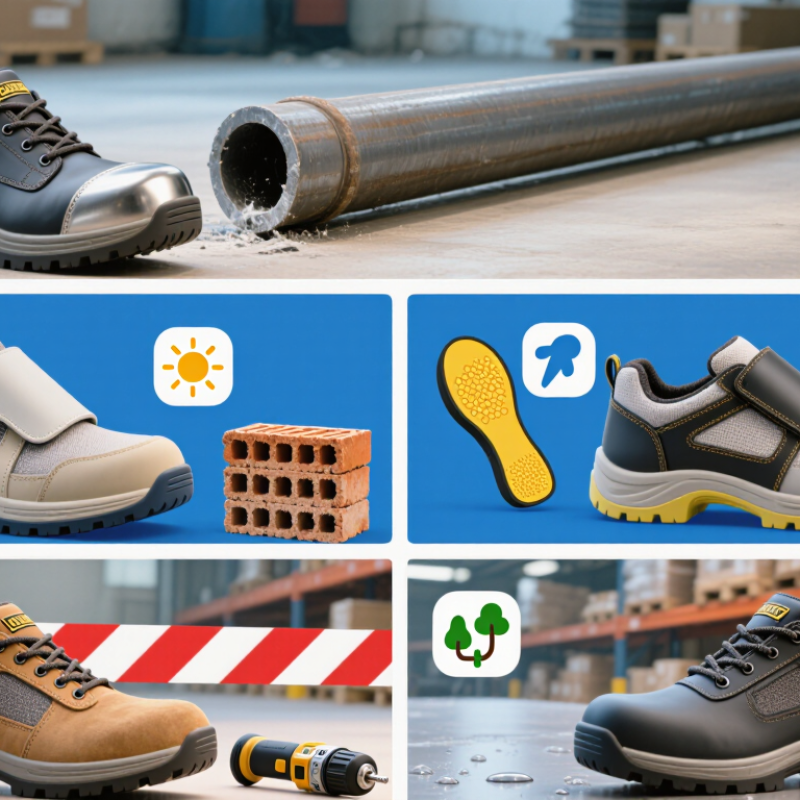
Choosing the right safety shoes starts with the hazards workers actually face. A warehouse picker may need dependable slip resistance, while a construction worker may require toe protection and a puncture-resistant midsole. Electricians often consider footwear designed for electrical hazards. Wet sites may call for waterproof uppers and soles with reliable grip. The best type depends on the task, the surface, and how long the shoes are worn.

Occupational safety physician Dr. John Howard, former director of the National Institute for Occupational Safety and Health, has focused on preventing work-related injuries. A concise paraphrase of that prevention-first perspective is: “Match protection to the hazard before work begins.” It is not a verbatim quote. That distinction matters when safety advice is repeated. This guide compares common types of safety shoes, including steel-toe, composite-toe, metatarsal-guard, electrical-hazard, and slip-resistant designs. It also considers fit, comfort, and workplace requirements. A protective label alone is not a guarantee. Check the product’s specifications and applicable standards, then assess whether the shoe suits the actual job. Even good footwear can fail a worker when it pinches, wears down, or mismatches the surface. Small details matter: a loose heel, a slick loading-bay floor, or a heavy object dropped near the toe. There is no perfect pair for every task. That is worth remembering.

What Are the Top Types of Safety Shoes?

## Protective-Toe Shoes: ASTM I/75 and C/75 Ratings Mean 75 ft·lbf Impact and 2,500 lb Compression

Protective-toe shoes are tested for specific hazards, not every risk on a worksite. Under ASTM F2413, an I/75 rating means the toe cap passed an impact test at 75 foot-pounds. A C/75 rating means it passed a compression test at 2,500 pounds of force. These are laboratory thresholds, not promises that a shoe can withstand any falling object or crushing event. The U.S. Bureau of Labor Statistics recorded 2.8 million nonfatal workplace injuries and illnesses in private industry in 2022; that broad total underscores why task-specific protection matters, though it does not measure the performance of toe caps.

In practice, match the rating to the job. A warehouse worker moving pallet loads may face a different toe-crush hazard than a maintenance worker handling tools near machinery. Check the shoe’s marking and fit, then inspect the toe area for dents, cracks, or separation. A damaged cap may not offer the tested protection. Small details matter. ASTM F2413 specifies test performance, while OSHA’s 29 CFR 1910.136 requires employers to select protective footwear when workplace hazards call for it. Still, ratings are easy to overread: I/75 and C/75 do not cover slips, punctures, or electrical hazards. I’d treat the label as a starting point, not the whole assessment.

## Metatarsal-Guard Shoes: How Added Coverage Protects the Foot’s Upper Surface

Metatarsal-guard shoes add a protective cap over the foot’s upper surface, beyond the toe. This matters when cartons, tools, or machine parts can fall behind a toe cap. The guard helps distribute impact across a broader area, but it cannot make the foot invulnerable. A close fit matters. A stiff edge may rub the instep, especially during long shifts or frequent kneeling. Workers should check for pressure points while standing and walking, not only while trying shoes on briefly.

ASTM F2413-18 specifies metatarsal-protection criteria and uses 75 foot-pounds of impact energy in its metatarsal impact test. That is a laboratory measure, not a promise that injuries will be prevented. OSHA’s personal protective equipment guidance recommends matching footwear to workplace hazards and fit. Consider falling stock, overhead handling, and repeated impacts when assessing whether extra coverage is suitable. Try shoes with usual work socks, then walk, climb, and crouch on a similar surface. Small discomfort counts. The Bureau of Labor Statistics’ 2023 Survey of Occupational Injuries and Illnesses records cases by event and body part, but it does not show that a particular guard prevented an injury.

## Puncture-Resistant Shoes: ASTM PR Testing Uses a 270 lb Penetration Force

Puncture-resistant footwear is designed for floors scattered with nails, wire, screws, or sharp metal scraps. Under ASTM F2412 test methods, a standardized probe presses against the shoe’s protective layer. The ASTM F2413 PR requirement is 270 pounds-force, about 1,200 newtons. That is a test force, not a claim that the shoe can support a 270-pound person. That distinction is easy to miss.

The test offers a useful comparison, not a promise against every hazard. A narrow nail may behave differently from a broad shard, and worn soles can weaken protection. PR shoes may use metal or nonmetal protective plates; each design can affect flexibility and weight. Check the shoe’s marking and match it to the debris and surface at work. Small details matter.

The U.S. Bureau of Labor Statistics reported 2.6 million nonfatal workplace injuries and illnesses in private industry in 2023, across many causes. That total does not measure puncture injuries specifically, so it should not be treated as proof of PR footwear effectiveness. In a workshop, warehouse, or construction area, inspect the outsole for cuts, embedded debris, and thinning. People sometimes skip that check when a shoe still looks clean. That is a mistake worth reconsidering.

## Electrical-Hazard Shoes: ASTM EH Tests Use 18,000 V Under Dry Conditions

Electrical-hazard (EH) shoes are designed to help reduce the risk of electric shock when a worker accidentally contacts an energized circuit. Under the ASTM test, footwear is exposed to 18,000 volts in dry conditions for a specified period. The test checks whether electrical current passes through the shoe. It is a laboratory measure, not a promise of protection in every job. Dry means dry.

That distinction matters. Water, metal dust, worn soles, or damaged uppers can change how footwear performs. EH shoes should be inspected for cracks, punctures, and trapped debris before use. A scuffed toe may look harmless, but damage near the sole deserves attention. The test does not replace proper electrical procedures or other required protective equipment. It also does not make a shoe suitable for every electrical task. Check the shoe’s markings and applicable workplace requirements, and ask a qualified safety professional when the hazard is unclear. Real worksites are messy; a clean test condition can never capture every variable.

Electrical-Hazard (EH) Footwear Test

ASTM EH testing applies 18,000 volts under dry conditions for one minute.

The chart shows the test voltage, not a guarantee of protection in every situation. EH footwear is not intended for wet conditions, and its protective properties can be affected by wear or contamination.

## Slip-Resistant Shoes: How Outsole Grip Helps Address Workplace Slip Hazards

Slip-resistant safety shoes use outsole compounds and tread patterns designed to improve traction on slick work surfaces. That matters around wet tile, oily concrete, or a freshly cleaned kitchen floor. BLS recorded 885 fatal work injuries involving falls, slips, and trips in 2023. The category also includes falls from height, so it is broader than floor-slip incidents alone (BLS, Census of Fatal Occupational Injuries, 2023). ASTM F2913-19 describes a laboratory method for measuring whole-shoe slip resistance on controlled surfaces. Real workplaces are less predictable. Water, grease, worn tread, and changing floor materials can all affect grip. No outsole suits every hazard. A shoe that performs well on wet tile may feel less secure on oily concrete. Fit matters, too; a loose heel can undermine steady footing. I would treat test results as useful evidence, not a guarantee.

Tips: Match the outsole to the contaminants and flooring workers actually encounter. Check tread regularly for flattened lugs, embedded debris, or uneven wear. Replace shoes when grip has noticeably declined. Floors change. So do work conditions. A short trial on the job’s typical surfaces can reveal problems a product description may miss.

Article Source: