

News

Miro: A New Standard in Responsible Innovation

Miro: A New Standard in Responsible Innovation The Miro monitor arm is setting new benchmarks in sustainability. It offers a high-performance solution without compromising on environmental responsibility. Designed with careful material selection, local sourcing, and longevity in mind, Miro’s responsible approach to design and unique manoeuvrability set it apart from the competition. Sustainable Choices Miro is crafted from energy-efficient materials with a lower carbon impact....

Read more
HSE Advisor

Role Purpose Support in the development, implementation and maintenance of the company’s Health, Safety & Environmental policies, processes, operational procedures, and standards.  Ensuring best practice and championing a continually improving HSE culture within the business. Key Responsibilities Liaise with and provide support to all areas of the business to eliminate, mitigate or reduce identified HSE exposures. Partner with the production management team and team leaders,...

Read more
CMD Ltd LAUNCHES 48-HOUR TURNAROUND ON BETATRAK® RAPID ORDERING SERVICE

CMD Ltd, the specialist in power distribution systems, workstation power and monitor arms, has launched a rapid ordering service for its Betatrak® underfloor powertrack distribution systems and accessories, with a commitment to delivering within 48-hours of an approved purchase order*. The service enables customers to order up to 50 lengths of Standard or Clean Earth (C/E) low noise Betatrak, along with up to 25 feed...

Read more

CMD INVESTS £1/4 MILLION IN NEW MACHINE AS PART OF FACTORY UPGRADE

We have invested in a new £1/4m TRUMPF CNC metal punch as part of an asset renewal strategy for our UK manufacturing capability. The new machine will be used in the production of a wide variety of our power distribution systems and workstation power products at our Rotherham factory. Suitable for handling sheet metal between 0.9mm and 3.0mm thick, the new machine will replace one...

Read more

CMD CATALOGUE PROVIDES TECHNICAL POWER DISTRIBUTION GUIDE

CMD Ltd has released a new catalogue, providing an easy to follow technical guide to our power distribution systems and plug and play desk modules. Detailing CMD’s full range of UK-manufactured power distribution systems and plug and play desk modules, the catalogue will be a helpful source of information to M&E engineers and contractors alike to understand how our power distribution systems connect together and...

Read more

Power Distribution Catalogue
CMD Ltd PLAYS ESSENTIAL ROLE IN ELECTRICAL FIT OUT AT LONDON’S PRESTIGIOUS OFFICE DEVELOPMENT

CMD Ltd, specialist in workplace connectivity and ergonomic solutions, has provided a flexible and high-quality power distribution network for The Ray, a prestigious office development in London’s Farringdon. Well-known for being the former site of The Guardian newspaper, The Ray now stands as an 83,000ft² office development characterised by a modernised warehouse aesthetic, with level two now occupied by a global social media company. The...

Read more

The Ray
CMD plugs in to european opportunity with Schuko Capsule unit launch

CMD Ltd, the specialist in power and connectivity solutions for commercial environments, has launched a Schuko version of its popular fixed format Capsule workstation power module for export to mainland Europe and beyond. A popular on desk power module comprising two sockets and dual USB (type A and C) chargers, CMD’s Capsule unit is already widely specified in the UK as an off-the-shelf workstation power...

Read more

CMD White Schuko Capsule Desk Power Module
CMD LTD EXTENDS MONITOR ARM RANGE WITH THE LAUNCH OF REACH PLUS

CMD Ltd, the specialist in ergonomic and connectivity solutions for commercial interiors, has completed its Reach monitor arm range with the launch of the Reach Plus. Available in single or dual screen options, the Reach Plus has been designed to provide an ideal solution for both single and dual screen workstation configurations, or can be used with next generation of large format curved screens. Suitable...

Read more

CMD Ltd DEMONSTRATES THE ART OF POWER DISTRIBUTION AT THE UNIVERSITY OF WARWICK

CMD Ltd, the specialist in workplace connectivity and ergonomic solutions, has provided Betatrak busbar power distribution and a range of electrical accessories for two major capital investment projects at the University of Warwick. Designed by Fielden Clegg Bradley Studios, the £33 million Faculty of Arts building is a showpiece development comprising four interconnected structures set around a central atrium, which will enable inter-disciplinary collaboration across...

Read more

University of Warwick
CMD BRINGS HARMONY TO COVENTRY UNIVERSITY RESEARCH FACILITIES

CMD Ltd, the specialist in power distribution solutions and workstation power and ergonomics, has provided under desk and on desk power modules for the refurbishment of three Coventry University research buildings. Located on Coventry University Technology Park, a business park designed to encourage collaboration between the university and knowledge-based businesses, the three buildings are being repurposed as office accommodation for university research teams. The refurbishment...

Read more

Coventry University

What Are the Top Types of LED Tri Proof Lights?

LED lighting has changed how facilities illuminate damp, dusty, and demanding spaces. The U.S. Department of Energy’s 2020 Lighting Market Characterization reported that LEDs made up nearly half of installed U.S. lighting stock that year. The shift matters in warehouses, food-processing areas, parking structures, and workshops, where maintenance access can be difficult. Small details count.

A Tri Proof Light Led is commonly designed to resist water, dust, and impact, but “tri-proof” is not a universal performance rating. Buyers should check the product’s stated IP and IK ratings, operating temperature, lumen output, and warranty. A sealed housing alone does not prove suitability for every environment. Labels can be vague.

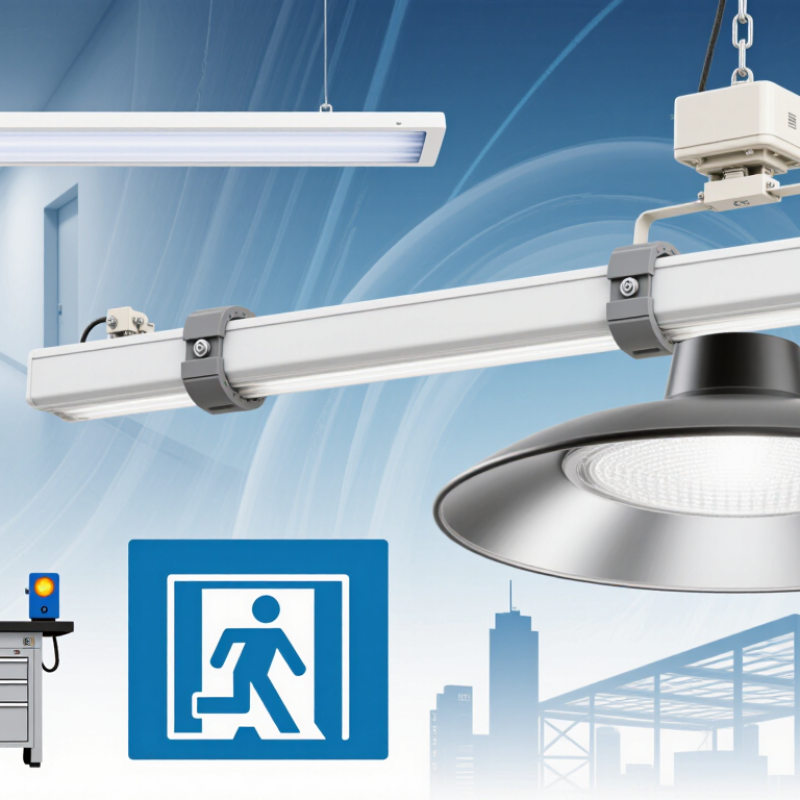
This guide compares the top types of LED tri-proof lights, including linear battens, vapor-tight fixtures, emergency models, and high-bay designs. Each format serves different mounting heights, operating schedules, and maintenance needs. For example, a low-profile batten may suit a corridor, while a suspended high-bay fixture can better illuminate a tall workshop. The right choice depends on the site, not the product name.

Industry data helps explain why efficient lighting is receiving attention, but it cannot replace a project-specific assessment. Review photometric layouts, electrical compatibility, and installation conditions before choosing. Some product categories overlap, and that can make comparisons messy. That uncertainty deserves attention.

What Are the Top Types of LED Tri Proof Lights?

Classify LED Tri-Proof Lights by IEC 60529: IP65, IP66, and IP69

LED Tri-Proof Lights are often grouped by their IP rating, which describes protection against dust and water under IEC 60529. The first digit, 6, means the enclosure is dust-tight. The second digit indicates the tested level of water protection. “Tri-proof” itself is not a precise test rating, so check the product’s stated IP code and test documentation.

IP65 fixtures resist water jets from a nozzle, making them suitable for dusty rooms and routine washdowns with controlled spray. IP66 is tested against more powerful water jets, which can matter in areas exposed to forceful cleaning. IP69 fixtures are designed for high-pressure, high-temperature water jets; confirm the exact test standard, since similar labels may refer to different requirements. That matters. A higher number can look decisive, but it does not prove resistance to every detergent, impact, or installation mistake. In real maintenance settings, cable glands, end caps, and mounting details can become weak points. Check that the rating applies to the complete assembled light, not just its housing. A quick spray test on site may feel reassuring, but it cannot replace verified test results.

Compare IP65–IP69 Ratings for Dust and Water-Jet Protection

LED tri-proof lights are commonly selected for warehouses, parking areas, food-processing spaces, and damp utility rooms. The IP code helps compare protection, but it does not describe every risk. The first digit, 6, means the enclosure is dust-tight under the rating test. The second digit measures water protection.

IP65 resists water jets from a nozzle, making it suitable for routine splashes and cleaning with controlled spray. IP66 is tested against stronger jets, such as water directed at an exposed fitting during washdown.

A hose test is not immersion. IP67 and IP68 cover temporary or continuous immersion under specified conditions; the depth and duration depend on the rating and test agreement. IP69 addresses high-pressure, high-temperature water jets.

Not interchangeable. A light rated IP68 is not automatically suited to hot, forceful cleaning.

Match the rating to the actual cleaning method, not just the room’s dampness. A ceiling-mounted fitting may face spray, while a low fixture near a floor drain could encounter standing water.

Check the product’s test conditions, cable entries, and installation instructions; a poor seal at the connector can undermine enclosure protection. IP ratings also do not confirm resistance to impact, detergents, or corrosion.

That distinction is easy to miss. For demanding washdown areas, confirm chemical compatibility separately and avoid assuming the highest number solves every site problem.

Measure Impact Resistance: IK08 (5 J) to IK10 (20 J)

For LED tri-proof lights, IK ratings describe resistance to mechanical impact. IK08 is tested at 5 joules, while IK10 is tested at 20 joules. The scale is defined under IEC 62262. A higher rating indicates a more demanding impact test, not immunity to damage.

Picture a light mounted beside a workshop doorway, where a cart or tool might strike its cover. An IK08 model may suit areas with occasional, moderate knocks. IK10 can be a more appropriate choice where impacts are more likely or potentially stronger. The test uses a specified impact energy and method. Real impacts can differ in shape, angle, and contact point. That matters.

Do not treat IK as a measure of sealing performance. It does not tell you whether a fixture resists dust or water; check its IP rating separately. Mounting also affects real-world protection: a loose fitting may vibrate or shift when struck. Look at the test documentation, installation conditions, and the likely impact hazards before selecting a rating. A higher IK number can add useful margin, but it may not solve poor placement. That deserves a second look.

Identify Fixture Types: Surface-Mounted, Suspended, and Modular

Surface-mounted LED tri-proof lights sit directly against a ceiling or wall, making them practical in rooms with limited headroom. They suit workshops, utility corridors, and parking areas where equipment must stay out of the way. Check the mounting surface before installation: uneven concrete or poorly sealed cable entries can undermine an otherwise weather-resistant fixture. A tight fit matters.

Suspended models hang from rods, chains, or cables, placing light closer to workbenches and high-ceiling spaces. Their extra clearance can improve access for cleaning, but movement and vibration may need consideration. Secure suspension points and follow the fixture’s installation instructions.

Modular tri-proof lights use separate components, such as a housing, light engine, or replaceable driver. This layout can make maintenance more manageable when a compatible replacement part is available. Compatibility is the catch. Confirm electrical ratings, dimensions, and sealing details before ordering parts; a component that fits physically may not preserve the fixture’s protection. The trade-off is not always neat: modular designs can simplify repairs, yet add choices during specification. Measure the space, note cable-entry locations, and compare how each mounting style affects cleaning and future access.

Compare Light Output by Lumens, lm/W, CCT, and CRI

LED tri-proof lights are commonly offered as sealed linear fixtures or retrofit tubes. Compare delivered lumens, not just wattage. Lumens describe total light output, while lm/W shows how efficiently a fixture turns electricity into light. For example, a 4,000-lumen fixture at 100 lm/W uses about 40 watts. Check the specification sheet for fixture-level output; chip ratings may not reflect light after the lens and housing reduce it. Numbers can look impressive. The mounting height matters, too.

CCT describes light color. Around 3000K looks warm, while 4000K is more neutral and 5000K appears cooler. A cool setting may help workers see detail in a utility room, but it can feel harsh in a small washdown area. CRI indicates how accurately colors appear. A CRI of 80 or higher suits many general spaces; color-sensitive inspection may need a higher rating. CRI is useful, but it does not measure brightness. I would not choose by one number alone.

Tips: Compare fixtures at the same CCT and similar lumen output. Check beam spread, mounting height, and rated operating conditions. If possible, test one fixture on site before ordering many. A specification can still miss how the light feels in the actual room.