

News

Miro: A New Standard in Responsible Innovation

Miro: A New Standard in Responsible Innovation The Miro monitor arm is setting new benchmarks in sustainability. It offers a high-performance solution without compromising on environmental responsibility. Designed with careful material selection, local sourcing, and longevity in mind, Miro’s responsible approach to design and unique manoeuvrability set it apart from the competition. Sustainable Choices Miro is crafted from energy-efficient materials with a lower carbon impact....

Read more
HSE Advisor

Role Purpose Support in the development, implementation and maintenance of the company’s Health, Safety & Environmental policies, processes, operational procedures, and standards.  Ensuring best practice and championing a continually improving HSE culture within the business. Key Responsibilities Liaise with and provide support to all areas of the business to eliminate, mitigate or reduce identified HSE exposures. Partner with the production management team and team leaders,...

Read more
CMD Ltd LAUNCHES 48-HOUR TURNAROUND ON BETATRAK® RAPID ORDERING SERVICE

CMD Ltd, the specialist in power distribution systems, workstation power and monitor arms, has launched a rapid ordering service for its Betatrak® underfloor powertrack distribution systems and accessories, with a commitment to delivering within 48-hours of an approved purchase order*. The service enables customers to order up to 50 lengths of Standard or Clean Earth (C/E) low noise Betatrak, along with up to 25 feed...

Read more

CMD INVESTS £1/4 MILLION IN NEW MACHINE AS PART OF FACTORY UPGRADE

We have invested in a new £1/4m TRUMPF CNC metal punch as part of an asset renewal strategy for our UK manufacturing capability. The new machine will be used in the production of a wide variety of our power distribution systems and workstation power products at our Rotherham factory. Suitable for handling sheet metal between 0.9mm and 3.0mm thick, the new machine will replace one...

Read more

CMD CATALOGUE PROVIDES TECHNICAL POWER DISTRIBUTION GUIDE

CMD Ltd has released a new catalogue, providing an easy to follow technical guide to our power distribution systems and plug and play desk modules. Detailing CMD’s full range of UK-manufactured power distribution systems and plug and play desk modules, the catalogue will be a helpful source of information to M&E engineers and contractors alike to understand how our power distribution systems connect together and...

Read more

Power Distribution Catalogue
CMD Ltd PLAYS ESSENTIAL ROLE IN ELECTRICAL FIT OUT AT LONDON’S PRESTIGIOUS OFFICE DEVELOPMENT

CMD Ltd, specialist in workplace connectivity and ergonomic solutions, has provided a flexible and high-quality power distribution network for The Ray, a prestigious office development in London’s Farringdon. Well-known for being the former site of The Guardian newspaper, The Ray now stands as an 83,000ft² office development characterised by a modernised warehouse aesthetic, with level two now occupied by a global social media company. The...

Read more

The Ray
CMD plugs in to european opportunity with Schuko Capsule unit launch

CMD Ltd, the specialist in power and connectivity solutions for commercial environments, has launched a Schuko version of its popular fixed format Capsule workstation power module for export to mainland Europe and beyond. A popular on desk power module comprising two sockets and dual USB (type A and C) chargers, CMD’s Capsule unit is already widely specified in the UK as an off-the-shelf workstation power...

Read more

CMD White Schuko Capsule Desk Power Module
CMD LTD EXTENDS MONITOR ARM RANGE WITH THE LAUNCH OF REACH PLUS

CMD Ltd, the specialist in ergonomic and connectivity solutions for commercial interiors, has completed its Reach monitor arm range with the launch of the Reach Plus. Available in single or dual screen options, the Reach Plus has been designed to provide an ideal solution for both single and dual screen workstation configurations, or can be used with next generation of large format curved screens. Suitable...

Read more

CMD Ltd DEMONSTRATES THE ART OF POWER DISTRIBUTION AT THE UNIVERSITY OF WARWICK

CMD Ltd, the specialist in workplace connectivity and ergonomic solutions, has provided Betatrak busbar power distribution and a range of electrical accessories for two major capital investment projects at the University of Warwick. Designed by Fielden Clegg Bradley Studios, the £33 million Faculty of Arts building is a showpiece development comprising four interconnected structures set around a central atrium, which will enable inter-disciplinary collaboration across...

Read more

University of Warwick
CMD BRINGS HARMONY TO COVENTRY UNIVERSITY RESEARCH FACILITIES

CMD Ltd, the specialist in power distribution solutions and workstation power and ergonomics, has provided under desk and on desk power modules for the refurbishment of three Coventry University research buildings. Located on Coventry University Technology Park, a business park designed to encourage collaboration between the university and knowledge-based businesses, the three buildings are being repurposed as office accommodation for university research teams. The refurbishment...

Read more

Coventry University

What Are the Top Types of Hub Motors?

Hub Motors are reshaping electric mobility, especially in e-bikes, scooters, delivery vehicles, and compact urban platforms. The International Energy Agency reported nearly 14 million electric cars sold globally in 2023, representing about 18% of new car sales. However, passenger-car figures do not directly measure hub-motor demand. That distinction matters.

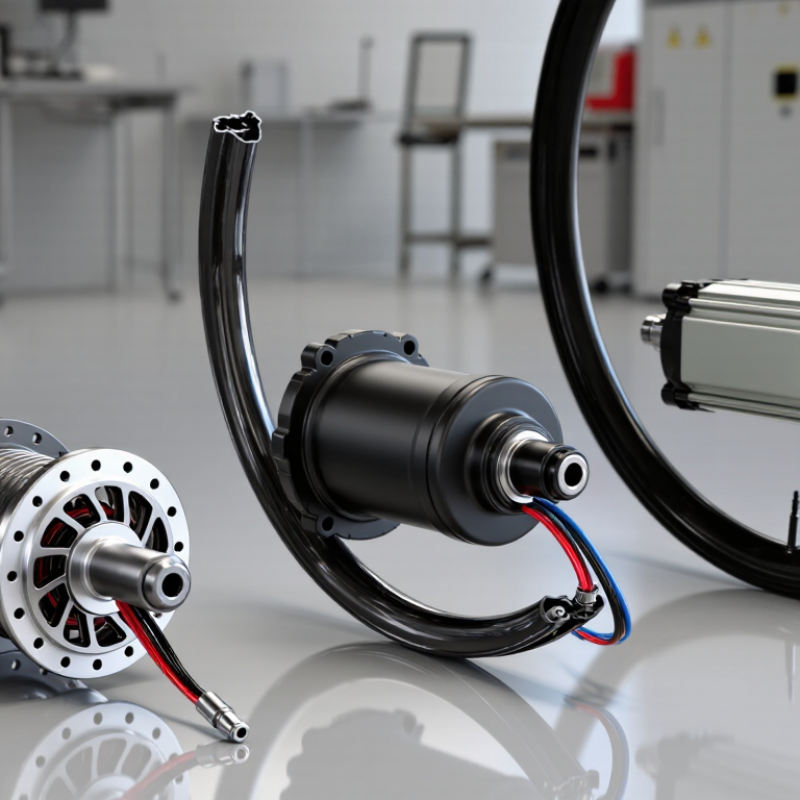
The leading designs include geared hub motors, direct-drive hub motors, and in-wheel motors. Geared systems use internal planetary gears to increase starting torque while reducing motor size. They suit hills, frequent stops, and lightweight bicycles. Direct-drive motors operate quietly and support regenerative braking, but they usually add wheel weight. In-wheel motors place the motor inside the wheel itself. This layout can simplify drivetrain packaging, yet it may expose sensitive components to impacts, water, and road vibration.

The details matter.

Industry research from IDTechEx and MarketsandMarkets identifies electric two-wheelers as important growth areas for compact traction motors. Still, market reports often combine hub motors with other electric motor categories. Their comparisons are not always perfectly consistent. Engineers should therefore examine torque curves, continuous power, thermal limits, efficiency, sealing, and service access. IP ratings should be checked against IEC 60529 requirements, rather than accepted from marketing language alone. A practical test includes a loaded climb, repeated braking, and operation on wet pavement. The best Hub Motors choice depends on the vehicle’s wheel size, payload, terrain, battery voltage, and maintenance expectations. No single design wins every application. That is the point worth challenging.

What Are the Top Types of Hub Motors?

How Hub Motors Work and Where They Fit in Electric Vehicles

Hub motors place propulsion at the wheel instead of using a central motor, driveshaft, and differential. Inside the housing, a stationary stator creates a rotating magnetic field. The rotor then turns the wheel directly. Power electronics control torque, speed, and regenerative braking.


The main types are direct-drive, geared, and in-wheel hub motors. Direct-drive units use fewer moving parts and deliver smooth torque. They can be heavy, however. Geared units add a reduction stage, allowing a smaller motor to produce stronger wheel torque. In-wheel designs sit inside the rim and save cabin space. Their extra unsprung mass can reduce ride comfort on rough roads. That compromise is easy to underestimate.

The International Energy Agency reported nearly 14 million electric-car sales worldwide in 2023, representing about 18% of new-car sales. This growth increases interest in compact propulsion layouts, especially for scooters, delivery vehicles, light urban cars, and low-speed platforms. The U.S. Department of Energy identifies regenerative braking as an important efficiency tool, and hub motors can apply it directly at each driven wheel. Yet passenger cars still face sealing, cooling, impact, and suspension challenges. Road salt is not a friendly laboratory. Real-world durability data also remains less consistent than sales data, so design claims deserve careful testing.

Direct-Drive Hub Motors: Design, Performance, and Typical Uses

Direct-drive hub motors place the stator around the axle and the rotor inside the wheel shell. They remove gears, belts, and clutch parts. This simple layout reduces mechanical wear and operating noise. The motor transfers torque directly to the wheel, which creates smooth acceleration and predictable control.

Their strongest advantage is quiet, low-maintenance performance. Direct-drive motors can also support regenerative braking when the controller and battery system allow it. However, they are often heavier than geared designs. That extra mass increases unsprung weight and may make a bicycle feel less responsive on rough roads. Starting from a stop can also require substantial current, especially on steep slopes. The trade-off is easy to underestimate. In practical testing, motor temperature, wheel size, rider load, and hill grade can change results significantly. A design that feels efficient on flat pavement may struggle during repeated climbs.

Tips: Check continuous power, not only peak power. Measure controller current and motor temperature during real climbs. Use proper torque arms on high-torque installations. Also, confirm axle spacing and cable routing before purchase. These details seem minor, but they can prevent costly installation problems. Direct-drive hubs suit commuter bicycles, electric scooters, light utility vehicles, and other applications needing quiet, durable wheel propulsion. Their weight may be acceptable where reliability matters more than quick handling.

Geared Hub Motors: Structure, Benefits, and Limitations

Geared Hub Motors: Structure, Benefits, and Limitations

A geared hub motor places a compact electric motor inside the wheel hub. The motor spins quickly, while planetary gears reduce speed and multiply torque. A fixed stator attaches to the axle. The rotor drives the gearset, which turns the wheel shell through a clutch or coupling. This layout avoids chains, belts, and external transmissions. It also keeps the drivetrain visually clean.

The main advantage is low-speed pulling power. A smaller motor can launch a loaded bicycle, scooter, or light vehicle more effectively. Geared systems usually weigh less than direct-drive hubs with similar starting torque. The U.S. Department of Energy reports that modern electric traction motors can exceed 90% efficiency across broad operating ranges. Real results vary with controller settings, temperature, and load. They vary more than product sheets suggest. The International Energy Agency’s Global EV Outlook 2024 recorded almost 14 million electric car sales in 2023, showing why efficient, compact drive systems remain important.

The gearbox introduces mechanical wear. Small planetary gears may produce a faint clicking or grinding sound, especially when the clutch engages. Heat also concentrates near the wheel, where cooling is difficult. Frequent hill starts can damage gear teeth or reduce lubricant life. The extra motor weight increases unsprung mass, making rough roads feel harsher. A workshop inspection should check axle washers, gear noise, freewheel action, and cable sealing. Geared hubs are practical, but their maintenance needs are often underestimated.

Single-Sided and Dual-Sided Hub Motor Configurations

Single-sided hub motors mount the wheel and motor assembly from one side of the axle. This design keeps the opposite side open, making tire changes and brake access more convenient. Technicians often value that simplicity during routine service. The open layout can also reduce interference around the frame or suspension. However, the cantilevered axle carries uneven loads, especially during cornering or hard braking. Bearing preload and axle stiffness therefore deserve close attention. Small details matter.

Dual-sided hub motors support the wheel from both sides. This arrangement spreads radial and bending forces across two mounting points, improving alignment under heavy loads. It can deliver steadier handling and reduce stress on individual bearings. The trade-off is added structure, tighter installation tolerances, and more components near the wheel. Service access may become less convenient, particularly when cables, seals, and brake hardware share limited space.

In practical testing, I would compare axle deflection, bearing temperature, vibration, and cable protection under repeated loading. A dual-sided design is not automatically stronger; poor machining or weak fasteners can erase its advantage. Likewise, a single-sided motor can perform reliably when its axle and bearings are properly engineered. My early preference for the easier-to-service layout changed after observing uneven tire wear caused by small alignment errors. Real operating conditions should guide the choice.

How to Compare Hub Motor Types for Different Applications

What Are the Top Types of Hub Motors?

Comparing hub motor types starts with the application, not the advertised wattage. Direct-drive hub motors use a large, slow-turning rotor and deliver smooth torque with few moving parts. They suit city bicycles, delivery vehicles, and light electric mobility systems where quiet operation matters. Geared hub motors add internal reduction gears. Their smaller size and stronger launch torque help on hills, but gear wear and noise require attention. The International Energy Agency reported more than 14 million electric cars were sold worldwide in 2023. That growth increases demand for compact, efficient drive systems, although passenger vehicles often need stronger thermal control than bicycles.

In-wheel motors place the motor inside the wheel, shortening the mechanical power path. This can improve packaging and allow independent wheel control. However, added unsprung mass may reduce ride comfort on rough roads. Direct-drive designs also generate heat during slow, heavy climbs, so airflow and temperature sensors deserve careful comparison. The U.S. Department of Energy reports that electric drive systems can exceed 90% efficiency under suitable operating conditions. Real-world efficiency varies with load, tire pressure, controller tuning, and speed. Small details matter. Field testing should measure hill starts, sustained heat, braking behavior, and water exposure. A specification sheet cannot reveal everything. The honest weakness is that hub motors may simplify maintenance while making wheel repairs less convenient.