

News

Miro: A New Standard in Responsible Innovation

Miro: A New Standard in Responsible Innovation The Miro monitor arm is setting new benchmarks in sustainability. It offers a high-performance solution without compromising on environmental responsibility. Designed with careful material selection, local sourcing, and longevity in mind, Miro’s responsible approach to design and unique manoeuvrability set it apart from the competition. Sustainable Choices Miro is crafted from energy-efficient materials with a lower carbon impact....

Read more
HSE Advisor

Role Purpose Support in the development, implementation and maintenance of the company’s Health, Safety & Environmental policies, processes, operational procedures, and standards.  Ensuring best practice and championing a continually improving HSE culture within the business. Key Responsibilities Liaise with and provide support to all areas of the business to eliminate, mitigate or reduce identified HSE exposures. Partner with the production management team and team leaders,...

Read more
CMD Ltd LAUNCHES 48-HOUR TURNAROUND ON BETATRAK® RAPID ORDERING SERVICE

CMD Ltd, the specialist in power distribution systems, workstation power and monitor arms, has launched a rapid ordering service for its Betatrak® underfloor powertrack distribution systems and accessories, with a commitment to delivering within 48-hours of an approved purchase order*. The service enables customers to order up to 50 lengths of Standard or Clean Earth (C/E) low noise Betatrak, along with up to 25 feed...

Read more

CMD INVESTS £1/4 MILLION IN NEW MACHINE AS PART OF FACTORY UPGRADE

We have invested in a new £1/4m TRUMPF CNC metal punch as part of an asset renewal strategy for our UK manufacturing capability. The new machine will be used in the production of a wide variety of our power distribution systems and workstation power products at our Rotherham factory. Suitable for handling sheet metal between 0.9mm and 3.0mm thick, the new machine will replace one...

Read more

CMD CATALOGUE PROVIDES TECHNICAL POWER DISTRIBUTION GUIDE

CMD Ltd has released a new catalogue, providing an easy to follow technical guide to our power distribution systems and plug and play desk modules. Detailing CMD’s full range of UK-manufactured power distribution systems and plug and play desk modules, the catalogue will be a helpful source of information to M&E engineers and contractors alike to understand how our power distribution systems connect together and...

Read more

Power Distribution Catalogue
CMD Ltd PLAYS ESSENTIAL ROLE IN ELECTRICAL FIT OUT AT LONDON’S PRESTIGIOUS OFFICE DEVELOPMENT

CMD Ltd, specialist in workplace connectivity and ergonomic solutions, has provided a flexible and high-quality power distribution network for The Ray, a prestigious office development in London’s Farringdon. Well-known for being the former site of The Guardian newspaper, The Ray now stands as an 83,000ft² office development characterised by a modernised warehouse aesthetic, with level two now occupied by a global social media company. The...

Read more

The Ray
CMD plugs in to european opportunity with Schuko Capsule unit launch

CMD Ltd, the specialist in power and connectivity solutions for commercial environments, has launched a Schuko version of its popular fixed format Capsule workstation power module for export to mainland Europe and beyond. A popular on desk power module comprising two sockets and dual USB (type A and C) chargers, CMD’s Capsule unit is already widely specified in the UK as an off-the-shelf workstation power...

Read more

CMD White Schuko Capsule Desk Power Module
CMD LTD EXTENDS MONITOR ARM RANGE WITH THE LAUNCH OF REACH PLUS

CMD Ltd, the specialist in ergonomic and connectivity solutions for commercial interiors, has completed its Reach monitor arm range with the launch of the Reach Plus. Available in single or dual screen options, the Reach Plus has been designed to provide an ideal solution for both single and dual screen workstation configurations, or can be used with next generation of large format curved screens. Suitable...

Read more

CMD Ltd DEMONSTRATES THE ART OF POWER DISTRIBUTION AT THE UNIVERSITY OF WARWICK

CMD Ltd, the specialist in workplace connectivity and ergonomic solutions, has provided Betatrak busbar power distribution and a range of electrical accessories for two major capital investment projects at the University of Warwick. Designed by Fielden Clegg Bradley Studios, the £33 million Faculty of Arts building is a showpiece development comprising four interconnected structures set around a central atrium, which will enable inter-disciplinary collaboration across...

Read more

University of Warwick
CMD BRINGS HARMONY TO COVENTRY UNIVERSITY RESEARCH FACILITIES

CMD Ltd, the specialist in power distribution solutions and workstation power and ergonomics, has provided under desk and on desk power modules for the refurbishment of three Coventry University research buildings. Located on Coventry University Technology Park, a business park designed to encourage collaboration between the university and knowledge-based businesses, the three buildings are being repurposed as office accommodation for university research teams. The refurbishment...

Read more

Coventry University

What Are the Top Types of EV Charging Stations?

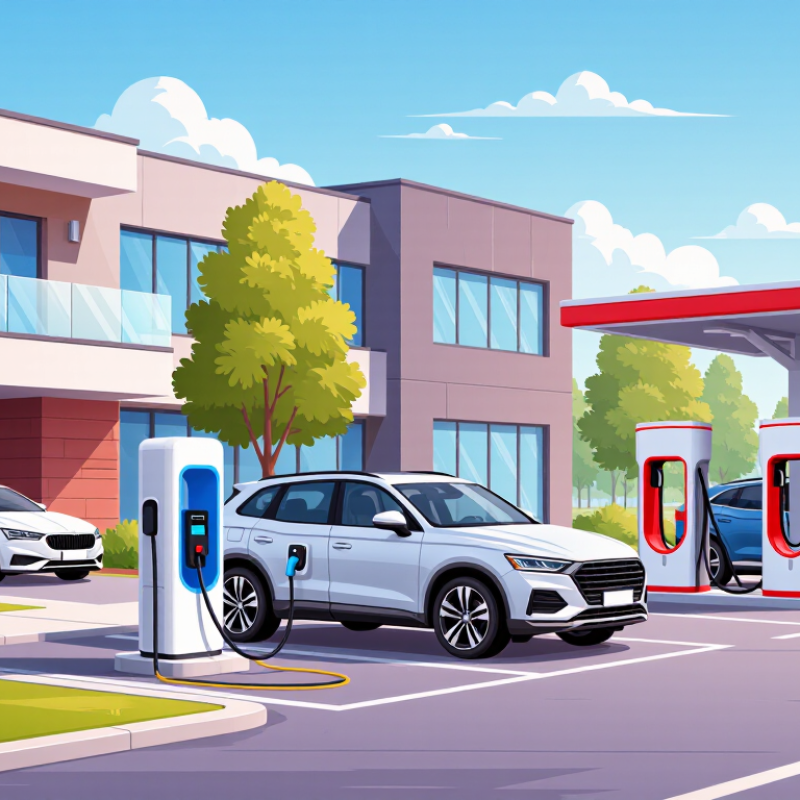
Electric vehicle charging is no longer limited to a single plug beside a garage. Drivers now encounter home outlets, wall-mounted units, workplace chargers, public AC posts, and high-powered DC systems. Each Charging Station serves a different purpose, depending on driving distance, available electricity, vehicle compatibility, and waiting time.

A basic Level 1 charger can use a household socket, but it may add only a few miles of range per hour. Level 2 equipment works faster and suits homes, offices, apartments, and shopping centers. DC fast chargers can restore substantial range during a short stop, although they usually cost more and may reduce speed as the battery fills. Some networks also offer ultra-fast stations, but their performance depends on the vehicle, cable, temperature, and local grid capacity.

Labels can mislead.

This guide compares the top types of EV charging stations through practical use, technical capability, installation demands, and everyday reliability. It considers what a homeowner sees in a driveway, what a fleet manager measures at a depot, and what a traveler experiences beside a highway. Charging speed alone does not determine the best choice. A cheaper charger may be more useful when it operates overnight, while a powerful unit may disappoint if the site has limited electrical capacity. The discussion also recognizes an uncomfortable reality: charging standards and network features continue to change. Some details may become outdated. Checking the vehicle manual, certified installation guidance, and current provider information remains essential before making a purchase or site decision.

What Are the Top Types of EV Charging Stations?

EV Charging Station Basics and Core Classification Criteria

What Are the Top Types of EV Charging Stations?

EV charging stations are mainly classified by current type, power output, charging speed, and installation location. These criteria matter more than appearance. An AC charger sends alternating current to the vehicle’s onboard charger. A DC charger converts power before it reaches the battery, allowing faster charging.

Common residential charging includes basic AC charging and higher-power AC charging. Basic units can use a standard household circuit, but charging may take many hours. Higher-power home units need suitable wiring and professional installation. Workplace and destination chargers usually provide moderate AC power. They suit vehicles parked for several hours. DC fast chargers deliver much more power and are designed for shorter stops. Actual speed still depends on battery temperature, vehicle limits, and the station’s available capacity.

Connector type is another core classification criterion. Compatibility must be checked before installation or travel. Power rating alone can be misleading. A station may advertise high output, yet the vehicle may accept less. Location also shapes the best choice: homes need convenience, highways need rapid turnover, and apartment sites may require shared load management. Safety protection, weather resistance, metering accuracy, and network reliability deserve equal attention. In practical use, a charger that works consistently is often more valuable than the fastest model. The categories are useful, but not perfect. Real charging performance changes with the cable, software, temperature, and site electricity supply.

Level 1, Level 2, and DC Fast Charging Stations Explained

What Are the Top Types of EV Charging Stations?

Level 1, Level 2, and DC Fast Charging Stations Explained

Level 1 charging uses a standard household outlet. The U.S. Department of Energy’s Alternative Fuels Data Center reports roughly 2–5 miles of range per charging hour. It suits overnight charging, apartment parking, and low-mileage drivers. It is slow. That can be perfectly practical.

Level 2 equipment typically uses 208- or 240-volt power. The same source estimates about 10–30 miles of range per hour. It is common at workplaces, homes, public car parks, and retail locations. Installation quality matters greatly. A long cable, shared circuit, or cold battery can reduce real-world speed. Many owners expect the maximum figure, but daily results are less tidy.

DC fast charging sends direct current to the battery, avoiding the vehicle’s onboard AC converter. Charging can add substantial range within minutes, although speed often falls after the battery reaches a high state of charge. The International Energy Agency reported more than 4 million public charging points worldwide at the end of 2023, with over 1.3 million added that year. Its Global EV Outlook 2024 also highlights rapid expansion of fast-charging networks. Still, connector access, queueing, and grid capacity remain practical concerns. The three-level model helps, but it simplifies a complicated experience. U.S. DOE Alternative Fuels Data Center; International Energy Agency, Global EV Outlook 2024.

Public, Workplace, Home, and Fleet Charging Station Types

What Are the Top Types of EV Charging Stations?

Public charging stations serve drivers who need access away from home. They usually include AC Level 2 chargers and faster DC chargers. AC charging suits shopping visits, parking, or longer stops. DC charging can add substantial range during a short break. However, charging speed depends on the vehicle, battery temperature, and station output. A crowded site can also make a fast charger feel surprisingly slow.

Workplace charging often uses AC stations during regular office hours. Employees can connect in the morning and leave with a useful range increase later. These stations may need access controls, usage rules, and fair scheduling. Home charging is usually simpler. A dedicated AC unit beside a driveway or garage can support overnight charging. Apartment residents may face limited parking, shared electrical capacity, or permission requirements. Those details matter more than advertised charging speed.

Fleet charging stations support delivery vans, taxis, buses, and service vehicles at depots. Operators commonly combine scheduled AC charging with higher-power DC charging for urgent departures. Load management helps prevent several vehicles from drawing maximum power together. Software can track energy use, charging status, and vehicle availability, but it is not flawless. Poor data, unexpected routes, or cold weather can disrupt a carefully planned schedule. Choosing a station type requires studying daily mileage, parking time, electrical capacity, and local operating conditions. A powerful charger is not always the most practical choice.

Wireless, Solar-Powered, and Battery-Buffered Charging Systems

Wireless, Solar-Powered, and Battery-Buffered Charging Systems

Wireless EV charging uses an induction pad beneath the vehicle.

Drivers park over it, and energy transfers through magnetic fields without a plug. The pad stays quiet. This design can help people with limited mobility or frequent short stops. However, alignment affects charging performance, and installation may require driveway reconstruction. A qualified installer should check electrical capacity, weather protection, and certified equipment before work begins.

Solar-powered charging stations connect rooftop or ground-mounted panels with charging hardware.

On a bright afternoon, panels can supply energy while a car sits in the driveway. Clouds still matter. Solar output changes with season, shade, and local weather, so many systems still use grid electricity. A practical assessment should compare daily driving distance, panel area, and household energy use. Overestimating solar production can create disappointing results.

Battery-buffered stations store electricity and release it when a vehicle needs power.

They can reduce pressure on weak local grids and support charging at rural sites. A battery may also capture surplus solar energy during midday. Yet storage adds cost, weight, thermal-management needs, and eventual replacement concerns. Operators should monitor temperature, charging cycles, and emergency shutdown systems. The technology is promising, but real performance depends on careful sizing and honest maintenance planning. Some early estimates may look attractive until winter demand and battery aging enter the calculation.

How to Choose an EV Charging Station for Different Use Cases

Choosing an EV charging station starts with the vehicle’s parking time, not the charger’s maximum power.

Level 1 uses a standard household outlet and suits overnight charging for low-mileage drivers. Level 2, usually operating at 208–240 volts, fits homes, offices, apartments, and retail parking. The U.S. Department of Energy’s Alternative Fuels Data Center identifies Level 2 as a practical daily-charging option, while DC fast charging is designed for rapid energy recovery during longer trips.

Use DC fast charging when drivers cannot wait.

A motorway site, taxi hub, or delivery depot may need outputs from 50 kW upward, depending on vehicle compatibility and grid capacity. However, higher power can increase installation costs, demand charges, and cooling requirements.

The International Energy Agency reported that global public charging points grew by about 40% in 2023, reaching nearly four million. More stations are appearing, but availability does not guarantee a suitable connector or dependable uptime.

For a house, calculate nightly mileage and available electrical capacity before choosing hardware. For apartments, load management and shared access may matter more than peak speed. Workplaces often benefit from several Level 2 ports, because cars remain parked for hours.

Public sites need lighting, weather protection, clear payment procedures, and maintenance plans. A perfect choice rarely exists. In practice, owners sometimes overestimate charging speed and underestimate parking behavior. That mistake deserves another review.

According to the IEA’s Global EV Outlook 2024, expanding charging access remains essential for wider electric vehicle adoption, but local demand should guide each installation.