
News

Miro: A New Standard in Responsible Innovation

Miro: A New Standard in Responsible Innovation The Miro monitor arm is setting new benchmarks in sustainability. It offers a high-performance solution without compromising on environmental responsibility. Designed with careful material selection, local sourcing, and longevity in mind, Miro’s responsible approach to design and unique manoeuvrability set it apart from the competition. Sustainable Choices Miro is crafted from energy-efficient materials with a lower carbon impact....

Read more
HSE Advisor

Role Purpose Support in the development, implementation and maintenance of the company’s Health, Safety & Environmental policies, processes, operational procedures, and standards.  Ensuring best practice and championing a continually improving HSE culture within the business. Key Responsibilities Liaise with and provide support to all areas of the business to eliminate, mitigate or reduce identified HSE exposures. Partner with the production management team and team leaders,...

Read more
CMD Ltd LAUNCHES 48-HOUR TURNAROUND ON BETATRAK® RAPID ORDERING SERVICE

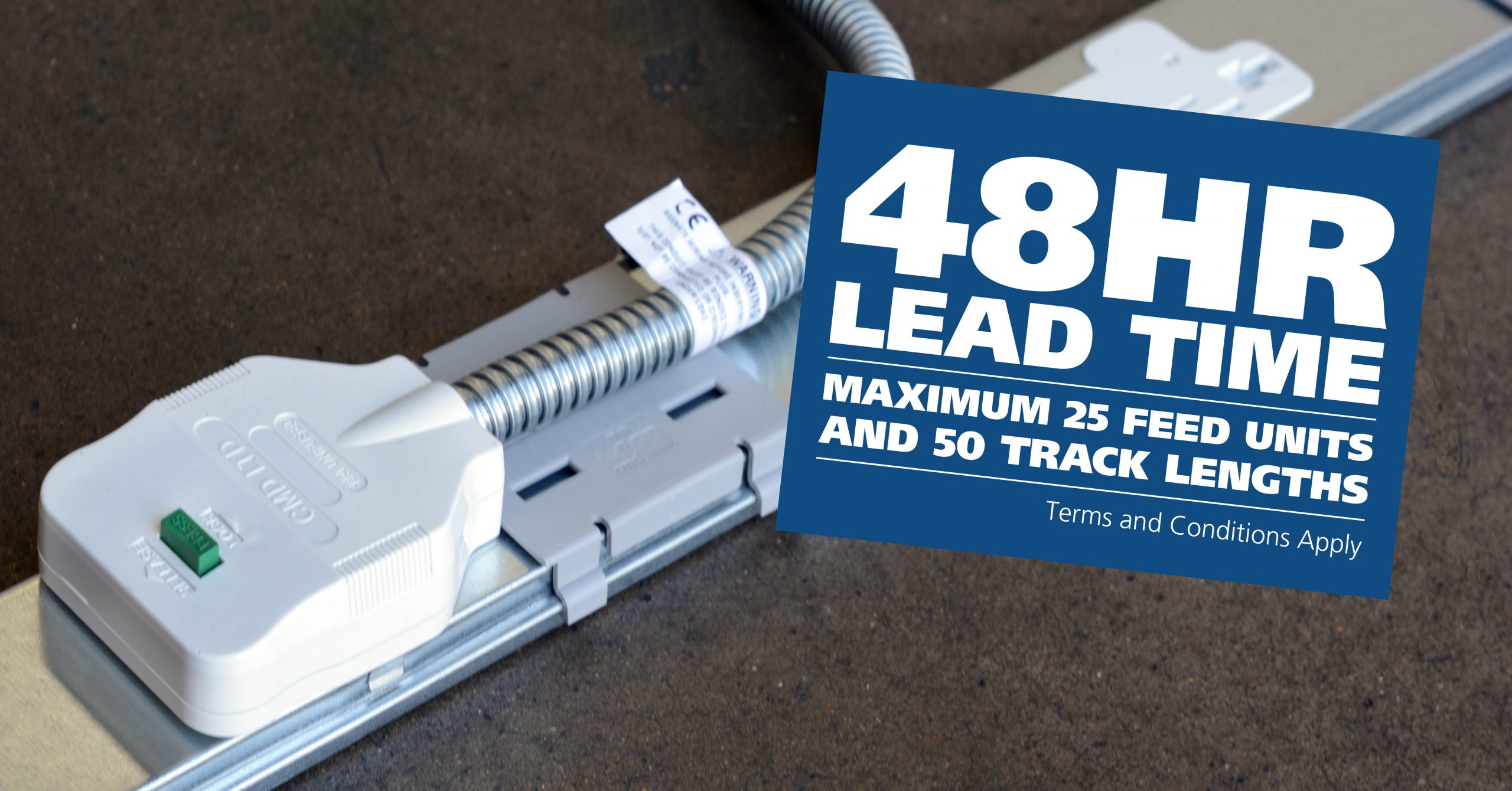
CMD Ltd, the specialist in power distribution systems, workstation power and monitor arms, has launched a rapid ordering service for its Betatrak® underfloor powertrack distribution systems and accessories, with a commitment to delivering within 48-hours of an approved purchase order*. The service enables customers to order up to 50 lengths of Standard or Clean Earth (C/E) low noise Betatrak, along with up to 25 feed...

Read more
CMD INVESTS £1/4 MILLION IN NEW MACHINE AS PART OF FACTORY UPGRADE

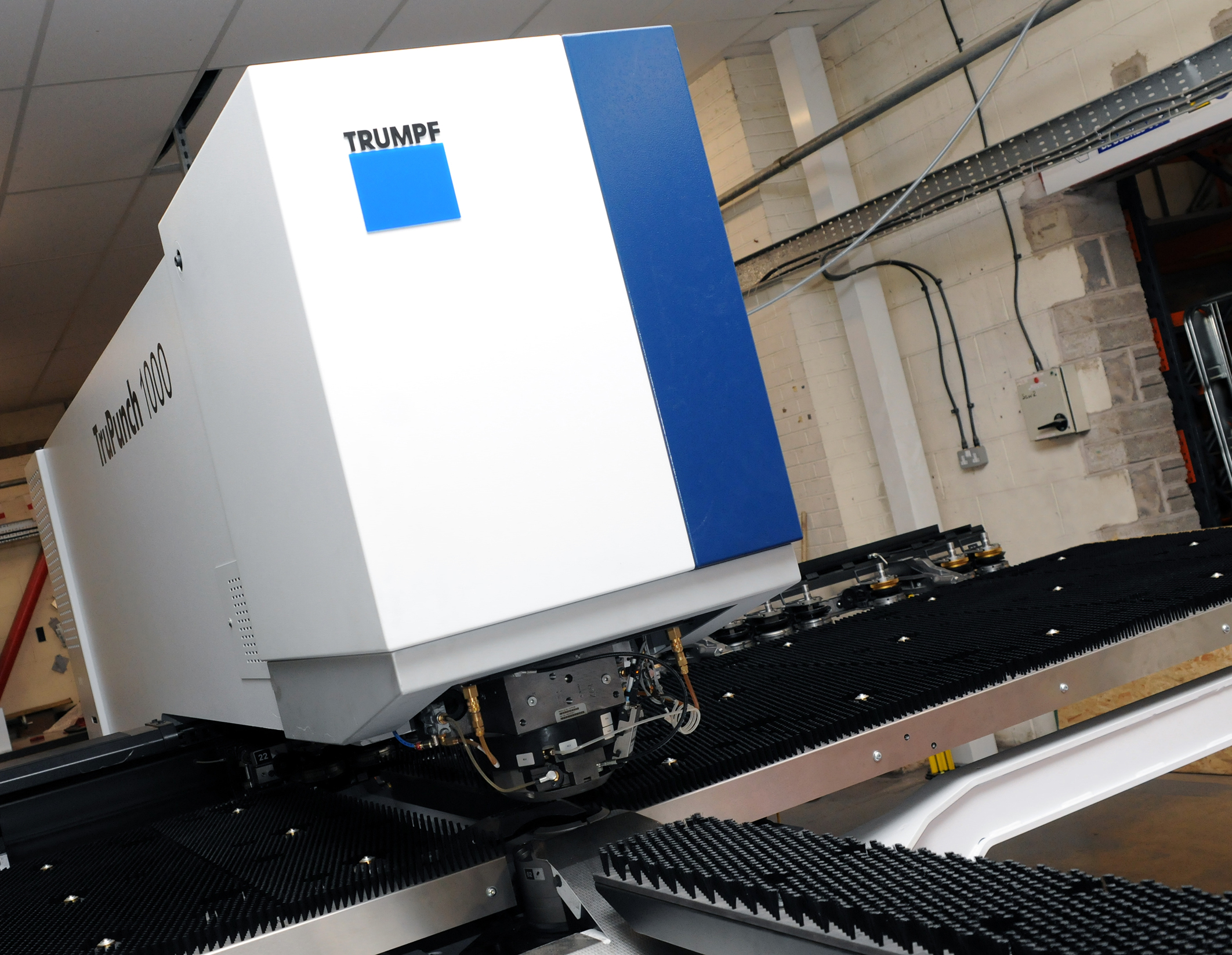
We have invested in a new £1/4m TRUMPF CNC metal punch as part of an asset renewal strategy for our UK manufacturing capability. The new machine will be used in the production of a wide variety of our power distribution systems and workstation power products at our Rotherham factory. Suitable for handling sheet metal between 0.9mm and 3.0mm thick, the new machine will replace one...

Read more
CMD CATALOGUE PROVIDES TECHNICAL POWER DISTRIBUTION GUIDE

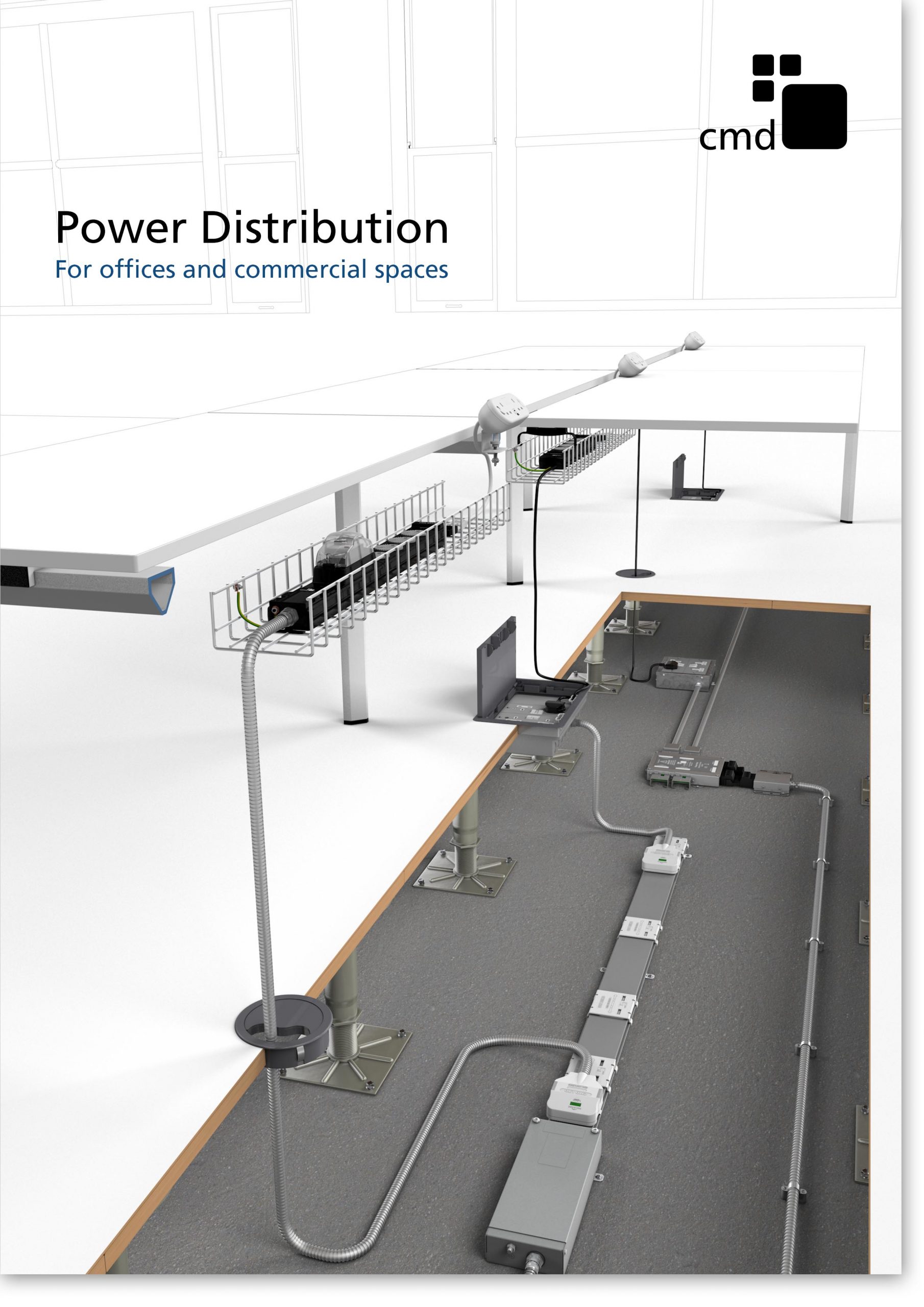
CMD Ltd has released a new catalogue, providing an easy to follow technical guide to our power distribution systems and plug and play desk modules. Detailing CMD’s full range of UK-manufactured power distribution systems and plug and play desk modules, the catalogue will be a helpful source of information to M&E engineers and contractors alike to understand how our power distribution systems connect together and...

Read more
Power Distribution Catalogue
CMD Ltd PLAYS ESSENTIAL ROLE IN ELECTRICAL FIT OUT AT LONDON’S PRESTIGIOUS OFFICE DEVELOPMENT

CMD Ltd, specialist in workplace connectivity and ergonomic solutions, has provided a flexible and high-quality power distribution network for The Ray, a prestigious office development in London’s Farringdon. Well-known for being the former site of The Guardian newspaper, The Ray now stands as an 83,000ft² office development characterised by a modernised warehouse aesthetic, with level two now occupied by a global social media company. The...

Read more

The Ray
CMD plugs in to european opportunity with Schuko Capsule unit launch

CMD Ltd, the specialist in power and connectivity solutions for commercial environments, has launched a Schuko version of its popular fixed format Capsule workstation power module for export to mainland Europe and beyond. A popular on desk power module comprising two sockets and dual USB (type A and C) chargers, CMD’s Capsule unit is already widely specified in the UK as an off-the-shelf workstation power...

Read more
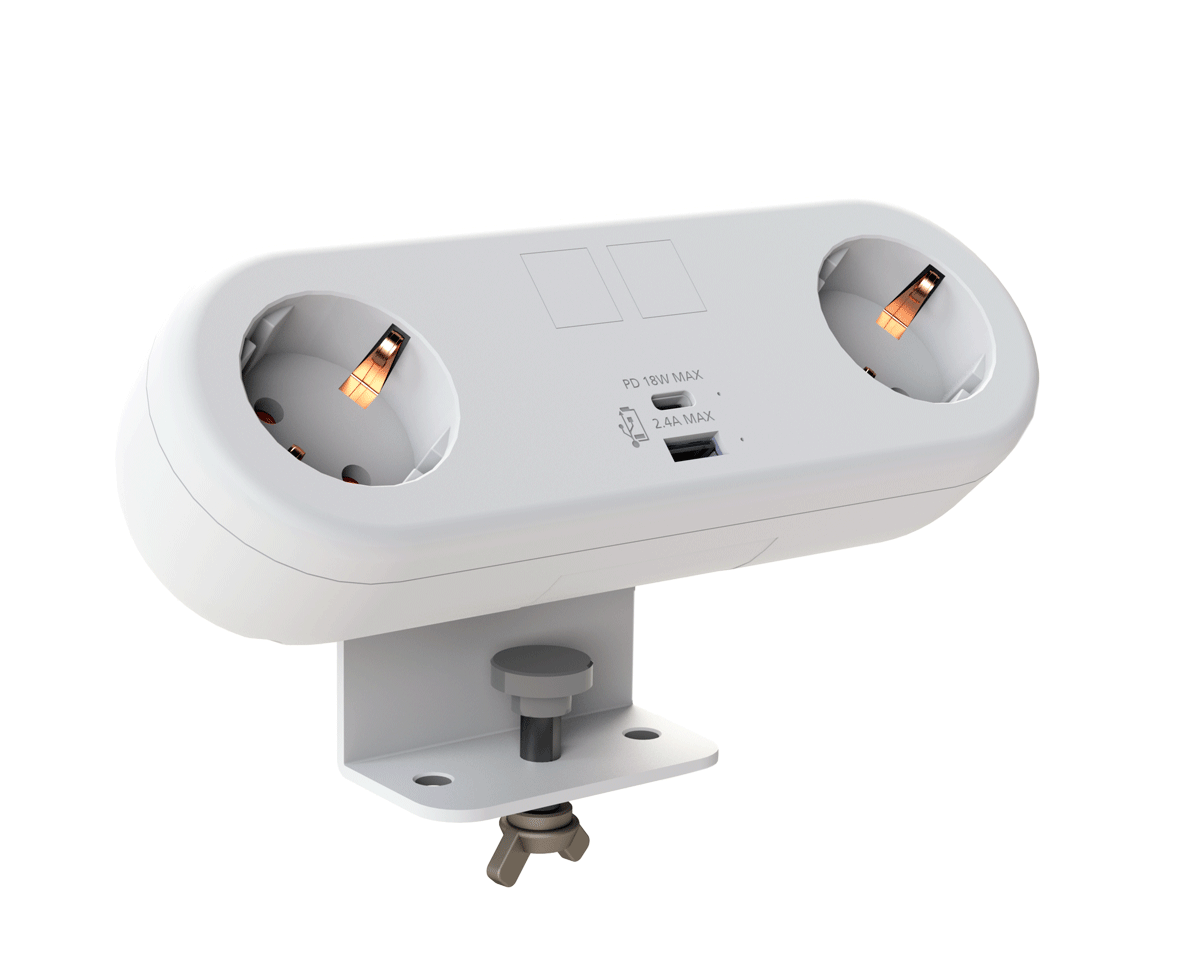
CMD White Schuko Capsule Desk Power Module
CMD LTD EXTENDS MONITOR ARM RANGE WITH THE LAUNCH OF REACH PLUS

CMD Ltd, the specialist in ergonomic and connectivity solutions for commercial interiors, has completed its Reach monitor arm range with the launch of the Reach Plus. Available in single or dual screen options, the Reach Plus has been designed to provide an ideal solution for both single and dual screen workstation configurations, or can be used with next generation of large format curved screens. Suitable...

Read more
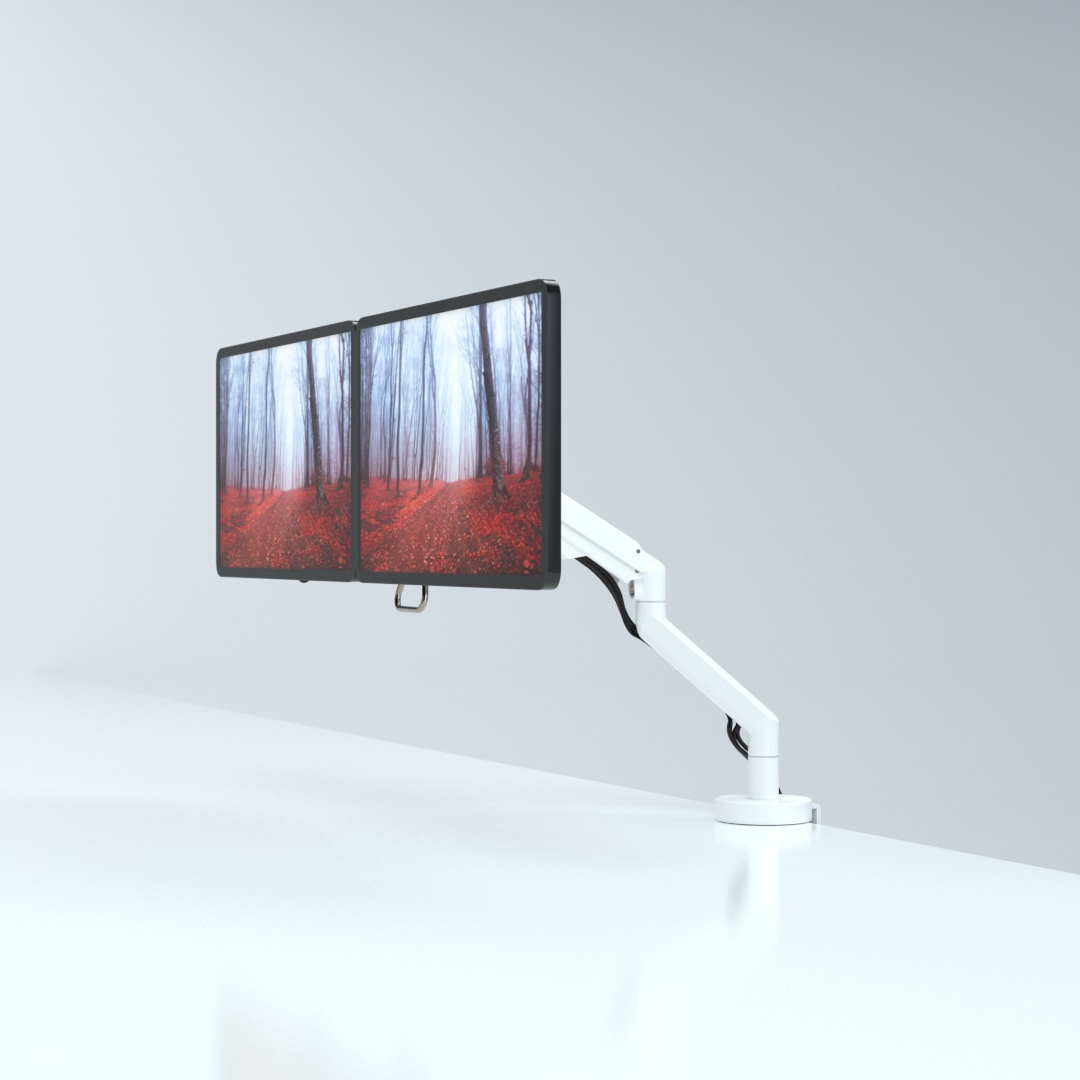
CMD Ltd DEMONSTRATES THE ART OF POWER DISTRIBUTION AT THE UNIVERSITY OF WARWICK

CMD Ltd, the specialist in workplace connectivity and ergonomic solutions, has provided Betatrak busbar power distribution and a range of electrical accessories for two major capital investment projects at the University of Warwick. Designed by Fielden Clegg Bradley Studios, the £33 million Faculty of Arts building is a showpiece development comprising four interconnected structures set around a central atrium, which will enable inter-disciplinary collaboration across...

Read more

University of Warwick
CMD BRINGS HARMONY TO COVENTRY UNIVERSITY RESEARCH FACILITIES

CMD Ltd, the specialist in power distribution solutions and workstation power and ergonomics, has provided under desk and on desk power modules for the refurbishment of three Coventry University research buildings. Located on Coventry University Technology Park, a business park designed to encourage collaboration between the university and knowledge-based businesses, the three buildings are being repurposed as office accommodation for university research teams. The refurbishment...

Read more

Coventry University

China Top Type C Laptop Charger Manufacturers

China has become a major manufacturing base for type c laptop charger products, serving laptop brands, wholesalers, and technology distributors worldwide. Its strength comes from dense supplier networks, automated assembly lines, and access to charging components. Yet manufacturing scale alone does not prove quality. A reliable supplier must demonstrate electrical testing, thermal control, material consistency, and traceable production records.

Jeff Ravencraft, president and chief operating officer of the USB Implementers Forum, has described USB Type-C as “the next-generation connector for USB.” That statement captures its appeal, but the connector is only one part of the system. A professional type c laptop charger must match the laptop’s power requirements, support suitable USB Power Delivery profiles, and maintain stable output under changing loads. Small details matter. A weak cable, loose port, or poorly managed heat path can affect daily performance.

This guide examines leading China manufacturers through practical criteria. These include certification documentation, factory experience, product testing, customization ability, minimum order quantities, and after-sales support. Factory photographs can help, but they are not proof. Independent reports and sample testing remain more dependable. Some suppliers may communicate well yet struggle with consistency after large orders. Others may offer excellent engineering but limited branding support. That tension deserves attention. Buyers should compare evidence, not promises, before selecting a long-term manufacturing partner.

China Top Type C Laptop Charger Manufacturers

Definition and Role of Type-C Laptop Chargers in China

China Top Type C Laptop Charger Manufacturers

Type-C laptop chargers convert AC power into controlled DC output through USB Power Delivery (PD). They negotiate voltage and current with a laptop, helping prevent unsafe power delivery. The USB Implementers Forum states that USB PD 3.1 supports power levels up to 240 watts, although most laptops require less. IDC reported 262.7 million PC shipments worldwide in 2024, showing the continuing need for dependable replacement chargers. In China, experienced manufacturers typically combine switching circuits, thermal sensors, reinforced cables, and automated testing. Quality depends on design discipline, not only production volume. A high wattage label is not proof of stable performance.

Reliable factories should verify output ripple, charging efficiency, insulation, connector temperature, and protection against overcurrent. IEC safety requirements and regional certification processes provide useful benchmarks, but paperwork alone cannot replace sample testing. In practical evaluations, I check whether a charger maintains power during heavy workloads, such as video rendering, while its casing remains comfortable to touch. That test can reveal weaknesses. Some specifications still look impressive but lack clear measurement conditions.

Tips: Match the charger’s rated wattage with the laptop’s requirement. Confirm PD protocol compatibility before ordering. Request test reports, traceable component records, and aging-test results. Leave room for doubt when a supplier avoids technical details.

Key Features of Leading Chinese Type-C Charger Manufacturers

Leading Chinese Type-C charger manufacturers combine compact engineering with disciplined production control. Many use gallium nitride components to reduce heat and shrink charger bodies. A 65W model can fit beside a notebook in a crowded travel bag. However, small size alone proves little. Reliable manufacturers test temperature, voltage stability, cable compatibility, and repeated plug cycles before shipping.

USB Power Delivery support is now essential for laptops, tablets, and phones. Better factories design products around current PD and PPS requirements, rather than relying on basic output claims. They also provide clear power profiles, such as 5V, 9V, 15V, and 20V. This helps buyers match a charger with different devices safely. It is a practical detail. Some suppliers also offer engineering samples, test reports, and traceable batch records for professional buyers.

Manufacturing consistency separates experienced suppliers from temporary sellers. Automated assembly, controlled soldering, and incoming component inspections reduce hidden defects. Factory audits can reveal whether quality procedures exist beyond attractive product photos. Still, even capable manufacturers may face uneven component availability or changing certification requirements. Buyers should request fresh samples and verify performance independently. One sample is not enough. A dependable supplier communicates limitations, supports customization carefully, and accepts technical questions without vague promises. Their documentation should match the physical charger, including ratings, warnings, and connector specifications.

China Top Type C Laptop Charger Manufacturers - Key Features of Leading Chinese Type-C Charger Manufacturers
Evaluation Dimension Common Capability of Export-Oriented Chinese OEM/ODM Manufacturers Relevant Technical Data or Standard Recommended Buyer Verification
USB-C Output Power Product portfolios commonly cover compact laptop chargers from 30 W to 100 W, with selected high-power models designed for performance laptops. USB Power Delivery 3.0 supports power profiles up to 100 W when used with an appropriate cable and compatible equipment. Request the complete PDO profile, maximum continuous output test, thermal test report, and rated-load aging data.
High-Power USB-C Design More advanced suppliers offer chargers supporting extended-power applications, including laptop and workstation charging. USB Power Delivery 3.1 Extended Power Range can support up to 240 W under the applicable specification and system conditions. Confirm the negotiated power level, connector rating, cable requirements, protection strategy, and compliance test results.
GaN Power Architecture Gallium-nitride designs are widely used for smaller and lighter laptop adapters because they can operate at higher switching frequencies and support compact layouts. GaN is a semiconductor technology rather than a charging protocol. Actual size, efficiency, and temperature depend on the complete circuit design. Compare measured efficiency at 25%, 50%, 75%, and 100% load, no-load power consumption, surface temperature, and acoustic performance.
Fast-Charging Protocol Support Export-oriented charger platforms commonly support USB-C Power Delivery and may add Programmable Power Supply for compatible mobile and computing devices. PPS allows the charger to adjust voltage and current in smaller steps than fixed power profiles, subject to the device and charger implementation. Obtain the protocol analyzer report and verify voltage ranges, current limits, transition behavior, and compatibility with target laptops.
Multi-Port Configuration Typical configurations include one USB-C port, two USB-C ports, or USB-C combined with USB-A for simultaneous charging of laptops, tablets, and accessories. Multi-port products must define total power allocation and port-priority behavior when more than one device is connected. Check the output matrix for every port combination, including single-port maximum power and reduced-power behavior under simultaneous use.
Power Allocation Control Mature manufacturers use firmware and power-management circuitry to distribute available power dynamically between ports. The actual output depends on negotiated PDO or PPS profiles, total rated power, thermal conditions, and the number of active ports. Request a port-allocation chart and test hot-plugging, device removal, reconnection, and load changes without output interruption.
Safety Protection Standard protection packages generally include over-voltage, over-current, short-circuit, over-temperature, surge, and input under-voltage protection. Protection functions should be evaluated against the applicable product safety requirements and the manufacturer’s rated operating conditions. Review circuit schematics, protection test records, abnormal-operation tests, dielectric-strength results, and temperature-rise reports.
Electrical Safety Compliance Chinese manufacturers serving domestic and overseas markets commonly develop models for Chinese regulatory approval and separate export certification. China Compulsory Certification may apply to covered power-adapter categories. IEC 62368-1 is a widely used safety standard for audio/video, information, and communication technology equipment. Confirm the exact model number on certificates, laboratory reports, critical-component lists, and factory quality-control records.
Export Compliance Experienced suppliers can prepare documentation for multiple destination markets, but certification scope varies by model, power rating, plug type, and target country. Export requirements may include electrical safety, electromagnetic compatibility, energy efficiency, chemical restrictions, and country-specific marking. Verify destination-specific certificates, declarations of conformity, test standards, labeling artwork, user manuals, and traceability information.
Energy Efficiency Laptop charger platforms are commonly optimized for low standby consumption and improved efficiency across a broad load range. Requirements may reference U.S. Department of Energy external power-supply rules, European energy-efficiency requirements, or other regional schemes. Request no-load power, average active efficiency, light-load efficiency, and test conditions for the specific finished product.
EMC and Ripple Control Established OEM/ODM production lines typically include conducted-emission, radiated-emission, output-ripple, and transient-response testing during development and quality control. Electromagnetic compatibility performance depends on switching design, filtering, shielding, PCB layout, and enclosure construction. Review EMC laboratory reports and measure output ripple, overshoot, settling time, and USB-C negotiation stability with representative loads.
USB-C Cable Compatibility Suppliers can provide detachable or integrated cable options, with higher-power configurations requiring suitable current and voltage ratings. USB-C cables designed for currents above standard default levels may require an electronic marker. High-power USB PD systems also require appropriate cable capability. Confirm cable current rating, e-marker behavior where applicable, conductor size, bend-cycle testing, connector durability, and cable length.
Input Voltage Range Many travel-oriented laptop chargers support universal AC input for use across major international power systems. A common design range is 100–240 V AC at 50/60 Hz, but the exact range must be confirmed on the product label and test report. Check operation at minimum and maximum input voltage, frequency variations, cold start, surge conditions, and full rated load.
Thermal Management Compact chargers commonly use multilayer PCB layouts, thermal pads, heat-spreading structures, and temperature-based power control. Operating temperature is affected by output power, ambient temperature, enclosure size, component selection, ventilation, and charging duration. Conduct full-load tests at the declared ambient temperature and record enclosure hot spots, internal component temperature, and thermal derating behavior.
Customization and ODM Support Qualified suppliers may support plug options, housing colors, labels, packaging, cable bundles, firmware settings, and customized power profiles. Any change to the enclosure, PCB, component list, cable, or power profile can affect certification and safety performance. Require an engineering-change process, approved sample, bill of materials, golden sample, certification-impact assessment, and production approval record.
Quality Assurance and Traceability Better-equipped factories use incoming-material inspection, automated production testing, aging tests, final inspection, and batch traceability. Key controls include component lot tracking, firmware or protocol verification, output-load testing, hipot testing, and visual inspection. Audit quality procedures, sampling plans, calibration records, defect statistics, corrective-action reports, and retained production samples.
The figures and standards shown are industry-level technical references rather than claims about any individual manufacturer. Actual performance, certification scope, and power capability must be verified for the specific model and production batch.

How Chinese Manufacturers Design and Produce Laptop Chargers

A reliable Type-C laptop charger starts with wattage mapping, not a shell drawing.

Engineers study the laptop’s charging profile, then select the power architecture, thermal path, and cable rating. USB-IF’s Power Delivery 3.1 specification permits up to 240 watts, compared with 100 watts under earlier PD levels. That figure changes transformer size, MOSFET selection, insulation distance, and enclosure ventilation. Many Chinese production teams now evaluate gallium-nitride switches for smaller adapters. Smaller is useful. However, compact layouts can concentrate heat around the primary side. During development, factories typically complete schematic reviews, PCB assembly, firmware loading, and automated electrical tests. Operators check voltage negotiation, over-current response, short-circuit protection, and burn-in temperature. Those checks need records. Otherwise, a passing sample may hide unstable batch performance.

Production quality depends on repeatability. Incoming inspection measures capacitors, magnetic parts, connectors, and insulation materials against approved specifications. Optical inspection catches solder defects, while hipot and ground-continuity tests screen safety risks under IEC 62368-1 requirements. Factories also use load banks to test 5V, 9V, 15V, and 20V outputs under changing loads.

The 2024 Global E-waste Monitor reported 62 million tonnes of e-waste in 2022. Only 22.3% was formally collected and recycled.

That data should influence charger design. Longer cable-flex testing, repair-minded construction, clearer material labeling, and lower standby draw matter. Yet cost pressure can weaken these choices. Some suppliers still overemphasize appearance. That is a mistake. Buyers should request test reports, traceability samples, and failure-rate data, not only a glossy prototype.

Safety Standards and Quality Testing for Type-C Chargers

China Top Type-C Laptop Charger Manufacturers: Safety Standards and Quality Testing

Reliable Type-C laptop chargers begin with safety design, not attractive casing. USB Power Delivery 3.1 supports power levels up to 240 watts, according to the USB Implementers Forum. That capacity demands controlled voltage, heat, and current protection. Manufacturers should test insulation, grounding, short-circuit response, and abnormal temperature conditions. IEC 62368-1 uses a hazard-based approach for audio, video, and information technology equipment. It requires engineers to reduce electrical, thermal, and fire-related risks before shipment.

Laboratory testing should include repeated plug cycles, cable bending, drop tests, humidity exposure, and full-load operation. A charger may pass a short test yet fail after hours beside a warm laptop. That detail matters. European Commission research estimates that common-charger rules could reduce electronic waste by about 11,000 tonnes yearly and save consumers €250 million. Lower waste still depends on products surviving real use. USB-IF compliance testing also helps verify communication between the charger, cable, and device, rather than relying only on printed power ratings.

Factory quality teams should test samples from every production batch, keep traceable records, and investigate abnormal results. Visual inspection is useful, but it cannot detect every weak solder joint or unstable controller. Testing is not flawless. Human error, rushed sampling, and changing components can undermine confidence. Independent laboratory checks and periodic factory audits provide stronger evidence for buyers comparing Chinese Type-C laptop charger manufacturers. Sources: USB-IF USB Power Delivery 3.1 specifications; IEC 62368-1; European Commission Common Charger initiative.

How to Select a Reliable China-Based Type-C Charger Supplier

Selecting a reliable China-based Type-C charger supplier requires evidence, not polished photos. The USB Implementers Forum states that USB Power Delivery 3.1 can support up to 240 watts. That range increases the need for thermal control, accurate power negotiation, and verified components.

Request factory ownership details, ISO 9001 records, production capacity, and recent third-party test reports. Check whether reports match the exact model, not a similar sample. A supplier should provide USB-IF compliance evidence, EMC results, safety testing, and material declarations. The European Commission estimates that common chargers could reduce annual electronic waste by about 11,000 tonnes. Compliance is now commercial planning, not decoration.

Test samples under continuous load. Measure temperature near the plug, transformer, and controller after several hours. Inspect solder joints and cable strain relief. Ask for protection against overvoltage, overcurrent, short circuits, and overheating. A supplier refusing raw test data deserves caution. I have found that a low sample price can conceal unstable components or weak change control. That mistake is expensive. Request batch traceability, approved component lists, aging-test records, warranty terms, and notification before design changes. Also confirm delivery performance, minimum order quantities, and corrective-action procedures. A capable supplier will explain failures clearly, even when the answer is uncomfortable.

China Type-C Laptop Charger Supplier Selection: USB-C Power Capability

When evaluating a China-based Type-C laptop charger supplier, confirm that its products support the required USB-C Power Delivery range. USB-C default power is up to 15W, USB PD Standard Power Range reaches up to 100W, and USB PD Extended Power Range reaches up to 240W. Ask suppliers for USB-IF compliance evidence, certified test reports, thermal protection data, and compatibility testing for the target laptop models.