

News

Miro: A New Standard in Responsible Innovation

Miro: A New Standard in Responsible Innovation The Miro monitor arm is setting new benchmarks in sustainability. It offers a high-performance solution without compromising on environmental responsibility. Designed with careful material selection, local sourcing, and longevity in mind, Miro’s responsible approach to design and unique manoeuvrability set it apart from the competition. Sustainable Choices Miro is crafted from energy-efficient materials with a lower carbon impact....

Read more
HSE Advisor

Role Purpose Support in the development, implementation and maintenance of the company’s Health, Safety & Environmental policies, processes, operational procedures, and standards.  Ensuring best practice and championing a continually improving HSE culture within the business. Key Responsibilities Liaise with and provide support to all areas of the business to eliminate, mitigate or reduce identified HSE exposures. Partner with the production management team and team leaders,...

Read more
CMD Ltd LAUNCHES 48-HOUR TURNAROUND ON BETATRAK® RAPID ORDERING SERVICE

CMD Ltd, the specialist in power distribution systems, workstation power and monitor arms, has launched a rapid ordering service for its Betatrak® underfloor powertrack distribution systems and accessories, with a commitment to delivering within 48-hours of an approved purchase order*. The service enables customers to order up to 50 lengths of Standard or Clean Earth (C/E) low noise Betatrak, along with up to 25 feed...

Read more

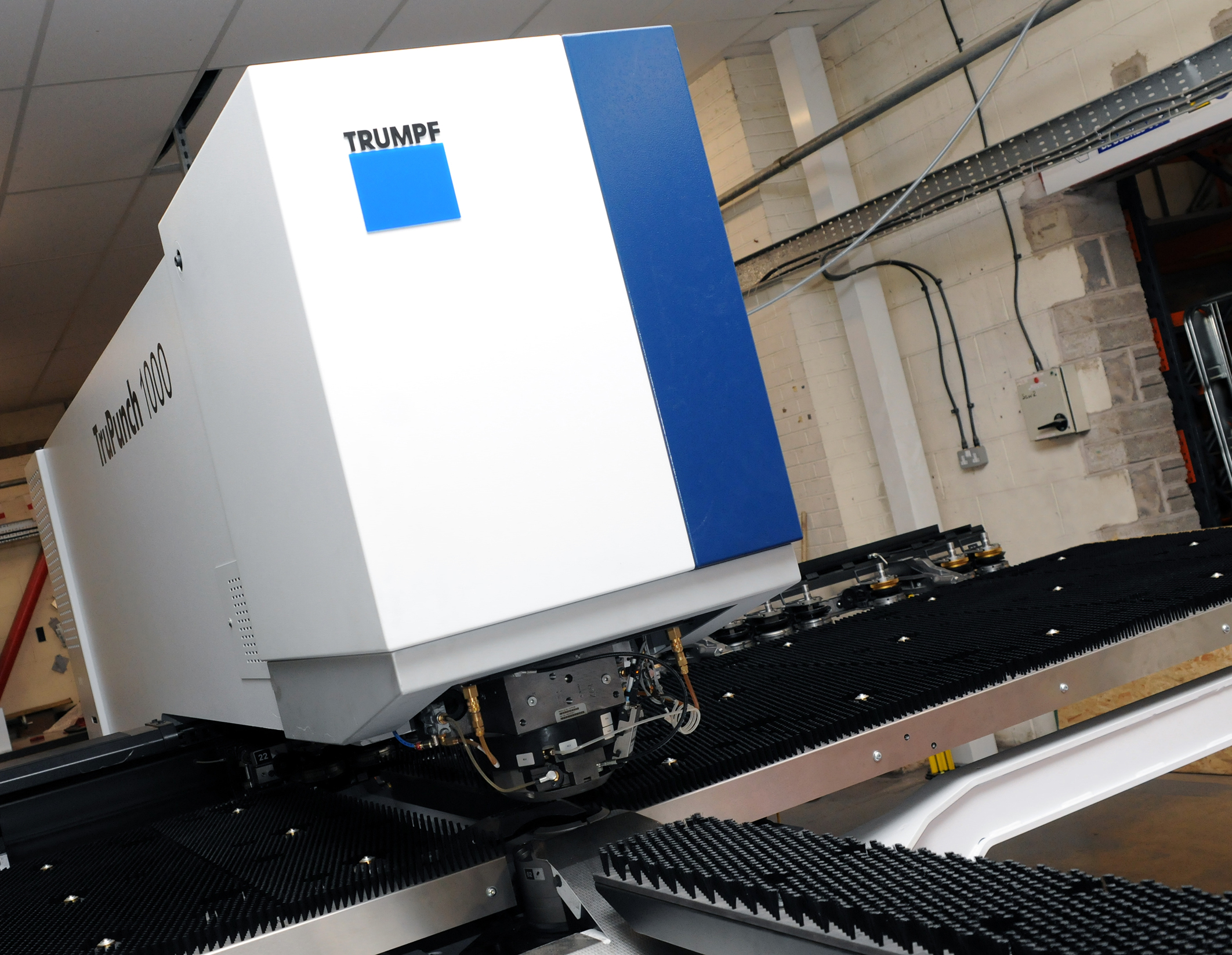
CMD INVESTS £1/4 MILLION IN NEW MACHINE AS PART OF FACTORY UPGRADE

We have invested in a new £1/4m TRUMPF CNC metal punch as part of an asset renewal strategy for our UK manufacturing capability. The new machine will be used in the production of a wide variety of our power distribution systems and workstation power products at our Rotherham factory. Suitable for handling sheet metal between 0.9mm and 3.0mm thick, the new machine will replace one...

Read more
CMD CATALOGUE PROVIDES TECHNICAL POWER DISTRIBUTION GUIDE

CMD Ltd has released a new catalogue, providing an easy to follow technical guide to our power distribution systems and plug and play desk modules. Detailing CMD’s full range of UK-manufactured power distribution systems and plug and play desk modules, the catalogue will be a helpful source of information to M&E engineers and contractors alike to understand how our power distribution systems connect together and...

Read more

Power Distribution Catalogue
CMD Ltd PLAYS ESSENTIAL ROLE IN ELECTRICAL FIT OUT AT LONDON’S PRESTIGIOUS OFFICE DEVELOPMENT

CMD Ltd, specialist in workplace connectivity and ergonomic solutions, has provided a flexible and high-quality power distribution network for The Ray, a prestigious office development in London’s Farringdon. Well-known for being the former site of The Guardian newspaper, The Ray now stands as an 83,000ft² office development characterised by a modernised warehouse aesthetic, with level two now occupied by a global social media company. The...

Read more

The Ray
CMD plugs in to european opportunity with Schuko Capsule unit launch

CMD Ltd, the specialist in power and connectivity solutions for commercial environments, has launched a Schuko version of its popular fixed format Capsule workstation power module for export to mainland Europe and beyond. A popular on desk power module comprising two sockets and dual USB (type A and C) chargers, CMD’s Capsule unit is already widely specified in the UK as an off-the-shelf workstation power...

Read more

CMD White Schuko Capsule Desk Power Module
CMD LTD EXTENDS MONITOR ARM RANGE WITH THE LAUNCH OF REACH PLUS

CMD Ltd, the specialist in ergonomic and connectivity solutions for commercial interiors, has completed its Reach monitor arm range with the launch of the Reach Plus. Available in single or dual screen options, the Reach Plus has been designed to provide an ideal solution for both single and dual screen workstation configurations, or can be used with next generation of large format curved screens. Suitable...

Read more

CMD Ltd DEMONSTRATES THE ART OF POWER DISTRIBUTION AT THE UNIVERSITY OF WARWICK

CMD Ltd, the specialist in workplace connectivity and ergonomic solutions, has provided Betatrak busbar power distribution and a range of electrical accessories for two major capital investment projects at the University of Warwick. Designed by Fielden Clegg Bradley Studios, the £33 million Faculty of Arts building is a showpiece development comprising four interconnected structures set around a central atrium, which will enable inter-disciplinary collaboration across...

Read more

University of Warwick
CMD BRINGS HARMONY TO COVENTRY UNIVERSITY RESEARCH FACILITIES

CMD Ltd, the specialist in power distribution solutions and workstation power and ergonomics, has provided under desk and on desk power modules for the refurbishment of three Coventry University research buildings. Located on Coventry University Technology Park, a business park designed to encourage collaboration between the university and knowledge-based businesses, the three buildings are being repurposed as office accommodation for university research teams. The refurbishment...

Read more

Coventry University

Top 10 Sources of Ammonium Sulfate Nitrogen in China?

Ammonium Sulfate Nitrogen is a vital source of nutrients for agriculture in China. The increasing demand for this nitrogen compound has led to a growing interest in its sources. Dr. Li Wei, an expert in agricultural chemistry, once stated, “Understanding the sources of Ammonium Sulfate Nitrogen is crucial for sustainable farming practices.”

China's agricultural landscape heavily relies on Ammonium Sulfate Nitrogen. It supports crop growth and enhances soil health. However, the origins of this nitrogen source are diverse and sometimes overlooked. This highlights an ongoing challenge for the industry. Identifying these sources can help optimize production methods.

Exploring the top sources of Ammonium Sulfate Nitrogen reveals much about current practices. Some traditional methods may no longer be effective or sustainable. As experts like Dr. Li affirm, it’s essential to rethink our approach. Each source has its own environmental impact. By analyzing these, we can promote a more responsible use of Ammonium Sulfate Nitrogen in China’s agriculture.

Top 10 Sources of Ammonium Sulfate Nitrogen in China?

Sources of Ammonium Sulfate Nitrogen in China's Agricultural Sector

Ammonium sulfate nitrogen plays a significant role in China's agricultural sector. It is essential for improving crop yield and soil health. Data from the Ministry of Agriculture indicates that ammonium sulfate usage has rapidly increased in recent years. Approximately 3.5 million tons are consumed annually, primarily in cereals and vegetables.

The primary sources of ammonium sulfate include the production of coal gasification and the treatment of wastewater. According to a 2022 report by the Chinese Agricultural University, around 60% of ammonium sulfate in the country is derived from these processes. This data highlights a reliance on industrial byproducts, raising questions about sustainability and environmental impact.

While ammonium sulfate is beneficial, its overuse can lead to soil acidification. The balance between enhancing productivity and maintaining soil health is delicate. Farmers often struggle to measure the right amount for their crops. Further research is required to optimize usage, ensuring that we maximize both yield and soil quality.

The ongoing challenge remains: how to achieve sustainable farming practices while meeting the increased food demand in China.

Role of Fertilizer Industry in Ammonium Sulfate Production in China

The fertilizer industry plays a crucial role in the production of ammonium sulfate in China. In 2022, the nation produced approximately 5.4 million tons of ammonium sulfate, contributing to the global supply. This fertilizer is essential for crop cultivation, providing nitrogen and sulfur, two key nutrients. The fertilizer sector accounted for nearly 45% of the total production capacity for ammonium sulfate in the region.

China's fertilizer plants use various raw materials, including gypsum and ammonia. Gypsum is often sourced as a byproduct from other industries, enhancing sustainability. The production process also faces challenges, such as environmental regulations and rising raw material costs. In recent years, reports indicated that the average production cost has increased by 15%, impacting profitability.

Moreover, the growing demand for advanced fertilizers means companies must innovate. Integrating technology into production can reduce waste and increase efficiency. Nevertheless, many plants still depend on legacy processes, which can hinder their competitiveness. As the industry evolves, a balanced approach between traditional methods and modern techniques is vital.

Contribution of Livestock Manure to Ammonium Sulfate Nitrogen Supply

Livestock manure is a significant source of ammonium sulfate nitrogen in China. It supplies essential nutrients to crops and enhances soil health. Many farmers rely on this resource due to its availability and cost-effectiveness. By recycling waste, they contribute to sustainable farming practices. However, the effectiveness of this nitrogen source can vary. Some farms may struggle with poor manure management. This can lead to uneven nutrient distribution in soils.

Improper application of manure often results in nutrient runoff. This creates environmental concerns, such as water pollution. Awareness of best practices is crucial. Farmers need training in proper techniques for spreading manure. It is essential to balance the nitrogen supply with crop needs. Excess nitrogen can harm plants and soil life. Regular soil testing helps in making informed decisions about manure application.

While livestock manure is beneficial, it is not without challenges. The nutrient content can differ based on animal type and feed. Some manure may lack adequate nitrogen for certain crops. Farmers should be cautious about over-reliance on this single source. Diversifying nutrient sources can increase resilience against crop failures. Therefore, improvements in livestock manure management can enhance its reliability for ammonium sulfate nitrogen supply.

Impact of Industrial Waste Treatment on Ammonium Sulfate Availability

Ammonium sulfate is a key nitrogen source in agriculture. In China, industrial waste treatment plays a crucial role in its availability. Reports indicate that over 30% of ammonium sulfate is derived from wastewater processes. These processes convert harmful waste into valuable fertilizers.

The effectiveness of wastewater treatment varies significantly. Many facilities struggle with outdated technology. Upgrading systems could significantly increase ammonium sulfate recovery rates. Studies show that modern techniques can boost recovery by up to 40%. However, not all plants have the resources or knowledge to implement these upgrades effectively.

Additionally, regulatory challenges also impact ammonium sulfate production. Some regions lack clear guidelines for the treatment of industrial waste. This uncertainty can lead to inconsistent nitrogen quality in the market. It also creates a reliance on conventional fertilizers, which can be detrimental to soil health. Investing in innovative waste management solutions is essential for a sustainable future in agriculture.

Analysis of Regional Variations in Ammonium Sulfate Raw Material Sources

In recent years, ammonium sulfate has gained prominence as a nitrogen source in agriculture. Different regions in China exhibit distinct variations in raw material sources for ammonium sulfate production. Understanding these regional differences is essential for improving production efficiency.

Northern China relies heavily on coal-based processes, which are abundant in the region. These methods can be cost-effective but often raise concerns regarding environmental impact. On the other hand, southern regions utilize more natural sources, such as by-products from the fermentation industry. This approach can be more sustainable but may result in fluctuations in availability and quality.

Central areas present a mix of resources, combining both coal and natural materials. This variability can lead to inconsistencies in ammonium sulfate quality across the country. Stakeholders must engage in careful planning to ensure a stable supply. Innovation and research into regional resources will play critical roles in the future development of ammonium sulfate production in China.

Top 10 Sources of Ammonium Sulfate Nitrogen in China

Rank Source Region Nitrogen Content (%) Annual Production (tons)
1 Coal Chemical Industry Shanxi 21.0 500,000
2 Synthetic Ammonia Henan 20.5 400,000
3 Phosphate Fertilizer Industry Yunnan 18.0 350,000
4 Natural Gas Processing Shaanxi 21.5 300,000
5 Biological Waste Treatment Jiangsu 19.0 250,000
6 Sewage Treatment Plants Guangdong 16.5 200,000
7 Animal Manure Sichuan 17.5 180,000
8 Industrial By-products Inner Mongolia 20.0 150,000
9 Urea Processing Shandong 19.2 120,000
10 Waste Incineration Zhejiang 15.0 100,000