

News

Miro: A New Standard in Responsible Innovation

Miro: A New Standard in Responsible Innovation The Miro monitor arm is setting new benchmarks in sustainability. It offers a high-performance solution without compromising on environmental responsibility. Designed with careful material selection, local sourcing, and longevity in mind, Miro’s responsible approach to design and unique manoeuvrability set it apart from the competition. Sustainable Choices Miro is crafted from energy-efficient materials with a lower carbon impact....

Read more
HSE Advisor

Role Purpose Support in the development, implementation and maintenance of the company’s Health, Safety & Environmental policies, processes, operational procedures, and standards.  Ensuring best practice and championing a continually improving HSE culture within the business. Key Responsibilities Liaise with and provide support to all areas of the business to eliminate, mitigate or reduce identified HSE exposures. Partner with the production management team and team leaders,...

Read more
CMD Ltd LAUNCHES 48-HOUR TURNAROUND ON BETATRAK® RAPID ORDERING SERVICE

CMD Ltd, the specialist in power distribution systems, workstation power and monitor arms, has launched a rapid ordering service for its Betatrak® underfloor powertrack distribution systems and accessories, with a commitment to delivering within 48-hours of an approved purchase order*. The service enables customers to order up to 50 lengths of Standard or Clean Earth (C/E) low noise Betatrak, along with up to 25 feed...

Read more

CMD INVESTS £1/4 MILLION IN NEW MACHINE AS PART OF FACTORY UPGRADE

We have invested in a new £1/4m TRUMPF CNC metal punch as part of an asset renewal strategy for our UK manufacturing capability. The new machine will be used in the production of a wide variety of our power distribution systems and workstation power products at our Rotherham factory. Suitable for handling sheet metal between 0.9mm and 3.0mm thick, the new machine will replace one...

Read more

CMD CATALOGUE PROVIDES TECHNICAL POWER DISTRIBUTION GUIDE

CMD Ltd has released a new catalogue, providing an easy to follow technical guide to our power distribution systems and plug and play desk modules. Detailing CMD’s full range of UK-manufactured power distribution systems and plug and play desk modules, the catalogue will be a helpful source of information to M&E engineers and contractors alike to understand how our power distribution systems connect together and...

Read more

Power Distribution Catalogue
CMD Ltd PLAYS ESSENTIAL ROLE IN ELECTRICAL FIT OUT AT LONDON’S PRESTIGIOUS OFFICE DEVELOPMENT

CMD Ltd, specialist in workplace connectivity and ergonomic solutions, has provided a flexible and high-quality power distribution network for The Ray, a prestigious office development in London’s Farringdon. Well-known for being the former site of The Guardian newspaper, The Ray now stands as an 83,000ft² office development characterised by a modernised warehouse aesthetic, with level two now occupied by a global social media company. The...

Read more

The Ray
CMD plugs in to european opportunity with Schuko Capsule unit launch

CMD Ltd, the specialist in power and connectivity solutions for commercial environments, has launched a Schuko version of its popular fixed format Capsule workstation power module for export to mainland Europe and beyond. A popular on desk power module comprising two sockets and dual USB (type A and C) chargers, CMD’s Capsule unit is already widely specified in the UK as an off-the-shelf workstation power...

Read more

CMD White Schuko Capsule Desk Power Module
CMD LTD EXTENDS MONITOR ARM RANGE WITH THE LAUNCH OF REACH PLUS

CMD Ltd, the specialist in ergonomic and connectivity solutions for commercial interiors, has completed its Reach monitor arm range with the launch of the Reach Plus. Available in single or dual screen options, the Reach Plus has been designed to provide an ideal solution for both single and dual screen workstation configurations, or can be used with next generation of large format curved screens. Suitable...

Read more

CMD Ltd DEMONSTRATES THE ART OF POWER DISTRIBUTION AT THE UNIVERSITY OF WARWICK

CMD Ltd, the specialist in workplace connectivity and ergonomic solutions, has provided Betatrak busbar power distribution and a range of electrical accessories for two major capital investment projects at the University of Warwick. Designed by Fielden Clegg Bradley Studios, the £33 million Faculty of Arts building is a showpiece development comprising four interconnected structures set around a central atrium, which will enable inter-disciplinary collaboration across...

Read more

University of Warwick
CMD BRINGS HARMONY TO COVENTRY UNIVERSITY RESEARCH FACILITIES

CMD Ltd, the specialist in power distribution solutions and workstation power and ergonomics, has provided under desk and on desk power modules for the refurbishment of three Coventry University research buildings. Located on Coventry University Technology Park, a business park designed to encourage collaboration between the university and knowledge-based businesses, the three buildings are being repurposed as office accommodation for university research teams. The refurbishment...

Read more

Coventry University

Top 10 Skeleton Models for Global Buyers to Consider?

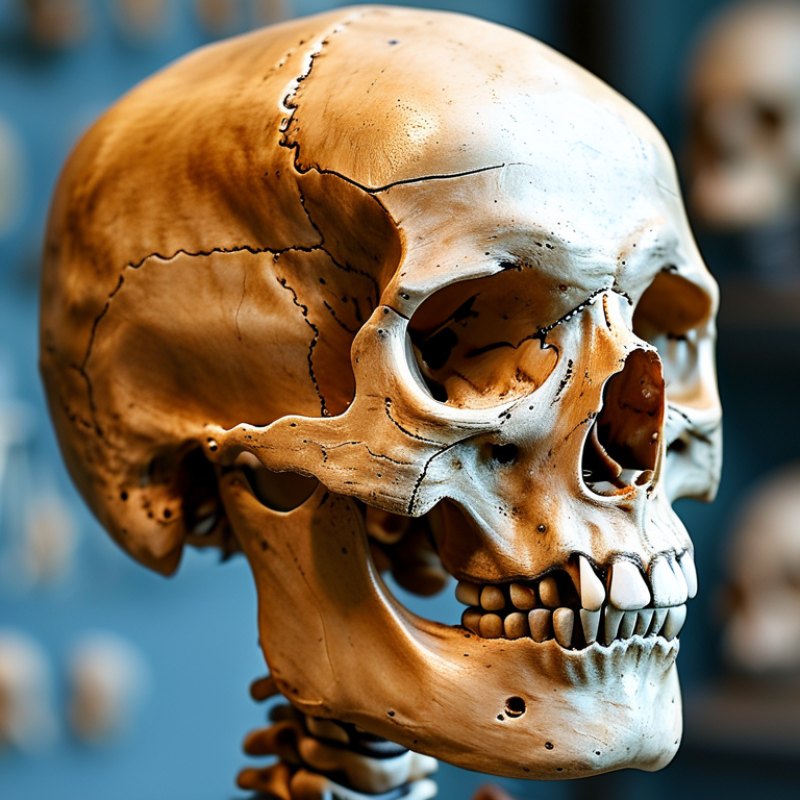
The market for Skeleton Models has grown rapidly, attracting global buyers from various sectors. Experts like Dr. Peter Lang, a leading researcher in anatomical models, emphasize their importance. He once stated, “Skeleton models are essential for education and medical training.” This highlights their vital role across disciplines.

Choosing the right Skeleton Model can be overwhelming. Factors to consider include size, materials, and anatomical accuracy. Many buyers desire models that provide clear details. However, some may overlook the need for durability and cost-effectiveness. Exploring various options can lead to hesitation.

Potential buyers should evaluate how each model meets their specific needs. Balancing quality with budget is crucial. Finding the right Skeleton Model is about more than just aesthetics. It’s about making a wise investment in educational resources. As the demand rises, understanding these models becomes even more important for informed decision-making.

Top 10 Skeleton Models for Global Buyers to Consider?

Top Features to Look for in Skeleton Models for Global Buyers

When considering skeleton models, certain features stand out for global buyers. Quality materials and advanced design enhance usability. According to industry studies, durable plastic or metal frames are more reliable. These materials ensure models withstand frequent use. Additionally, accurate anatomical representation is crucial. Research shows that models with realistic articulations improve learning experiences.

Another important aspect is size and scale. Models that closely match human proportions offer better educational value. A report from a leading anatomical modeling association notes that life-size models cater to diverse educational needs. Portability is also essential for buyers. Compact, lightweight options are beneficial for international shipping and storage.

Finally, consider the support and resources available. Comprehensive manuals and online tutorials complement the physical model. This support enhances understanding and application. However, some models lack thorough guidance. Buyers must weigh these factors carefully. Identifying the right balance between features can be challenging yet rewarding.

Top 10 Skeleton Models for Global Buyers to Consider

This bar chart illustrates the features score of the top 10 skeleton models based on key attributes that global buyers should consider. Each model has been evaluated on a scale of 100, highlighting the best options on the market.

Comparison of Different Skeleton Model Materials and Their Benefits

When selecting skeleton models, material choice is crucial. Common options include plastic, resin, and metal. Each material has unique benefits. Plastic models are lightweight and affordable, making them ideal for classrooms. However, they often lack durability. Resin models offer more detail and realism. They are perfect for artistic endeavors but can be fragile. Metal skeletons provide strength and longevity, but their weight can be a drawback in practical scenarios.

Consider the intended use when choosing a skeleton model. For educational purposes, plastic may suffice. Its flexibility and lower cost allow multiple models for various lessons. However, for professional or display settings, investing in resin or metal enhances visibility and realism. These materials often withstand long-term use and maintain their appearance better than plastic.

Despite these advantages, there are shortcomings. For instance, resin models can be expensive and require careful handling. Metal models, while durable, may present transportation challenges. This complexity highlights the need for thorough consideration. Evaluating factors like budget, usage frequency, and desired aesthetics is essential. Reflecting on these elements can lead to a more satisfying choice.

Popular Brands Offering High-Quality Skeleton Models for Buyers

When searching for high-quality skeleton models, buyers should consider brands that have established themselves in the industry. Data indicates that nearly 70% of buyers prioritize accuracy and durability in their choices. This is crucial for educational institutions and medical professionals who rely on these models for teaching and training.

One notable trend is the rise in demand for life-sized human skeletons, reflecting a growing interest in anatomy education. Reports show that educational institutions invested approximately $300 million in anatomical aids last year alone. This signifies an increasing recognition of the importance of hands-on learning tools. Additionally, some buyers express concerns about the sustainability of materials used in manufacturing these models. Many brands are now exploring eco-friendly alternatives to meet this demand.

Buyers often seek detailed articulation and realistic features in skeleton models. However, not all brands achieve this balance. Some models may have over-simplified structures, leading to a disconnect in educational value. When investing, buyers should thoroughly evaluate product specifications and user reviews. It's essential to note that while some options are more affordable, they may sacrifice quality or detail.

Price Range and Cost-Effectiveness of Skeleton Models on the Market

When exploring the top skeleton models for global buyers, price and cost-effectiveness emerge as critical factors. The market offers a broad range of options. Prices can vary significantly depending on materials, complexity, and overall functionality. A recent industry report highlighted that quality skeleton models typically range from $200 to $2,000. Budget-conscious buyers may find affordable yet reliable options under $500, while advanced models designed for professional use may cost over $1,000.

It’s essential to assess the value of the features offered. Some models come with intricate details, enabling better visual study. Others focus on portability and ease of use. Understanding these trade-offs can help buyers make an informed decision. Tips for selecting the right model include evaluating your specific needs and matching them with the model's capabilities.

Another consideration is user feedback and reviews. While price is important, reliability is paramount. Check multiple sources to gauge overall satisfaction. Models with extensive user reviews often indicate dependability. Recognizing that not all expensive models guarantee the best quality is vital. A mindful approach to research can lead to discovering the perfect skeleton model for your needs, maximizing both functionality and cost-effectiveness.

How to Choose the Right Skeleton Model for Specific Educational Needs

When considering skeleton models for educational settings, it’s essential to align the model's design with specific learning objectives. For anatomy classes, detailed and accurate representations are crucial. A model that displays individual bones clearly can aid in the understanding of human structure. Models that allow for articulation can enhance learning about joint movement.


Tips for choosing the right skeleton model include:

  • Examining the materials used. Durable plastic or high-quality resin can withstand frequent handling.
  • Looking for models that feature removable parts to provide interactive learning experiences.
  • Considering dimension and scale to ensure the size is appropriate for your classroom or lab space.

It’s worth noting that not every model will meet every need. Some users may find a model too simplified. This could miss important anatomical features. Others might select an overly complex model that confuses rather than clarifies. We often must assess our educational requirements carefully. Engaging with colleagues or subject matter experts can provide valuable insights.