10 Best Plastic Coating Machines for Global Buyers
Plastic coating is moving from a niche process to a strategic manufacturing capability. Plastics Europe reported 413.8 million tonnes of global plastics production in 2023. The Smithers report, The Future of Global Flexible Packaging to 2028, also identifies continuing demand for barrier films, pouches, and coated packaging structures. These trends create pressure for stable, efficient equipment. A modern Plastic Coating Machine must control coating thickness, drying temperature, web tension, and material waste.
Chris Rauwendaal, a recognized extrusion-processing authority and author of Polymer Extrusion, offers a practical reminder: “A stable process is more valuable than a fast process.” That principle matters on the factory floor. A thin coating can fail through pinholes. Excess heat can distort a polymer film. Small tension changes may create wrinkles across a wide roll. Buyers should examine pump accuracy, inline inspection, energy consumption, cleaning access, and after-sales support. CE marking, electrical safety, and local compliance requirements also deserve careful review.
This guide evaluates ten leading machines for global buyers. It considers coating method, production flexibility, substrate range, automation, maintenance, and total ownership cost. Market reports provide useful direction, but they cannot replace trials with the buyer’s actual resin, film, adhesive, or solvent system. No ranking fits every plant. A machine that appears efficient on paper may perform poorly with sensitive materials. That is an uncomfortable but necessary point. The strongest choice balances measurable output with operator experience, service response, and long-term process stability.
Plastic Coating Machine Types: Extrusion, Spray, Dip, and Powder Systems
When comparing the 10 best plastic coating machines, buyers should match technology to the substrate, coating, and production speed. Extrusion systems wrap molten plastic around wire, pipe, or cable. They deliver even thickness and high throughput. A heated die, stable puller, and accurate temperature control matter greatly. From operating trials, small temperature changes can create rough surfaces or weak bonding. That detail is easy to overlook.
Spray systems suit large panels and irregular shapes. They use atomized coating, airflow, and controlled passes. Operators can adjust coverage around corners without touching the wet film. Dip systems are simpler for small parts, hooks, and metal frames. They can provide strong coverage inside recesses, but drainage needs attention. A slow withdrawal may leave runs. A fast withdrawal may leave thin areas.
Powder systems apply charged dry particles before oven curing. They create a durable finish with little liquid waste. Buyers should inspect booth recovery, oven uniformity, grounding, and filter access. In practice, powder lines often look efficient on paper. Yet color changes and cleaning can reduce actual output. I would request coated samples, thickness readings, adhesion tests, and energy data from qualified technicians. No machine is perfect. Trial measurements usually reveal more than brochure speed.
Core Benchmarks: Line Speed, Coating Width, Thickness, and Throughput
10 Best Plastic Coating Machines for Global Buyers
Core Benchmarks: Line Speed, Coating Width, Thickness, and Throughput
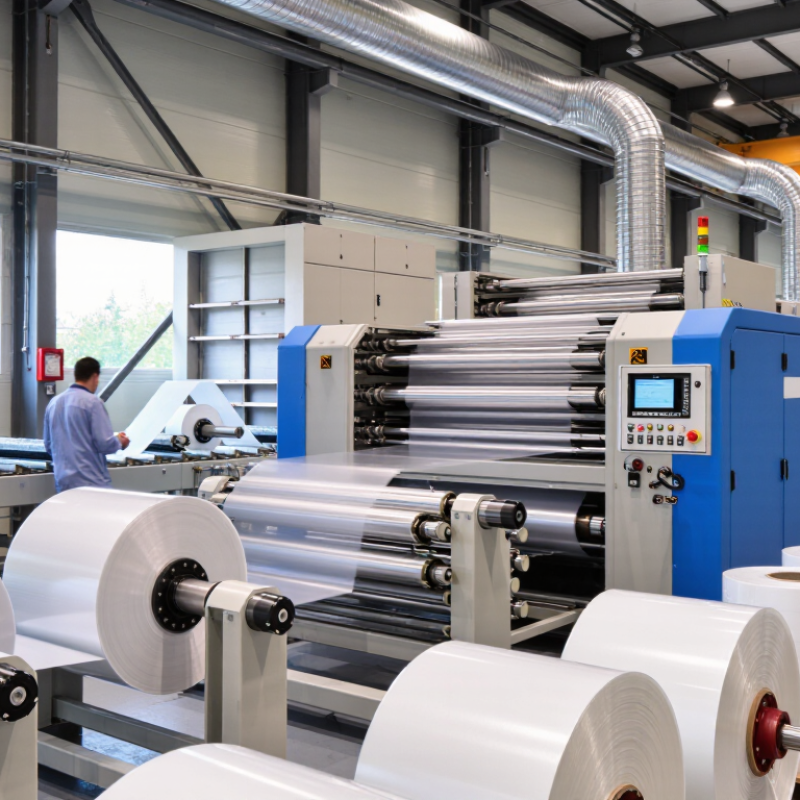
Comparing plastic coating machines starts with measurable production limits, not brochure claims. Line speed shows how quickly the web moves through the coating section. A machine rated at 80 meters per minute may run slower with high-viscosity material or delicate film. Ask for verified speed under your target conditions.
Coating width must match both the product and planned waste allowance. A 1,200-millimeter working width may produce less usable output if edge trimming is excessive. Check the minimum and maximum widths, tension control, and adjustment time between jobs. Small details matter. During factory trials, measure actual coated width after drying, not only the setting on the control panel.
Thickness consistency directly affects quality, cost, and downstream performance. Use calibrated gauges across the web, including both edges and the center. A target of 25 microns is not meaningful if readings vary by several microns. Throughput combines speed, width, coating weight, drying capacity, and uptime. Calculate kilograms per hour from real production data, including cleaning and changeovers. This is where many comparisons become less flattering. A fast line can still deliver poor daily output when stoppages are frequent. I would also request sample rolls, energy figures, and maintenance records before ranking any machine. A polished demonstration is useful, but it is not proof of dependable production.
Performance Testing: ASTM D1003, ASTM D3359, and ISO 9001 Quality Controls
For global buyers, a plastic coating machine should prove performance under controlled testing, not only produce a glossy surface. ASTM D1003 measures haze and luminous transmittance, making it useful for clear panels, protective films, and transparent housings. A small haze increase can signal poor curing, uneven thickness, or contamination. Use calibrated instruments, stable lighting, and conditioned samples. Do not trust one reading.
ASTM D3359 evaluates coating adhesion through cross-cut or tape testing, with ratings commonly ranging from 0B to 5B. Operators should record substrate preparation, coating thickness, drying time, tape type, and test temperature.
ISO 9001 does not certify a machine’s coating performance. It controls the quality system behind purchasing, production, inspection, and corrective action. The ISO Survey reports more than one million ISO 9001 certificates worldwide, showing its broad industrial adoption. Yet certification alone is not proof of repeatable coating quality.
A buyer should request control charts, calibration records, failed-test reports, and batch traceability. Real factory experience matters here. ASTM results can vary between operators. That uncomfortable detail deserves attention. A strong machine supports testing discipline, but it cannot replace it.
Global Ranking of 10 Machines by Energy Use, Safety, Capacity, and ROI
For global buyers, this ranking weighs energy use, safety, capacity, and return on investment. The top choice is an enclosed powder-coating line, followed by an automatic electrostatic liquid-coating line, roll-to-roll gravure coater, slot-die coater, curtain coater, reciprocating spray booth, dip-coating line, fluidized-bed coater, UV-curing line, and manual electrostatic booth. Powder systems usually recover unused material, while slot-die machines reduce coating waste through precise liquid delivery. However, capacity depends heavily on film thickness, substrate width, curing time, and operator skill.
The International Energy Agency reports that industry consumes about 37% of global final energy. The U.S. Department of Energy also identifies motor-driven systems as major industrial electricity users. Therefore, variable-speed drives, insulated curing chambers, and heat recovery can strongly affect operating costs. Safety should carry equal weight. IFC environmental, health, and safety guidance recommends local exhaust ventilation and suitable electrical protection where flammable vapors exist. A high-capacity machine is not a good investment if ventilation, maintenance, or worker training is weak. My ranking remains indicative, not absolute; real factory data may change the order.
Tips: Request a 72-hour production trial using your actual plastic parts. Record kWh per coated square meter, material loss, changeover time, and defect rates. Ask for ISO 13849-related safety documentation, emergency-stop testing, and spare-parts availability. Include downtime in ROI calculations. Many buyers forget it.
Buyer Requirements: CE or UL Compliance, 50/60 Hz Power, and Service Support
Choosing among the 10 best plastic coating machines requires more than comparing output speed. Global buyers should request valid CE or UL compliance documents before discussing price. These records should identify the machine model, applicable standards, and testing scope. A neat certificate copy is not enough. Ask for the original declaration, test reports, and electrical drawings.
Power compatibility can prevent expensive delays. Confirm whether the machine supports 50 Hz, 60 Hz, or both frequencies. Check voltage, phase, plug type, motor rating, and control-panel requirements. A machine designed for one grid may overheat or operate poorly elsewhere. Ask for a clear nameplate photo. Small details matter.
Service support also deserves careful review. Reliable suppliers should provide installation guidance, troubleshooting procedures, spare-parts lists, and response times. Remote support is useful, but local technicians may reduce production downtime.
Tips: Request a test run using your actual plastic material and coating thickness. Record temperature stability, line speed, and surface finish. Confirm who pays for travel and replacement parts. Some sellers promise fast support, yet their written service terms remain vague. Treat that as a warning. I would also leave room for uncertainty, because factory conditions rarely match a showroom demonstration. Keep compliance, power, and service requirements in the purchase contract, not only in emails.