What Are China Top Mini Circuit Breaker Manufacturers?
China’s low-voltage electrical market is expanding with construction, industrial automation, and renewable-energy investment. In 2024, China’s National Energy Administration reported national electricity consumption of about 9.85 trillion kilowatt-hours. This scale creates sustained demand for dependable circuit protection equipment.
A Mini Circuit Breaker protects residential circuits, control panels, commercial buildings, and compact industrial systems. However, selecting China’s top manufacturers requires more than comparing catalogue prices. Product safety, interruption capacity, thermal performance, quality control, export experience, and after-sales support all matter. The IEC 60898-1 standard provides an important reference for household and similar installations. Manufacturers such as CHINT, Delixi Electric, TENGEN, People Electrical Appliance, Nader, and other established suppliers are therefore worth examining through these technical and commercial criteria.
Market reports from organizations such as MarketsandMarkets and Grand View Research identify steady growth in the global circuit breaker sector. Meanwhile, the International Energy Agency’s Renewables 2024 report highlights China’s major role in global renewable-capacity expansion. These trends support stronger demand for compact protection devices in solar systems, distribution cabinets, factories, and buildings.
A perfect ranking is impossible. Public data differs between companies, and certification claims require careful verification. Buyers should check test reports, rated current ranges, short-circuit capacity, temperature-rise results, and certification validity. Field experience also matters. A breaker that performs well in a laboratory may still disappoint when terminals loosen, heat accumulates, or maintenance is neglected. This guide compares leading Chinese manufacturers with practical evidence, while acknowledging that “top” depends on application, budget, compliance requirements, and long-term reliability.
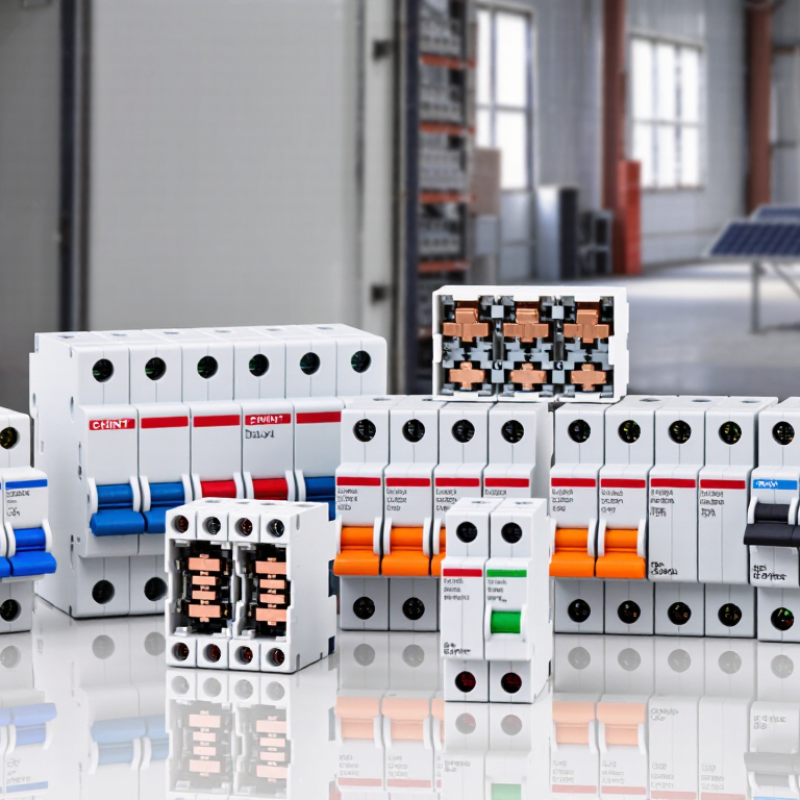
What Is a Miniature Circuit Breaker and Why Is It Important?
A miniature circuit breaker, or MCB, is a resettable protective device for low-voltage electrical circuits. It disconnects power when current rises above a safe level. Unlike a fuse, it does not need replacement after every fault. A technician can reset it after identifying the problem.
Inside the MCB, a thermal element responds to prolonged overloads, such as too many appliances sharing one circuit. A magnetic mechanism reacts almost instantly to short circuits. The contacts separate, while an arc chamber helps control the electrical arc. Its compact body usually clips onto a DIN rail inside a distribution board.
Small device.
Serious responsibility.
An MCB protects cables from overheating and reduces the risk of insulation damage, equipment failure, and electrical fires. Selection still requires care. The rated current must match the conductor and circuit load, not merely the appliance label.
Breaking capacity, pole configuration, tripping curve, and local installation conditions also matter. A higher rating is not automatically safer. It may allow a cable to overheat before disconnection.
In practice, unclear labeling or poor coordination can create mistakes, even in professionally installed panels. Testing should follow applicable standards, manufacturer instructions, and qualified electrical procedures. The device is important, but it cannot correct damaged wiring, loose terminals, or an incorrectly designed circuit.
How China’s Mini Circuit Breaker Manufacturing Industry Is Organized
China’s mini circuit breaker manufacturing industry is organized through regional clusters, specialized suppliers, and layered production networks. Many factories focus on one stage, such as molding, contact assembly, thermal calibration, or final testing. Others operate as integrated manufacturers with their own tooling and inspection departments. This structure helps control costs and shorten production cycles.
In factory audits, buyers usually find three supplier levels. Large manufacturers often develop complete product families and maintain formal quality systems. Mid-sized factories commonly produce private-label units for distributors and electrical contractors. Smaller workshops may handle plastic parts, metal stamping, or assembly under contract.
The arrangement is practical, but not perfectly transparent. A trading company may present itself as a manufacturer, even when production is outsourced.
Reliable sourcing requires more than comparing unit prices. Buyers should review test records, incoming-material controls, production samples, and traceability procedures. Key checks include trip characteristics, insulation performance, terminal strength, and resistance to heat. Independent laboratory reports can support factory claims, but documents still need careful verification.
Local supply clusters provide speed and flexibility, while export-oriented factories often understand packaging and destination-market requirements better. Still, communication gaps can affect drawings, tolerances, and inspection standards. A clear specification sheet matters. So does an agreed sampling plan. Overlooking one small detail can create repeated field failures, especially when breakers are installed in crowded distribution boxes.
Which Companies Are China’s Leading Mini Circuit Breaker Manufacturers?
China’s leading mini circuit breaker manufacturers are usually identified by engineering depth, production consistency, and transparent testing. The strongest suppliers develop breakers for residential, commercial, and light industrial panels. They offer common ratings from 6A to 63A, with B, C, and D tripping curves. Some also provide 1P, 2P, 3P, and 4P configurations.
A reliable manufacturer should explain its breaking capacity clearly, such as 6kA or 10kA. It should also provide test reports, inspection records, and traceable batch information. During a factory evaluation, buyers should examine copper terminals, contact materials, spring strength, and housing quality. A loose terminal screw or uneven molding can create trouble after installation. Production lines with automatic assembly and calibrated electrical testing usually reduce these risks.
Catalogs can look convincing. They are not proof.
Leading Chinese manufacturers normally maintain stable raw-material controls and repeatable testing procedures. They may support OEM packaging, customized markings, and regional certification requirements. However, low prices can hide thinner contacts, weaker springs, or inconsistent trip performance. Even experienced buyers sometimes focus too much on certification labels and overlook after-sales response. A serious supplier should answer technical questions quickly, explain limitations honestly, and share samples from regular production rather than specially prepared units.
How to Compare China’s Mini Circuit Breaker Suppliers
China’s mini circuit breaker market is expanding with low-voltage distribution demand. MarketsandMarkets estimates the global circuit breaker market could grow from about USD 7.8 billion in 2023 to USD 11.1 billion by 2028. This growth makes supplier comparison more important, not easier.
Start with standards, not price. Ask for current test reports against IEC 60898-1 or IEC 60947-2, depending on the application. Check rated current, tripping curve, breaking capacity, insulation voltage, and temperature calibration. A 6 kA claim means little without a traceable laboratory report. Request sample units from different production batches. Inspect terminal strength, contact materials, enclosure quality, and label accuracy. Small details often reveal process control.
Factory capability matters too. Review incoming-material records, automated assembly points, routine testing, and calibration schedules. Confirm whether the supplier can provide serial-level traceability and stable lead times. The IEA’s Electricity 2024 report forecasts global electricity demand growth of about 3.4% annually through 2026, increasing pressure on reliable distribution equipment. However, rapid capacity expansion can create uneven quality. A cheaper quotation may hide weaker testing or inconsistent accessories. That is an uncomfortable point, but it deserves attention. Compare warranty handling, failure analysis, replacement procedures, and communication speed before signing. I would also score suppliers with a simple matrix, although experienced buyers know that paperwork never fully replaces an on-site audit.
What Standards and Quality Factors Should Buyers Check?
When choosing China’s top mini circuit breaker manufacturers, buyers should examine standards before comparing prices. A reliable supplier should provide test evidence for IEC 60898-1 or IEC 60947-2, depending on the application. Local requirements may also require additional certification, such as UL compliance. Check the certificate number, testing laboratory, issue date, and product model carefully. A certificate without clear traceability deserves questions.
Electrical performance matters in daily operation. Review the rated current, voltage, frequency, breaking capacity, and trip curve. For example, B, C, and D curves respond differently to starting currents. Ask for thermal and magnetic trip test results. Inspect terminal strength, contact materials, insulation distance, and enclosure resistance. Production quality also depends on process control, incoming material checks, and final sampling. ISO 9001 supports management discipline, but it does not replace product testing. This distinction is often missed.
Tips: Request a sample batch, not one perfect sample. Test several units under realistic loads. Check whether the markings remain clear after handling. Ask for endurance data and factory inspection records. Confirm batch numbers and complaint procedures. A supplier may answer quickly, yet documentation can still be incomplete. That is a warning sign. In my experience, small details reveal manufacturing consistency: uneven screw torque, rough plastic edges, or inconsistent tripping force. Buyers should record these findings and compare them with the approved specification. No inspection is flawless, so independent testing remains worthwhile for critical installations.
Miniature Circuit Breaker Buyer Guide: Standard Voltage Coverage
When evaluating miniature circuit breakers, buyers should confirm that the product is tested and marked according to the applicable standard. IEC 60898-1 covers household and similar circuit-breakers, including products rated up to 440 V AC. IEC 60947-2 applies to circuit-breakers used in low-voltage switchgear and controlgear, with applications up to 1,000 V AC or 1,500 V DC.
In addition to voltage compatibility, check rated current, tripping curve, short-circuit breaking capacity, insulation voltage, temperature-rise performance, terminal quality, mechanical endurance, electrical endurance, markings, and evidence of third-party or accredited laboratory testing. Actual product ratings depend on the specific design and certification.