

News

Miro: A New Standard in Responsible Innovation

Miro: A New Standard in Responsible Innovation The Miro monitor arm is setting new benchmarks in sustainability. It offers a high-performance solution without compromising on environmental responsibility. Designed with careful material selection, local sourcing, and longevity in mind, Miro’s responsible approach to design and unique manoeuvrability set it apart from the competition. Sustainable Choices Miro is crafted from energy-efficient materials with a lower carbon impact....

Read more
HSE Advisor

Role Purpose Support in the development, implementation and maintenance of the company’s Health, Safety & Environmental policies, processes, operational procedures, and standards.  Ensuring best practice and championing a continually improving HSE culture within the business. Key Responsibilities Liaise with and provide support to all areas of the business to eliminate, mitigate or reduce identified HSE exposures. Partner with the production management team and team leaders,...

Read more
CMD Ltd LAUNCHES 48-HOUR TURNAROUND ON BETATRAK® RAPID ORDERING SERVICE

CMD Ltd, the specialist in power distribution systems, workstation power and monitor arms, has launched a rapid ordering service for its Betatrak® underfloor powertrack distribution systems and accessories, with a commitment to delivering within 48-hours of an approved purchase order*. The service enables customers to order up to 50 lengths of Standard or Clean Earth (C/E) low noise Betatrak, along with up to 25 feed...

Read more

CMD INVESTS £1/4 MILLION IN NEW MACHINE AS PART OF FACTORY UPGRADE

We have invested in a new £1/4m TRUMPF CNC metal punch as part of an asset renewal strategy for our UK manufacturing capability. The new machine will be used in the production of a wide variety of our power distribution systems and workstation power products at our Rotherham factory. Suitable for handling sheet metal between 0.9mm and 3.0mm thick, the new machine will replace one...

Read more

CMD CATALOGUE PROVIDES TECHNICAL POWER DISTRIBUTION GUIDE

CMD Ltd has released a new catalogue, providing an easy to follow technical guide to our power distribution systems and plug and play desk modules. Detailing CMD’s full range of UK-manufactured power distribution systems and plug and play desk modules, the catalogue will be a helpful source of information to M&E engineers and contractors alike to understand how our power distribution systems connect together and...

Read more

Power Distribution Catalogue
CMD Ltd PLAYS ESSENTIAL ROLE IN ELECTRICAL FIT OUT AT LONDON’S PRESTIGIOUS OFFICE DEVELOPMENT

CMD Ltd, specialist in workplace connectivity and ergonomic solutions, has provided a flexible and high-quality power distribution network for The Ray, a prestigious office development in London’s Farringdon. Well-known for being the former site of The Guardian newspaper, The Ray now stands as an 83,000ft² office development characterised by a modernised warehouse aesthetic, with level two now occupied by a global social media company. The...

Read more

The Ray
CMD plugs in to european opportunity with Schuko Capsule unit launch

CMD Ltd, the specialist in power and connectivity solutions for commercial environments, has launched a Schuko version of its popular fixed format Capsule workstation power module for export to mainland Europe and beyond. A popular on desk power module comprising two sockets and dual USB (type A and C) chargers, CMD’s Capsule unit is already widely specified in the UK as an off-the-shelf workstation power...

Read more

CMD White Schuko Capsule Desk Power Module
CMD LTD EXTENDS MONITOR ARM RANGE WITH THE LAUNCH OF REACH PLUS

CMD Ltd, the specialist in ergonomic and connectivity solutions for commercial interiors, has completed its Reach monitor arm range with the launch of the Reach Plus. Available in single or dual screen options, the Reach Plus has been designed to provide an ideal solution for both single and dual screen workstation configurations, or can be used with next generation of large format curved screens. Suitable...

Read more

CMD Ltd DEMONSTRATES THE ART OF POWER DISTRIBUTION AT THE UNIVERSITY OF WARWICK

CMD Ltd, the specialist in workplace connectivity and ergonomic solutions, has provided Betatrak busbar power distribution and a range of electrical accessories for two major capital investment projects at the University of Warwick. Designed by Fielden Clegg Bradley Studios, the £33 million Faculty of Arts building is a showpiece development comprising four interconnected structures set around a central atrium, which will enable inter-disciplinary collaboration across...

Read more

University of Warwick
CMD BRINGS HARMONY TO COVENTRY UNIVERSITY RESEARCH FACILITIES

CMD Ltd, the specialist in power distribution solutions and workstation power and ergonomics, has provided under desk and on desk power modules for the refurbishment of three Coventry University research buildings. Located on Coventry University Technology Park, a business park designed to encourage collaboration between the university and knowledge-based businesses, the three buildings are being repurposed as office accommodation for university research teams. The refurbishment...

Read more

Coventry University

7 Best Laser Cleaning Technologies for Global Buyers

Choosing the right laser cleaning system is rarely as simple as comparing power ratings. Global buyers must assess surface material, contamination type, production speed, workspace conditions, and after-sales support. This guide examines seven leading laser cleaning technologies, including pulsed fiber, continuous-wave, CO2, UV, green, handheld, and robotic systems. Each option creates different results on rust, paint, oil, oxides, and delicate coatings.

Laser Cleaning Technology has developed from a specialist process into a practical solution for maintenance, restoration, manufacturing, and precision preparation. Pulsed systems can remove contamination with limited heat input, while continuous-wave systems may suit heavier industrial work. UV and green lasers offer useful control for sensitive materials, but their purchase costs and operating requirements can be higher. Not every machine fits.

Reliable selection requires more than a supplier’s brochure. Buyers should request demonstration videos, sample testing, beam safety information, warranty terms, training details, and verified performance data. Regional electrical standards and workplace safety rules also matter, especially when importing equipment across borders. Real workshops are messier. Dust, uneven surfaces, operator skill, and ventilation can change the final outcome. One weakness in many technology comparisons is the lack of independent, material-specific testing. Therefore, this overview considers practical evidence, realistic limitations, maintenance needs, and total ownership costs. The goal is not to name one universal winner. It is to help buyers match each laser cleaning method with the right application, budget, and operating environment.

7 Best Laser Cleaning Technologies for Global Buyers

Laser Cleaning Technology: Principles, Components, and Operating Methods

Laser Cleaning Technology: Principles, Components, and Operating Methods

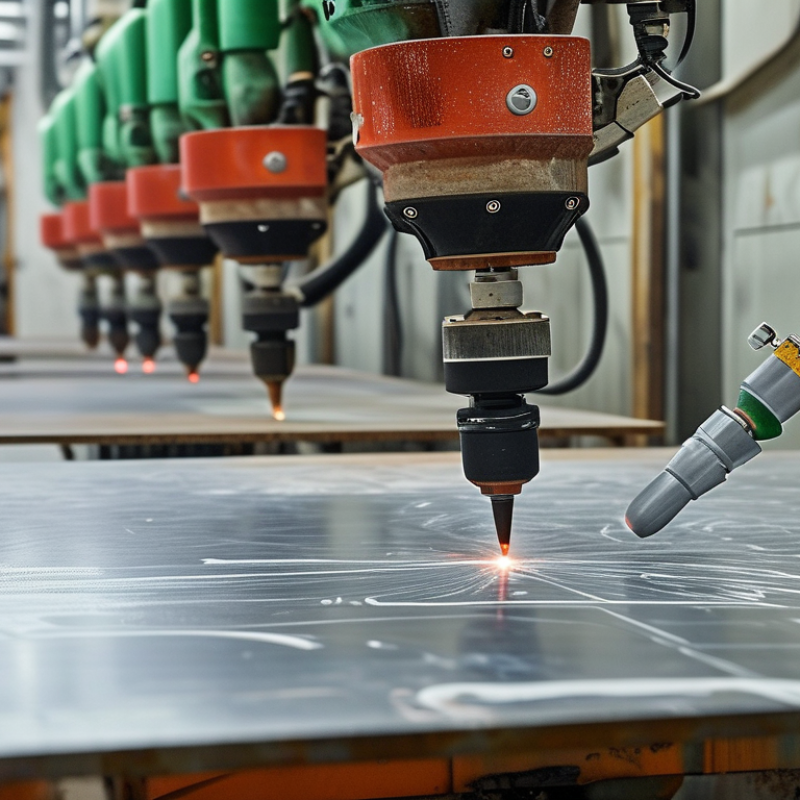
Laser cleaning technology removes rust, paint, oxide layers, and residue through controlled light energy. A pulsed beam strikes the surface and causes rapid heating, vaporization, or micro-fracturing. Short pulses can lift contamination while limiting heat transfer into the base material. Continuous-wave systems suit broader, less delicate surfaces, but they demand careful thermal control.

The result depends on wavelength, pulse duration, energy density, repetition rate, and scanning speed. Small changes matter.

Operators should inspect the substrate before testing, because identical stains can react differently on steel, stone, or coated aluminum. A clean edge is useful evidence, but it does not prove the process is optimized.

A reliable system usually includes a laser source, beam delivery path, scanning head, control unit, extraction equipment, and protective enclosure or area controls. Fume extraction is essential when coatings or residues release airborne particles.

Operators should verify focus, working distance, spot overlap, and surface temperature during trials. A staged method works well: document the surface, select conservative settings, test a hidden area, then increase power gradually.

Watch for discoloration, roughness, or altered reflectivity. These signs often reveal excessive heat.

Speed targets can distract from surface quality. Some materials need slower passes, while others require multiple light passes. Results may vary across one panel, especially when corrosion depth is uneven.

Process records, inspection photographs, and operator training improve repeatability. Yet no preset replaces a material-specific trial.

Pulsed Laser Cleaning for Precision Surface Treatment

Pulsed laser cleaning offers global buyers a controlled method for precision surface treatment. Short energy bursts remove rust, oxide films, paint residue, and processing contaminants. The base material receives less heat than with continuous laser exposure. That difference matters on thin metal parts, molds, tools, and delicate assemblies.

In practical trials, technicians adjust pulse duration, energy density, spot size, and scanning speed. A narrow beam can clean a weld seam without disturbing nearby coating. On a steel fixture, the surface may reveal a fine, matte texture after one pass. Operators should inspect the area under suitable lighting and measure surface changes when tolerances are strict. The result is visible.

However, pulsed laser cleaning is not automatically gentle. Excessive energy can discolor metal, alter roughness, or damage a sensitive substrate. Dust extraction, protective enclosures, and appropriate eye protection remain essential. Buyers should request process demonstrations using their actual material and contamination type. Test panels often expose problems that product brochures miss.

Reliable equipment should provide repeatable pulse control, stable beam delivery, clear parameter records, and accessible maintenance support. Experienced suppliers can explain cleaning thresholds rather than promising universal settings. Material response also varies with alloy, coating thickness, moisture, and previous treatment. That uncertainty deserves attention. A careful qualification process helps users balance cleaning speed, surface integrity, operator safety, and long-term production consistency.

Continuous-Wave Laser Cleaning for Large-Scale Applications

Continuous-wave laser cleaning is gaining attention for large surfaces, where steady energy matters more than short bursts. Unlike pulsed systems, a CW source delivers a stable beam across steel frames, rail sections, ship components, and fabrication lines. Operators can maintain consistent travel speeds. The process can also fit robotic gantries and automated production cells.

MarketsandMarkets estimated the laser cleaning market at about USD 587 million in 2023. Its 2028 forecast reached approximately USD 1.1 billion, with a 13.5% compound annual growth rate. Grand View Research also identified industrial automation and reduced consumable waste as major growth drivers.

In practical work, CW cleaning may reduce abrasive media, dust, and disposal requirements. Results still depend on coating thickness, reflectivity, beam diameter, and surface temperature.

Heat control remains critical. A continuous beam can discolor thin sheet, distort edges, or affect nearby coatings. A clean appearance is not proof of process quality. Adhesion testing and microscopic inspection should follow every trial. Operators should record power density, scanning speed, stand-off distance, and substrate temperature. The approach is not perfect. Highly reflective metals may require conservative settings and stronger safeguards. Early trials sometimes look efficient, yet reveal uneven cleaning after coating application. That gap deserves more attention from equipment designers and production engineers.

Comparison of Laser Cleaning Technologies by Material and Use Case

For global buyers, laser cleaning should be matched to the material, residue, and production speed. Pulsed fiber lasers suit rust, paint, and oxide removal on steel, aluminum, and tools. They deliver short bursts with limited heat transfer. Continuous-wave fiber systems work faster on large metal surfaces, but operators must control thermal distortion.

CO2 lasers cover broad areas and perform well on stone, wood, and thick organic coatings. UV lasers create smaller heat-affected zones, making them useful for electronics, precision parts, and sensitive polymers. Green lasers are effective on copper and brass, where infrared absorption can be less efficient. Excimer lasers support delicate polymer and surface treatment applications. Ultrafast picosecond and femtosecond systems offer exceptional control for optics, aerospace parts, and semiconductor components.

The material decides more than the laser source. A 2024 Grand View Research report projects the laser cleaning market to grow at about 5.9% annually through 2030. Other industry reports indicate strong demand for automated systems, especially in automotive and manufacturing. These figures support investment, but they do not replace trials. In field testing, reflective copper can behave unpredictably, while painted steel may clean evenly in seconds. That difference matters. Buyers should verify fluence, pulse width, scanning speed, fume extraction, and surface roughness before approval. A practical test coupon often reveals more than a sales specification. My own caution is simple: the fastest system is not always the safest choice.

Safety, Maintenance, and Purchasing Criteria for Global Buyers

Selecting the best laser cleaning technology starts with the material, not the machine. Pulsed fiber, continuous-wave, ultraviolet, green, carbon dioxide, diode, and ultrafast lasers each suit different surfaces. Pulsed systems often remove rust with limited heat input. Continuous-wave units can support larger, faster work areas. UV and ultrafast options may protect delicate parts, but they usually demand higher budgets and tighter process control.

Safety must be tested in the real workplace. A qualified technician should measure reflections from steel, glass, and painted surfaces. Enclosures, interlocks, extraction, warning controls, and suitable eyewear are essential. Train every operator, including temporary staff. A small gap near a door can defeat an otherwise careful setup. That detail is easy to miss.

Buyers should request documented risk assessments, electrical certificates, user manuals, and service records. Requirements differ across countries, so local compliance checks should happen before payment.

Maintenance affects total cost more than the purchase price. Inspect lenses, protective windows, cooling paths, cables, and extraction filters on a fixed schedule. Dust on a lens can distort the beam and damage expensive components.

Ask about spare-part availability, response times, calibration support, and remote diagnostics.

Test sample parts before choosing a system. Measure cleaning speed, residue, surface roughness, and heat marks. Some suppliers promise universal performance. That claim deserves skepticism.

My practical view is simple: a slightly slower machine with clear training and dependable service may outperform a faster machine that operators cannot maintain.