

News

Miro: A New Standard in Responsible Innovation

Miro: A New Standard in Responsible Innovation The Miro monitor arm is setting new benchmarks in sustainability. It offers a high-performance solution without compromising on environmental responsibility. Designed with careful material selection, local sourcing, and longevity in mind, Miro’s responsible approach to design and unique manoeuvrability set it apart from the competition. Sustainable Choices Miro is crafted from energy-efficient materials with a lower carbon impact....

Read more
HSE Advisor

Role Purpose Support in the development, implementation and maintenance of the company’s Health, Safety & Environmental policies, processes, operational procedures, and standards.  Ensuring best practice and championing a continually improving HSE culture within the business. Key Responsibilities Liaise with and provide support to all areas of the business to eliminate, mitigate or reduce identified HSE exposures. Partner with the production management team and team leaders,...

Read more
CMD Ltd LAUNCHES 48-HOUR TURNAROUND ON BETATRAK® RAPID ORDERING SERVICE

CMD Ltd, the specialist in power distribution systems, workstation power and monitor arms, has launched a rapid ordering service for its Betatrak® underfloor powertrack distribution systems and accessories, with a commitment to delivering within 48-hours of an approved purchase order*. The service enables customers to order up to 50 lengths of Standard or Clean Earth (C/E) low noise Betatrak, along with up to 25 feed...

Read more

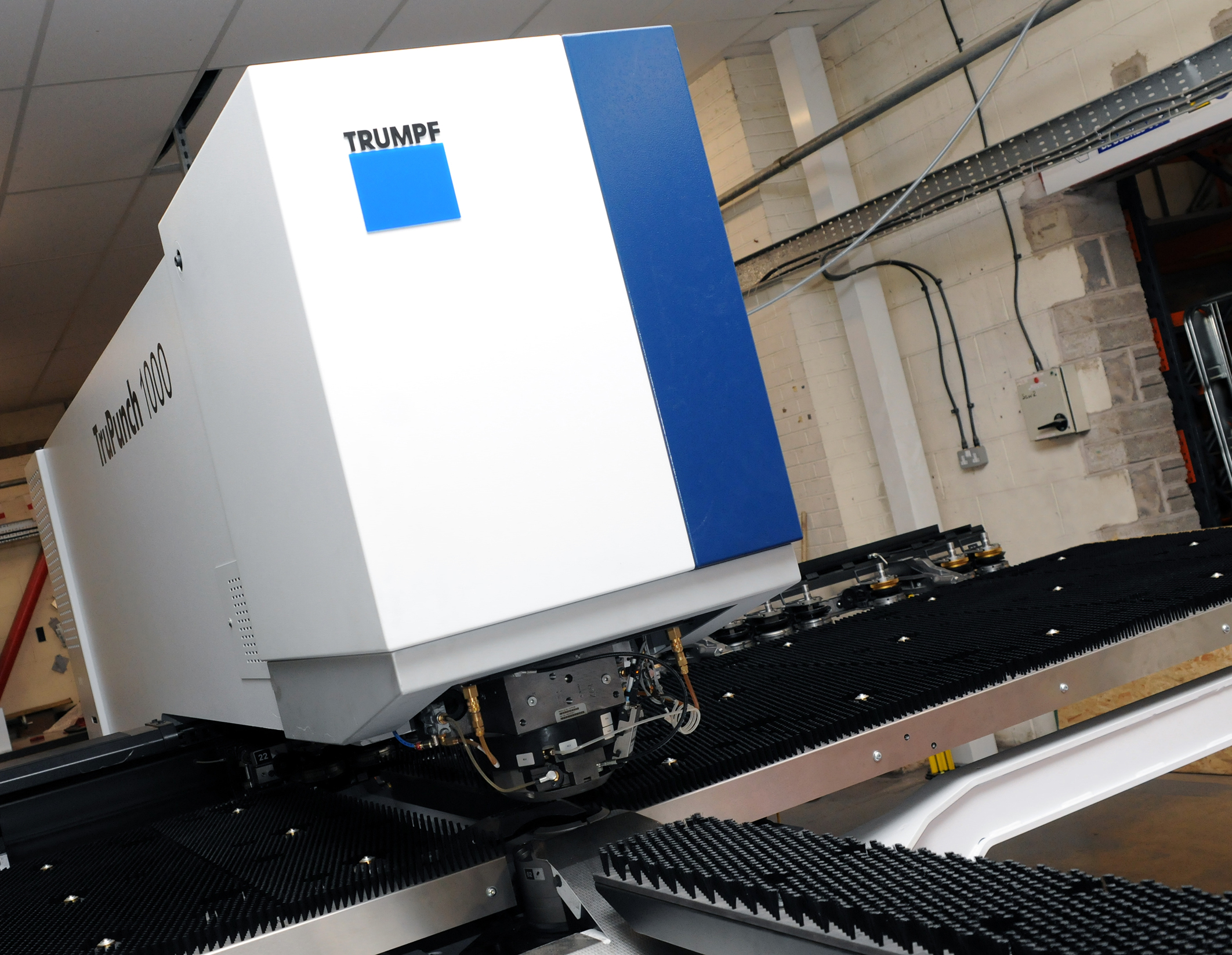
CMD INVESTS £1/4 MILLION IN NEW MACHINE AS PART OF FACTORY UPGRADE

We have invested in a new £1/4m TRUMPF CNC metal punch as part of an asset renewal strategy for our UK manufacturing capability. The new machine will be used in the production of a wide variety of our power distribution systems and workstation power products at our Rotherham factory. Suitable for handling sheet metal between 0.9mm and 3.0mm thick, the new machine will replace one...

Read more
CMD CATALOGUE PROVIDES TECHNICAL POWER DISTRIBUTION GUIDE

CMD Ltd has released a new catalogue, providing an easy to follow technical guide to our power distribution systems and plug and play desk modules. Detailing CMD’s full range of UK-manufactured power distribution systems and plug and play desk modules, the catalogue will be a helpful source of information to M&E engineers and contractors alike to understand how our power distribution systems connect together and...

Read more
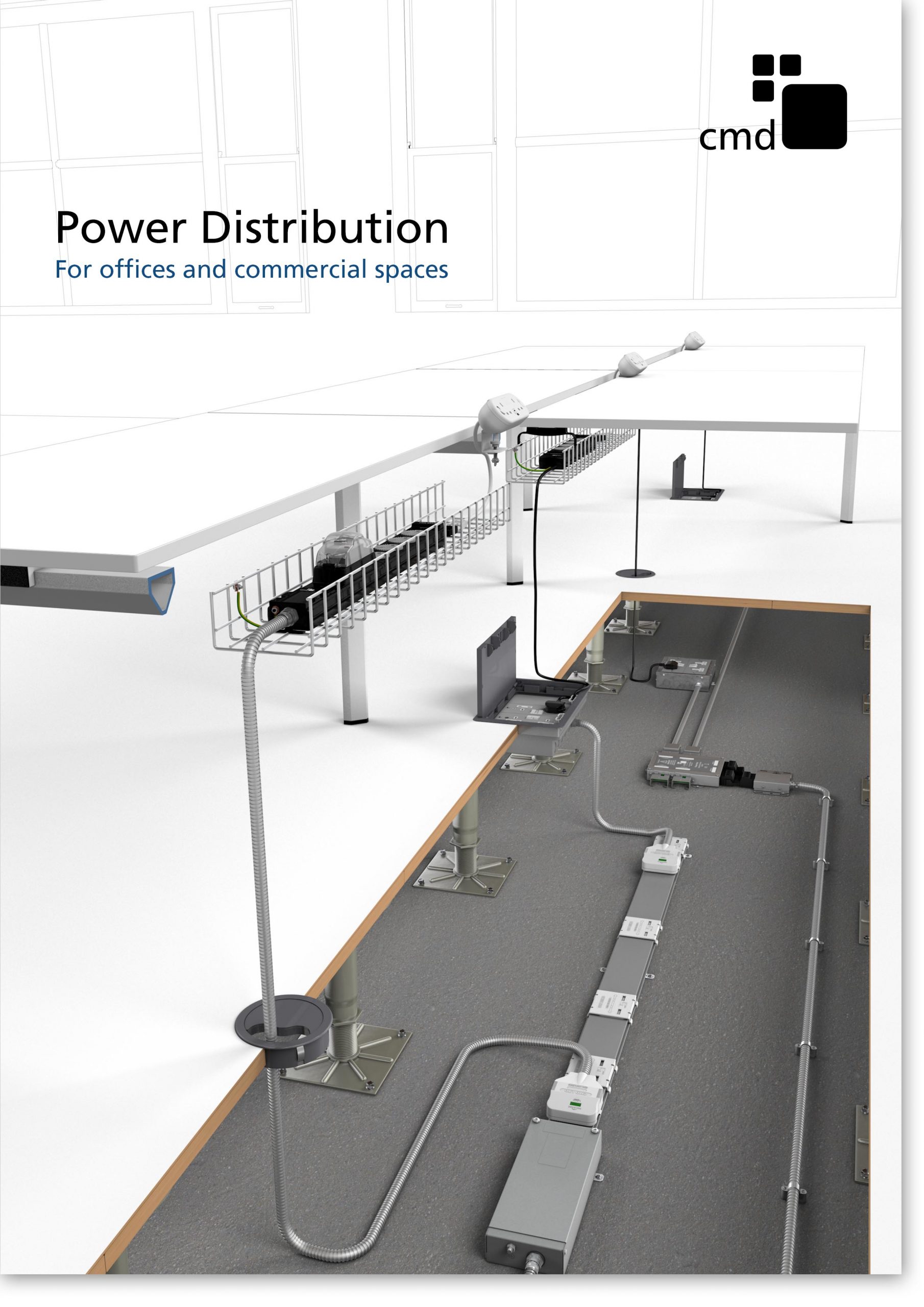
Power Distribution Catalogue
CMD Ltd PLAYS ESSENTIAL ROLE IN ELECTRICAL FIT OUT AT LONDON’S PRESTIGIOUS OFFICE DEVELOPMENT

CMD Ltd, specialist in workplace connectivity and ergonomic solutions, has provided a flexible and high-quality power distribution network for The Ray, a prestigious office development in London’s Farringdon. Well-known for being the former site of The Guardian newspaper, The Ray now stands as an 83,000ft² office development characterised by a modernised warehouse aesthetic, with level two now occupied by a global social media company. The...

Read more

The Ray
CMD plugs in to european opportunity with Schuko Capsule unit launch

CMD Ltd, the specialist in power and connectivity solutions for commercial environments, has launched a Schuko version of its popular fixed format Capsule workstation power module for export to mainland Europe and beyond. A popular on desk power module comprising two sockets and dual USB (type A and C) chargers, CMD’s Capsule unit is already widely specified in the UK as an off-the-shelf workstation power...

Read more
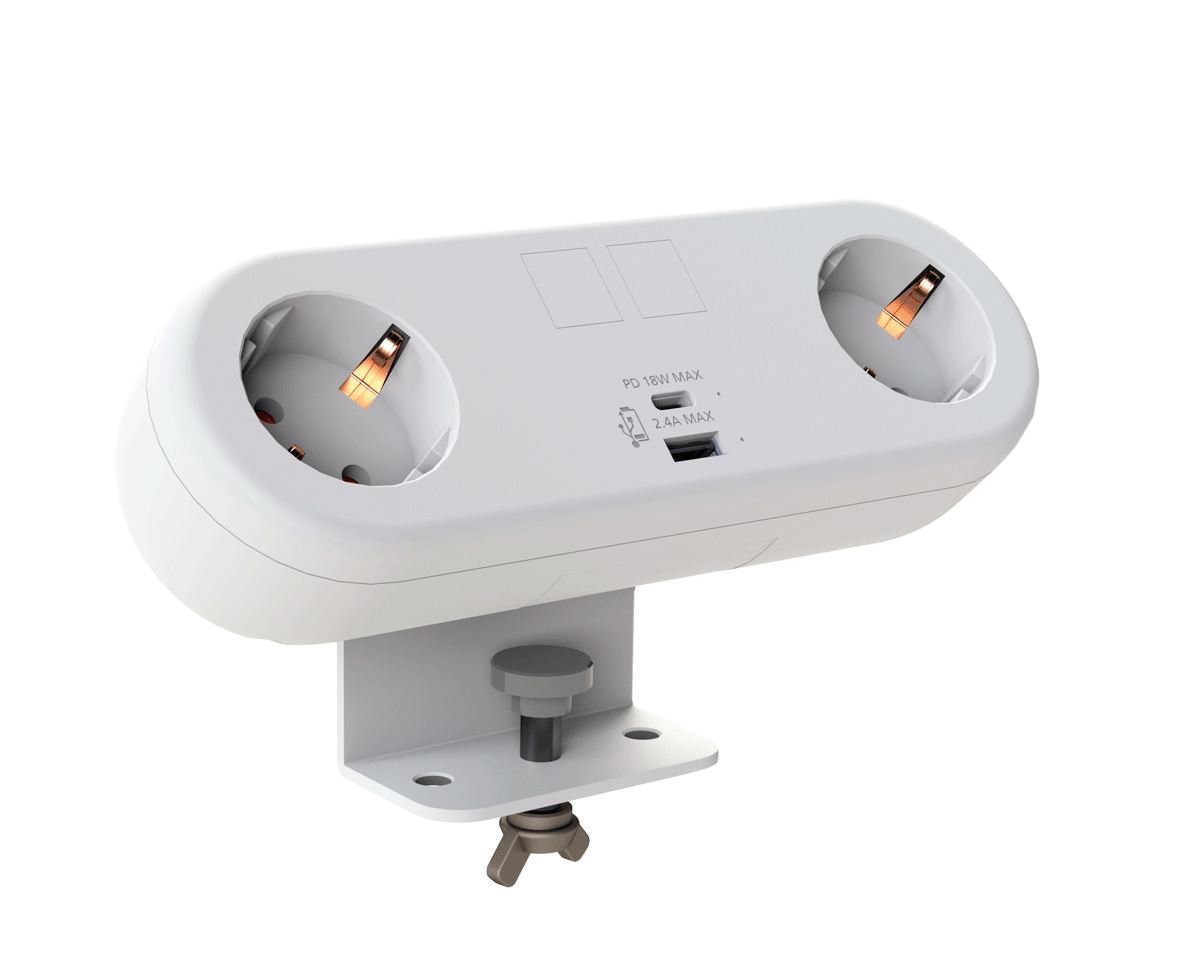
CMD White Schuko Capsule Desk Power Module
CMD LTD EXTENDS MONITOR ARM RANGE WITH THE LAUNCH OF REACH PLUS

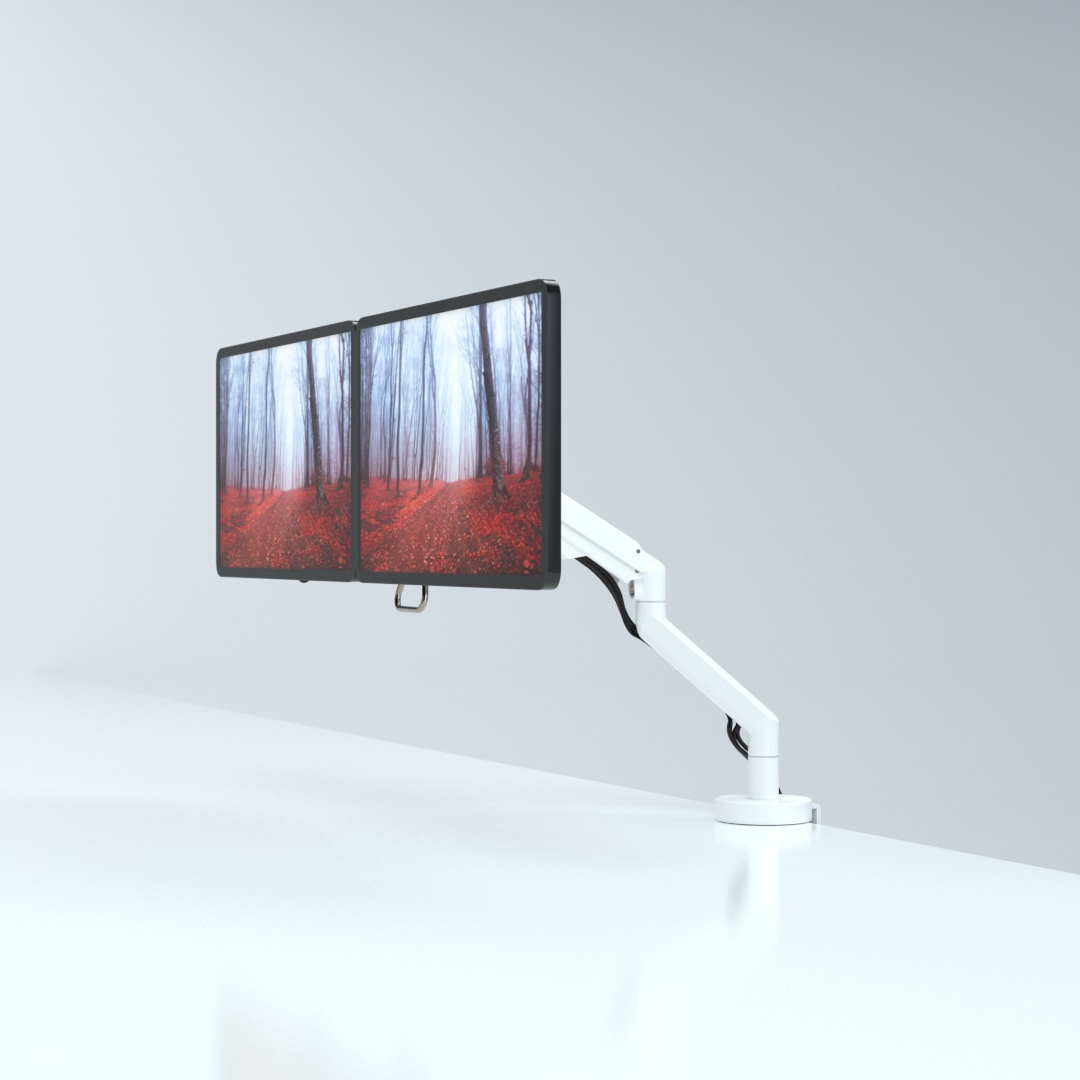
CMD Ltd, the specialist in ergonomic and connectivity solutions for commercial interiors, has completed its Reach monitor arm range with the launch of the Reach Plus. Available in single or dual screen options, the Reach Plus has been designed to provide an ideal solution for both single and dual screen workstation configurations, or can be used with next generation of large format curved screens. Suitable...

Read more
CMD Ltd DEMONSTRATES THE ART OF POWER DISTRIBUTION AT THE UNIVERSITY OF WARWICK

CMD Ltd, the specialist in workplace connectivity and ergonomic solutions, has provided Betatrak busbar power distribution and a range of electrical accessories for two major capital investment projects at the University of Warwick. Designed by Fielden Clegg Bradley Studios, the £33 million Faculty of Arts building is a showpiece development comprising four interconnected structures set around a central atrium, which will enable inter-disciplinary collaboration across...

Read more

University of Warwick
CMD BRINGS HARMONY TO COVENTRY UNIVERSITY RESEARCH FACILITIES

CMD Ltd, the specialist in power distribution solutions and workstation power and ergonomics, has provided under desk and on desk power modules for the refurbishment of three Coventry University research buildings. Located on Coventry University Technology Park, a business park designed to encourage collaboration between the university and knowledge-based businesses, the three buildings are being repurposed as office accommodation for university research teams. The refurbishment...

Read more

Coventry University

Who Are the Top CNC Device Manufacturers in China?

China’s CNC landscape spans compact routers, vertical machining centers, turning centers, and high-end multi-axis platforms. This guide examines manufacturers by more than catalog size. It considers machine accuracy, control-system compatibility, service access, and the parts each platform can reliably produce. A smooth showroom cut is not the whole story.

Professor Yoram Koren, a manufacturing-systems scholar, offers a useful lens. A fair paraphrase of his work is: “A machine’s value depends on how well it fits the production system around it.” This is a paraphrase, not a verbatim quotation. For buyers comparing Cnc Devices, that distinction matters. A machine’s spindle, tool changer, controller, and thermal stability must suit the intended workload. A small workshop making aluminum brackets has different needs from a factory running steel components across multiple shifts.

The manufacturers discussed here are assessed through practical questions: What materials do their machines handle? How clearly do they document specifications? Can buyers obtain installation, training, and replacement parts? These details shape uptime after delivery. Some published claims are difficult to compare directly, and specifications alone cannot prove long-term performance. That is a real limitation. This introduction sets up a grounded comparison, not a universal ranking; the best choice depends on the part, budget, production volume, and support available.

Who Are the Top CNC Device Manufacturers in China?

What CNC Devices and Machine Tools Do Chinese Manufacturers Produce?

Chinese manufacturers produce a broad range of CNC machine tools, from compact bench lathes to large machining centers. CNC lathes turn shafts, sleeves, and threaded parts. Vertical machining centers mill housings, plates, and aluminum components. Horizontal models suit repeated work on several faces. Some factories also build five-axis machines for curved surfaces and complex aerospace or medical components.

The equipment extends beyond cutting. Manufacturers make CNC grinders for precise finishing, routers for panels and plastics, and electrical-discharge machines for hard materials and narrow cavities. They also supply controllers, servo systems, tool changers, and spindle assemblies. These parts shape how smoothly a machine moves and how reliably it repeats a job. Small details matter. A misaligned tool changer can slow an entire production line.

Capabilities vary considerably between factories. Some focus on standard three-axis machines, while others offer custom configurations, automation, or integrated inspection. A machine’s advertised accuracy is only part of the picture; installation, calibration, tooling, and operator skill affect real results. Specifications deserve close review. Buyers should check sample parts, service arrangements, and component documentation. Product catalogs can look similar, yet performance may differ in ordinary workshop conditions. That is easy to overlook.

Who Are the Top CNC Device Manufacturers in China? – What CNC Devices and Machine Tools Do Chinese Manufacturers Produce?

Product Category Common Configurations Typical Processes Typical Workpieces and Applications
CNC turning machines and turning centers Two-axis X/Z turning; some models add a Y-axis, a C-axis, live tooling, or a sub-spindle. Turning, facing, boring, grooving, threading, and—in equipped models—milling and drilling. Shafts, bushings, fittings, and other round components for general engineering, automotive, and fluid-power applications.
Vertical machining centers Three-axis XYZ configurations are common; rotary tables or additional axes may be available. Face and end milling, drilling, boring, tapping, and contour machining. Prismatic parts, plates, molds, and housings used in machinery, electronics, and automotive supply chains.
Horizontal machining centers Horizontal spindle layouts, often offered with rotary tables and pallet systems for multi-face machining. Milling, drilling, boring, and tapping on multiple sides of a workpiece. Box-shaped components, transmission parts, pump bodies, and other parts suited to repeatable multi-face machining.
Gantry and bridge-type machining centers Large-format machines with a bridge or gantry structure; spindle and table arrangements vary by model. Heavy-duty milling, drilling, boring, and machining of large surfaces and contours. Large molds, machine bases, structural parts, and other oversized components.
CNC drilling and tapping machines Vertical or multi-spindle designs; some compact models are configured for fast hole-making cycles. Drilling, tapping, countersinking, and related hole-making operations. Parts with repeated hole patterns, including small housings, panels, and components for electronics and general manufacturing.
CNC grinding machines Surface, cylindrical, and centerless configurations, depending on the grinding task. Precision grinding to achieve specified dimensions and surface finishes. Tooling, shafts, bearing-related components, and other parts requiring controlled finishing.
Electrical discharge machining (EDM) equipment Wire-cut EDM and sinker EDM are distinct common machine types. Wire EDM cuts conductive materials along a programmed path; sinker EDM forms cavities using a shaped electrode. Dies, punches, molds, and intricate features in electrically conductive materials.
CNC gear-cutting machines Hobbing and gear-shaping machines are common configurations; machine setup depends on gear geometry. Cutting external or internal gear teeth and other gear features supported by the machine. Gears and toothed components for reducers, vehicles, machinery, and industrial drives.
CNC laser-cutting machines Flat-sheet systems and tube-cutting systems; cutting source and capacity vary by model. Programmed laser cutting of sheet or tubular material. Sheet-metal parts, enclosures, brackets, and tube components for fabrication and equipment manufacturing.
CNC control and drive equipment Controllers, operator panels, servo drives, and servo motors are commonly used as parts of a CNC system. Program execution, axis motion control, and machine-automation functions. Integrated into CNC machine tools; compatibility and functions depend on the machine design and control system.

These are product categories and configurations found across the manufacturing sector. Available features and specifications vary by machine model and manufacturer.

How Has China’s CNC Manufacturing Industry Developed?

China’s CNC manufacturing industry has developed from a market focused heavily on basic machine tools into a broad ecosystem of machine builders, component suppliers, and precision workshops. Over several decades, manufacturers expanded their capabilities as factories demanded faster production and more consistent tolerances. CNC equipment became common in sectors such as automotive parts, electronics, and general machinery.

The shift involved more than adding computer controls. Local suppliers gradually improved spindle systems, servo drives, tooling, and control software. Many workshops now run machining centers that cut aluminum housings or steel components through multiple operations, with less manual repositioning. Practical experience on factory floors has helped refine machine stability and ease of maintenance. Progress is uneven, though. High-end applications can still expose gaps in precision, reliability, or process support.

Investment in automation and digital production is shaping the next stage. Sensors can track tool wear, while connected systems help operators monitor machine status and production schedules. Small gains matter. A shorter setup or fewer rejected parts can improve a workshop’s output. Yet software integration and skilled labor remain challenges, especially for smaller factories. The industry’s development is real, but it is not complete; performance still depends on the machine, the process, and the people running it.

Who Are the Top CNC Device Manufacturers in China? How Has the Industry Developed?

China’s manufacturing automation has expanded rapidly. Industrial robot installations provide context for this development; they are not a measure of CNC machine-tool production.

Annual industrial robot installations in China, 2018–2023 (thousands of units). Source: International Federation of Robotics (IFR), World Robotics reports.

Which Companies Are Major CNC Device Manufacturers in China?

China’s major CNC device manufacturers are best understood by what they build, not by a single ranking.

Large machine-tool groups supply machining centers, turning machines, and production-line equipment. Specialist firms focus on CNC controllers, servo drives, spindle units, or precision tooling. Some combine these capabilities; others rely on outside suppliers. This distinction matters when buyers compare accuracy, uptime, and repair access.

Demand data provides context, but it cannot identify CNC sales leaders. The International Federation of Robotics’ World Robotics 2024 report records 276,288 industrial robot installations in China in 2023, about 51% of the global total. This signals a large automation base, not CNC market share.

Buyers should check positioning accuracy, thermal stability after warm-up, repeatability, control compatibility, and local technician response. Ask for test records using the intended material and cutting cycle.

Small details matter. A catalog can look convincing; a factory trial is stronger evidence.

This grouping is useful, but imperfect: companies may produce both complete machines and key components, while public data rarely separates those revenues. Compare audited production figures and service coverage before calling any manufacturer “major.”

What Technologies and Products Distinguish These Manufacturers?

Chinese CNC machine manufacturers differ less by the word “CNC” than by how their platforms handle real production demands. Some focus on compact three-axis milling centers, while others build five-axis machines for complex components. Their distinguishing technologies often include rigid cast frames, high-speed spindles, automatic tool changers, and thermal compensation. These features matter during cutting. A stable spindle and effective chip evacuation can improve surface finish during long runs. Small details matter. Probe systems, tool monitoring, and clear controls can also reduce setup errors when operators switch between short production batches.

Product range is another useful distinction. Manufacturers may offer turning centers, gantry mills, machining centers, or integrated turning-and-milling systems. Advanced models can pair robotic loading with pallet changers, but automation only helps when the cell is easy to maintain. Buyers should compare repeatability, cutting tests, control compatibility, and spare-parts availability. Ask for sample-part measurements, not only catalog specifications. A brochure can look convincing. Yet accuracy figures may depend on temperature, tooling, and test conditions. This deserves scrutiny. Strong suppliers explain those limits clearly and provide practical commissioning and service support. One weakness in many comparisons is that purchase price gets more attention than long-term uptime.

How Can Buyers Compare Chinese CNC Manufacturers?

Comparing Chinese CNC manufacturers requires more than matching spindle speed and machine price. Start with the workpiece: its material, dimensions, required tolerance, and expected production volume. Ask each supplier to explain how a proposed machine handles those conditions. A specification sheet is only a starting point.

Request a sample cut using material similar to yours. Measure critical features independently, and ask how the supplier checks repeatability across several parts. Look closely at the finish. Check the dimensions. If possible, inspect the factory’s assembly area and quality records, or arrange a remote walkthrough. These steps can reveal gaps that a polished brochure may not show. They take time, but skipping them can cost more later.

Compare the complete offer, not just the machine’s price. Confirm what training, installation, spare parts, and response times are included. Ask for references from buyers with similar production needs, then verify the details directly. Communication matters too: vague answers about maintenance or delivery deserve follow-up. Some buyers focus heavily on headline accuracy figures; that can be misleading without a clear testing method. Keep a written checklist, and record any unanswered questions before committing.

Article Source: