

News

Miro: A New Standard in Responsible Innovation

Miro: A New Standard in Responsible Innovation The Miro monitor arm is setting new benchmarks in sustainability. It offers a high-performance solution without compromising on environmental responsibility. Designed with careful material selection, local sourcing, and longevity in mind, Miro’s responsible approach to design and unique manoeuvrability set it apart from the competition. Sustainable Choices Miro is crafted from energy-efficient materials with a lower carbon impact....

Read more
HSE Advisor

Role Purpose Support in the development, implementation and maintenance of the company’s Health, Safety & Environmental policies, processes, operational procedures, and standards.  Ensuring best practice and championing a continually improving HSE culture within the business. Key Responsibilities Liaise with and provide support to all areas of the business to eliminate, mitigate or reduce identified HSE exposures. Partner with the production management team and team leaders,...

Read more
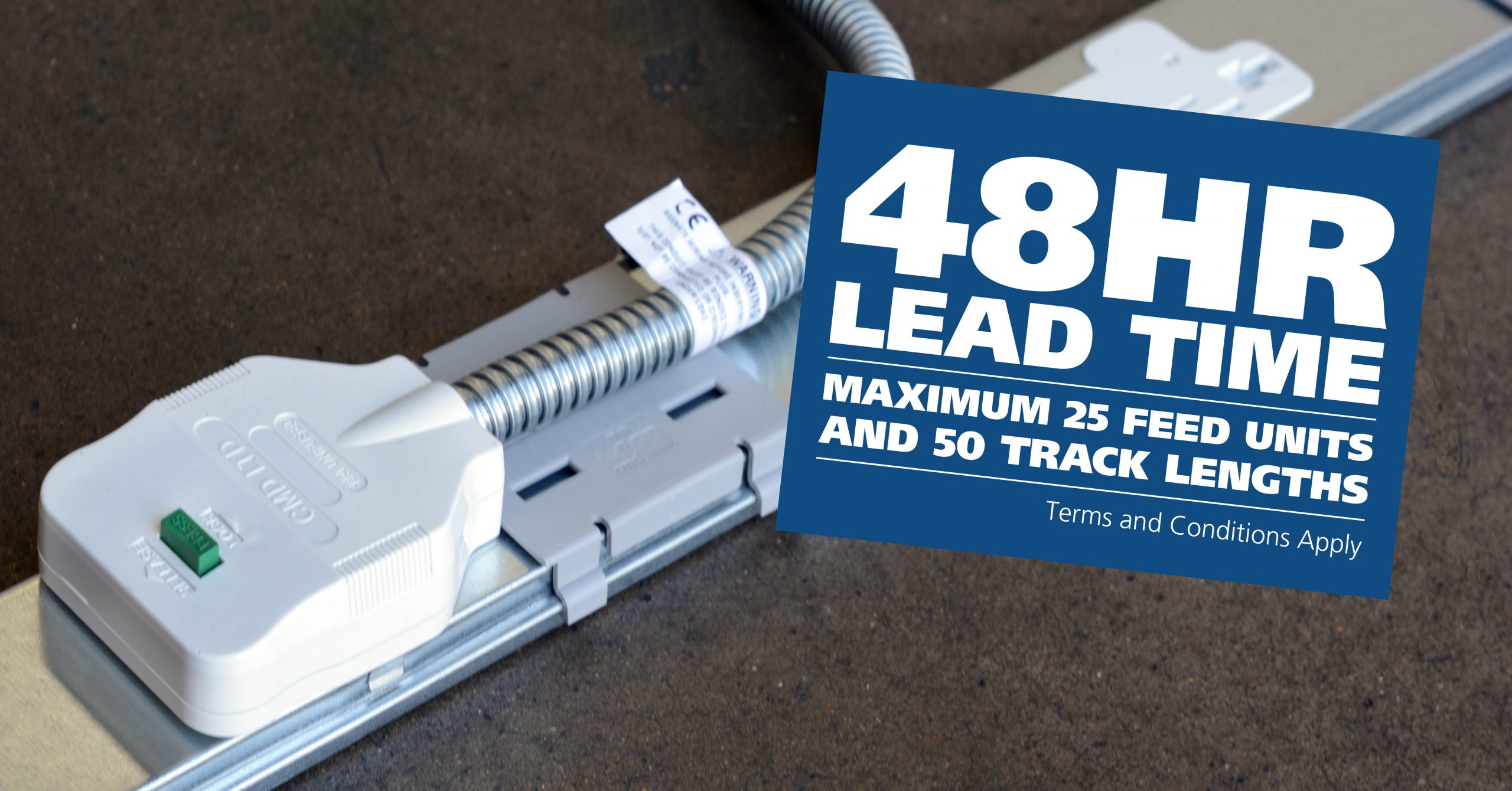
CMD Ltd LAUNCHES 48-HOUR TURNAROUND ON BETATRAK® RAPID ORDERING SERVICE

CMD Ltd, the specialist in power distribution systems, workstation power and monitor arms, has launched a rapid ordering service for its Betatrak® underfloor powertrack distribution systems and accessories, with a commitment to delivering within 48-hours of an approved purchase order*. The service enables customers to order up to 50 lengths of Standard or Clean Earth (C/E) low noise Betatrak, along with up to 25 feed...

Read more
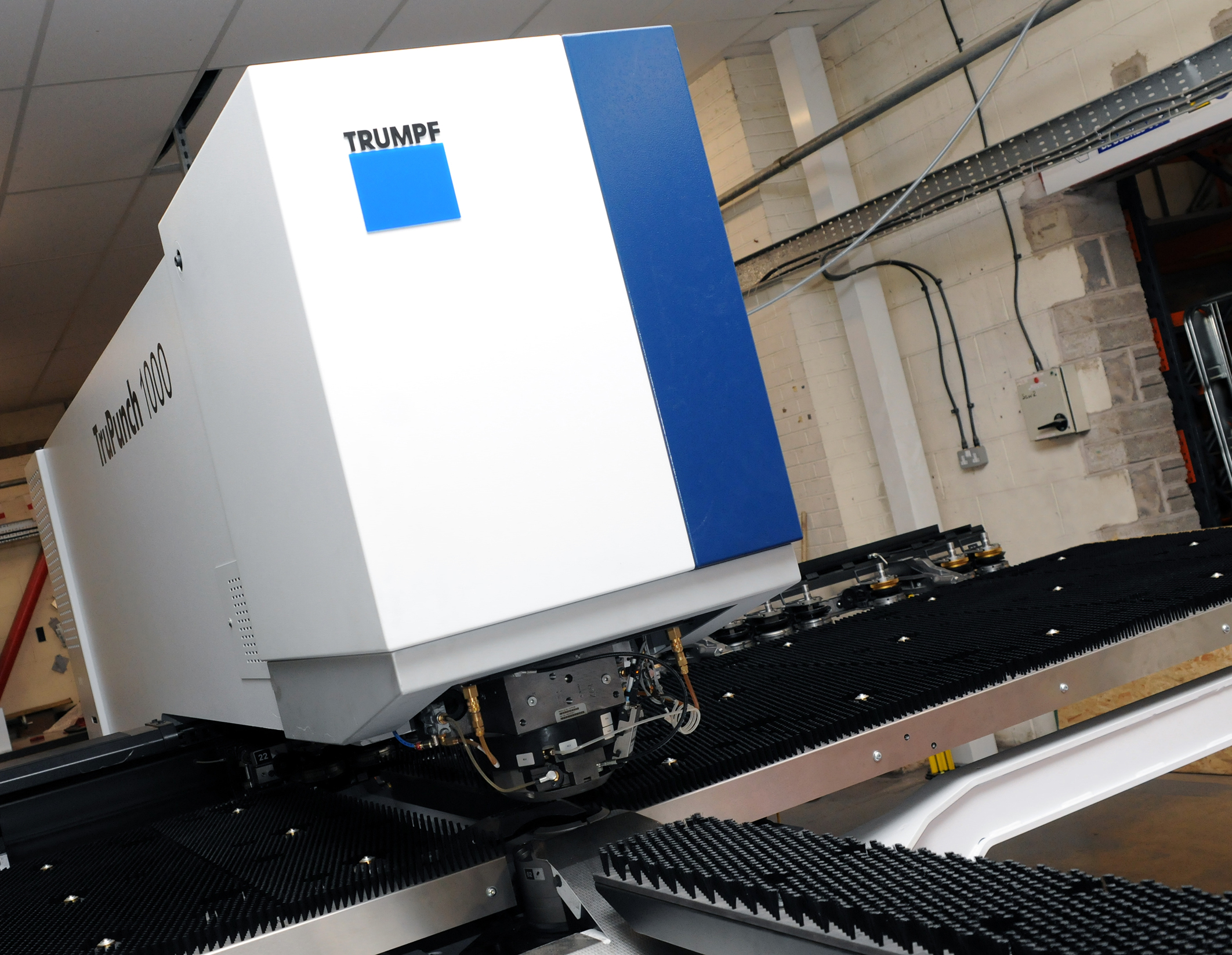
CMD INVESTS £1/4 MILLION IN NEW MACHINE AS PART OF FACTORY UPGRADE

We have invested in a new £1/4m TRUMPF CNC metal punch as part of an asset renewal strategy for our UK manufacturing capability. The new machine will be used in the production of a wide variety of our power distribution systems and workstation power products at our Rotherham factory. Suitable for handling sheet metal between 0.9mm and 3.0mm thick, the new machine will replace one...

Read more
CMD CATALOGUE PROVIDES TECHNICAL POWER DISTRIBUTION GUIDE

CMD Ltd has released a new catalogue, providing an easy to follow technical guide to our power distribution systems and plug and play desk modules. Detailing CMD’s full range of UK-manufactured power distribution systems and plug and play desk modules, the catalogue will be a helpful source of information to M&E engineers and contractors alike to understand how our power distribution systems connect together and...

Read more
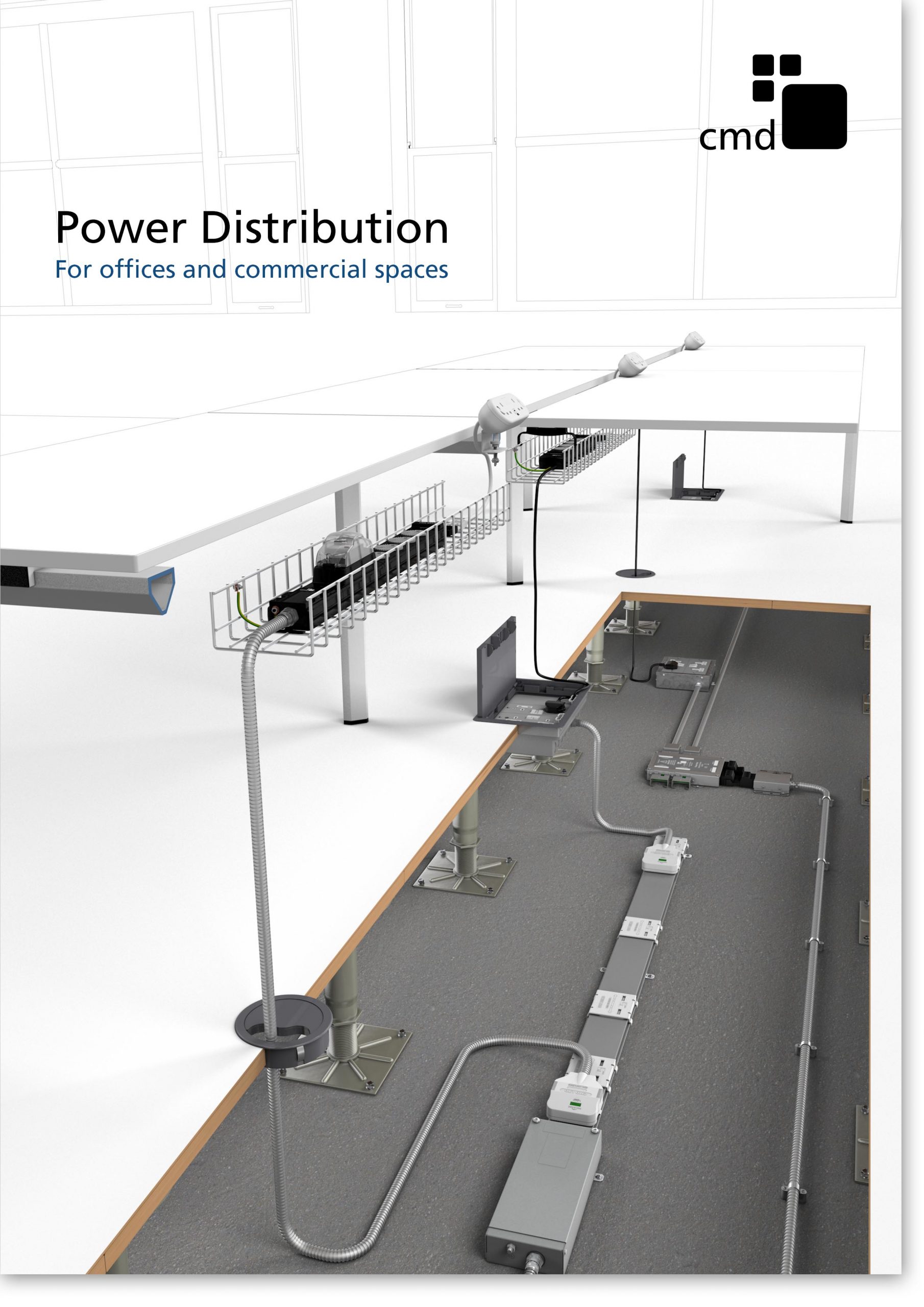
Power Distribution Catalogue
CMD Ltd PLAYS ESSENTIAL ROLE IN ELECTRICAL FIT OUT AT LONDON’S PRESTIGIOUS OFFICE DEVELOPMENT

CMD Ltd, specialist in workplace connectivity and ergonomic solutions, has provided a flexible and high-quality power distribution network for The Ray, a prestigious office development in London’s Farringdon. Well-known for being the former site of The Guardian newspaper, The Ray now stands as an 83,000ft² office development characterised by a modernised warehouse aesthetic, with level two now occupied by a global social media company. The...

Read more

The Ray
CMD plugs in to european opportunity with Schuko Capsule unit launch

CMD Ltd, the specialist in power and connectivity solutions for commercial environments, has launched a Schuko version of its popular fixed format Capsule workstation power module for export to mainland Europe and beyond. A popular on desk power module comprising two sockets and dual USB (type A and C) chargers, CMD’s Capsule unit is already widely specified in the UK as an off-the-shelf workstation power...

Read more
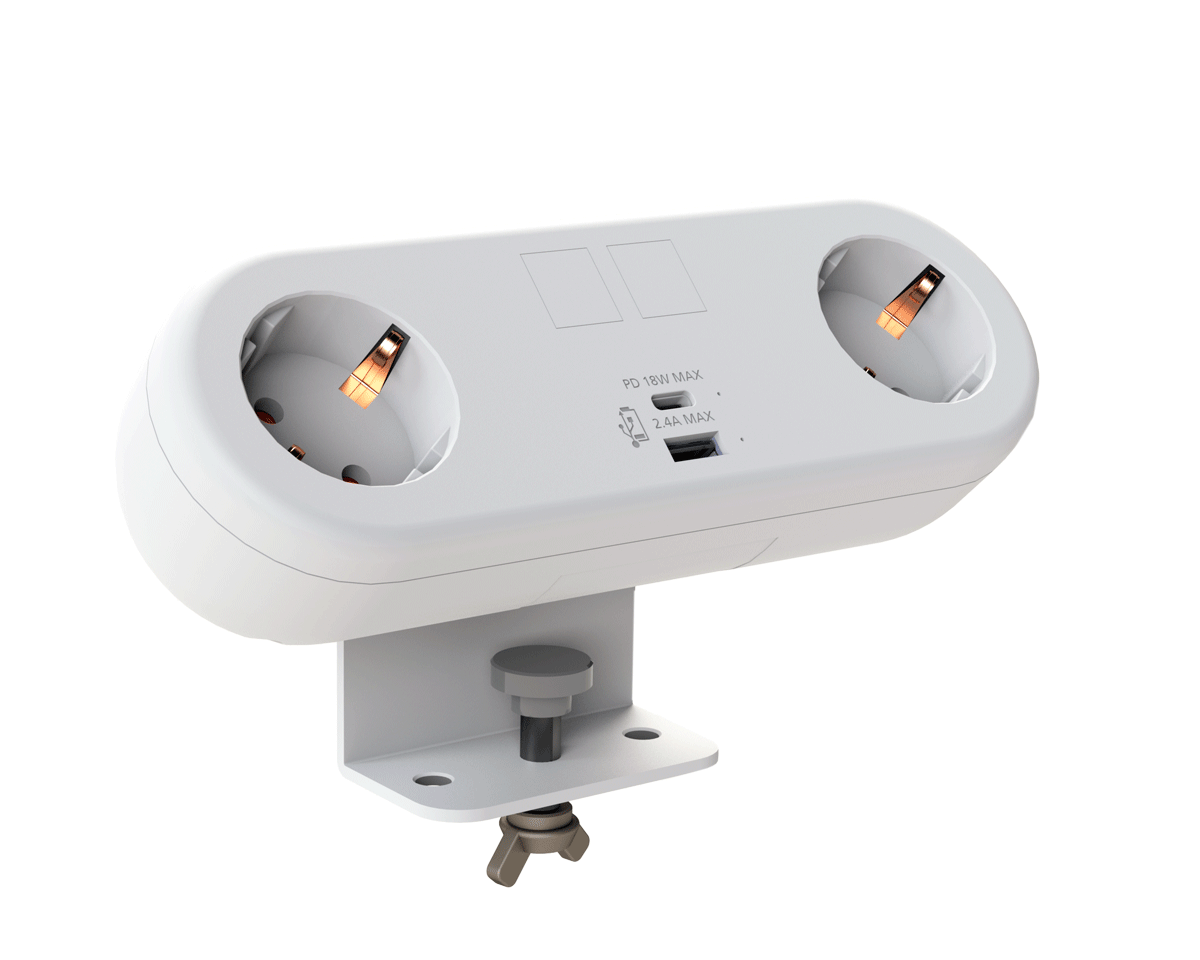
CMD White Schuko Capsule Desk Power Module
CMD LTD EXTENDS MONITOR ARM RANGE WITH THE LAUNCH OF REACH PLUS

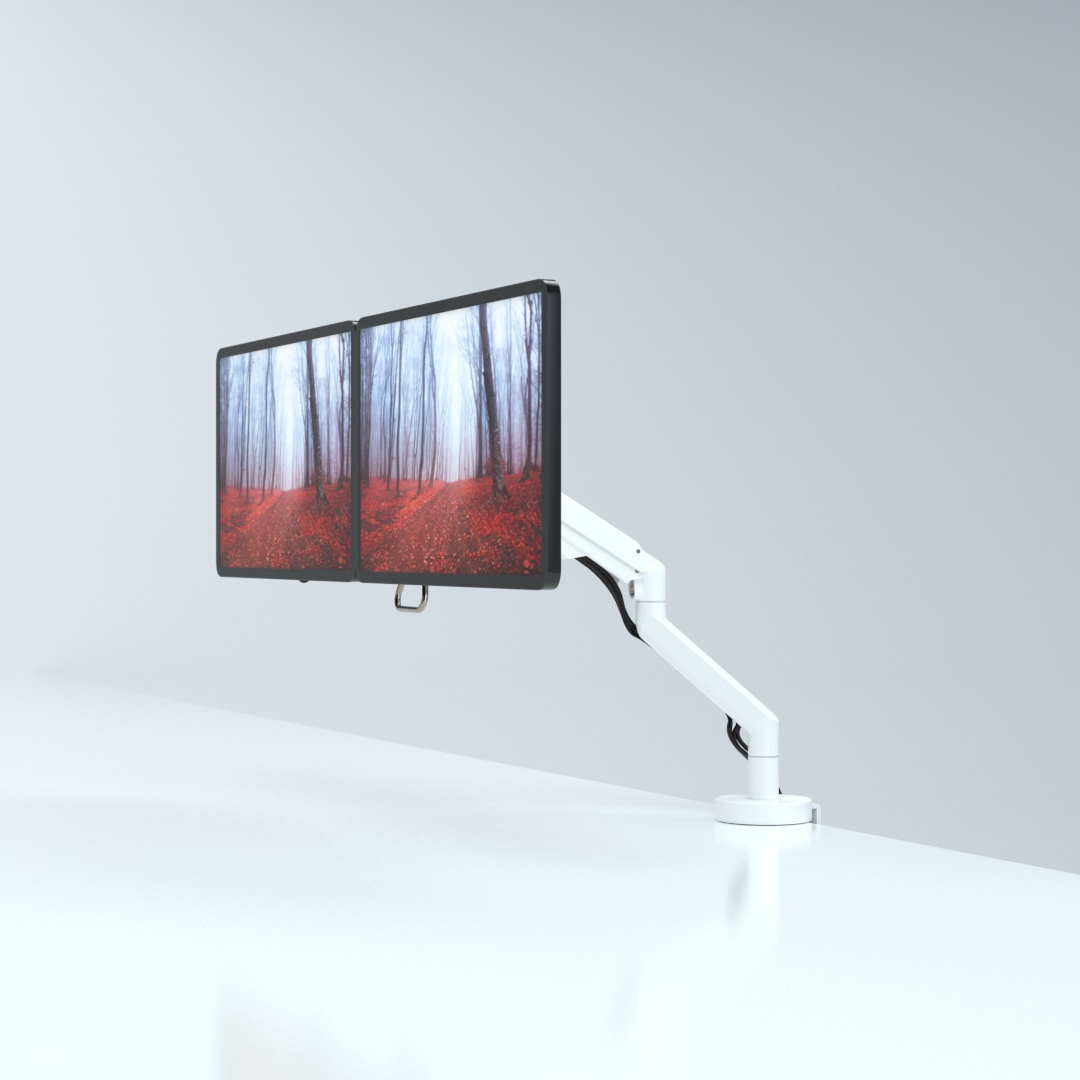
CMD Ltd, the specialist in ergonomic and connectivity solutions for commercial interiors, has completed its Reach monitor arm range with the launch of the Reach Plus. Available in single or dual screen options, the Reach Plus has been designed to provide an ideal solution for both single and dual screen workstation configurations, or can be used with next generation of large format curved screens. Suitable...

Read more
CMD Ltd DEMONSTRATES THE ART OF POWER DISTRIBUTION AT THE UNIVERSITY OF WARWICK

CMD Ltd, the specialist in workplace connectivity and ergonomic solutions, has provided Betatrak busbar power distribution and a range of electrical accessories for two major capital investment projects at the University of Warwick. Designed by Fielden Clegg Bradley Studios, the £33 million Faculty of Arts building is a showpiece development comprising four interconnected structures set around a central atrium, which will enable inter-disciplinary collaboration across...

Read more

University of Warwick
CMD BRINGS HARMONY TO COVENTRY UNIVERSITY RESEARCH FACILITIES

CMD Ltd, the specialist in power distribution solutions and workstation power and ergonomics, has provided under desk and on desk power modules for the refurbishment of three Coventry University research buildings. Located on Coventry University Technology Park, a business park designed to encourage collaboration between the university and knowledge-based businesses, the three buildings are being repurposed as office accommodation for university research teams. The refurbishment...

Read more

Coventry University

Top 10 Automated Feeding Systems for the Medicine Industry?

In the rapidly evolving landscape of the medicine industry, Automated Feeding Systems for medicine field play a crucial role. Dr. Emily Chen, a leading expert in pharmaceutical manufacturing, states, “These systems enhance precision and efficiency, resulting in better patient outcomes.” As healthcare demands increase, the need for reliable feeding systems is more vital than ever.

Automated Feeding Systems streamline the production of various medicinal products. They reduce human error and ensure precise ingredient delivery. However, these systems are not infallible; occasional malfunctions can disrupt the production process. In an industry where time and accuracy matter, it’s essential to strike a balance between automation and human oversight.

The investment in Automated Feeding Systems for medicine field is significant. Companies must consider cost versus efficiency. While automation can improve production speed and consistency, it also requires ongoing maintenance and potential upgrades. This complex relationship invites ongoing reflection on how technology and human skill can best coexist in pharmaceutical operations.

Top 10 Automated Feeding Systems for the Medicine Industry?

Advantages of Automated Feeding Systems in the Medicine Industry

Automated feeding systems in the medicine industry offer significant advantages. They enhance precision in the preparation of pharmaceutical products. This precision reduces human error and increases the overall quality of the medication. Consistency in dosage is crucial. Automated systems ensure each batch meets exact specifications.

Integration of technology improves efficiency. Automated systems can run continuously, reducing downtime. This allows for increased production capacity without sacrificing quality. Furthermore, these systems can monitor processes in real-time. Immediate adjustments can be made, ensuring optimal performance. Yet, reliance on technology can lead to oversights. Regular maintenance and monitoring are essential.

Moreover, automated feeding systems help with regulatory compliance. Documentation and traceability are streamlined, making audits simpler. However, training personnel is necessary. Workers must understand how to operate and troubleshoot these systems. As technology evolves, staying updated is crucial for operational success. Balancing automation and human oversight creates a more robust production environment.

Key Technologies Behind Automated Feeding Solutions for Pharmaceuticals

Automated feeding systems are gaining traction in the pharmaceutical industry. These systems streamline processes, reduce human error, and ensure consistent quality. Key technologies play a significant role in their effectiveness. Commonly, these include advanced sensors, real-time data analytics, and machine learning algorithms. Such technologies enhance accuracy in dosing and material handling.

Sensors monitor material flow, detecting blockages or inconsistencies. They provide feedback, enabling immediate corrections. Analytics help in forecasting needs, optimizing inventory levels. Machine learning systems adapt to changing demands, learning from historical data to improve performance. However, the reliance on technology can pose challenges. If the algorithms misinterpret data, it can lead to costly mistakes.

Integrating these systems requires a careful balance. Adjustments are often necessary to fit specific operational environments. Continuous training for personnel is essential to manage these automated systems effectively. Without proper understanding, issues can arise, leading to potential disruptions. Thus, while automated feeding systems offer significant advantages, a thoughtful approach is crucial for successful implementation.

Top 10 Automated Feeding Systems: Features and Specifications

Automated feeding systems play a critical role in the medicine industry. These innovations streamline the process of drug formulation and packaging. With precision and efficiency, they minimize human error. Key features include adjustable feed rates and compatibility with various materials. Such adaptability is crucial in catering to diverse production needs.

Many systems boast integrated sensors that monitor flow rates in real time. This ensures consistent dosing, which is vital for patient safety. However, not all systems are the same. Some may struggle with certain materials, leading to blockages or inconsistent flow. Regular maintenance is necessary to keep these machines running smoothly. Additionally, while automation enhances efficiency, it often requires specialized training for staff.

Reliability is a significant factor when selecting a feeding system. Continuous operation can be disrupted if the system lacks robustness. Monitoring and feedback loops can help identify potential issues early. This proactive approach is essential. Investing time in understanding these systems can yield long-term benefits in efficiency and safety.

Compliance and Safety Standards for Feeding Systems in Drug Manufacturing

Automated feeding systems play a crucial role in the medicine industry, especially in drug manufacturing. Compliance with safety standards is non-negotiable. The FDA mandates strict guidelines for the operation of these systems. Automation must meet Good Manufacturing Practices (GMP) to ensure product safety and efficacy. Inadequate compliance can lead to serious consequences, including costly recalls and reputational damage.

Data from the International Society for Pharmaceutical Engineering (ISPE) indicates that nearly 30% of manufacturers reported issues related to feeding system failures. Regular maintenance and audits are essential. These systems should undergo validation processes to ensure they operate within defined parameters. Neglecting this can lead to batch contamination and inconsistent product quality.

Tip: Always implement a quality assurance strategy to monitor system performance. Collect data regularly to identify deviations early. Engage with cross-functional teams to enhance compliance measures.

Selecting the right system is vital. Systems must be adaptable to various materials and processes. Customization is key to meeting the unique requirements of different manufacturing environments. Investing in training for staff can significantly improve adherence to safety protocols. Understanding the interplay between technology and compliance can drive better outcomes.

Top 10 Automated Feeding Systems in the Medicine Industry: Compliance and Safety Standards

Market Trends and Innovations in Automated Feeding Technologies for Healthcare

The healthcare sector is witnessing remarkable advancements in automated feeding technologies. These systems offer precision and efficiency in medication delivery. By integrating smart sensors, they monitor real-time data. This capability ensures timely and accurate dosing. Some innovations even utilize AI for predictive analytics. These features allow healthcare providers to optimize treatment plans.

However, challenges remain. Not all automated systems are user-friendly. Some medical staff report difficulties in operation. Training for these technologies can be inconsistent. Additionally, reliance on automation raises questions about human oversight. It is crucial to balance efficiency with personal touch in patient care.

Market trends show a clear demand for improved reliability in these systems. Innovations focused on user experience may lead the way forward. Streamlined interfaces can reduce errors and increase adoption. As technology evolves, the healthcare industry must address both benefits and obstacles. Continuous feedback and improvements will shape the future of automated feeding systems.