

News

Miro: A New Standard in Responsible Innovation

Miro: A New Standard in Responsible Innovation The Miro monitor arm is setting new benchmarks in sustainability. It offers a high-performance solution without compromising on environmental responsibility. Designed with careful material selection, local sourcing, and longevity in mind, Miro’s responsible approach to design and unique manoeuvrability set it apart from the competition. Sustainable Choices Miro is crafted from energy-efficient materials with a lower carbon impact....

Read more
HSE Advisor

Role Purpose Support in the development, implementation and maintenance of the company’s Health, Safety & Environmental policies, processes, operational procedures, and standards.  Ensuring best practice and championing a continually improving HSE culture within the business. Key Responsibilities Liaise with and provide support to all areas of the business to eliminate, mitigate or reduce identified HSE exposures. Partner with the production management team and team leaders,...

Read more
CMD Ltd LAUNCHES 48-HOUR TURNAROUND ON BETATRAK® RAPID ORDERING SERVICE

CMD Ltd, the specialist in power distribution systems, workstation power and monitor arms, has launched a rapid ordering service for its Betatrak® underfloor powertrack distribution systems and accessories, with a commitment to delivering within 48-hours of an approved purchase order*. The service enables customers to order up to 50 lengths of Standard or Clean Earth (C/E) low noise Betatrak, along with up to 25 feed...

Read more

CMD INVESTS £1/4 MILLION IN NEW MACHINE AS PART OF FACTORY UPGRADE

We have invested in a new £1/4m TRUMPF CNC metal punch as part of an asset renewal strategy for our UK manufacturing capability. The new machine will be used in the production of a wide variety of our power distribution systems and workstation power products at our Rotherham factory. Suitable for handling sheet metal between 0.9mm and 3.0mm thick, the new machine will replace one...

Read more

CMD CATALOGUE PROVIDES TECHNICAL POWER DISTRIBUTION GUIDE

CMD Ltd has released a new catalogue, providing an easy to follow technical guide to our power distribution systems and plug and play desk modules. Detailing CMD’s full range of UK-manufactured power distribution systems and plug and play desk modules, the catalogue will be a helpful source of information to M&E engineers and contractors alike to understand how our power distribution systems connect together and...

Read more

Power Distribution Catalogue
CMD Ltd PLAYS ESSENTIAL ROLE IN ELECTRICAL FIT OUT AT LONDON’S PRESTIGIOUS OFFICE DEVELOPMENT

CMD Ltd, specialist in workplace connectivity and ergonomic solutions, has provided a flexible and high-quality power distribution network for The Ray, a prestigious office development in London’s Farringdon. Well-known for being the former site of The Guardian newspaper, The Ray now stands as an 83,000ft² office development characterised by a modernised warehouse aesthetic, with level two now occupied by a global social media company. The...

Read more

The Ray
CMD plugs in to european opportunity with Schuko Capsule unit launch

CMD Ltd, the specialist in power and connectivity solutions for commercial environments, has launched a Schuko version of its popular fixed format Capsule workstation power module for export to mainland Europe and beyond. A popular on desk power module comprising two sockets and dual USB (type A and C) chargers, CMD’s Capsule unit is already widely specified in the UK as an off-the-shelf workstation power...

Read more

CMD White Schuko Capsule Desk Power Module
CMD LTD EXTENDS MONITOR ARM RANGE WITH THE LAUNCH OF REACH PLUS

CMD Ltd, the specialist in ergonomic and connectivity solutions for commercial interiors, has completed its Reach monitor arm range with the launch of the Reach Plus. Available in single or dual screen options, the Reach Plus has been designed to provide an ideal solution for both single and dual screen workstation configurations, or can be used with next generation of large format curved screens. Suitable...

Read more

CMD Ltd DEMONSTRATES THE ART OF POWER DISTRIBUTION AT THE UNIVERSITY OF WARWICK

CMD Ltd, the specialist in workplace connectivity and ergonomic solutions, has provided Betatrak busbar power distribution and a range of electrical accessories for two major capital investment projects at the University of Warwick. Designed by Fielden Clegg Bradley Studios, the £33 million Faculty of Arts building is a showpiece development comprising four interconnected structures set around a central atrium, which will enable inter-disciplinary collaboration across...

Read more

University of Warwick
CMD BRINGS HARMONY TO COVENTRY UNIVERSITY RESEARCH FACILITIES

CMD Ltd, the specialist in power distribution solutions and workstation power and ergonomics, has provided under desk and on desk power modules for the refurbishment of three Coventry University research buildings. Located on Coventry University Technology Park, a business park designed to encourage collaboration between the university and knowledge-based businesses, the three buildings are being repurposed as office accommodation for university research teams. The refurbishment...

Read more

Coventry University

Top 10 Solar Energy Charger Manufacturers in China

A Solar Energy Charger can keep small devices powered when wall outlets are far away. Yet products with similar labels may differ in panel design, battery capacity, charging speed, and durability. A compact foldable unit may suit a day hike, while a larger solar charging system may better serve remote work or emergency preparedness. Details matter.

China has a broad electronics manufacturing base, but that alone does not guarantee product quality. Buyers should look beyond promotional claims and compare manufacturers’ experience, production capabilities, component sourcing, and quality-control practices. Ask how a company tests output under changing sunlight, protects batteries from overheating, and verifies compatibility with phones or other devices. Clear answers are useful evidence. Vague promises are not.

This guide introduces ten Chinese manufacturers associated with solar energy charging products. It offers a starting point for comparing product ranges, customization options, technical support, and export experience—not a guarantee that every supplier or model will fit every need. Specifications can change, and performance depends on sunlight, temperature, device requirements, and usage. That part is easy to overlook. Before choosing a supplier, request current datasheets, test reports, warranty terms, and samples where practical. A careful comparison takes time, but it can reveal meaningful differences that a product photo cannot show.

Top 10 Solar Energy Charger Manufacturers in China

Solar Energy Chargers: Technology, Components, and Product Types

Solar energy chargers turn sunlight into usable electrical power through photovoltaic cells. Their real-world output depends on more than the panel’s rated wattage. Sun angle, cloud cover, heat, and partial shade all affect charging speed. Shade changes everything. A compact charger may work well on a bright day but struggle behind a tent flap or car window.

Common components include solar panels, a charge controller, battery storage, and output ports. The controller regulates power and helps protect connected batteries from unsuitable voltage or current. Some designs use maximum power point tracking to improve energy collection as conditions change; simpler controllers may be less costly. Internal batteries store energy for evening use, while direct-output models charge devices only when sunlight is available. Small details matter. Check whether the stated capacity refers to battery storage or panel output, since those figures describe different things.

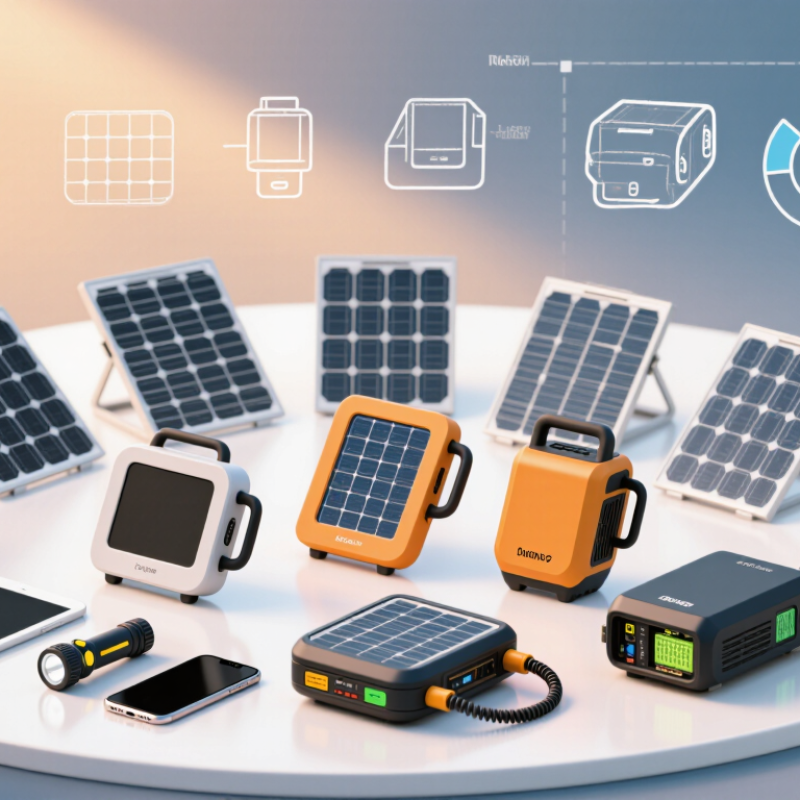
Product types range from slim solar power banks to folding panels and larger portable charging kits. A power bank is convenient for short trips, but its small panel can take a long time to refill. Folding panels offer more surface area and often pair with a separate battery. Monocrystalline cells are commonly chosen for compact, efficient designs, while other cell constructions may suit different price or form-factor goals. In practice, matching the charger to daily use matters more than choosing the biggest number on a package. There is no perfect setup; even a good panel needs thoughtful placement and realistic expectations.

China’s Solar Charger Industry and Its Manufacturing Landscape

China’s solar charger industry draws strength from a mature photovoltaic supply chain, but portable chargers are not the same as utility-scale solar panels. The International Energy Agency’s Special Report on Solar PV Global Supply Chains (2022) found that China held more than 80% of global manufacturing capacity across key PV stages, including wafers, cells, and modules. Its share of wafer production was close to 95%. These figures describe the wider solar sector, not portable-charger output specifically. That distinction matters.

In practice, a charger may combine a compact panel, battery cells, a charge-control circuit, ports, and a weather-resistant case. Manufacturers must balance panel area against weight: a small panel on a backpack may extend runtime, but often charges slowly in cloudy conditions. China’s manufacturing landscape links component suppliers, electronics assembly, tooling, and product testing, helping factories adapt designs for different capacities and use cases. Still, production scale does not guarantee reliable performance. A weakness in some product comparisons is the lack of consistent real-world charging tests. Buyers and manufacturers should examine measured output, battery capacity, heat management, and durability under changing light—not just the printed wattage.

Criteria for Evaluating Solar Energy Charger Manufacturers

When evaluating solar energy charger manufacturers in China, look beyond quoted wattage and attractive product photos. Ask for test reports tied to the exact model, including panel output under stated light conditions and usable battery capacity. Numbers can mislead. Check whether charging performance remains stable in partial shade and after repeated charge cycles. Request clear details on cell type, connectors, temperature limits, and protection against overcharging or short circuits.

Tips: Order samples from the same production process used for bulk orders. Compare measured output with the datasheet using consistent conditions. Check inspection records, component traceability, warranty terms, and response times for technical questions. A quick, specific answer is useful; a vague promise is not. Small details matter.

Factory audits and quality certificates can support an assessment, but verify their scope and dates. Ask how defects are recorded and what happens when a batch fails inspection. For outdoor products, review evidence of water-resistance and temperature testing rather than relying on labels alone. A neat scorecard still cannot predict every field failure. Treat it as a starting point, and leave room to reassess after sample testing.

Profiles of 10 Leading Solar Energy Charger Manufacturers in China

China’s solar charger market includes manufacturers with different strengths, from compact travel gear to larger off-grid systems. These ten profiles describe distinct production capabilities, not a ranking. A portable-device specialist may build folding panels with USB outputs for hikers. A battery-focused producer may pair panels with lithium storage and protective circuitry. A rugged-equipment maker may use reinforced corners, sealed ports, and textured casings. Small details matter.

A fourth manufacturer might focus on lightweight panels for emergency kits, where low packed weight is essential. A fifth may offer configurable output ports for different devices. A sixth could specialize in private-label production, supporting custom packaging and enclosure design. A seventh may serve outdoor retailers with compact, weather-resistant products. Their claims still need checking against test reports.

An eighth profile is a supplier experienced in larger panel-and-battery combinations for campsites. A ninth may emphasize quality control, including output checks under repeatable light conditions. A tenth might provide engineering support for custom orders, though lead times can vary. Buyers should request clear panel ratings, battery capacity, charging curves, warranty terms, and sample units. A sunny showroom test is not enough; performance changes with shade, angle, and temperature. Some product pages leave these details unclear, which deserves a closer look.

Top 10 Solar Energy Charger Manufacturers in China - Profiles of 10 Leading Solar Energy Charger Manufacturers in China

Anonymized product-profile overview. The profiles describe common product categories, not a verified company ranking; specifications vary by model.

Profile Product focus Representative configuration Typical applications Buyer checks
Profile 01 Foldable portable solar panels Multi-panel folding design; commonly offered in output classes from tens to around 100 W; USB outputs or a separate power-station connection, depending on model. Camping, travel, and charging portable power stations Rated power, connector type, folded size, and performance under partial shade
Profile 02 Solar power banks with an integrated panel Rechargeable battery with USB charging; the built-in panel is generally small and intended as an emergency or supplemental charging source. Outdoor backup and emergency use Battery capacity in Wh or mAh, USB output rating, charging time, and whether solar charging is described as supplemental
Profile 03 Direct-to-device USB solar chargers Portable panel paired with USB-A and, on some models, USB-C outputs; charging current can vary with sunlight and device requirements. Phones, small USB devices, and day trips Output protocol, voltage regulation, restart behavior after cloud cover, and device compatibility
Profile 04 Rugged outdoor solar chargers Portable panels or battery-plus-panel products with reinforced housings; water and dust resistance depend on the stated IP rating of the specific model. Hiking, field work, and outdoor emergency kits Verified IP rating, operating temperature, impact protection, and warranty terms
Profile 05 Camping solar charging kits Panel bundled with cables, adapters, or a charge controller; some kits are designed to connect to a compatible portable power station. Campsites, vans, and off-grid recreation Included accessories, connector compatibility, controller limits, and setup instructions
Profile 06 Flexible and lightweight solar panels Thin, bendable panel formats intended for selected curved or weight-sensitive installations; allowable bend radius and mounting method are model-specific. Specialty outdoor setups and selected mobile applications Maximum bend radius, surface compatibility, heat management, and mechanical warranty
Profile 07 Monocrystalline portable panel products Panels using monocrystalline silicon cells, available in rigid or foldable constructions; panel efficiency and rated output should be checked on the product datasheet. Portable charging where panel area is limited Datasheet test conditions, cell layout, temperature coefficient, and measured dimensions
Profile 08 Multiport solar charging products Portable panel or battery system with multiple device outputs; USB-C Power Delivery may be available on selected models and is not universal. Charging several devices during travel or outdoor use Per-port and shared output limits, supported charging protocols, and port protection
Profile 09 Solar chargers for small off-grid systems Panel-and-controller combinations intended for compatible battery systems; system voltage, controller type, and battery chemistry must match. Remote monitoring, small lighting systems, and basic off-grid installations Controller specifications, battery compatibility, protection functions, and wiring diagram
Profile 10 OEM/ODM solar charger production Contract production may support custom housings, packaging, connectors, or product configurations; available services and compliance depend on the supplier and project. Private-label and customized product programs Factory audit, sample testing, quality-control plan, certification scope, and production lead time

Note: Solar output depends on irradiance, panel orientation, temperature, shading, and connected-device limits. Confirm all product specifications and certifications against the manufacturer’s current datasheet before purchase.

Products, Applications, and Supplier Selection Factors

China’s solar charger suppliers offer compact panel-and-battery kits, foldable panels, and larger charging stations. Their applications range from phone charging during hikes to backup power at remote work sites. Scale matters: IRENA reported that global solar capacity reached 1,419 GW in 2023, adding 346 GW that year. The IEA’s 2022 solar supply-chain report also found that China held over 80% of global manufacturing capacity across key photovoltaic stages. That scale can broaden supplier options, but it does not guarantee consistent product quality.

For portable chargers, check panel output, battery capacity, connector types, weight, and performance under partial shade. For larger systems, ask about charge-controller compatibility, battery protection, temperature limits, and documented test results. Small details matter. A “20-watt” panel rating describes test conditions, not necessarily the power delivered on a cloudy afternoon. Published specifications can look precise; real-world charging is less tidy.

Compare suppliers using samples, production records, warranty terms, and clear responses to technical questions. Request test data for the complete product, not just its solar cell. Confirm whether stated battery capacity is rated in watt-hours or merely advertised as a headline figure. Check packaging, spare-part availability, and lead times against your intended market. One caveat: the cheapest sample may perform well, while later batches vary. Batch-level checks are worth the extra effort.