

News

Miro: A New Standard in Responsible Innovation

Miro: A New Standard in Responsible Innovation The Miro monitor arm is setting new benchmarks in sustainability. It offers a high-performance solution without compromising on environmental responsibility. Designed with careful material selection, local sourcing, and longevity in mind, Miro’s responsible approach to design and unique manoeuvrability set it apart from the competition. Sustainable Choices Miro is crafted from energy-efficient materials with a lower carbon impact....

Read more
HSE Advisor

Role Purpose Support in the development, implementation and maintenance of the company’s Health, Safety & Environmental policies, processes, operational procedures, and standards.  Ensuring best practice and championing a continually improving HSE culture within the business. Key Responsibilities Liaise with and provide support to all areas of the business to eliminate, mitigate or reduce identified HSE exposures. Partner with the production management team and team leaders,...

Read more
CMD Ltd LAUNCHES 48-HOUR TURNAROUND ON BETATRAK® RAPID ORDERING SERVICE

CMD Ltd, the specialist in power distribution systems, workstation power and monitor arms, has launched a rapid ordering service for its Betatrak® underfloor powertrack distribution systems and accessories, with a commitment to delivering within 48-hours of an approved purchase order*. The service enables customers to order up to 50 lengths of Standard or Clean Earth (C/E) low noise Betatrak, along with up to 25 feed...

Read more

CMD INVESTS £1/4 MILLION IN NEW MACHINE AS PART OF FACTORY UPGRADE

We have invested in a new £1/4m TRUMPF CNC metal punch as part of an asset renewal strategy for our UK manufacturing capability. The new machine will be used in the production of a wide variety of our power distribution systems and workstation power products at our Rotherham factory. Suitable for handling sheet metal between 0.9mm and 3.0mm thick, the new machine will replace one...

Read more

CMD CATALOGUE PROVIDES TECHNICAL POWER DISTRIBUTION GUIDE

CMD Ltd has released a new catalogue, providing an easy to follow technical guide to our power distribution systems and plug and play desk modules. Detailing CMD’s full range of UK-manufactured power distribution systems and plug and play desk modules, the catalogue will be a helpful source of information to M&E engineers and contractors alike to understand how our power distribution systems connect together and...

Read more

Power Distribution Catalogue
CMD Ltd PLAYS ESSENTIAL ROLE IN ELECTRICAL FIT OUT AT LONDON’S PRESTIGIOUS OFFICE DEVELOPMENT

CMD Ltd, specialist in workplace connectivity and ergonomic solutions, has provided a flexible and high-quality power distribution network for The Ray, a prestigious office development in London’s Farringdon. Well-known for being the former site of The Guardian newspaper, The Ray now stands as an 83,000ft² office development characterised by a modernised warehouse aesthetic, with level two now occupied by a global social media company. The...

Read more

The Ray
CMD plugs in to european opportunity with Schuko Capsule unit launch

CMD Ltd, the specialist in power and connectivity solutions for commercial environments, has launched a Schuko version of its popular fixed format Capsule workstation power module for export to mainland Europe and beyond. A popular on desk power module comprising two sockets and dual USB (type A and C) chargers, CMD’s Capsule unit is already widely specified in the UK as an off-the-shelf workstation power...

Read more

CMD White Schuko Capsule Desk Power Module
CMD LTD EXTENDS MONITOR ARM RANGE WITH THE LAUNCH OF REACH PLUS

CMD Ltd, the specialist in ergonomic and connectivity solutions for commercial interiors, has completed its Reach monitor arm range with the launch of the Reach Plus. Available in single or dual screen options, the Reach Plus has been designed to provide an ideal solution for both single and dual screen workstation configurations, or can be used with next generation of large format curved screens. Suitable...

Read more

CMD Ltd DEMONSTRATES THE ART OF POWER DISTRIBUTION AT THE UNIVERSITY OF WARWICK

CMD Ltd, the specialist in workplace connectivity and ergonomic solutions, has provided Betatrak busbar power distribution and a range of electrical accessories for two major capital investment projects at the University of Warwick. Designed by Fielden Clegg Bradley Studios, the £33 million Faculty of Arts building is a showpiece development comprising four interconnected structures set around a central atrium, which will enable inter-disciplinary collaboration across...

Read more

University of Warwick
CMD BRINGS HARMONY TO COVENTRY UNIVERSITY RESEARCH FACILITIES

CMD Ltd, the specialist in power distribution solutions and workstation power and ergonomics, has provided under desk and on desk power modules for the refurbishment of three Coventry University research buildings. Located on Coventry University Technology Park, a business park designed to encourage collaboration between the university and knowledge-based businesses, the three buildings are being repurposed as office accommodation for university research teams. The refurbishment...

Read more

Coventry University

China Top 10 Kitchen Pendant Light Manufacturers

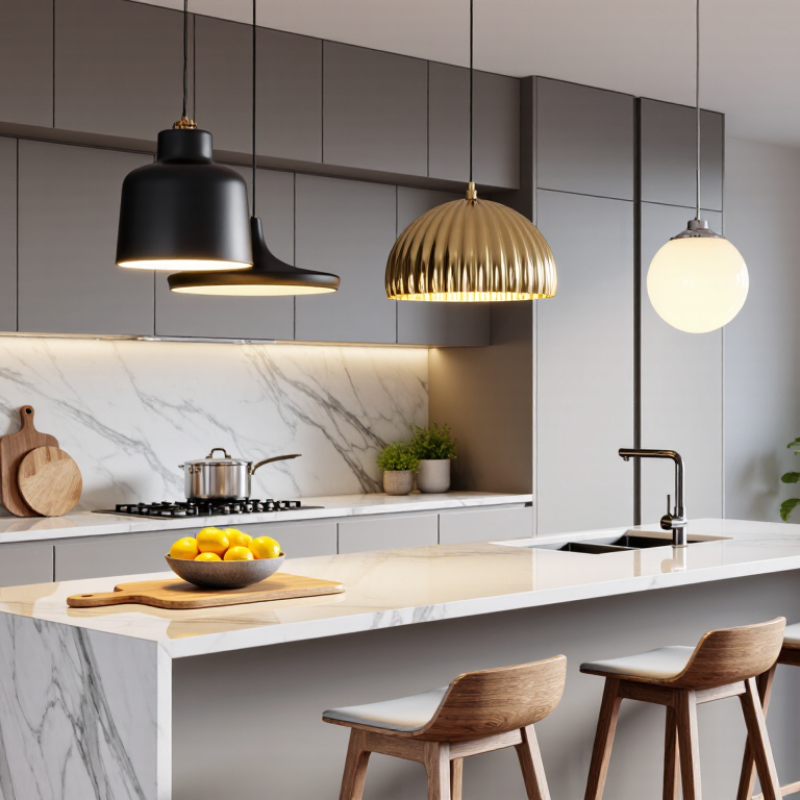
Choosing the right Kitchen Pendants can change how a kitchen feels and functions. A warm glow above an island makes meal preparation easier and gives the room a natural gathering point. Yet a stylish photograph cannot show everything. Buyers also need to consider materials, finish quality, light distribution, customization, and how clearly a supplier communicates.

This guide introduces ten Chinese manufacturers of kitchen pendant lighting and explains what buyers may want to examine when comparing them. The focus is practical: product range, design flexibility, manufacturing capabilities, quality processes, and experience serving overseas customers. Details can vary by model and order, so specifications should be confirmed directly with each manufacturer. Ask about dimensions, compatible bulbs, finish samples, packaging, and inspection procedures before making a decision. Small details matter.

A low-hanging fixture may look striking but obstruct sightlines. A broad shade can cast useful light, though it may create shadows across a work surface. These trade-offs deserve attention. The guide is not a substitute for checking samples, references, and current product documentation. Manufacturer rankings can also depend on a buyer’s priorities; there is no single supplier that fits every project. Some information may be incomplete or change over time. That is worth acknowledging. With careful comparison, readers can build a clearer shortlist and discuss their requirements with greater confidence.

China Top 10 Kitchen Pendant Light Manufacturers

Kitchen Pendant Lights: Core Types, Components, and Applications

Kitchen pendant lights generally take three forms: single drops, linear bars, and clustered fixtures. Single drops suit compact islands; bars spread light across longer counters, while clusters create a softer visual rhythm. A typical fixture includes a ceiling canopy, suspension, socket or LED module, driver, and shade or diffuser. Open metal shades direct light onto work surfaces. Opal glass softens glare. Small details matter. Check that shades are easy to clean and that LED modules or drivers can be serviced.

For food preparation, position pendants above work zones without obstructing seated sightlines. A dimmable source with high color rendering helps reveal the colors of ingredients and finishes. The International Energy Agency’s lighting overview estimates that lighting accounts for about 15% of global electricity use and 5% of greenhouse-gas emissions. This broad estimate is not specific to kitchens, but it supports choosing efficient LEDs and useful controls. Still, pendant placement cannot solve every shadow; dark counters may need under-cabinet task lighting.

China Top 10 Kitchen Pendant Light Manufacturers - Kitchen Pendant Lights: Core Types, Components, and Applications

Pendant light type Typical construction and components Light distribution Common kitchen applications Key selection considerations
Dome pendant Downward-facing metal or glass shade, lampholder or LED module, suspension cord or stem, ceiling canopy. Mostly downward-directed light, with some reflected light depending on the shade interior. Focused lighting over an island, peninsula, or breakfast bar. Check shade diameter, hanging height, glare control, and whether the light source is replaceable.
Mini pendant Compact shade or exposed lamp, socket or integrated LED, short canopy, and adjustable suspension hardware. Localized task or accent lighting; coverage depends on lumen output and beam spread. Installed individually in small kitchens or in a spaced row above an island or counter. For multiple fixtures, plan even spacing and coordinate their scale with the island dimensions.
Linear multi-light pendant A linear canopy or bar supporting several lamp holders or LED heads, with wiring and suspension points. Distributed light along a horizontal line. Long kitchen islands and dining counters where a single centered fixture is preferred. Match fixture length to the surface and confirm the ceiling junction-box position and mounting method.
Glass globe pendant Spherical clear, opal, or tinted glass shade with a socket or LED module, suspension, and canopy. Opal glass diffuses light; clear glass exposes the lamp and generally provides less diffusion. Island groupings, breakfast nooks, and decorative kitchen zones. Consider cleaning access, visible-lamp glare, and the effect of glass tint on light output.
Cone or task pendant Tapered shade, lamp holder or LED source, internal reflector in some models, and adjustable suspension. Concentrated downward illumination, often with limited upward spill. Food-preparation counters, islands, or work areas needing localized light. Review the beam spread and shade depth to balance useful task light against glare.
Drum pendant Cylindrical fabric, metal, or glass shade; diffuser may be fitted at the bottom; includes a light source and suspension. A diffuser can soften direct light, while the shade may also direct light downward or upward. Kitchen dining areas and larger spaces where softer ambient light is desired. Check shade material, diffuser availability, and how easily the fixture can be cleaned.
Lantern pendant Open or framed metal structure with glass panels in some designs, plus a socket or LED source and hanging hardware. Light can pass through open sides; distribution depends on the frame, glass, and lamp position. Decorative focal points over an island, dining table, or kitchen entry area. Check overall clearance, exposed-lamp glare, and whether the frame allows convenient bulb replacement.
Adjustable-arm pendant Pivoting arm or articulated joints, shade, wiring, mounting point, and a socket or integrated LED module. Direction can be changed to suit the task area, subject to the fixture's movement range. Flexible task lighting over counters or work zones where the target area may vary. Confirm arm reach, joint stability, mounting strength, and clearance from cabinets and walkways.
Cluster pendant Several separate shade-and-light assemblies grouped on one canopy or arranged as a coordinated set. Multiple light points create a broader or layered effect, depending on spacing and output. Kitchen islands, open-plan kitchens, and high ceilings needing a decorative group arrangement. Check canopy size, ceiling support, cord adjustment, and the total fixture width and drop.
Integrated LED pendant Built-in LED board or module, driver, heat-management structure, diffuser or lens, suspension, and canopy. Designed distribution varies by lens and fixture geometry; dimming depends on driver compatibility. General, task, or decorative lighting over islands and counters, depending on output and optics. Verify rated lumens, color temperature, color rendering information, dimmer compatibility, and service options.

Note: The table describes common kitchen pendant-light categories and components; it does not rank or identify manufacturers. Actual performance varies by product design, light source, installation, and applicable electrical requirements.

Key Benchmarks: CRI ≥80, CCT, Luminous Efficacy, and Rated Life

When comparing China’s kitchen pendant-light manufacturers, use CRI ≥80 as a baseline, not proof of excellent color rendering. For counters, timber finishes, and fresh produce, CRI 90 or higher can reveal colors more naturally. A CCT of 2700–3000 K gives a warm dining feel; 3000–4000 K often looks cleaner over prep areas. These are practical ranges, not universal rules. View a sample in the actual kitchen if possible.

The U.S. Department of Energy’s 2020 U.S. Lighting Market Characterization estimated that LEDs made up about 47% of installed lighting. Adoption is substantial. Yet efficacy and rated life still vary by product. Compare luminaire efficacy in lumens per watt, rather than relying only on LED-chip claims. Ask whether rated life is stated as L70, and whether it applies to the complete fixture. DOE guidance on LM-80 and TM-21 explains how LED lumen-maintenance data supports life projections; a projected rating is not a guarantee of identical fixture performance.

Tips: Request CCT, CRI, lumens, luminaire efficacy, and rated-life documentation on the same specification sheet. Check dimming compatibility and glare in person. A tidy data sheet can still miss a real-world issue.

How China’s Top 10 Manufacturers Are Evaluated: Quality, Capacity, and Compliance

China Top 10 Kitchen Pendant Light Manufacturers

A credible “top 10” assessment should compare evidence, not polished catalogs. Quality checks can include finish consistency, wiring, socket temperature, and repeated-operation test records. The U.S. Department of Energy’s Energy Saver guidance says LED lighting uses at least 75% less energy and can last up to 25 times longer than incandescent lighting. That benchmark concerns light sources, not complete pendant fixtures, so fixture-level testing still matters. Small distinction. Big impact.

For product safety, evaluators can review applicable test reports against the IEC 60598 luminaire safety standards. They should also check whether certificates match the exact model, components, and destination market. A certificate alone is not proof of stable production. Sample units, traceable inspection records, and corrective-action logs offer stronger evidence. Kitchen conditions add practical concerns: heat, grease, and frequent cleaning can expose weak finishes or loose connections.

Capacity should be measured against documented output, equipment, staffing, and delivery performance—not a factory’s largest advertised figure. Auditors can compare recent order volumes with production schedules and inspect how defects are handled during peak demand. Compliance reviews should cover product documentation, material declarations, and required market-specific testing. Rankings still involve judgment. A supplier may perform well in samples, then struggle with repeat orders; the evaluation should say so plainly.

Profiles of 10 Chinese Manufacturers: Product Ranges and Specializations

Comparing ten Chinese kitchen pendant light manufacturers means looking beyond appearance. Their ranges may include single pendants, linear fixtures for islands, multi-light clusters, and adjustable models. Materials often shape each maker’s focus: clear or opal glass softens glare, while aluminum and steel suit clean, directional designs. Some suppliers emphasize decorative finishes; others concentrate on practical, repeatable designs for kitchens and hospitality projects. Small details matter.

The profiles should also distinguish standard collections from customization services. A manufacturer may offer choices in shade dimensions, cord length, finish, or light source, while another may focus on producing fixtures to a buyer’s drawings. Ask for dimensional drawings, finish samples, and clear information about installation and maintenance. Check whether the listed light source is replaceable and whether the canopy fits your ceiling setup. These points are easy to overlook. Product pages may not show how a finish looks under warm kitchen lighting, so samples can help. Specifications and capabilities vary by supplier, and they should be confirmed directly before a project moves forward.

Comparing Customization, Production Lead Times, Certifications, and Warranty Terms

For buyers comparing China’s top ten kitchen pendant light manufacturers, customization should be tested against drawings, not adjectives. Ask for a dimensioned canopy, cord-length range, finish samples, and a signed bill of materials. Confirm whether custom glass, metal colors, dimming components, and ceiling hardware are made in-house or outsourced. That distinction affects revision speed. Request separate timelines for sample approval, production, inspection, and freight. “Thirty days” means little without a clear start date.

Production evidence should include monthly capacity, recent on-time delivery rates, and a written plan for damaged or rejected units. The U.S. Department of Energy’s 2019 Energy Savings Forecast for Solid-State Lighting projected 569 terawatt-hours of annual U.S. electricity savings by 2035 under broad LED adoption. That makes efficient design relevant, but buyers should still verify the actual fixture’s driver, dimming compatibility, and thermal performance. Check safety and electromagnetic-compatibility certificates against the exact model, voltage, and destination market—not a generic factory certificate. Ask for test-report numbers and the issuing laboratory. Warranty terms need equal scrutiny: coverage for drivers and finishes, replacement freight, labor, and claim-response time. A long warranty sounds reassuring. It may not be. Get exclusions in writing, including finish discoloration near a hot cooktop.