

News

Miro: A New Standard in Responsible Innovation

Miro: A New Standard in Responsible Innovation The Miro monitor arm is setting new benchmarks in sustainability. It offers a high-performance solution without compromising on environmental responsibility. Designed with careful material selection, local sourcing, and longevity in mind, Miro’s responsible approach to design and unique manoeuvrability set it apart from the competition. Sustainable Choices Miro is crafted from energy-efficient materials with a lower carbon impact....

Read more
HSE Advisor

Role Purpose Support in the development, implementation and maintenance of the company’s Health, Safety & Environmental policies, processes, operational procedures, and standards.  Ensuring best practice and championing a continually improving HSE culture within the business. Key Responsibilities Liaise with and provide support to all areas of the business to eliminate, mitigate or reduce identified HSE exposures. Partner with the production management team and team leaders,...

Read more
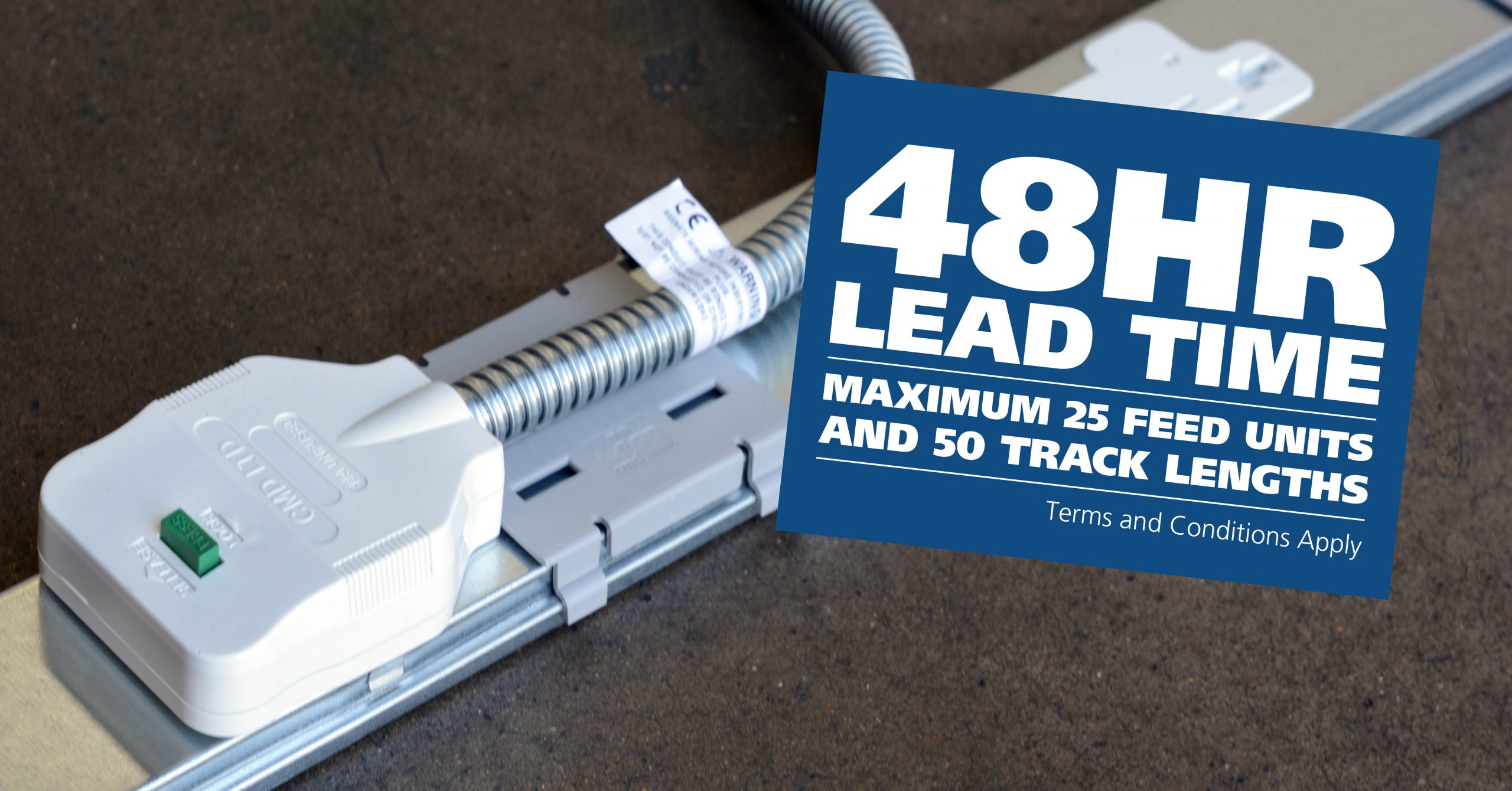
CMD Ltd LAUNCHES 48-HOUR TURNAROUND ON BETATRAK® RAPID ORDERING SERVICE

CMD Ltd, the specialist in power distribution systems, workstation power and monitor arms, has launched a rapid ordering service for its Betatrak® underfloor powertrack distribution systems and accessories, with a commitment to delivering within 48-hours of an approved purchase order*. The service enables customers to order up to 50 lengths of Standard or Clean Earth (C/E) low noise Betatrak, along with up to 25 feed...

Read more
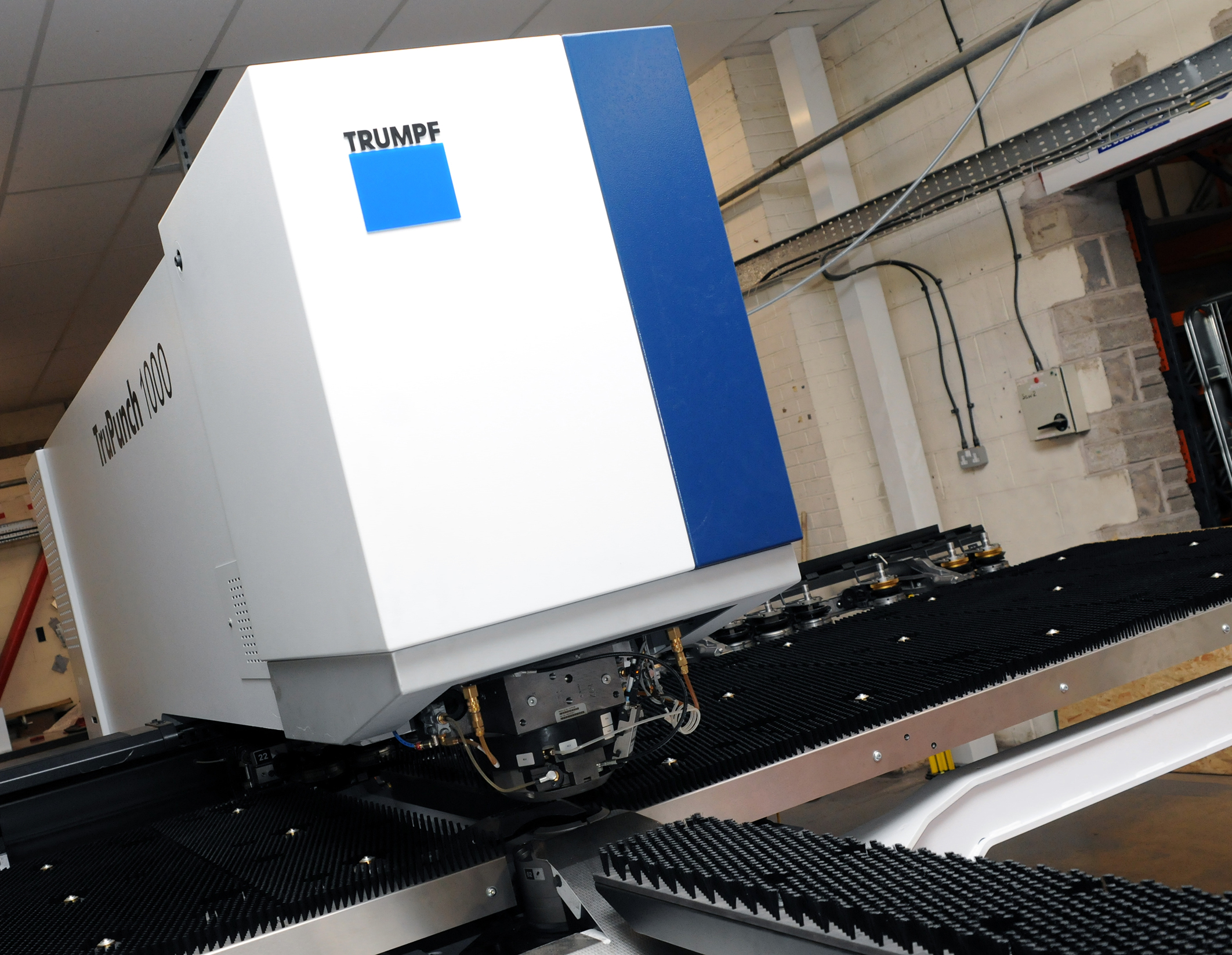
CMD INVESTS £1/4 MILLION IN NEW MACHINE AS PART OF FACTORY UPGRADE

We have invested in a new £1/4m TRUMPF CNC metal punch as part of an asset renewal strategy for our UK manufacturing capability. The new machine will be used in the production of a wide variety of our power distribution systems and workstation power products at our Rotherham factory. Suitable for handling sheet metal between 0.9mm and 3.0mm thick, the new machine will replace one...

Read more
CMD CATALOGUE PROVIDES TECHNICAL POWER DISTRIBUTION GUIDE

CMD Ltd has released a new catalogue, providing an easy to follow technical guide to our power distribution systems and plug and play desk modules. Detailing CMD’s full range of UK-manufactured power distribution systems and plug and play desk modules, the catalogue will be a helpful source of information to M&E engineers and contractors alike to understand how our power distribution systems connect together and...

Read more
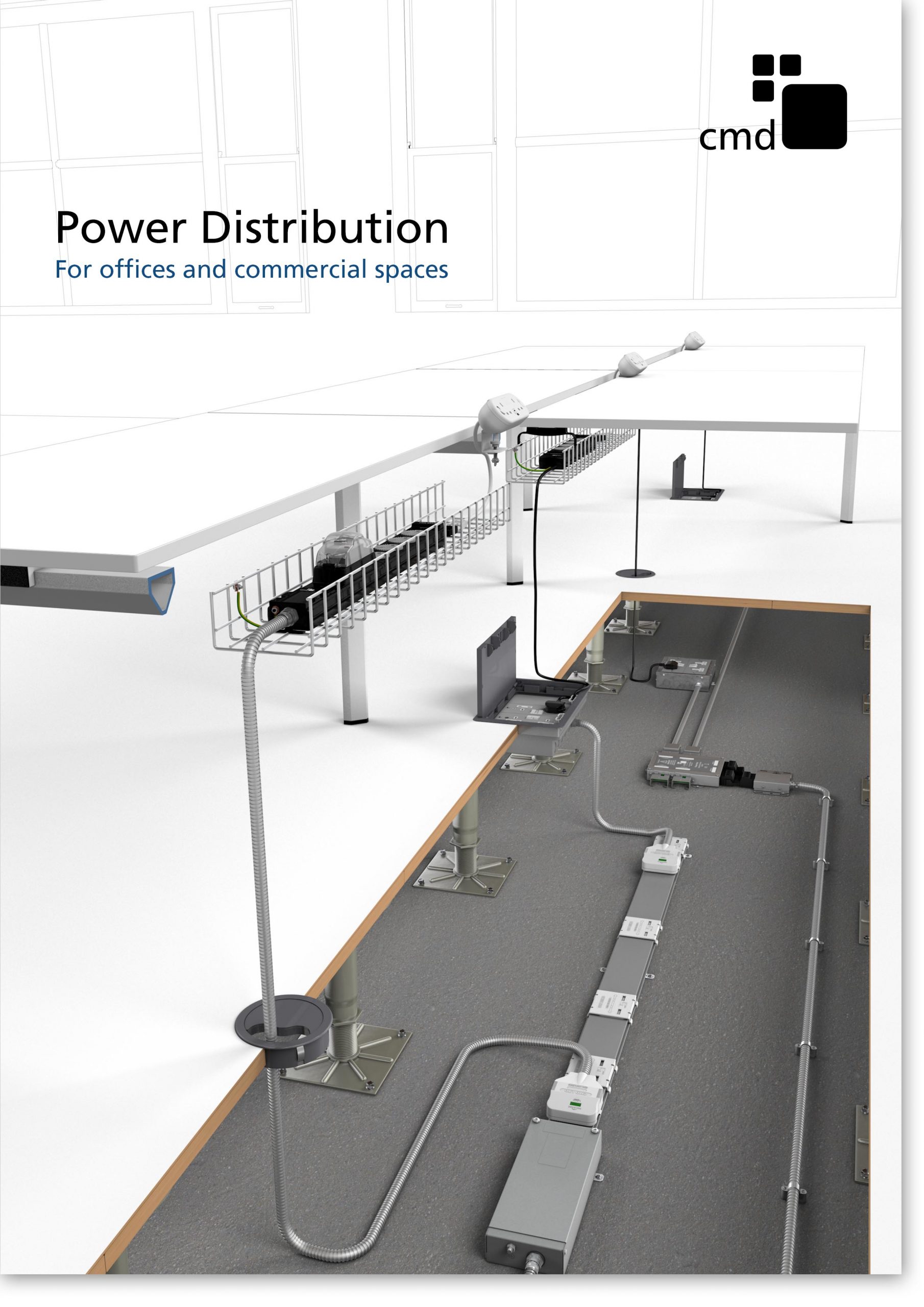
Power Distribution Catalogue
CMD Ltd PLAYS ESSENTIAL ROLE IN ELECTRICAL FIT OUT AT LONDON’S PRESTIGIOUS OFFICE DEVELOPMENT

CMD Ltd, specialist in workplace connectivity and ergonomic solutions, has provided a flexible and high-quality power distribution network for The Ray, a prestigious office development in London’s Farringdon. Well-known for being the former site of The Guardian newspaper, The Ray now stands as an 83,000ft² office development characterised by a modernised warehouse aesthetic, with level two now occupied by a global social media company. The...

Read more

The Ray
CMD plugs in to european opportunity with Schuko Capsule unit launch

CMD Ltd, the specialist in power and connectivity solutions for commercial environments, has launched a Schuko version of its popular fixed format Capsule workstation power module for export to mainland Europe and beyond. A popular on desk power module comprising two sockets and dual USB (type A and C) chargers, CMD’s Capsule unit is already widely specified in the UK as an off-the-shelf workstation power...

Read more
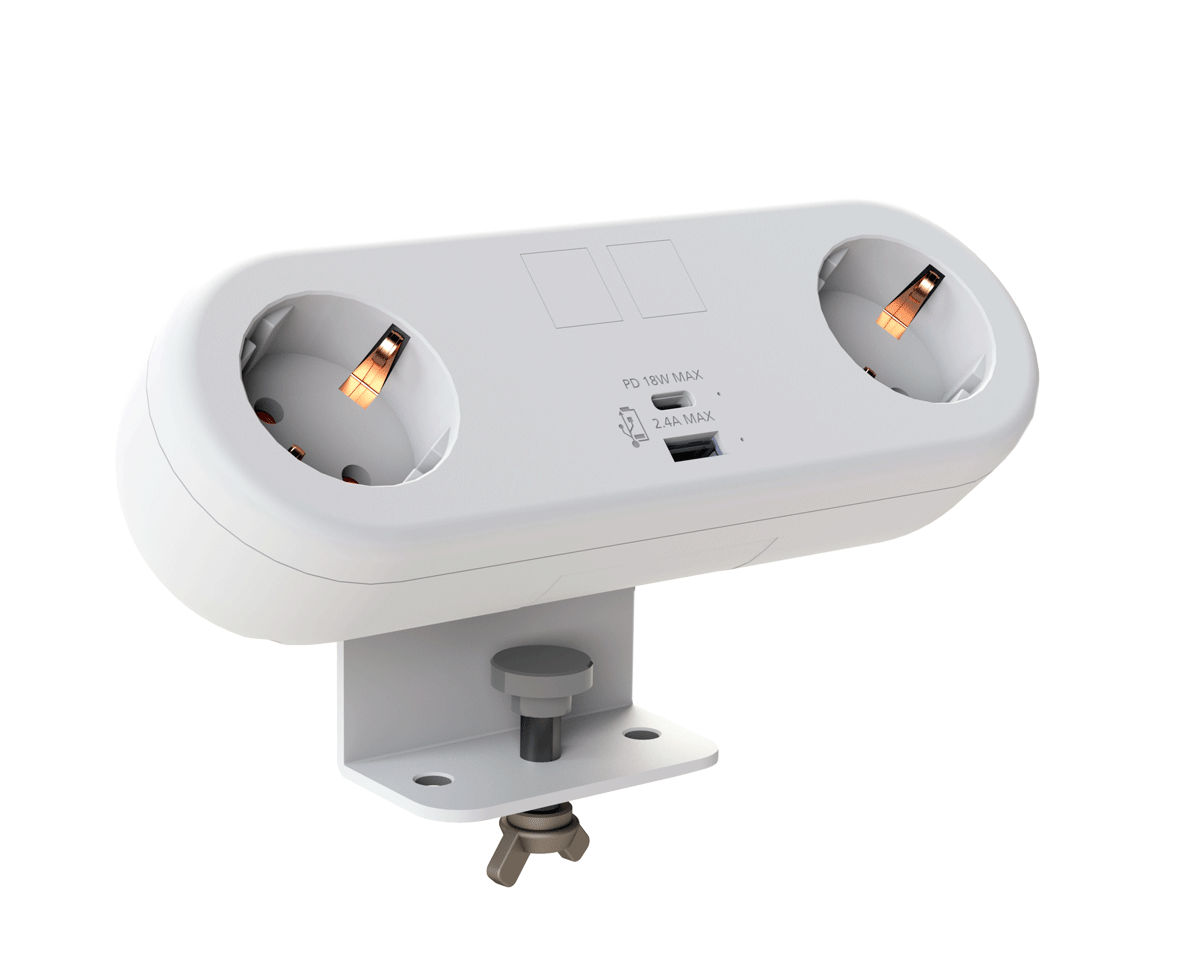
CMD White Schuko Capsule Desk Power Module
CMD LTD EXTENDS MONITOR ARM RANGE WITH THE LAUNCH OF REACH PLUS

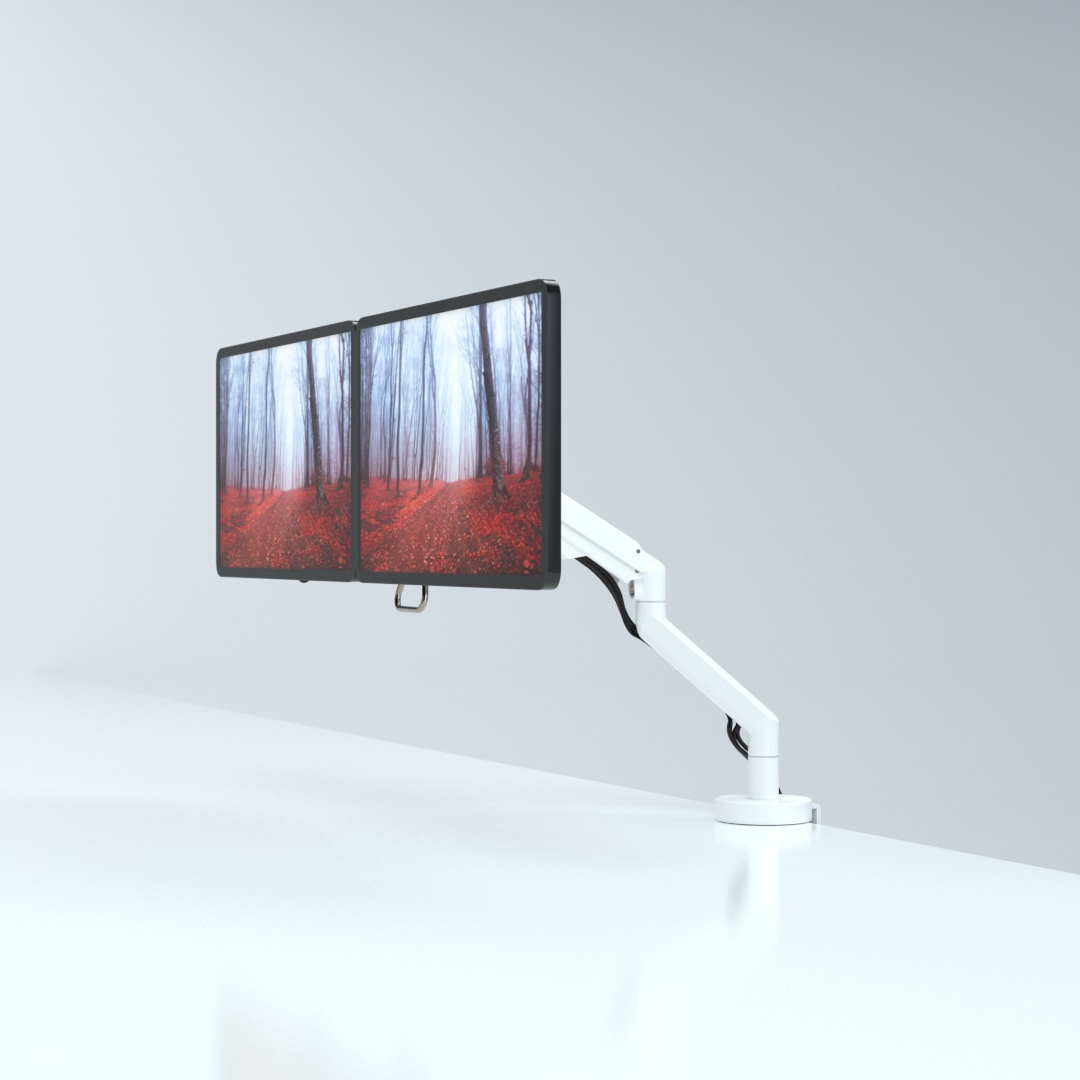
CMD Ltd, the specialist in ergonomic and connectivity solutions for commercial interiors, has completed its Reach monitor arm range with the launch of the Reach Plus. Available in single or dual screen options, the Reach Plus has been designed to provide an ideal solution for both single and dual screen workstation configurations, or can be used with next generation of large format curved screens. Suitable...

Read more
CMD Ltd DEMONSTRATES THE ART OF POWER DISTRIBUTION AT THE UNIVERSITY OF WARWICK

CMD Ltd, the specialist in workplace connectivity and ergonomic solutions, has provided Betatrak busbar power distribution and a range of electrical accessories for two major capital investment projects at the University of Warwick. Designed by Fielden Clegg Bradley Studios, the £33 million Faculty of Arts building is a showpiece development comprising four interconnected structures set around a central atrium, which will enable inter-disciplinary collaboration across...

Read more

University of Warwick
CMD BRINGS HARMONY TO COVENTRY UNIVERSITY RESEARCH FACILITIES

CMD Ltd, the specialist in power distribution solutions and workstation power and ergonomics, has provided under desk and on desk power modules for the refurbishment of three Coventry University research buildings. Located on Coventry University Technology Park, a business park designed to encourage collaboration between the university and knowledge-based businesses, the three buildings are being repurposed as office accommodation for university research teams. The refurbishment...

Read more

Coventry University

Top 10 Inverter Inductor Manufacturers for Global Buyers

An Inverter Inductor may look like a compact coil on a circuit board, but its design affects ripple current, heat, noise, and system reliability. In solar inverters, energy storage, and industrial drives, buyers need parts matched to operating frequency, current, voltage, and cooling conditions. A catalogue rating alone is not enough. Core material, winding layout, insulation, and measured temperature rise all matter.

Power electronics professor Robert W. Erickson’s work emphasizes that magnetic components must be designed around the converter’s operating conditions. Put simply, an inductor that performs well in one circuit may be a poor fit in another. That distinction is easy to miss when comparing suppliers by price or headline specifications. Ask for test conditions, drawings, tolerances, and evidence behind performance claims. Small details matter.

This guide reviews ten manufacturers serving global buyers, with attention to product range, engineering support, customization, and documentation. It is a starting point, not a substitute for qualification testing. Supplier capabilities can vary by facility and product line; even a polished datasheet leaves questions unanswered. A sample can reveal winding consistency, mounting fit, and real-world temperature behavior. The best choice is not always the largest brand. It is the supplier whose verified capabilities match the application, delivery needs, and quality requirements.

Top 10 Inverter Inductor Manufacturers for Global Buyers

Inverter Inductors Explained: Inductance (µH), RMS Current (A), and DCR (mΩ)

An inverter inductor may look like a simple coil, but its ratings shape efficiency, temperature, and operating stability. Inductance, measured in microhenries (µH), affects current ripple and response to switching changes. A higher value can reduce ripple, yet it may require more turns or a larger core. The best value depends on switching frequency, input voltage, load range, and control design. Check the specified test conditions; two µH figures are not always directly comparable.

RMS current, measured in amperes (A), indicates the continuous heating burden under a stated thermal setup. Compare it with the inverter’s actual current waveform, ambient temperature, airflow, and available board space. It is not the same as peak current. Brief overloads can still push the magnetic core toward saturation, so verify peak-current capability too. DCR, measured in milliohms (mΩ), is the winding’s direct-current resistance. Lower DCR usually means lower copper loss, calculated approximately as I²R, but it can come with trade-offs in size or cost. Small differences matter. At high current, even a few milliohms can create measurable heat. Datasheets may leave practical questions unanswered, such as how a rating changes inside a compact enclosure. That is worth checking with thermal tests.

Top 10 Inverter Inductor Manufacturers for Global Buyers - Inverter Inductors Explained: Inductance (µH), RMS Current (A), and DCR (mΩ)

The table below is an application-oriented buyer’s reference, not a manufacturer ranking or a list of supplier-specific specifications. Values are illustrative engineering ranges; actual requirements depend on topology, switching frequency, ripple current, temperature rise, core material, and cooling. Confirm ratings against the component datasheet and operating conditions.

No. Inverter application Typical inductance range (µH) Typical RMS current range (A) Typical DCR range (mΩ) Key buyer checks
1 Low-power DC-AC inverter 10–100 2–15 10–200 Package size, saturation current, and temperature rise
2 Residential solar inverter, boost stage 50–500 10–60 1–30 DC bias, core loss at switching frequency, and cooling method
3 Three-phase grid-tied inverter output filter 100–2,000 10–200 0.2–20 Ripple-current rating, acoustic noise, and insulation requirements
4 Energy-storage inverter DC-DC stage 10–500 20–300 0.1–10 Bidirectional operation, peak current, and thermal performance
5 Electric-vehicle traction inverter filter or choke 1–100 50–500 0.05–5 Vibration, thermal cycling, insulation system, and fault current
6 Industrial motor-drive inverter 10–1,000 10–300 0.1–15 Overload duration, enclosure temperature, and EMC requirements
7 Uninterruptible power supply inverter 100–3,000 10–250 0.1–20 Continuous-duty losses, transient current, and filter interaction
8 Microinverter power stage 10–500 2–40 1–100 Compact footprint, ambient-temperature derating, and lifetime
9 High-frequency transformer-coupled inverter stage 1–200 5–150 0.2–30 Frequency-dependent core loss, winding construction, and creepage
10 Regenerative or grid-interactive inverter 50–2,000 10–300 0.1–15 Bidirectional ripple, saturation margin, and grid-filter stability

RMS current is the effective continuous current under specified thermal conditions; it is not interchangeable with saturation current. DCR is the winding’s DC resistance, and its associated copper loss is approximately I²R. Compare values only at consistent reference temperatures and verify inductance under the intended DC bias.

How Core Materials Affect Losses Across a 10–100 kHz Switching Range

For inverter inductors operating from 10 to 100 kHz, core choice can change where heat appears: inside the magnetic material or in the winding. At the low end, laminated electrical steel may remain practical, but rising frequency increases eddy-current loss. Ferrite’s high electrical resistivity helps limit that loss, making it common at higher frequencies. The trade-off is saturation: a compact ferrite core can lose inductance sharply if current peaks exceed its design margin. Check the actual waveform, not just the rated current.

Frequency alone does not predict core heating. Flux swing, temperature, air gap, and material grade matter too. Published ferrite material data commonly report loss at specified frequency, flux density, and temperature; figures near 100 kHz and 100 mT can reach several hundred kW/m³, but values vary widely by grade. IEC 62044-3 provides measurement methods for soft magnetic cores, helping engineers compare results on consistent terms. Ask suppliers for loss curves across your full operating range, then test a sample under the inverter’s real ripple current. A neat datasheet curve is not the whole story. Even a small flux increase can raise loss noticeably, and thermal measurements may expose that gap.

Key Rating Checks: Saturation Current, Temperature Rise, and Operating Temperature

For global buyers comparing inverter inductor manufacturers, three ratings deserve close attention: saturation current, temperature rise, and operating temperature. They describe different limits. Treating them as interchangeable can lead to a poor design choice.

Saturation current

Saturation current indicates when an inductor’s inductance begins to fall under increasing current. Check how the manufacturer defines that point; a 10% drop and a 30% drop are not equivalent. Also compare the rating with the actual current waveform, including ripple and short overloads. A datasheet number without test conditions tells only part of the story. Small detail, big impact.

Temperature rise and operating temperature

Temperature rise depends on more than the inductor itself. Board copper, airflow, switching frequency, and nearby heat sources all affect the measured result. Ask for test conditions and, where possible, verify performance on the intended PCB. Operating temperature is the permitted ambient or component range, so confirm which one the rating describes. Then account for self-heating and the hottest expected enclosure conditions.

A tidy spreadsheet can still hide an unrealistic airflow assumption; that deserves a second look. Request derating curves, tolerances, and sample test data before comparing quotations.

Top 10 Inverter Inductor Manufacturers Compared by Portfolio and Global Reach

A useful comparison of inverter inductor manufacturers starts with portfolio depth, not catalogue size. Buyers should check core materials, inductance ranges, thermal limits, insulation systems, and custom-design support. These details affect heat rise, switching noise, and reliability inside a real inverter cabinet. Reach matters. Regional engineering teams and nearby production can shorten sample cycles and simplify technical communication, though local presence alone does not prove dependable delivery.

Demand is expanding. The IEA PVPS Trends in Photovoltaic Applications 2024 report puts global installed solar capacity above 1.6 terawatts by the end of 2023. The IEA Renewables 2023 report also recorded nearly 510 gigawatts of new renewable capacity that year.

These figures do not measure inductor demand directly, but they show why suppliers need scalable portfolios and service across markets.

Compare manufacturers by product breadth, documented qualification testing, stated lead times, and support for different grid and climate conditions. Ask for test conditions, not just headline ratings. A polished datasheet is not field evidence.

Even this comparison has limits: portfolio and global reach cannot replace checking samples against the buyer’s own switching frequency, ambient temperature, and vibration profile.

How Global Buyers Assess Quality Systems, Customization, and Supply Capacity

Top 10 Inverter Inductor Manufacturers for Global Buyers

Global buyers should assess more than catalog ratings. The IRENA report Renewable Capacity Statistics 2025 records 585 GW of renewable capacity added in 2024, representing 92.5% of total power capacity expansion. That growth makes dependable component supply important, but it does not prove any supplier can meet a project’s needs. Ask for dated production records, lot-level material traceability, and test results at the intended operating temperature.

For inverter inductors, compare inductance under DC bias, winding resistance, core loss, insulation performance, and temperature rise. Request samples from normal production, not specially prepared prototypes. Check how the supplier controls winding tension and air gaps; small variations can change electrical performance. No scorecard is perfect. A polished audit can still miss a weak corrective-action process, so review how defects are contained and documented.

Customization should come with clear engineering limits, drawings, and change control. Confirm whether the supplier can provide pilot quantities before committing to volume, and ask how capacity is allocated during demand peaks. Review monthly output, equipment utilization, lead-time history, and backup plans for critical materials. IRENA’s capacity figures show a rapidly expanding power sector, not a guaranteed forecast for any specific inductor. Keep that distinction. A second qualified source may reduce disruption risk, although it adds validation work and is not automatically the cheaper choice.