

News

Miro: A New Standard in Responsible Innovation

Miro: A New Standard in Responsible Innovation The Miro monitor arm is setting new benchmarks in sustainability. It offers a high-performance solution without compromising on environmental responsibility. Designed with careful material selection, local sourcing, and longevity in mind, Miro’s responsible approach to design and unique manoeuvrability set it apart from the competition. Sustainable Choices Miro is crafted from energy-efficient materials with a lower carbon impact....

Read more
HSE Advisor

Role Purpose Support in the development, implementation and maintenance of the company’s Health, Safety & Environmental policies, processes, operational procedures, and standards.  Ensuring best practice and championing a continually improving HSE culture within the business. Key Responsibilities Liaise with and provide support to all areas of the business to eliminate, mitigate or reduce identified HSE exposures. Partner with the production management team and team leaders,...

Read more
CMD Ltd LAUNCHES 48-HOUR TURNAROUND ON BETATRAK® RAPID ORDERING SERVICE

CMD Ltd, the specialist in power distribution systems, workstation power and monitor arms, has launched a rapid ordering service for its Betatrak® underfloor powertrack distribution systems and accessories, with a commitment to delivering within 48-hours of an approved purchase order*. The service enables customers to order up to 50 lengths of Standard or Clean Earth (C/E) low noise Betatrak, along with up to 25 feed...

Read more

CMD INVESTS £1/4 MILLION IN NEW MACHINE AS PART OF FACTORY UPGRADE

We have invested in a new £1/4m TRUMPF CNC metal punch as part of an asset renewal strategy for our UK manufacturing capability. The new machine will be used in the production of a wide variety of our power distribution systems and workstation power products at our Rotherham factory. Suitable for handling sheet metal between 0.9mm and 3.0mm thick, the new machine will replace one...

Read more

CMD CATALOGUE PROVIDES TECHNICAL POWER DISTRIBUTION GUIDE

CMD Ltd has released a new catalogue, providing an easy to follow technical guide to our power distribution systems and plug and play desk modules. Detailing CMD’s full range of UK-manufactured power distribution systems and plug and play desk modules, the catalogue will be a helpful source of information to M&E engineers and contractors alike to understand how our power distribution systems connect together and...

Read more

Power Distribution Catalogue
CMD Ltd PLAYS ESSENTIAL ROLE IN ELECTRICAL FIT OUT AT LONDON’S PRESTIGIOUS OFFICE DEVELOPMENT

CMD Ltd, specialist in workplace connectivity and ergonomic solutions, has provided a flexible and high-quality power distribution network for The Ray, a prestigious office development in London’s Farringdon. Well-known for being the former site of The Guardian newspaper, The Ray now stands as an 83,000ft² office development characterised by a modernised warehouse aesthetic, with level two now occupied by a global social media company. The...

Read more

The Ray
CMD plugs in to european opportunity with Schuko Capsule unit launch

CMD Ltd, the specialist in power and connectivity solutions for commercial environments, has launched a Schuko version of its popular fixed format Capsule workstation power module for export to mainland Europe and beyond. A popular on desk power module comprising two sockets and dual USB (type A and C) chargers, CMD’s Capsule unit is already widely specified in the UK as an off-the-shelf workstation power...

Read more

CMD White Schuko Capsule Desk Power Module
CMD LTD EXTENDS MONITOR ARM RANGE WITH THE LAUNCH OF REACH PLUS

CMD Ltd, the specialist in ergonomic and connectivity solutions for commercial interiors, has completed its Reach monitor arm range with the launch of the Reach Plus. Available in single or dual screen options, the Reach Plus has been designed to provide an ideal solution for both single and dual screen workstation configurations, or can be used with next generation of large format curved screens. Suitable...

Read more

CMD Ltd DEMONSTRATES THE ART OF POWER DISTRIBUTION AT THE UNIVERSITY OF WARWICK

CMD Ltd, the specialist in workplace connectivity and ergonomic solutions, has provided Betatrak busbar power distribution and a range of electrical accessories for two major capital investment projects at the University of Warwick. Designed by Fielden Clegg Bradley Studios, the £33 million Faculty of Arts building is a showpiece development comprising four interconnected structures set around a central atrium, which will enable inter-disciplinary collaboration across...

Read more

University of Warwick
CMD BRINGS HARMONY TO COVENTRY UNIVERSITY RESEARCH FACILITIES

CMD Ltd, the specialist in power distribution solutions and workstation power and ergonomics, has provided under desk and on desk power modules for the refurbishment of three Coventry University research buildings. Located on Coventry University Technology Park, a business park designed to encourage collaboration between the university and knowledge-based businesses, the three buildings are being repurposed as office accommodation for university research teams. The refurbishment...

Read more

Coventry University

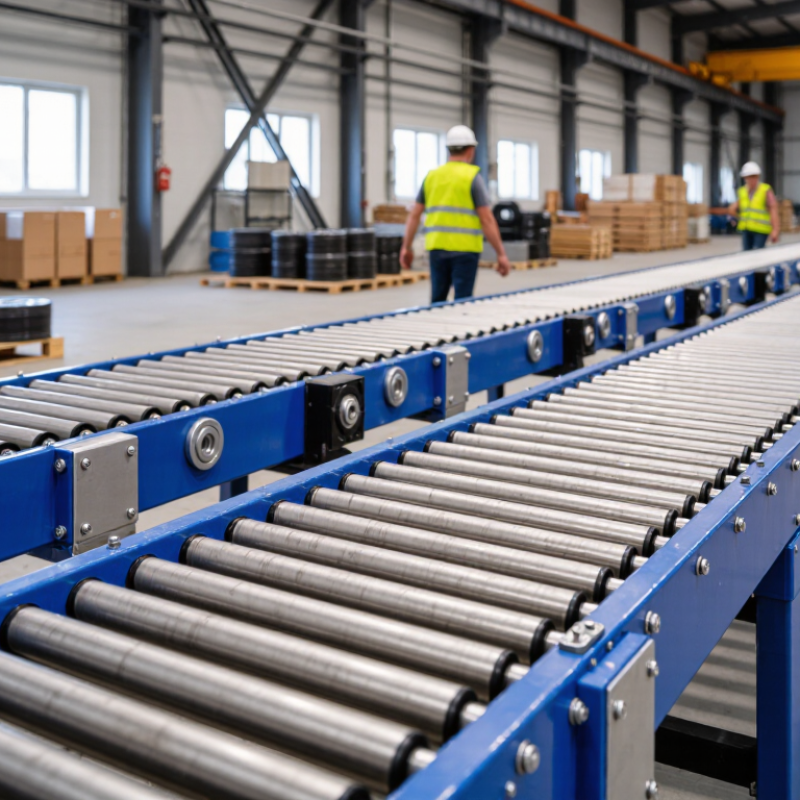
China Top 10 Belt Conveyor Roller Manufacturers?

Choosing a belt conveyor roller supplier in China involves more than comparing prices or browsing product photos. Rollers influence belt tracking, noise, energy use, and maintenance intervals. A poorly matched roller may develop vibration or bearing problems sooner than expected. Small details matter.

China has a broad network of conveyor component manufacturers, serving industries such as mining, ports, agriculture, and logistics. Their capabilities differ. Some focus on high-volume standard rollers; others offer custom dimensions, sealing arrangements, or materials for demanding conditions. Factory location, production capacity, testing methods, and export experience can all affect the fit for a project.

This guide introduces ten manufacturers for buyers beginning their research. It is not a universal ranking, and inclusion should not replace direct technical checks. Ask for drawings, material specifications, bearing details, and evidence of quality control. Where possible, compare sample rollers under conditions similar to your actual belt speed, load, dust, and moisture exposure. A polished catalog is useful, but it cannot show every weakness.

There is no perfect shortlist. Product information can change, and published claims may need confirmation with the manufacturer. Use the profiles as a starting point, then assess response quality, delivery commitments, warranty terms, and after-sales support. A few careful questions can prevent a costly mismatch.

China Top 10 Belt Conveyor Roller Manufacturers?

Belt Conveyor Roller Types: 4 Idler Roles in Bulk-Material Systems

In bulk-material systems, idlers do more than hold a belt. CEMA’s Belt Conveyors for Bulk Materials explains how idler selection and spacing relate to belt load, material load, and operating conditions. Four common roles stand out: carrying, impact, return, and training. Small parts. Big consequences.

Carrying idlers support the loaded belt, often in a trough that helps contain material. Impact idlers sit beneath loading points, where falling rock can bruise the belt and overload ordinary rollers. Return idlers support the empty belt on its way back; cleaning access and carryback can affect their performance. Training idlers help correct belt wander, but they cannot fix poor loading or a misaligned structure. A roller is not a cure-all.

The U.S. Department of Energy’s motor-systems sourcebook estimates that motor-driven systems account for about 70% of U.S. industrial electricity use. That figure covers many applications, not conveyors alone, but it underlines why avoidable drag deserves attention. In practice, seized bearings, packed fines, and uneven roller spacing can add resistance. Teams sometimes choose by price first; that judgment can prove costly. Match the idler role to the loading zone, belt speed, material size, and maintenance conditions.

Industry Standards: ISO 1537 and CEMA 502 for Conveyor Idlers

Choosing conveyor idlers by price alone can hide costly mismatches. ISO 1537:1975 specifies idlers for troughed belt conveyors, giving engineers a shared dimensional reference. CEMA 502 provides guidance for bulk-material idler dimensions and load ratings. These standards help buyers compare technical specifications, but neither can predict every site condition.

Check the actual load, belt speed, trough angle, and material profile against the applicable standard tables. A roller that fits the frame may still be poorly matched to impact zones or abrasive dust. For example, confirm that the stated load rating suits the conveyor’s operating duty, not just its unloaded test condition. Standards are a baseline, not a durability guarantee. Field alignment and maintenance still matter.

Tips: Ask suppliers for the standard edition, roller dimensions, and load-rating basis. Compare the same duty class across quotations. Then inspect sample rollers for smooth rotation, sealing, and obvious runout. Small details count. Dust can expose weak seals quickly. ISO 1537 dates to 1975, so verify that the referenced edition and project requirements align; older guidance may not address every modern operating condition.

How to Compare China’s Top 10 Roller Manufacturers: 5 Quality Metrics

Comparing China’s top 10 belt conveyor roller manufacturers takes more than checking prices and delivery dates. Usefive quality metrics: dimensional accuracy, material consistency, bearing and seal protection, load performance, and traceable inspection records. Ask for measured roller diameter, shaft straightness, and runout—not just catalog specifications. A dial indicator check can reveal wobble that is hard to spot by eye.

Material details matter. Confirm the shell thickness, steel grade, and surface finish for your operating environment. Then inspect bearing seals and ask how rollers are tested under load. Look for noise, heat, and vibration during a continuous run. A smooth hand spin is useful, but it proves very little. Request inspection data from a production batch, and check whether the report identifies actual test conditions.

Compare like with like. Manufacturers may use different test loads or measurement methods, so unclear figures deserve follow-up. Ask for sample rollers and verify dimensions after delivery. Review how defects are logged and how corrective actions are documented. I would not treat a polished factory video as strong evidence; it shows a moment, not a process. One awkward point: even careful checks cannot predict every failure in a dusty, misaligned conveyor. Record your application conditions and evaluate samples in a realistic setup.

Manufacturer Profiles: Product Range, Production Capacity, and Certifications

A useful profile of China’s belt conveyor roller manufacturers should show more than a product catalogue. Compare standard, impact, return, and self-aligning rollers, then check whether custom shaft lengths and sealing options are available. These details matter on site. A roller designed for dusty bulk handling may need different seals from one used in a clean warehouse.

Production capacity needs careful reading. Monthly output is meaningful only when the manufacturer explains its production lines, testing process, and typical lead time. Ask whether stated capacity covers finished rollers or components, and whether sample orders follow the same inspection steps as larger batches. A neat factory photo proves little. Request recent dimensional inspection records, runout measurements, and information about bearing and shell tolerances. Some public profiles leave these details out; that gap deserves attention.

Certifications should be checked against their scope and validity, not treated as automatic proof of product performance. Review quality-management certificates, relevant test reports, and material documentation, where applicable. Confirm that the documents identify the actual manufacturing site and product category. For a fair top-ten comparison, use the same questions for every supplier and record answers in a simple table. A minor weakness in transparency may be worth noting, even when the product range looks impressive.

Roller Selection: Match Diameter, Belt Speed, Load, and Operating Conditions

Selecting a conveyor roller starts with the belt, not a catalog dimension. Roller diameter affects rotational speed, bearing load, and belt support. At a belt speed of 2.5 meters per second, a smaller roller turns faster and may increase bearing wear. A larger diameter can reduce rotational speed, but it needs enough clearance and may add weight. Measure the actual belt speed and check the conveyor layout before choosing. Small details matter.

Assess the load at each roller, especially where wet material or heavy packages drop onto the belt. A light return roller may suit an empty belt but struggle near a loaded transfer point. Match shell thickness, shaft size, and bearing rating to the load profile, not just average tonnage. Dust, washdown, heat, and outdoor moisture also affect seal and material choices. Check how often the line starts and stops; frequent starts can stress components more than steady running. That sounds simple. It isn’t always. An estimate may miss actual operating temperatures or impact loads, so verify measurements on site and allow for uncertainty.