What Are the Top 10 Double Panel Radiators?
Choosing among the top 10 Double Panel Radiators is not simply a matter of picking the largest model. Room size, heat loss, wall space, pipe position, and heating-system pressure all influence the final result. A radiator that performs brilliantly in a well-insulated bedroom may feel inadequate in a draughty hallway.
Heating expert Dan Holohan has often stressed, “The system matters as much as the radiator.” That principle shapes this guide. We examine practical details, including heat output, steel thickness, finish quality, mounting hardware, valve compatibility, and everyday cleaning access. A double-panel design usually provides more heating surface than a single panel. It can warm a room faster, but it also needs sensible sizing and proper installation.
Some differences are easy to miss. Imagine two white radiators beside a cold window: one has evenly spaced convector fins, while the other has uneven welds and a thin coating. On paper, both may look similar. In use, they may not age equally. Small details matter.
This ranking is useful, but it is not absolute. Manufacturer output figures can vary between testing conditions, and real homes rarely behave like laboratories. That is worth remembering. We compare each Double Panel Radiator fairly, while acknowledging that insulation, thermostat settings, and installer workmanship can change the experience. The strongest choice is not always the most expensive one. It is the model that delivers dependable warmth, fits the room, and remains practical for years.
What Is a Double Panel Radiator and How Does It Work?
What Are the Top 10 Double Panel Radiators?
What Is a Double Panel Radiator and How Does It Work?
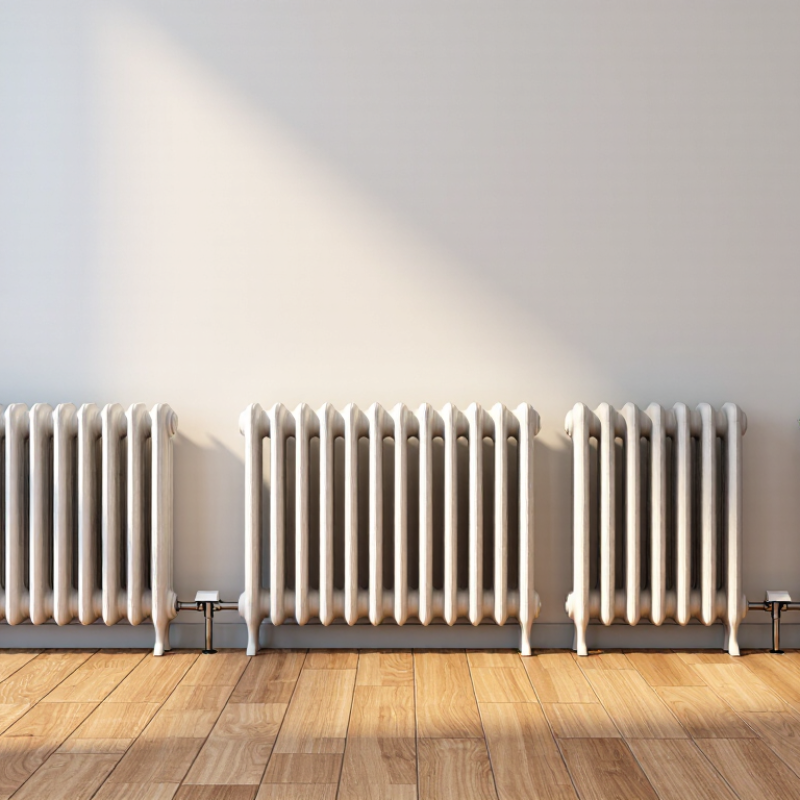
A double panel radiator contains two steel heating panels, usually joined by internal convector fins. Hot water enters through a valve and warms both panels. The panels release radiant heat, while the fins move warm air around the room. This creates a faster response than many single-panel designs. It also offers higher output within a similar wall width.
Testing matters. EN 442 commonly rates radiators at 75/65/20°C, meaning 75°C flow water, 65°C return water, and a 20°C room. Actual performance can fall sharply with lower temperatures. CIBSE Guide B explains that emitter output depends on the mean water-to-room temperature difference. A radiator designed for a boiler may feel less powerful with a low-temperature heat pump.
The International Energy Agency reported that buildings used about 30% of global final energy in 2022. The European Commission also identifies space heating as the largest household energy use in the European Union. Correct sizing therefore matters. A double panel unit is not automatically more efficient; it simply transfers more heat at the same tested conditions. Room insulation, window area, pipe layout, and thermostat position all change results. I have seen compact rooms become uncomfortably hot because installers trusted catalogue output alone. That shortcut deserves more doubt. Compare EN 442 data, check the required heat load, and leave clear space above and below the radiator for airflow.
What Are the Top 10 Double Panel Radiators? - What Is a Double Panel Radiator and How Does It Work?
What is a double panel radiator? A double panel radiator has two steel water-filled panels. Many models also include convector fins between or behind the panels, which increase the heat-transfer area. Hot water enters the radiator, warms the steel panels and fins, and heat is released into the room through a combination of radiation and natural convection. Output values below are indicative ranges for a 1,000 mm-wide radiator tested at a 50°C mean water-to-room temperature difference (ΔT50); actual performance varies by design and operating conditions.
| Rank | Double Panel Configuration | Panel and Fin Arrangement | Typical Height | Typical Depth | Indicative Output per Metre at ΔT50 | Best Use |
| 1 | Type 22, 900 mm High | Two steel panels with two rows of convector fins | 900 mm | Approximately 100–110 mm | 2.40–3.00 kW/m | Large rooms where wall space is limited |
| 2 | Type 22, 700 mm High | Two steel panels with two rows of convector fins | 700 mm | Approximately 100–110 mm | 1.90–2.40 kW/m | High-output heating in standard rooms |
| 3 | Type 22, 600 mm High | Two steel panels with two rows of convector fins | 600 mm | Approximately 100–110 mm | 1.60–2.00 kW/m | General-purpose living rooms and bedrooms |
| 4 | Type 22, 500 mm High | Two steel panels with two rows of convector fins | 500 mm | Approximately 100–110 mm | 1.35–1.75 kW/m | Rooms with a lower window sill or restricted height |
| 5 | Type 22, 400 mm High | Two steel panels with two rows of convector fins | 400 mm | Approximately 100–110 mm | 1.10–1.45 kW/m | Compact spaces requiring a deeper radiator |
| 6 | Type 21, 600 mm High | Two steel panels with one row of convector fins | 600 mm | Approximately 65–75 mm | 1.20–1.55 kW/m | Moderate heat demand with a slimmer profile |
| 7 | Type 21, 500 mm High | Two steel panels with one row of convector fins | 500 mm | Approximately 65–75 mm | 1.00–1.30 kW/m | Bedrooms and smaller living areas |
| 8 | Type 21, 400 mm High | Two steel panels with one row of convector fins | 400 mm | Approximately 65–75 mm | 0.80–1.10 kW/m | Low-profile installations and limited-height walls |
| 9 | Type 20, 600 mm High | Two steel panels without convector fins | 600 mm | Approximately 55–65 mm | 0.85–1.15 kW/m | Simple, easy-to-clean installations |
| 10 | Type 20, 500 mm High | Two steel panels without convector fins | 500 mm | Approximately 55–65 mm | 0.70–0.95 kW/m | Smaller rooms and minimalist radiator layouts |
Selection note:Type 22 Radiators generally provide the highest output for a given wall length because they combine two panels with two convector-fin layers. Type 21 and Type 20 units are usually shallower, making them useful where projection from the wall, cleaning access, or furniture clearance is more important than maximum heat output.
Which Features Define a High-Quality Double Panel Radiator?
A high-quality double panel radiator should be judged by measured performance, not its weight or glossy finish. EN 442 testing reports heat output under controlled temperature conditions, usually at a 50°C temperature difference. Compare these figures before comparing prices. A larger radiator is not automatically better. Room size, insulation, window area, and water temperature all affect performance.
Look for two steel panels with continuous convector fins. They increase surface area and help warm air move through the room. The panels should remain straight, with clean welds and an even powder coating.
Check the working pressure and corrosion protection, especially in older heating systems. A sturdy wall bracket matters too. I have seen radiators with impressive output ratings but weak fittings; that detail is easy to miss.
Thermostatic compatibility improves control. It can prevent overheated rooms and reduce wasted heat. The International Energy Agency reported in The Future of Heat Pumps (2022) that heat pumps can deliver three to five units of heat for each unit of electricity. That makes low-temperature radiator performance increasingly important.
Ask for output figures at 50°C, not only the traditional 75/65/20°C test point. The numbers may look smaller. They are more realistic.
A 2024 European Commission energy overview also identifies space heating as the largest household energy demand in many European homes.
For a practical top-ten comparison, prioritize verified output, low-temperature efficiency, pressure testing, coating quality, valve compatibility, and accessible installation data. Even experts should pause here: published figures do not always reflect a poorly balanced heating system.
How Do the Top 10 Double Panel Radiators Compare?
Comparing the top ten double-panel radiators requires more than reading advertised heat ratings. I would check output under identical water temperatures, room sizes, and wall positions. A larger radiator may heat faster, but it can overwhelm a small bedroom. Match the stated BTU or wattage with a room heat-loss calculation, not guesswork. That matters. Two radiators with identical dimensions can produce different heat because their convector fins vary.
The best comparisons also examine construction, controls, and installation details. Coated steel panels usually resist everyday moisture, while thicker steel may feel more solid but add weight. A thermostatic radiator valve can maintain a steadier room temperature and reduce unnecessary heating. It is not magic. Look for even welds, straight panels, secure brackets, and clear instructions. I would inspect the fixing system carefully, especially on plasterboard walls. Some units include valves and brackets; others require separate purchases, changing the real cost.
Daily use reveals differences that product tables often miss. A slim double-panel radiator suits a narrow hallway, while a deeper model may project farther into the room. Closely spaced fins can offer strong output but collect dust and need a narrow brush. Radiator depth is easy to overlook. My comparison would not automatically choose the highest-output model, because that shortcut may create uneven warmth or wasted energy. Even the most carefully measured choice can need adjustment after installation.
What Are the Heating Strengths of Each Featured Radiator?
What Are the Top 10 Double Panel Radiators?
Heating strength depends on panel depth, convector fins, dimensions, and room heat loss. EN 442-2 compares radiator output at ΔT50°C, while CIBSE Guide A recommends calculating room demand before selecting equipment. A typical 600 x 1000 mm double-panel radiator may deliver roughly 1,500–2,000 watts under these conditions. Actual output falls in lower-temperature systems.
The Type 22 horizontal radiator ranks highly because two panels and two finned convectors create strong airflow. The Type 21 uses one convector and offers slightly lower output with a slimmer profile. The Type 20 has two panels but no fins, giving gentle, steady heat. A high-output Type 22 adds deeper fins for colder rooms. A vertical Type 22 uses wall height efficiently and can produce substantial heat in narrow spaces. Strong, but not magic.
A low-temperature Type 22 suits heat pumps when correctly oversized. Its strength comes from a larger surface area, not hotter water. The compact Type 22 fits beneath windows and supports even convection. A slimline double-panel model saves projection space, though its output usually suffers. A fin-enhanced double-panel radiator improves convection around furniture, but dust can reduce performance. Finally, a double-panel designer radiator prioritises appearance while retaining useful heat capacity. CIBSE guidance stresses accurate heat-loss calculations, and that matters here. My ranking is practical, not absolute; insulation, glazing, pipe flow, and thermostat settings can change the result. Measure the room first.
How Should You Choose and Install the Right Double Panel Radiator?
Choosing and installing a double panel radiator requires more than comparing appearance and price. A double panel model usually provides greater heat output than a single panel radiator. However, size alone does not guarantee comfort. Start by measuring the room, window area, insulation, and ceiling height. Measure twice.
Calculate the required heat output in watts, using a room heat-loss method rather than guesswork. My first estimate was too optimistic in a poorly insulated room. That mistake caused a cold corner near the window. Check the manufacturer’s output rating at the same water temperature your heating system uses. Also confirm the radiator’s width, height, pipe positions, and wall capacity. Leave enough clearance for airflow and cleaning.
During installation, mount the brackets into solid masonry or suitable structural supports. A full radiator becomes surprisingly heavy. Use a spirit level before tightening every fixing. Connect the valves carefully, then fill the system gradually and inspect each joint for leaks. Bleed trapped air after the radiator warms. Check system pressure afterward, because it may drop slightly. Keep furniture several centimetres away from the front panel. Curtains should not cover the top grille, or heat will collect behind the fabric. Local plumbing rules may require a qualified professional, especially with sealed systems or modified pipework. A small installation error can waste energy for years.