

News

Miro: A New Standard in Responsible Innovation

Miro: A New Standard in Responsible Innovation The Miro monitor arm is setting new benchmarks in sustainability. It offers a high-performance solution without compromising on environmental responsibility. Designed with careful material selection, local sourcing, and longevity in mind, Miro’s responsible approach to design and unique manoeuvrability set it apart from the competition. Sustainable Choices Miro is crafted from energy-efficient materials with a lower carbon impact....

Read more
HSE Advisor

Role Purpose Support in the development, implementation and maintenance of the company’s Health, Safety & Environmental policies, processes, operational procedures, and standards.  Ensuring best practice and championing a continually improving HSE culture within the business. Key Responsibilities Liaise with and provide support to all areas of the business to eliminate, mitigate or reduce identified HSE exposures. Partner with the production management team and team leaders,...

Read more
CMD Ltd LAUNCHES 48-HOUR TURNAROUND ON BETATRAK® RAPID ORDERING SERVICE

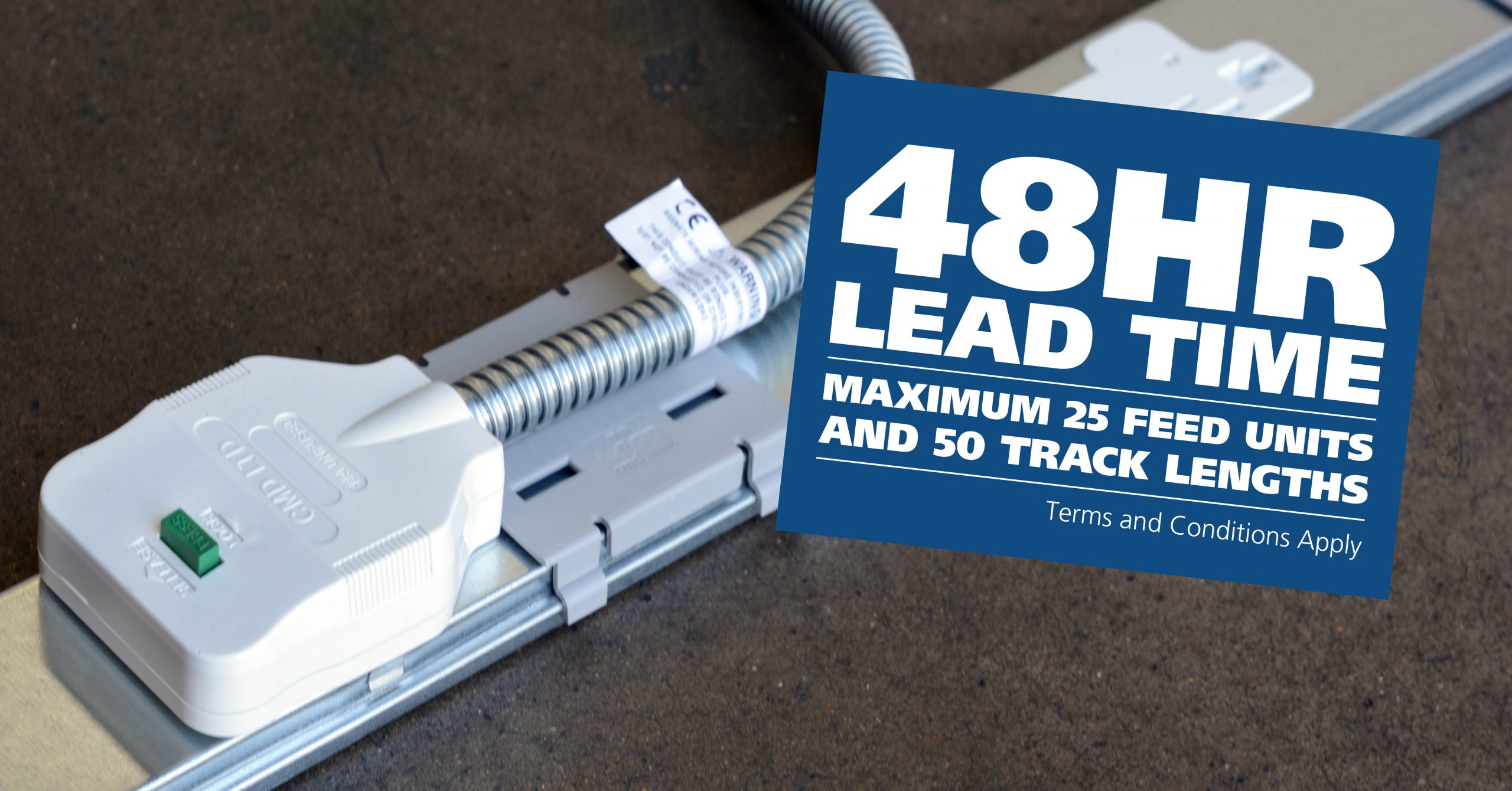
CMD Ltd, the specialist in power distribution systems, workstation power and monitor arms, has launched a rapid ordering service for its Betatrak® underfloor powertrack distribution systems and accessories, with a commitment to delivering within 48-hours of an approved purchase order*. The service enables customers to order up to 50 lengths of Standard or Clean Earth (C/E) low noise Betatrak, along with up to 25 feed...

Read more
CMD INVESTS £1/4 MILLION IN NEW MACHINE AS PART OF FACTORY UPGRADE

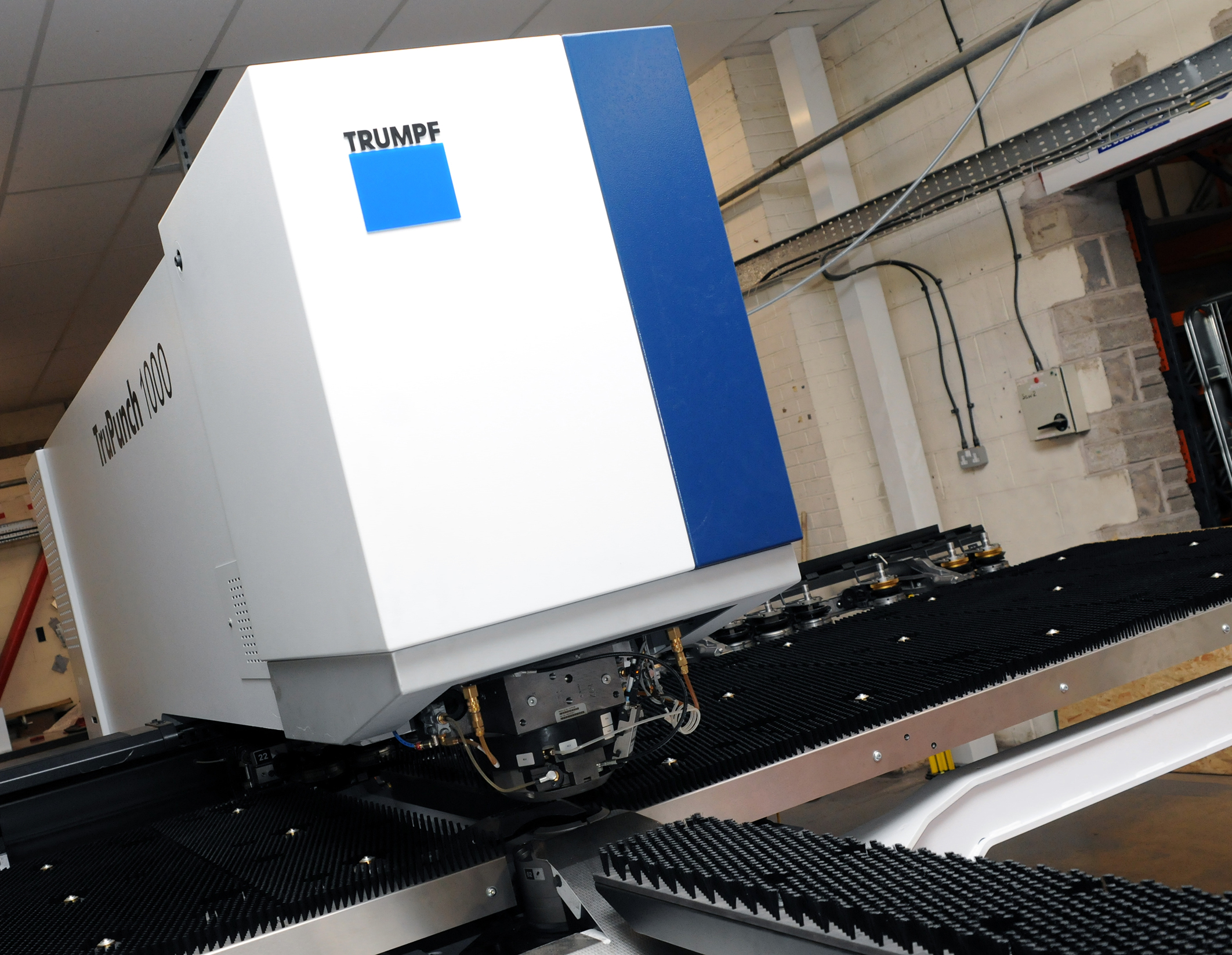
We have invested in a new £1/4m TRUMPF CNC metal punch as part of an asset renewal strategy for our UK manufacturing capability. The new machine will be used in the production of a wide variety of our power distribution systems and workstation power products at our Rotherham factory. Suitable for handling sheet metal between 0.9mm and 3.0mm thick, the new machine will replace one...

Read more
CMD CATALOGUE PROVIDES TECHNICAL POWER DISTRIBUTION GUIDE

CMD Ltd has released a new catalogue, providing an easy to follow technical guide to our power distribution systems and plug and play desk modules. Detailing CMD’s full range of UK-manufactured power distribution systems and plug and play desk modules, the catalogue will be a helpful source of information to M&E engineers and contractors alike to understand how our power distribution systems connect together and...

Read more

Power Distribution Catalogue
CMD Ltd PLAYS ESSENTIAL ROLE IN ELECTRICAL FIT OUT AT LONDON’S PRESTIGIOUS OFFICE DEVELOPMENT

CMD Ltd, specialist in workplace connectivity and ergonomic solutions, has provided a flexible and high-quality power distribution network for The Ray, a prestigious office development in London’s Farringdon. Well-known for being the former site of The Guardian newspaper, The Ray now stands as an 83,000ft² office development characterised by a modernised warehouse aesthetic, with level two now occupied by a global social media company. The...

Read more

The Ray
CMD plugs in to european opportunity with Schuko Capsule unit launch

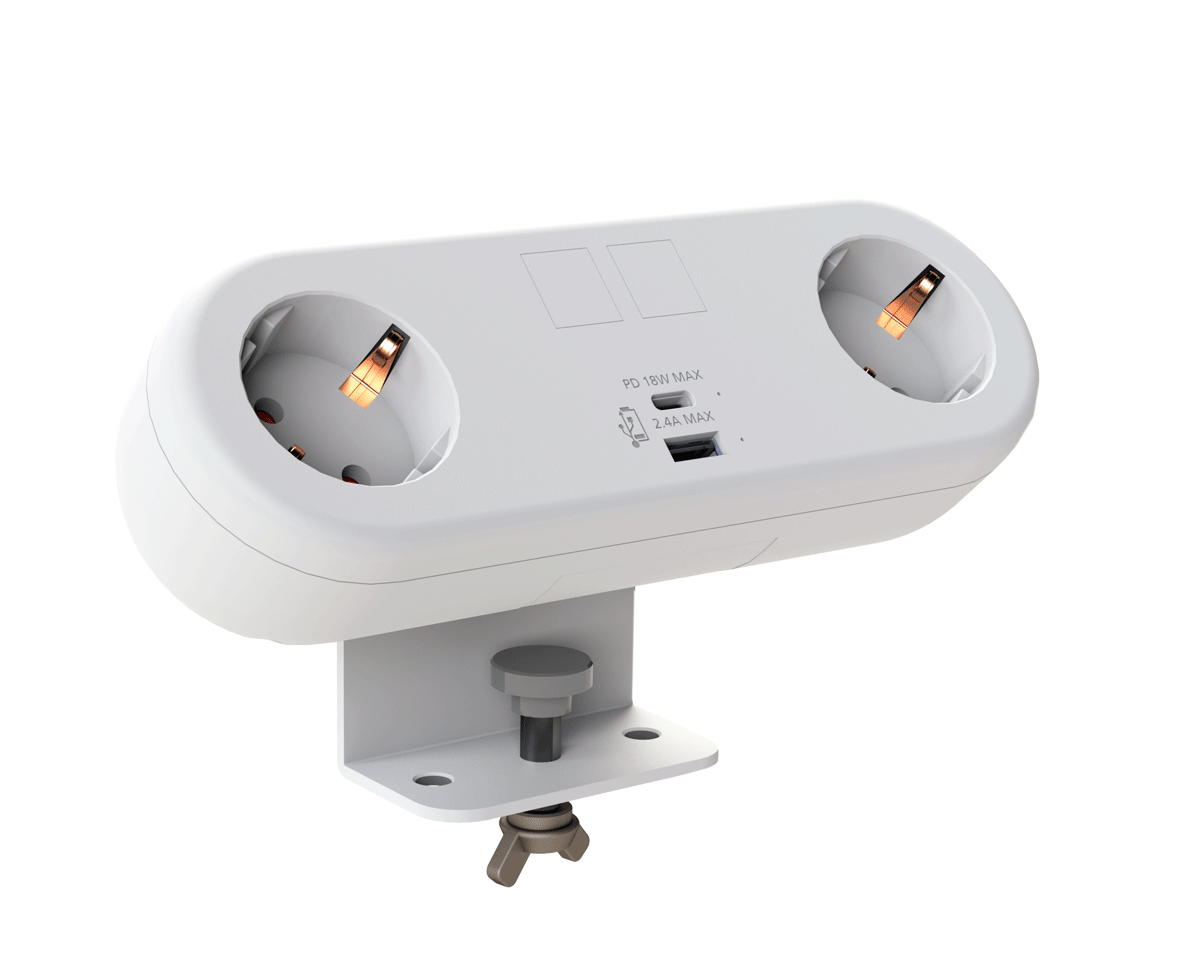
CMD Ltd, the specialist in power and connectivity solutions for commercial environments, has launched a Schuko version of its popular fixed format Capsule workstation power module for export to mainland Europe and beyond. A popular on desk power module comprising two sockets and dual USB (type A and C) chargers, CMD’s Capsule unit is already widely specified in the UK as an off-the-shelf workstation power...

Read more
CMD White Schuko Capsule Desk Power Module
CMD LTD EXTENDS MONITOR ARM RANGE WITH THE LAUNCH OF REACH PLUS

CMD Ltd, the specialist in ergonomic and connectivity solutions for commercial interiors, has completed its Reach monitor arm range with the launch of the Reach Plus. Available in single or dual screen options, the Reach Plus has been designed to provide an ideal solution for both single and dual screen workstation configurations, or can be used with next generation of large format curved screens. Suitable...

Read more

CMD Ltd DEMONSTRATES THE ART OF POWER DISTRIBUTION AT THE UNIVERSITY OF WARWICK

CMD Ltd, the specialist in workplace connectivity and ergonomic solutions, has provided Betatrak busbar power distribution and a range of electrical accessories for two major capital investment projects at the University of Warwick. Designed by Fielden Clegg Bradley Studios, the £33 million Faculty of Arts building is a showpiece development comprising four interconnected structures set around a central atrium, which will enable inter-disciplinary collaboration across...

Read more

University of Warwick
CMD BRINGS HARMONY TO COVENTRY UNIVERSITY RESEARCH FACILITIES

CMD Ltd, the specialist in power distribution solutions and workstation power and ergonomics, has provided under desk and on desk power modules for the refurbishment of three Coventry University research buildings. Located on Coventry University Technology Park, a business park designed to encourage collaboration between the university and knowledge-based businesses, the three buildings are being repurposed as office accommodation for university research teams. The refurbishment...

Read more

Coventry University

10 Tips for Choosing the Right Silicon Diode

Choosing the right Silicon Diode is a small decision with serious consequences. A few milliamps of leakage can become visible heat inside a tightly packed power supply. A poorly chosen reverse-voltage rating may fail during a motor startup or switching surge. These details matter in rectifiers, battery chargers, automotive modules, and industrial controls.

Market pressure is also increasing. The World Semiconductor Trade Statistics (WSTS) Spring 2024 Forecast valued global semiconductor sales at $611.2 billion for 2024. The International Energy Agency’s Global EV Outlook 2024 reported more than 14 million electric cars sold worldwide in 2023. These trends expand demand for efficient power-conversion components, although they do not guarantee that every Silicon Diode application needs the newest device. That assumption deserves scrutiny.

Professor B. Jayant Baliga, a leading power-semiconductor authority, defines power electronics as “the technology associated with the efficient conversion, control, and conditioning of electric power.” His statement highlights the real selection challenge: efficiency alone is not enough. Forward voltage, reverse recovery, surge current, thermal resistance, package construction, and operating temperature must work together. Read the datasheet carefully. Then test the diode under realistic load conditions. A laboratory result can still mislead when wiring inductance, airflow, or production tolerances change.

This guide presents ten practical tips for choosing the right Silicon Diode. It connects manufacturer data, recognized industry research, and application-level testing. Some recommendations may feel obvious. They are still easy to overlook. That is where expensive failures often begin.

10 Tips for Choosing the Right Silicon Diode

Define the Role and Operating Conditions of the Silicon Diode

10 Tips for Choosing the Right Silicon Diode

Define the diode’s role before comparing specifications. Is it rectifying AC, blocking reverse current, clamping voltage, or protecting an inductive load? The answer determines the important ratings. A rectifier may need high forward-current capacity, while a signal diode may prioritize fast switching and low capacitance. Do not choose from voltage alone. That shortcut can fail.

Tip 1: Map the real operating conditions.

Record the normal current, peak current, reverse voltage, switching frequency, ambient temperature, and available cooling. Measure the circuit, rather than trusting an ideal simulation. A 12-volt rail can produce sharp transients during startup. Those moments matter.

Tip 2: Build practical safety margins.

Select a reverse-voltage rating above the measured peak, including spikes and tolerance. Check forward voltage at the actual current and temperature, because both affect heat. Estimate power with P = Vf × If, then inspect the package and PCB copper area. In field testing, I have seen a diode remain electrically correct but become too hot to touch. That result should trigger a review, not confidence. Datasheet graphs deserve careful attention, although they may not perfectly represent every assembly. Also verify leakage, recovery time, and pulse capability when the diode operates repeatedly. A small thermal rise can become a serious reliability issue inside an enclosed product.

Match Voltage and Current Ratings to the Circuit Requirements

10 Tips for Choosing the Right Silicon Diode

Match Voltage and Current Ratings to the Circuit Requirements

Selecting a silicon diode starts with the circuit’s worst electrical conditions, not its normal readings. The reverse repetitive voltage, or VRRM, should exceed measured peaks, including switching overshoot. A 24-volt motor rail may briefly reach 52 volts during shutdown. A 60-volt diode could be marginal. Leave practical voltage headroom.

Forward current ratings also need careful interpretation. IF(AV) assumes specific temperature, mounting, and cooling conditions. A circuit drawing 3 amperes continuously may still need an 8-ampere surge rating during startup. Check IFSM, pulse duration, duty cycle, and junction temperature. Heat matters. A lower-voltage diode can lose efficiency when forward current rises. Measure its temperature after sustained operation, rather than trusting a catalog number alone.

The World Semiconductor Trade Statistics Spring 2024 Forecast projected global semiconductor sales at 611 billion dollars for 2024. More available components do not make selection simpler. The International Energy Agency’s Electricity 2024 report expects data-center electricity demand to more than double by 2026, increasing pressure on efficient power conversion. These figures provide industry context, not a substitute for testing. I once treated nominal current as the key value. That was incomplete. Verify derating curves, thermal resistance, reverse leakage, and transient behavior against the actual enclosure and airflow. A small bench error can become a field failure.

10 Tips for Choosing the Right Silicon Diode: Match Voltage and Current Ratings to Circuit Requirements

The chart shows typical design targets for common silicon-diode applications. Select a diode with a reverse-voltage rating above the circuit peak, including transients, and a forward-current rating above the expected continuous load. Additional thermal and surge-current margins are also required in practical designs.

Evaluate Forward Voltage, Leakage Current, and Switching Speed

10 Tips for Choosing the Right Silicon Diode

Forward voltage, leakage current, and switching speed often decide whether a silicon diode performs reliably. I begin by checking forward voltage at the circuit’s real operating current, not only the headline rating. A lower forward voltage can reduce heat, but it may involve trade-offs elsewhere. That sounds simple. Measure it at actual load current and temperature. A diode rated for one ampere may behave differently near its maximum rating. Temperature matters. In a compact enclosure, rising heat can increase conduction losses and shorten service life.

Leakage current deserves careful attention in battery-powered and sensing circuits. It is usually small, but it rises with temperature and applied reverse voltage. For a low-power circuit, even a few microamps can affect stored charge or sensor accuracy. Check the maximum leakage specification at the highest expected temperature. I once ignored this detail during a prototype test. The circuit worked on the bench, then drifted after several hours. That mistake was useful. Use the worst-case value, then add practical margin.

Switching speed becomes important when the diode operates in a fast rectifier or pulse circuit. When current changes quickly, reverse recovery can create voltage spikes, noise, and extra losses. A slow device may still work at low frequency, but fail under sharper pulses. Keep measurement leads short. Probe layout can change the waveform. My measurements were not always clean, and repeating them with better grounding changed the result. Compare reverse recovery time, junction capacitance, and forward voltage under matching conditions. Temperature testing should include startup and sustained operation.

Choose the Appropriate Diode Package and Thermal Performance

Choosing the right silicon diode involves more than matching voltage and current ratings. Package selection strongly affects heat removal, assembly reliability, and long-term performance.

For low-power circuits, a small axial or surface-mount package may provide enough thermal capacity. Higher-current designs often need a larger body, wider leads, or an exposed thermal pad. Check the datasheet’s junction-to-ambient thermal resistance, not just the package name. A compact package can become surprisingly hot near its rated current. Measure the board temperature around the diode during realistic operation. Do not rely on room-temperature calculations alone.

Copper area matters. A larger copper pad can spread heat, while poor airflow traps it beneath the component. Keep nearby heat-sensitive parts away from the diode. In one bench test, a diode stayed stable at moderate load but exceeded the expected temperature after the enclosure was closed. The calculation was correct, but the airflow assumption was not. That mistake changed the package choice.

Allow thermal margin for ripple current, switching losses, ambient temperature, and production variation. Review the forward-voltage curve at the actual operating temperature. Lower forward voltage usually means less conduction loss, but the trade-off may involve leakage or reverse-recovery behavior. Solder quality also affects heat transfer, especially with exposed-pad packages. A prototype should run through repeated load cycles before approval. Watch for discoloration, rising voltage drop, or unstable readings. Small details matter.

Verify Reliability, Standards, Availability, and Total Cost

10 Tips for Choosing the Right Silicon Diode

Verify Reliability, Standards, Availability, and Total Cost

A diode should survive the real circuit, not only pass a paper review. Check forward voltage, reverse leakage, surge current, and junction temperature across the intended operating range. Ask for production test data, lot traceability, and documented failure analysis. Independent laboratory reports can strengthen confidence, especially for high-temperature or high-frequency applications. Check the paperwork.

Standards provide a practical quality boundary. Review compliance with relevant safety, environmental, and semiconductor requirements, such as IEC 60747-2, RoHS, or REACH where applicable. Confirm that test conditions match your design. A certification logo alone proves little without scope, date, and supporting records. I would also inspect the supplier’s quality system and change-notification process. Small details matter.

Availability affects reliability after launch. Confirm current stock, lead time, minimum order quantities, and expected product lifetime. A second qualified source may reduce supply risk, but substitution requires electrical and mechanical checks. Calculate total cost, including assembly, thermal management, testing, shipping, inventory, and possible field failures. The cheapest diode may create expensive heat. Cold numbers deceive. I may still overlook a hidden cost, so a small pilot order and measured validation are worth the effort.

Article Source: