

News

Miro: A New Standard in Responsible Innovation

Miro: A New Standard in Responsible Innovation The Miro monitor arm is setting new benchmarks in sustainability. It offers a high-performance solution without compromising on environmental responsibility. Designed with careful material selection, local sourcing, and longevity in mind, Miro’s responsible approach to design and unique manoeuvrability set it apart from the competition. Sustainable Choices Miro is crafted from energy-efficient materials with a lower carbon impact....

Read more
HSE Advisor

Role Purpose Support in the development, implementation and maintenance of the company’s Health, Safety & Environmental policies, processes, operational procedures, and standards.  Ensuring best practice and championing a continually improving HSE culture within the business. Key Responsibilities Liaise with and provide support to all areas of the business to eliminate, mitigate or reduce identified HSE exposures. Partner with the production management team and team leaders,...

Read more
CMD Ltd LAUNCHES 48-HOUR TURNAROUND ON BETATRAK® RAPID ORDERING SERVICE

CMD Ltd, the specialist in power distribution systems, workstation power and monitor arms, has launched a rapid ordering service for its Betatrak® underfloor powertrack distribution systems and accessories, with a commitment to delivering within 48-hours of an approved purchase order*. The service enables customers to order up to 50 lengths of Standard or Clean Earth (C/E) low noise Betatrak, along with up to 25 feed...

Read more

CMD INVESTS £1/4 MILLION IN NEW MACHINE AS PART OF FACTORY UPGRADE

We have invested in a new £1/4m TRUMPF CNC metal punch as part of an asset renewal strategy for our UK manufacturing capability. The new machine will be used in the production of a wide variety of our power distribution systems and workstation power products at our Rotherham factory. Suitable for handling sheet metal between 0.9mm and 3.0mm thick, the new machine will replace one...

Read more

CMD CATALOGUE PROVIDES TECHNICAL POWER DISTRIBUTION GUIDE

CMD Ltd has released a new catalogue, providing an easy to follow technical guide to our power distribution systems and plug and play desk modules. Detailing CMD’s full range of UK-manufactured power distribution systems and plug and play desk modules, the catalogue will be a helpful source of information to M&E engineers and contractors alike to understand how our power distribution systems connect together and...

Read more
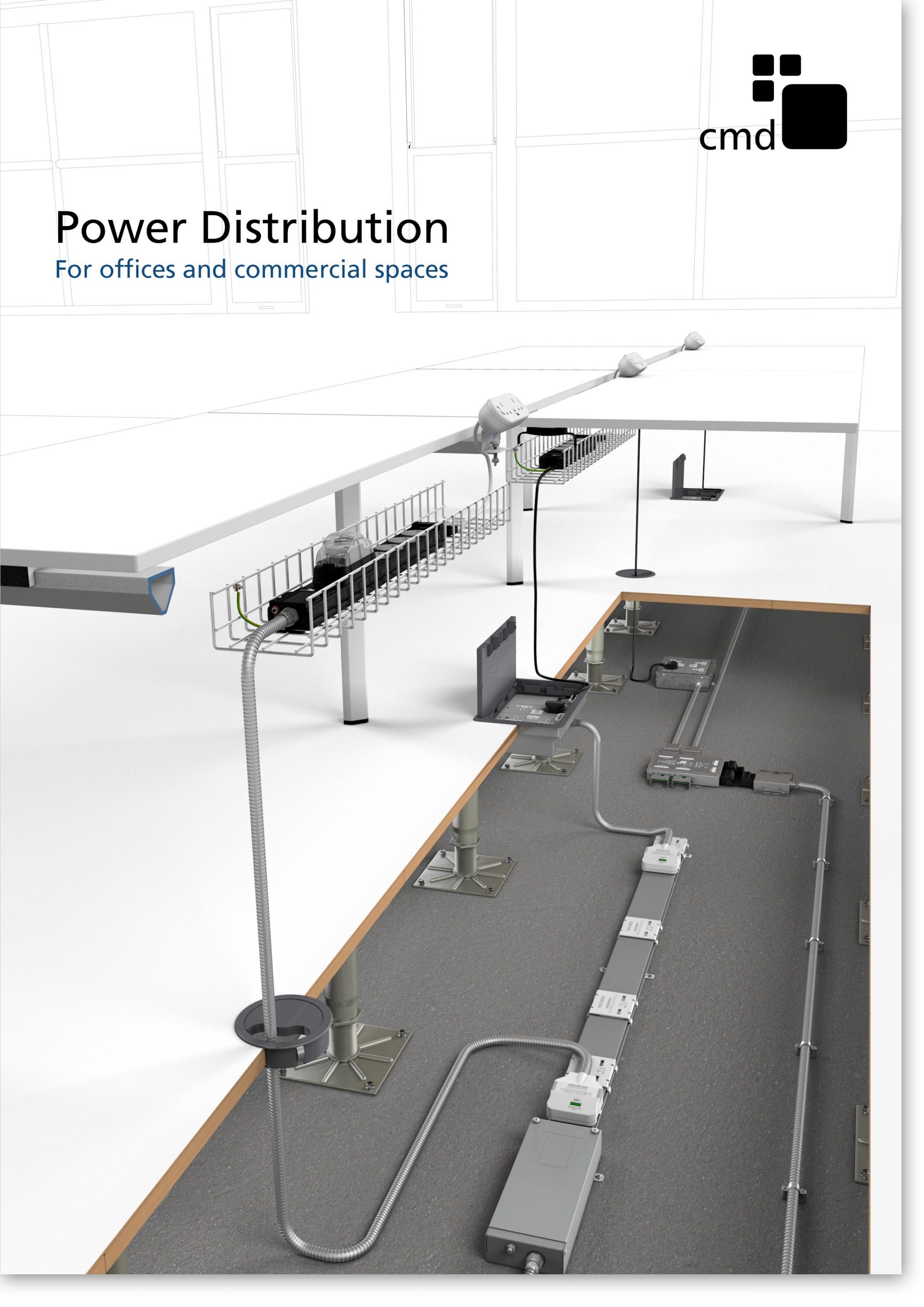
Power Distribution Catalogue
CMD Ltd PLAYS ESSENTIAL ROLE IN ELECTRICAL FIT OUT AT LONDON’S PRESTIGIOUS OFFICE DEVELOPMENT

CMD Ltd, specialist in workplace connectivity and ergonomic solutions, has provided a flexible and high-quality power distribution network for The Ray, a prestigious office development in London’s Farringdon. Well-known for being the former site of The Guardian newspaper, The Ray now stands as an 83,000ft² office development characterised by a modernised warehouse aesthetic, with level two now occupied by a global social media company. The...

Read more

The Ray
CMD plugs in to european opportunity with Schuko Capsule unit launch

CMD Ltd, the specialist in power and connectivity solutions for commercial environments, has launched a Schuko version of its popular fixed format Capsule workstation power module for export to mainland Europe and beyond. A popular on desk power module comprising two sockets and dual USB (type A and C) chargers, CMD’s Capsule unit is already widely specified in the UK as an off-the-shelf workstation power...

Read more
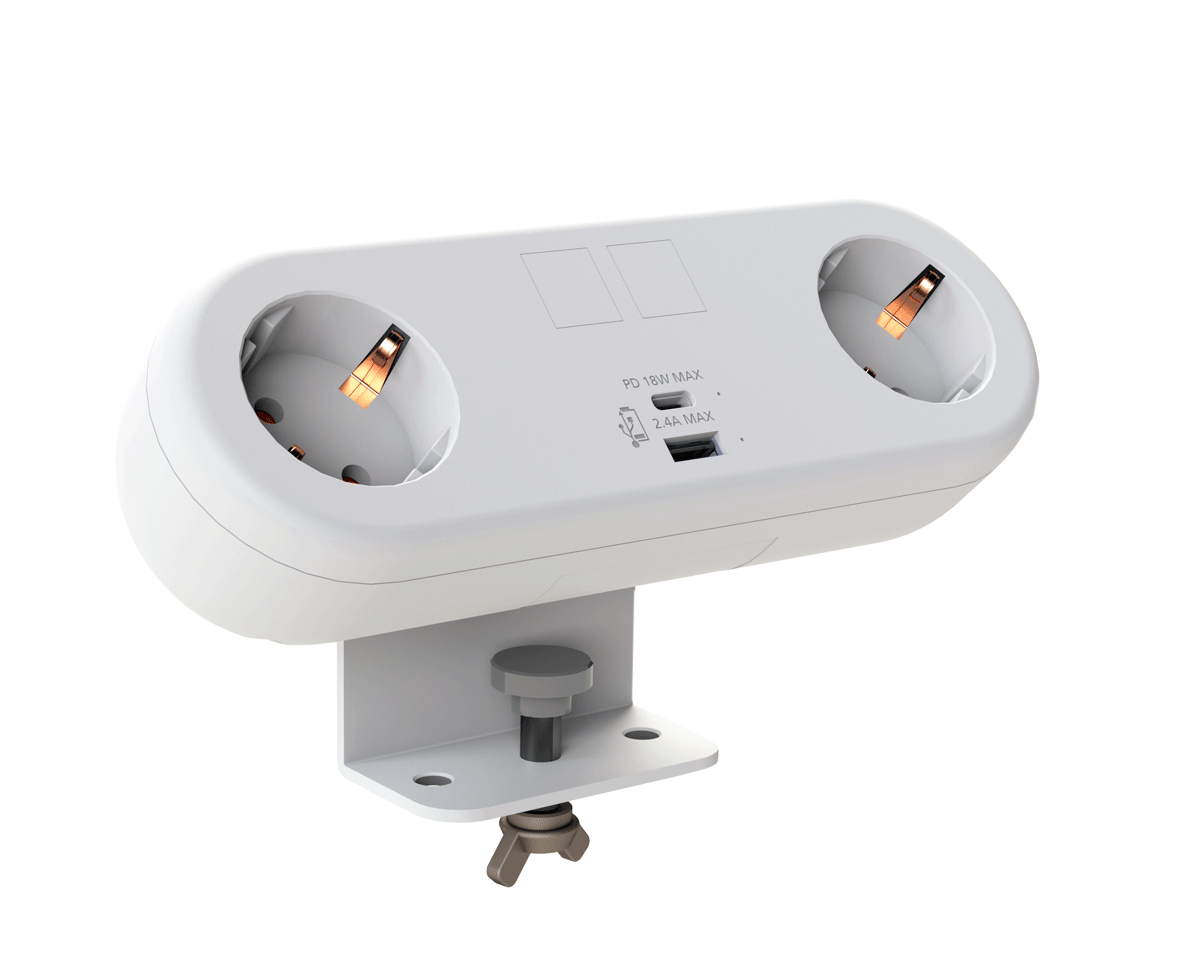
CMD White Schuko Capsule Desk Power Module
CMD LTD EXTENDS MONITOR ARM RANGE WITH THE LAUNCH OF REACH PLUS

CMD Ltd, the specialist in ergonomic and connectivity solutions for commercial interiors, has completed its Reach monitor arm range with the launch of the Reach Plus. Available in single or dual screen options, the Reach Plus has been designed to provide an ideal solution for both single and dual screen workstation configurations, or can be used with next generation of large format curved screens. Suitable...

Read more

CMD Ltd DEMONSTRATES THE ART OF POWER DISTRIBUTION AT THE UNIVERSITY OF WARWICK

CMD Ltd, the specialist in workplace connectivity and ergonomic solutions, has provided Betatrak busbar power distribution and a range of electrical accessories for two major capital investment projects at the University of Warwick. Designed by Fielden Clegg Bradley Studios, the £33 million Faculty of Arts building is a showpiece development comprising four interconnected structures set around a central atrium, which will enable inter-disciplinary collaboration across...

Read more

University of Warwick
CMD BRINGS HARMONY TO COVENTRY UNIVERSITY RESEARCH FACILITIES

CMD Ltd, the specialist in power distribution solutions and workstation power and ergonomics, has provided under desk and on desk power modules for the refurbishment of three Coventry University research buildings. Located on Coventry University Technology Park, a business park designed to encourage collaboration between the university and knowledge-based businesses, the three buildings are being repurposed as office accommodation for university research teams. The refurbishment...

Read more


Coventry University

10 Tips for Choosing Packaging Supplies Boxes

Choosing the right Packaging Supplies Boxes is more than selecting cardboard with an attractive price. Box size, board strength, closure style, and cushioning affect damage rates, shipping costs, and customer trust. A crushed corner can turn a profitable order into a return.

The opportunity is substantial. Pitney Bowes’ Parcel Shipping Index reported 161.8 billion parcels worldwide in 2022, showing the pressure placed on packaging systems. Smithers’ report, The Future of E-Commerce Packaging to 2028, also identifies continued growth in online retail packaging and stronger demand for efficient, recyclable formats. These figures matter because every shipment faces handling, stacking, vibration, and changing delivery conditions.

This guide presents ten practical tips for choosing boxes with greater confidence. It considers product weight, dimensions, compression strength, material selection, warehouse efficiency, and sustainability claims. The right box should fit closely without forcing the product inside. It should also leave enough room for protective material when needed.

Small details matter.

A measuring tape, a sample shipment, and a basic drop test can reveal problems early. However, no checklist replaces real-world testing. Some recommendations may need adjustment for fragile products, humid storage areas, or long-distance transport. That limitation deserves attention.

Reliable decisions should combine supplier specifications, recognized testing practices, and hands-on packing experience. Where possible, compare samples before placing a large order. A cheaper carton is not truly economical if it causes breakage, excess void space, or higher dimensional-weight charges. These ten tips provide a practical starting point for safer, more efficient, and more responsible packaging choices.

10 Tips for Choosing Packaging Supplies Boxes

Identify the Products, Dimensions, and Protection Requirements

Choosing a packaging box begins with the product, not the warehouse shelf. Record the item’s length, width, height, weight, fragility, and center of gravity. A ceramic mug needs different protection from a soft textile. Measure twice. Small mistakes create oversized voids, higher shipping costs, and product movement.

The Pitney Bowes Parcel Shipping Index reported 161.8 billion parcels worldwide in 2023. That volume makes box efficiency increasingly important. Select an inner box that leaves limited clearance around the product. Add cushioning where impact is most likely, especially beneath corners and around handles. Corrugated strength should match weight, stacking pressure, and transport distance. A thin box may look economical, but a crushed edge can erase that saving quickly.

Protection requirements should be tested, not guessed. ISTA testing procedures can help simulate drops, vibration, compression, and handling conditions. The U.S. Environmental Protection Agency reported 82.2 million tons of containers and packaging entered the U.S. municipal waste stream in 2018. Right-sizing can reduce material use, although it does not automatically improve performance. That assumption deserves scrutiny. A smaller box with weak cushioning may fail more often.

Examine the product after testing, including hidden dents and shifted contents. Then revise the dimensions, closure method, and internal supports. No spreadsheet replaces a crushed-corner test.

Choose the Right Box Material and Strength Level

Choosing box material starts with the product’s weight, shape, and travel environment. In warehouse testing, a snug corrugated box usually performs better than an oversized box with loose filler. Single-wall board suits many lightweight items. Double-wall board offers more compression resistance for heavier loads or stacked cartons. Triple-wall board may be excessive for ordinary shipments. It also adds cost and handling effort. The flute profile matters. Smaller flutes cushion well, while larger flutes provide stronger vertical support. No material wins every time.

Check the board’s strength rating, not just its appearance. Edge Crush Test results indicate stacking performance, while burst strength reflects resistance to punctures and tearing. Ask for test data and confirm that the rating applies to the complete box style. A box can have strong paper but weak seams. Moisture changes that equation. Damp storage areas can soften fibers, so water-resistant coatings or inner liners may be practical. They are not always necessary. Use them when exposure is realistic.

Measure the packed product, then leave only enough clearance for protective material. Too much empty space lets contents gain impact speed during a drop. Too little space can crush corners before delivery. Fit matters. Pack one sample, shake it, and inspect the corners after a short drop test. I once selected a heavier box because it felt safer, but the extra weight increased shipping cost without improving protection. That mistake was useful. Recheck box strength after changing the filler, closure, or stacking pattern. Test it. Packaging decisions should rely on evidence, not touch alone.

Compare Box Styles, Closures, and Interior Support Options

10 Tips for Choosing Packaging Supplies Boxes

Box style affects speed, protection, and customer perception. In packing audits, I compare regular slotted cartons, mailer boxes, and rigid setup boxes. Regular slotted cartons suit warehouse efficiency. Mailer boxes fold quickly and resist opening during delivery. Rigid boxes feel premium, but they add weight and storage space.

Tip one: match the style to handling conditions.

Tip two: measure the product, not just its retail size.

Tip three: leave minimal void space. Oversized boxes waste material and invite product movement.

Closures deserve equal attention.

Tuck flaps create a clean, tool-free opening. Locking tabs improve security without extra tape. Pressure-sensitive tape supports rough handling, but it slows manual repacking.

Tip four: test the closure with gloved hands.

Tip five: inspect repeated opening and closing.

Tip six: choose tamper-evident features only when genuinely necessary.

The U.S. EPA reports that containers and packaging represented 28.1% of municipal solid waste in 2018. This makes material efficiency more than a design preference.

Interior support prevents damage at its source.

Corrugated inserts separate edges, while molded pulp supports rounded products. Paper cushioning works well for light movement, but it may compress under heavy loads. Foam can protect fragile items, yet its disposal may be difficult.

Tip seven: support corners first.

Tip eight: prevent contact between hard surfaces.

Tip nine: test vibration and drop resistance using recognized transit procedures.

Tip ten: record failure points after testing.

PMMI’s packaging research highlights right-sizing and protective performance as continuing industry priorities.

My own preference has changed after rushed trials; a box that looks secure can still fail at one sharp corner.

Evaluate Sustainability, Storage, Shipping, and Cost Factors

Choosing packaging boxes requires more than comparing unit prices. Start with the product’s weight, shape, fragility, and journey. A box that fits closely usually needs less filler and occupies less truck space. Measure the packed item, not the product alone. Small gaps become expensive air. For sustainability, check recycled content, recyclability, ink coverage, and supplier documentation. Reuse can help, but only when boxes remain clean, dry, and structurally sound. A heavier box may protect better, yet its added material deserves scrutiny. Green is not always simple.

Storage conditions can quietly damage packaging supplies. Keep cartons off concrete floors and away from moisture, heat, and direct sunlight. Store them flat. Respect the supplier’s stacking limits. Before ordering pallets, calculate shelf volume and monthly usage. Overstock ties up cash and may weaken with age. In a busy packing area, easy access matters too. Workers lose time when common sizes sit behind slow-moving stock. That detail is often missed.

Shipping performance should be tested with realistic handling, vibration, compression, and temperature changes. Select board strength for the full route, including warehouse stacking and last-mile handling. Check dimensional weight before approving a box size. A lighter carton can still cost more if it triggers a larger shipping tier. Compare purchase price, tape, labor, storage, damage claims, and replacement shipments. I would not trust a sample test alone. Real orders expose awkward closures, crushed corners, and inconsistent sizes. Review the data after a trial run, then adjust without defending a poor first choice.

10 Tips for Choosing Packaging Supplies Boxes

Comparing box volume helps evaluate storage efficiency, shipping space, material usage, and potential cost. The volumes below are calculated from the displayed external dimensions and are intended as generic planning examples.

Choose the smallest box that safely protects the product, while allowing enough room for cushioning. Actual shipping charges may also depend on weight, dimensional-weight rules, destination, and carrier requirements.

Test, Refine, and Standardize Your Packaging Supply Selection

Choosing Packaging Supplies Boxes

Test, Refine, and Standardize Your Packaging Supply Selection

Choosing packaging supply boxes should begin with real products, not attractive catalog images. Test each box with the items it will actually carry. Measure product length, width, height, and weight before selecting a size. Leave enough room for protective material, but avoid excessive empty space. A box that looks efficient may still crush during transport.

Test the packed box with simple drop checks, compression checks, and short moisture exposure. Observe damaged corners, shifted contents, and torn seams. Record the results with photos and clear notes. Small changes matter. Try a different board strength, insert shape, or closure method. My early trials used too much filler, which increased cost without improving protection. That mistake revealed a useful lesson: packaging decisions need evidence, not assumptions.

Refine one factor at a time so the results remain reliable. After repeated testing, standardize approved box sizes, packing steps, and inspection points. Create a simple specification sheet for each box, including internal dimensions, weight limits, and acceptable defects. Train packers with physical samples, not written instructions alone. Review damaged shipments and customer feedback every quarter. Standardization should reduce variation, but it should not block practical improvements. An unusual product may need a different solution. That part is easy to miss.