

News

Miro: A New Standard in Responsible Innovation

Miro: A New Standard in Responsible Innovation The Miro monitor arm is setting new benchmarks in sustainability. It offers a high-performance solution without compromising on environmental responsibility. Designed with careful material selection, local sourcing, and longevity in mind, Miro’s responsible approach to design and unique manoeuvrability set it apart from the competition. Sustainable Choices Miro is crafted from energy-efficient materials with a lower carbon impact....

Read more
HSE Advisor

Role Purpose Support in the development, implementation and maintenance of the company’s Health, Safety & Environmental policies, processes, operational procedures, and standards.  Ensuring best practice and championing a continually improving HSE culture within the business. Key Responsibilities Liaise with and provide support to all areas of the business to eliminate, mitigate or reduce identified HSE exposures. Partner with the production management team and team leaders,...

Read more
CMD Ltd LAUNCHES 48-HOUR TURNAROUND ON BETATRAK® RAPID ORDERING SERVICE

CMD Ltd, the specialist in power distribution systems, workstation power and monitor arms, has launched a rapid ordering service for its Betatrak® underfloor powertrack distribution systems and accessories, with a commitment to delivering within 48-hours of an approved purchase order*. The service enables customers to order up to 50 lengths of Standard or Clean Earth (C/E) low noise Betatrak, along with up to 25 feed...

Read more

CMD INVESTS £1/4 MILLION IN NEW MACHINE AS PART OF FACTORY UPGRADE

We have invested in a new £1/4m TRUMPF CNC metal punch as part of an asset renewal strategy for our UK manufacturing capability. The new machine will be used in the production of a wide variety of our power distribution systems and workstation power products at our Rotherham factory. Suitable for handling sheet metal between 0.9mm and 3.0mm thick, the new machine will replace one...

Read more

CMD CATALOGUE PROVIDES TECHNICAL POWER DISTRIBUTION GUIDE

CMD Ltd has released a new catalogue, providing an easy to follow technical guide to our power distribution systems and plug and play desk modules. Detailing CMD’s full range of UK-manufactured power distribution systems and plug and play desk modules, the catalogue will be a helpful source of information to M&E engineers and contractors alike to understand how our power distribution systems connect together and...

Read more

Power Distribution Catalogue
CMD Ltd PLAYS ESSENTIAL ROLE IN ELECTRICAL FIT OUT AT LONDON’S PRESTIGIOUS OFFICE DEVELOPMENT

CMD Ltd, specialist in workplace connectivity and ergonomic solutions, has provided a flexible and high-quality power distribution network for The Ray, a prestigious office development in London’s Farringdon. Well-known for being the former site of The Guardian newspaper, The Ray now stands as an 83,000ft² office development characterised by a modernised warehouse aesthetic, with level two now occupied by a global social media company. The...

Read more

The Ray
CMD plugs in to european opportunity with Schuko Capsule unit launch

CMD Ltd, the specialist in power and connectivity solutions for commercial environments, has launched a Schuko version of its popular fixed format Capsule workstation power module for export to mainland Europe and beyond. A popular on desk power module comprising two sockets and dual USB (type A and C) chargers, CMD’s Capsule unit is already widely specified in the UK as an off-the-shelf workstation power...

Read more

CMD White Schuko Capsule Desk Power Module
CMD LTD EXTENDS MONITOR ARM RANGE WITH THE LAUNCH OF REACH PLUS

CMD Ltd, the specialist in ergonomic and connectivity solutions for commercial interiors, has completed its Reach monitor arm range with the launch of the Reach Plus. Available in single or dual screen options, the Reach Plus has been designed to provide an ideal solution for both single and dual screen workstation configurations, or can be used with next generation of large format curved screens. Suitable...

Read more

CMD Ltd DEMONSTRATES THE ART OF POWER DISTRIBUTION AT THE UNIVERSITY OF WARWICK

CMD Ltd, the specialist in workplace connectivity and ergonomic solutions, has provided Betatrak busbar power distribution and a range of electrical accessories for two major capital investment projects at the University of Warwick. Designed by Fielden Clegg Bradley Studios, the £33 million Faculty of Arts building is a showpiece development comprising four interconnected structures set around a central atrium, which will enable inter-disciplinary collaboration across...

Read more

University of Warwick
CMD BRINGS HARMONY TO COVENTRY UNIVERSITY RESEARCH FACILITIES

CMD Ltd, the specialist in power distribution solutions and workstation power and ergonomics, has provided under desk and on desk power modules for the refurbishment of three Coventry University research buildings. Located on Coventry University Technology Park, a business park designed to encourage collaboration between the university and knowledge-based businesses, the three buildings are being repurposed as office accommodation for university research teams. The refurbishment...

Read more

Coventry University

5 Tips to Choose the Best Frequency VFD?

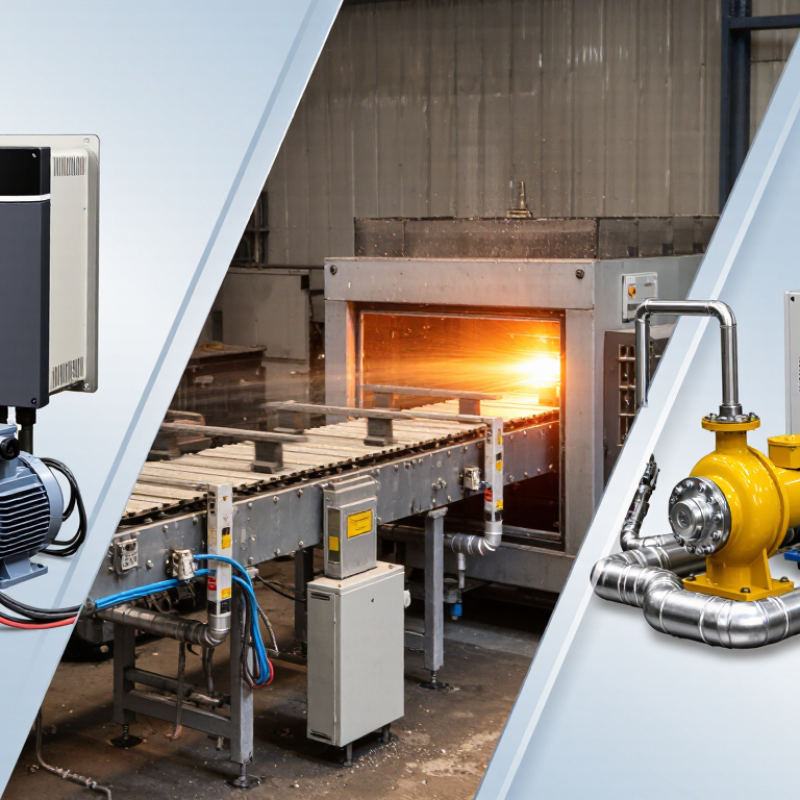
Choosing the right Frequency Vfd is not simply a matter of comparing prices or selecting the highest power rating. It requires practical judgment. Motor type, load behavior, operating environment, control accuracy, and maintenance access all influence the final decision. A pump in a clean indoor room has different needs from a conveyor working beside dust, heat, and vibration.

Power-electronics authority Bimal K. Bose wrote, “Power electronics is the technology behind the efficient use of electrical energy.” That principle remains useful when evaluating a VFD. A suitable drive should reduce wasted energy while protecting the motor and supporting stable production. Look closely at the motor’s rated current, starting torque, speed range, overload demand, and braking requirements. Small details matter. A drive cabinet that feels hot after ten minutes may reveal poor ventilation, even when the specifications appear impressive.

This guide presents five practical tips for choosing the best Frequency Vfd. It examines sizing, application matching, control methods, environmental protection, and supplier support. These points can prevent common mistakes, such as choosing only by horsepower or ignoring harmonics. Some recommendations will not fit every installation. That is the honest part. A technically excellent VFD can still perform poorly when installed incorrectly or operated beyond its intended conditions. Review the manufacturer’s manual, confirm local electrical requirements, and ask qualified professionals to verify the final selection. Performance begins with careful questions.

5 Tips to Choose the Best Frequency VFD?

Define the Application and Operating Requirements

Choosing the best frequency VFD starts with defining the application, not comparing product labels. Identify the motor’s rated power, voltage, current, base frequency, and service factor. Then record the required speed range and load profile. A conveyor needs steady torque. A fan usually follows variable torque. A hoist demands controlled starting and braking.

Operating conditions matter just as much. Note daily running hours, acceleration time, reversing frequency, ambient temperature, dust, moisture, and installation altitude. Check whether the motor operates below its base speed for long periods. Reduced speed can weaken cooling, especially with a shaft-mounted fan. The U.S. Department of Energy reports that motor systems consume more than 70% of industrial electricity. Small efficiency decisions can therefore affect substantial operating costs. The International Energy Agency also estimates that electric motor systems use about 53% of global electricity.

Select the VFD after calculating real operating demands. Size for continuous current and overload capacity, not motor horsepower alone. A crusher may need heavy-duty overload performance. A pump may need sleep functions and stable pressure control. Review braking resistance, harmonic limits, cable length, and electromagnetic compatibility. Field experience shows that many failures begin with incomplete application data. That is an uncomfortable point. A perfect drive cannot correct an undersized cable or poor cooling. The DOE’s Improving Motor and Drive System Performance Sourcebook recommends evaluating the complete motor-drive system, rather than treating the drive as an isolated component. Leave room for future load changes, but avoid excessive oversizing. It can reduce control accuracy and raise purchase costs.

5 Tips to Choose the Best Frequency VFD? - Define the Application and Operating Requirements

Tip Application Requirement Key Data to Collect Recommended VFD Selection Criteria Typical Example
1 Define the load profile Determine whether the load is variable-torque or constant-torque. Motor power, rated current, speed range, starting frequency, acceleration time, and load torque behavior. Select a variable-torque rating for centrifugal fans and pumps. Select a constant-torque or heavy-duty rating for conveyors, mixers, compressors, hoists, and loaded machinery. A centrifugal pump usually needs less torque at reduced speed, while a conveyor may require nearly full torque during acceleration and low-speed operation.
2 Match motor and supply data Make sure the VFD is compatible with the motor and available electrical supply. Motor voltage, full-load current, rated frequency, number of phases, motor type, and incoming supply voltage and frequency. Choose the VFD by output current and overload capability rather than motor horsepower alone. Verify that the VFD input and output voltage ranges match the installation. For a three-phase motor rated at 400 V and 50 Hz, the drive should provide a compatible three-phase output and be sized for the motor's nameplate current.
3 Set the required speed range Confirm the minimum and maximum operating speeds and the required control accuracy. Normal speed, minimum speed, maximum speed, speed regulation, acceleration and deceleration times, and stopping method. Use basic volts-per-hertz control for simple fan or pump duties. Consider sensorless vector control when higher starting torque, better low-speed performance, or improved speed regulation is required. A pump operating from 30 to 50 Hz may use a standard control mode, while a conveyor that must start under load may require vector control and a higher overload rating.
4 Check braking and stopping needs Identify whether the machine must stop quickly or control an overrunning load. Load inertia, stopping time, stopping frequency, downhill or lifting operation, and whether the load returns energy to the drive. Use controlled ramp-down for ordinary stopping. Add a braking resistor or regenerative braking system when rapid deceleration or regenerative energy exceeds the VFD's internal capacity. A high-inertia centrifuge may require a braking resistor, while a hoist or frequent lowering application may require a regenerative braking solution and a suitable safety control system.
5 Evaluate environment and installation conditions Ensure the VFD can operate reliably in the actual electrical and physical environment. Ambient temperature, altitude, humidity, dust, moisture, enclosure location, cable length, switching frequency, and harmonic limits. Check derating requirements above the manufacturer's specified temperature or altitude limits. Select an appropriate enclosure, provide adequate ventilation, and consider input reactors, filters, or output filters where needed. A drive installed in a dusty industrial area may need a protected enclosure and filtered cooling airflow. Long motor cables may require an output reactor or dV/dt filter to reduce motor insulation stress.

Match VFD Capacity with Motor Power and Load Characteristics

5 Tips to Choose the Best Frequency VFD

The right VFD is not selected by horsepower alone. Match its continuous output current with the motor’s rated current. A 7.5 kW motor may need different capacity under heavy starting loads. Check the nameplate voltage, frequency, service factor, and full-load amperage. The U.S. Department of Energy recommends evaluating the complete motor-driven system, not isolated components.

Study the load profile before choosing capacity. Fans and centrifugal pumps usually follow variable-torque behavior. Conveyors, mixers, crushers, and compressors can demand constant torque. Allow suitable overload capacity for acceleration and sudden resistance. A VFD that barely matches the motor may trip repeatedly. That is expensive downtime. It also signals poor application review.

Motor speed matters too. Confirm the rated base frequency and required operating range. Above base speed, available torque may fall, while low-speed operation can reduce cooling. External ventilation may be necessary. The IEA reports that motor systems consume about 53% of global electricity, making correct control valuable. Yet energy savings depend on real load conditions, not optimistic calculations. Measure current and pressure when possible. I sometimes find that estimated loads are wrong. That mistake deserves attention. Consider cable length, ambient temperature, enclosure protection, braking needs, and harmonic limits. Finally, select the VFD using the most demanding operating condition, then verify settings during commissioning.

Evaluate Frequency Range, Control Accuracy, and Torque Performance

5 Tips to Choose the Best Frequency VFD?

Evaluate Frequency Range, Control Accuracy, and Torque Performance

Choosing a frequency VFD starts with the motor’s real operating range. Check the motor nameplate, starting load, and expected low-speed duty. A drive rated from 0 to 400 Hz may look impressive, but its useful range depends on cooling and motor design. Confirm continuous current ratings, not only short-term overload figures.

Control accuracy matters when speed changes affect product quality. Compare frequency resolution, feedback options, and response time. For pumps, basic sensorless control may be sufficient. For conveyors or winding equipment, closed-loop control can provide steadier speed.

I once saw a system hunt during acceleration because the tuning values were copied from another motor. The specification was correct, but the setup was not.

Torque performance deserves a practical test. Review starting torque, overload capacity, and torque output at low frequency. Test the drive with the heaviest expected load, especially after several minutes of operation. Monitor current, motor temperature, and acceleration smoothness. A drive can meet its datasheet values and still perform poorly with an oversized or poorly tuned motor. Check protection functions, installation guidance, and independent test records before purchase. Ask how the supplier verifies torque claims. Good documentation helps, but field evidence matters more. Be willing to revise your choice after testing; the first selection is not always the best one.

Check Voltage Compatibility, Protection Features, and Installation Needs

5 Tips to Choose the Best Frequency VFD?

Choosing the best frequency VFD starts with the voltage plate, not the catalog. Match incoming voltage, phase, frequency, and motor voltage exactly. Check full-load current, service factor, and motor insulation rating. A 460-volt motor should not connect casually to a 230-volt output. That sounds obvious. Yet field errors still occur. The U.S. Department of Energy’s Improving Motor and Drive System Performance report states that variable-torque drives can reduce energy use by 20–50% in suitable applications.

Protection deserves equal attention. Select overload, short-circuit, phase-loss, overtemperature, and ground-fault functions. Safe torque off helps prevent unexpected motor movement. IEEE 519 provides a framework for evaluating harmonic distortion at the connection point. Do not assume the drive alone controls harmonics. Line reactors or filters may be required. The International Energy Agency has estimated that motor-driven systems consume roughly 46% of global electricity. Small design choices matter.

Installation conditions often decide reliability. Confirm enclosure rating, ambient temperature, altitude, cooling clearance, cable length, grounding, and EMC requirements. Derating may apply inside a hot, dusty cabinet. Long motor cables can increase reflected-wave stress. Follow IEC 61800-5-1 and documented installation procedures. The DOE report also emphasizes system-level assessment, not drive selection alone. That is the part I would revisit. A correct calculation can still fail inside a poorly ventilated panel.

Compare Efficiency, Reliability, Cost, and Manufacturer Support

Selecting a frequency VFD requires more than matching motor horsepower. Use five checks: efficiency, reliability, cost, application fit, and support. Start with measured load data, not assumptions. A clamp meter, process log, and speed profile can expose hours of part-load operation. The U.S. Department of Energy reports that motor systems can exceed 70% of industrial electricity use. Its Motor Systems guidance says suitable adjustable-speed applications may reduce energy use by 10–50%. Those savings depend heavily on control settings. Not every pump qualifies.

Compare tested efficiency across the expected speed range, using IEC 61800-9-2 data where available. Then inspect reliability details: overload capacity, thermal derating, enclosure rating, cooling, harmonic performance, and fault history. A low-cost unit can become expensive when a hot cabinet causes repeated trips. The DOE also notes that energy commonly dominates a motor’s lifecycle cost, while purchase price is comparatively small. Create a five-year estimate covering electricity, installation, filters, downtime, and replacement parts. I once selected by purchase price alone. That was costly.

For manufacturer support, request commissioning help, parameter backups, firmware practices, local technicians, spare-parts availability, and written response times. NIST Cybersecurity Framework 2.0 emphasizes governance, protection, detection, response, and recovery. Apply those ideas to connected drives. Ask for documented compatibility with motors, sensors, braking hardware, and network protocols. A reliable supplier shares test records and failure guidance, not vague promises. Check references from similar duty cycles. Support looks intangible until production stops. I would still challenge the brochure’s best-case efficiency. Real sites are dirtier, hotter, and less predictable.

5 Tips to Choose the Best Frequency VFD

Compare efficiency, reliability, cost, and manufacturer support before selecting a variable frequency drive.

1. Check efficiency: Compare efficiency across the expected load range, not only at rated load.
2. Match reliability: Verify overload capacity, cooling design, protection rating, and operating temperature.
3. Calculate total cost: Include purchase price, installation, energy consumption, maintenance, and downtime.
4. Confirm compatibility: Check motor voltage, current, control method, braking needs, and harmonics requirements.
5. Evaluate support: Review documentation, commissioning assistance, spare-parts availability, training, and service response.

The chart shows representative efficiency benchmarks for modern industrial VFDs under typical operating conditions. Actual results depend on drive size, motor efficiency, switching frequency, load profile, and installation conditions.

Article Source: