

News

Miro: A New Standard in Responsible Innovation

Miro: A New Standard in Responsible Innovation The Miro monitor arm is setting new benchmarks in sustainability. It offers a high-performance solution without compromising on environmental responsibility. Designed with careful material selection, local sourcing, and longevity in mind, Miro’s responsible approach to design and unique manoeuvrability set it apart from the competition. Sustainable Choices Miro is crafted from energy-efficient materials with a lower carbon impact....

Read more
HSE Advisor

Role Purpose Support in the development, implementation and maintenance of the company’s Health, Safety & Environmental policies, processes, operational procedures, and standards.  Ensuring best practice and championing a continually improving HSE culture within the business. Key Responsibilities Liaise with and provide support to all areas of the business to eliminate, mitigate or reduce identified HSE exposures. Partner with the production management team and team leaders,...

Read more
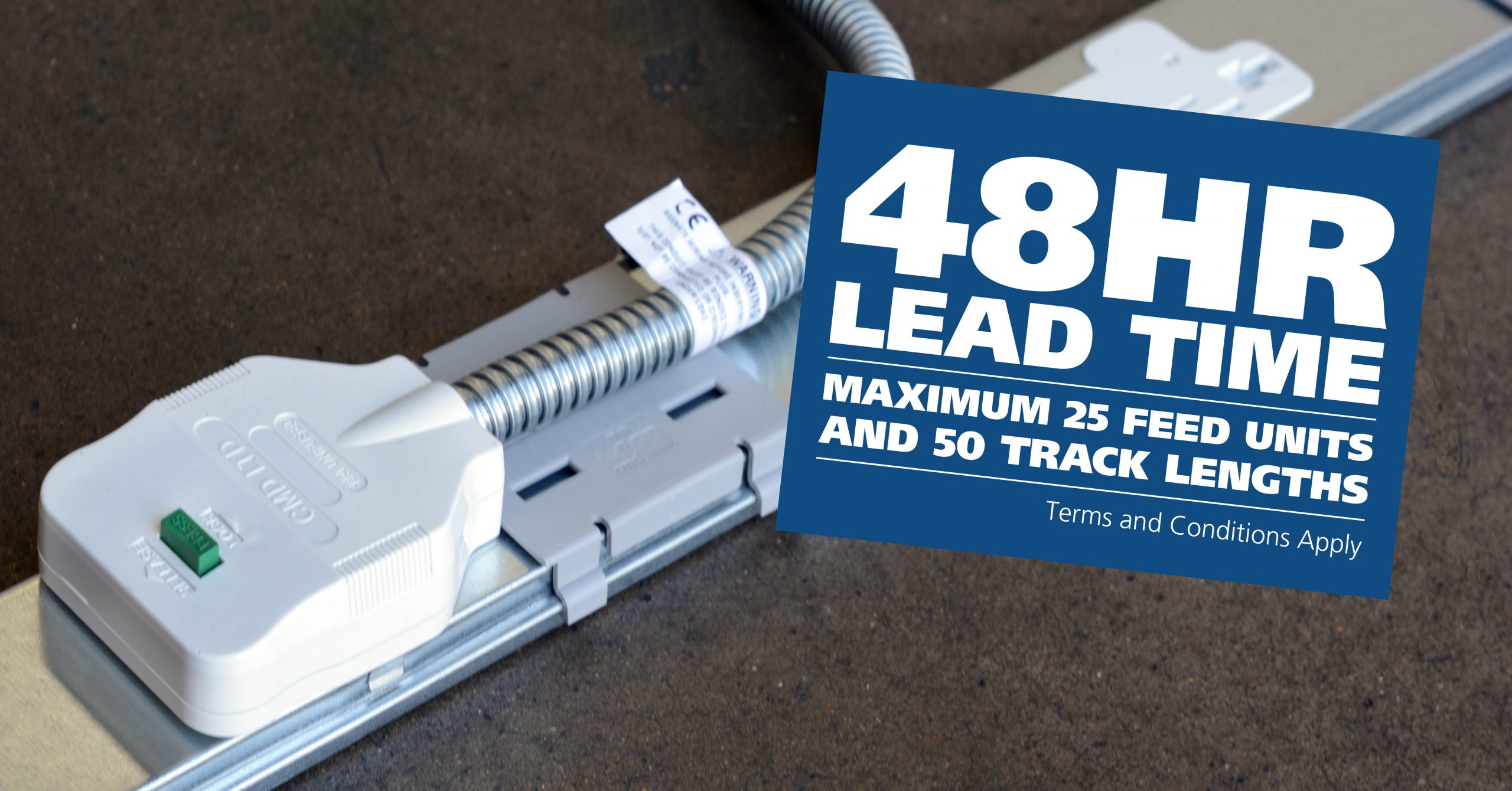
CMD Ltd LAUNCHES 48-HOUR TURNAROUND ON BETATRAK® RAPID ORDERING SERVICE

CMD Ltd, the specialist in power distribution systems, workstation power and monitor arms, has launched a rapid ordering service for its Betatrak® underfloor powertrack distribution systems and accessories, with a commitment to delivering within 48-hours of an approved purchase order*. The service enables customers to order up to 50 lengths of Standard or Clean Earth (C/E) low noise Betatrak, along with up to 25 feed...

Read more
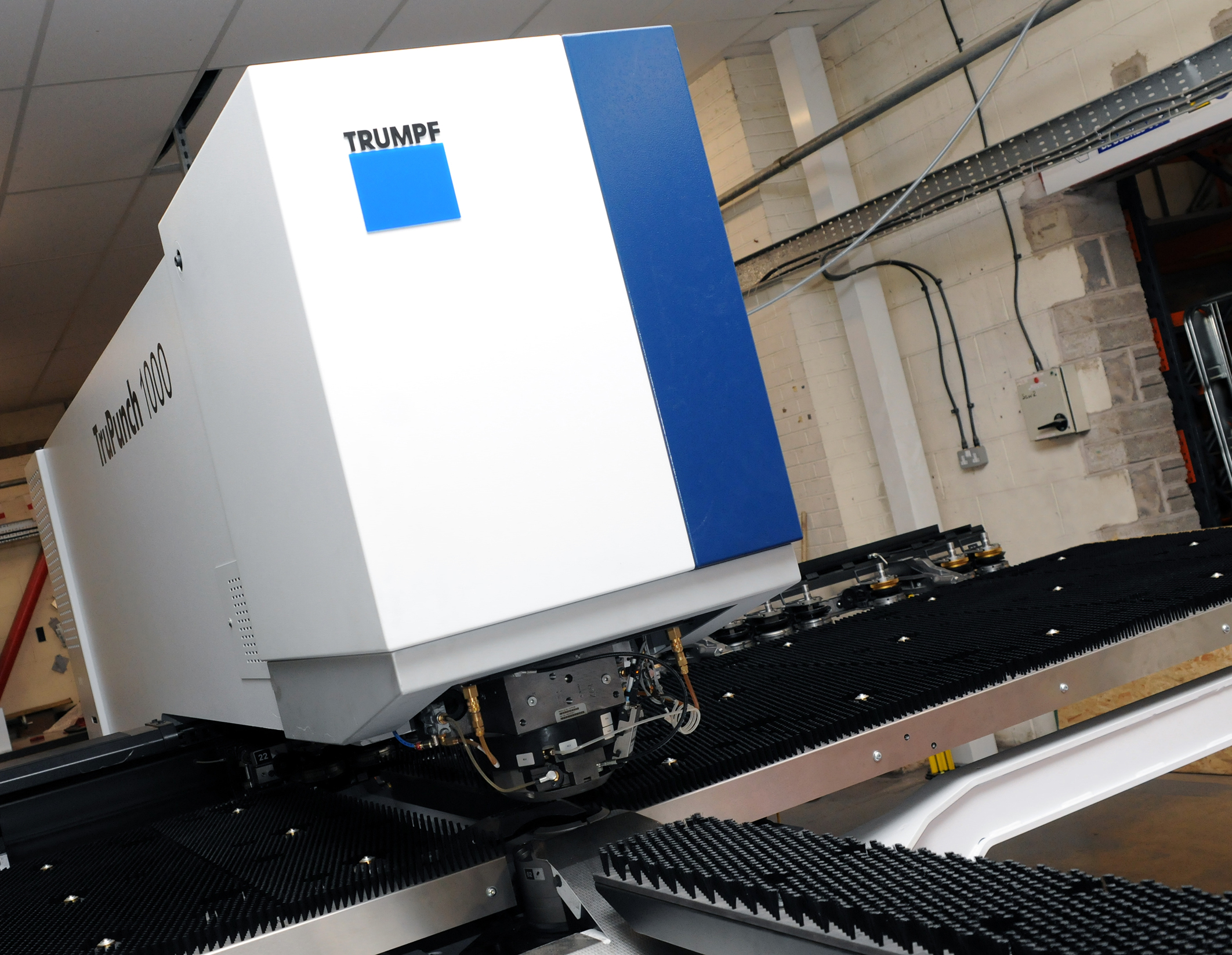
CMD INVESTS £1/4 MILLION IN NEW MACHINE AS PART OF FACTORY UPGRADE

We have invested in a new £1/4m TRUMPF CNC metal punch as part of an asset renewal strategy for our UK manufacturing capability. The new machine will be used in the production of a wide variety of our power distribution systems and workstation power products at our Rotherham factory. Suitable for handling sheet metal between 0.9mm and 3.0mm thick, the new machine will replace one...

Read more
CMD CATALOGUE PROVIDES TECHNICAL POWER DISTRIBUTION GUIDE

CMD Ltd has released a new catalogue, providing an easy to follow technical guide to our power distribution systems and plug and play desk modules. Detailing CMD’s full range of UK-manufactured power distribution systems and plug and play desk modules, the catalogue will be a helpful source of information to M&E engineers and contractors alike to understand how our power distribution systems connect together and...

Read more
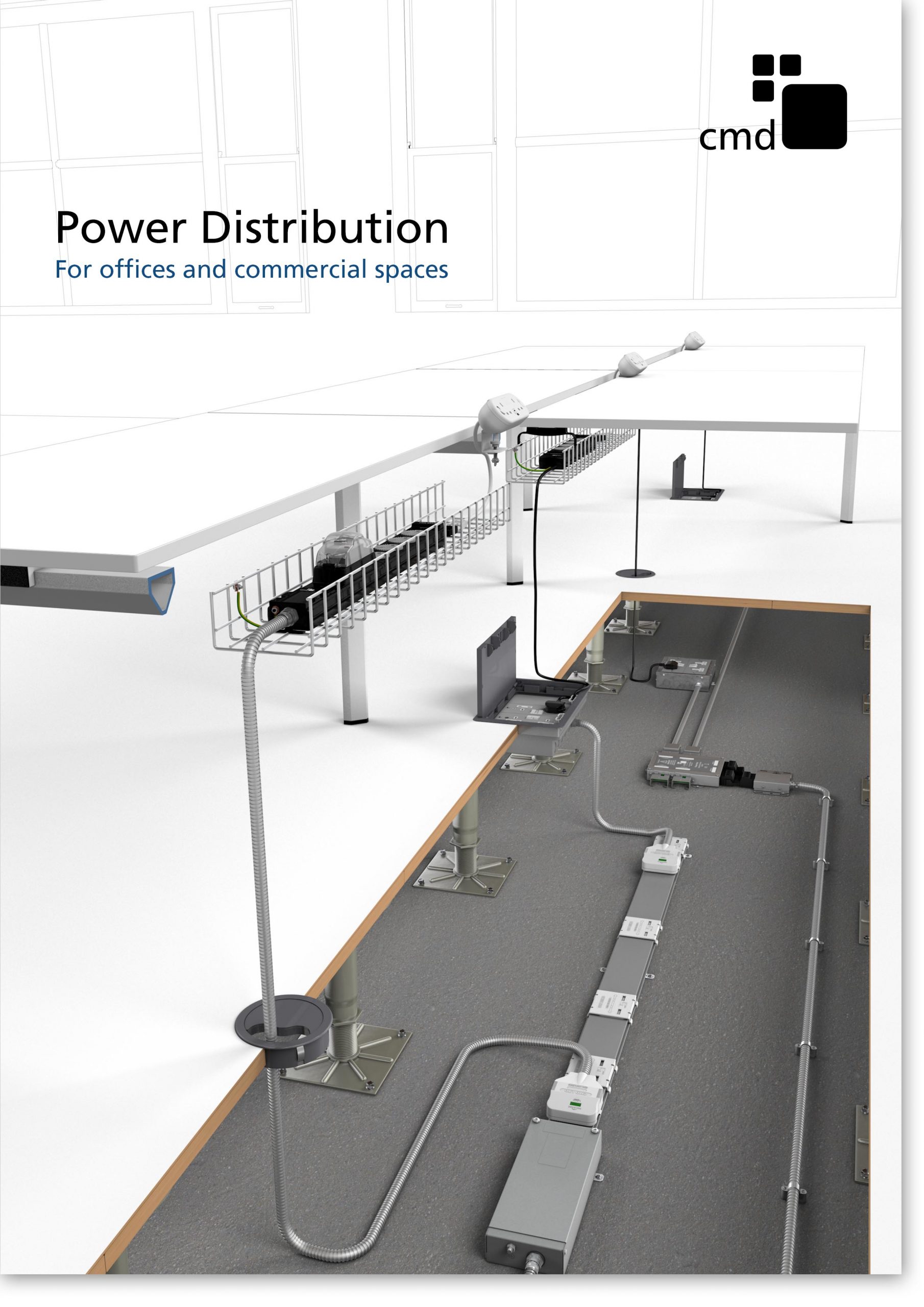
Power Distribution Catalogue
CMD Ltd PLAYS ESSENTIAL ROLE IN ELECTRICAL FIT OUT AT LONDON’S PRESTIGIOUS OFFICE DEVELOPMENT

CMD Ltd, specialist in workplace connectivity and ergonomic solutions, has provided a flexible and high-quality power distribution network for The Ray, a prestigious office development in London’s Farringdon. Well-known for being the former site of The Guardian newspaper, The Ray now stands as an 83,000ft² office development characterised by a modernised warehouse aesthetic, with level two now occupied by a global social media company. The...

Read more

The Ray
CMD plugs in to european opportunity with Schuko Capsule unit launch

CMD Ltd, the specialist in power and connectivity solutions for commercial environments, has launched a Schuko version of its popular fixed format Capsule workstation power module for export to mainland Europe and beyond. A popular on desk power module comprising two sockets and dual USB (type A and C) chargers, CMD’s Capsule unit is already widely specified in the UK as an off-the-shelf workstation power...

Read more
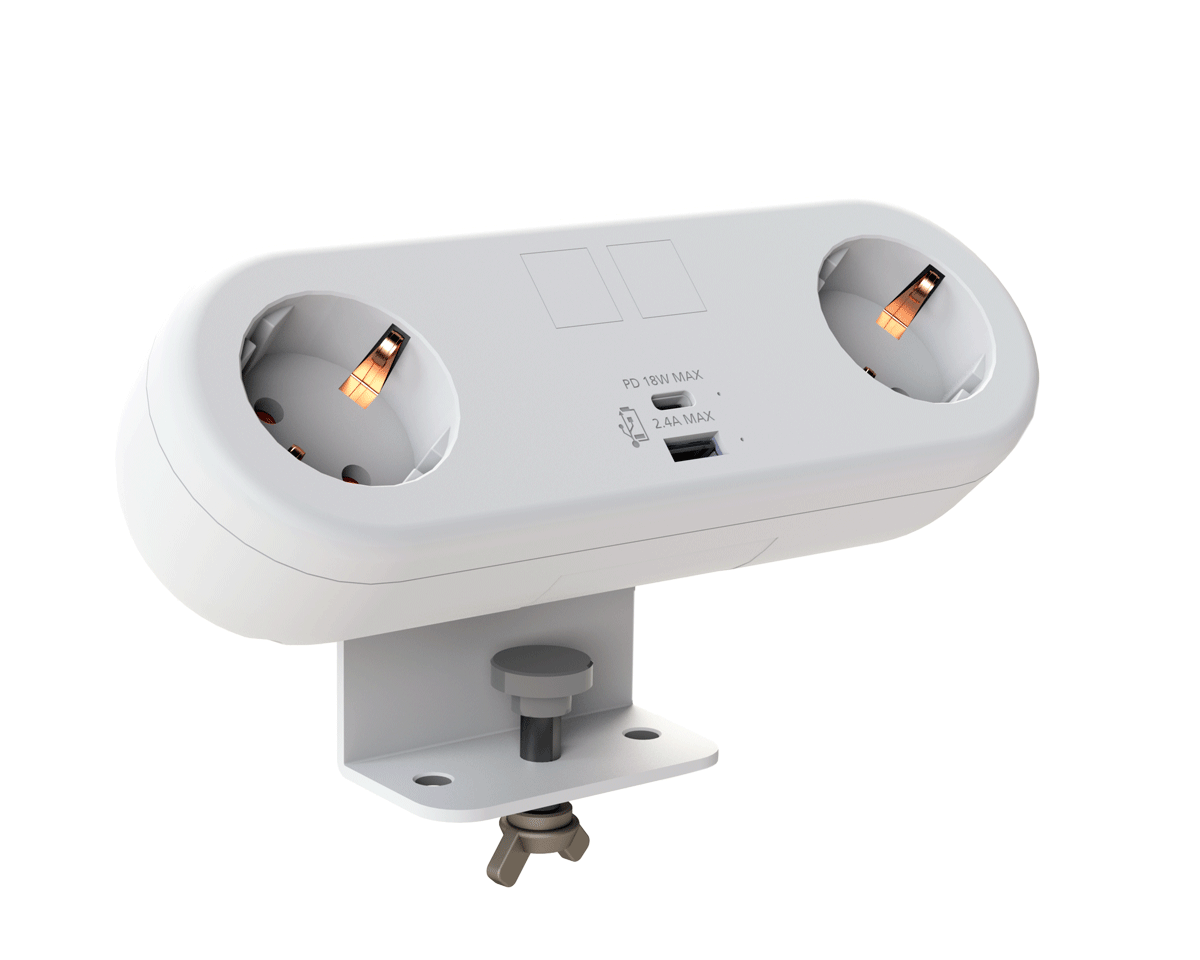
CMD White Schuko Capsule Desk Power Module
CMD LTD EXTENDS MONITOR ARM RANGE WITH THE LAUNCH OF REACH PLUS

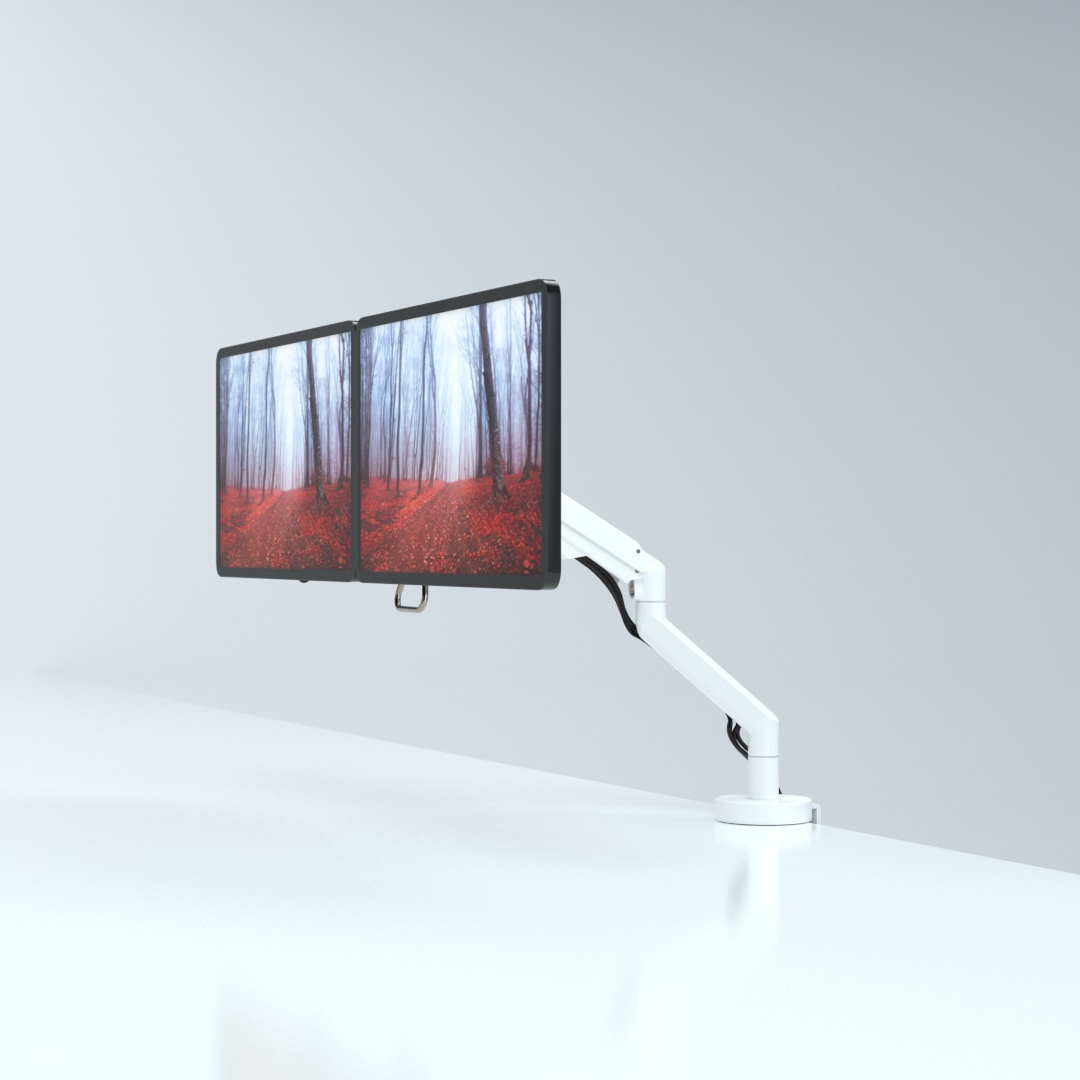
CMD Ltd, the specialist in ergonomic and connectivity solutions for commercial interiors, has completed its Reach monitor arm range with the launch of the Reach Plus. Available in single or dual screen options, the Reach Plus has been designed to provide an ideal solution for both single and dual screen workstation configurations, or can be used with next generation of large format curved screens. Suitable...

Read more
CMD Ltd DEMONSTRATES THE ART OF POWER DISTRIBUTION AT THE UNIVERSITY OF WARWICK

CMD Ltd, the specialist in workplace connectivity and ergonomic solutions, has provided Betatrak busbar power distribution and a range of electrical accessories for two major capital investment projects at the University of Warwick. Designed by Fielden Clegg Bradley Studios, the £33 million Faculty of Arts building is a showpiece development comprising four interconnected structures set around a central atrium, which will enable inter-disciplinary collaboration across...

Read more

University of Warwick
CMD BRINGS HARMONY TO COVENTRY UNIVERSITY RESEARCH FACILITIES

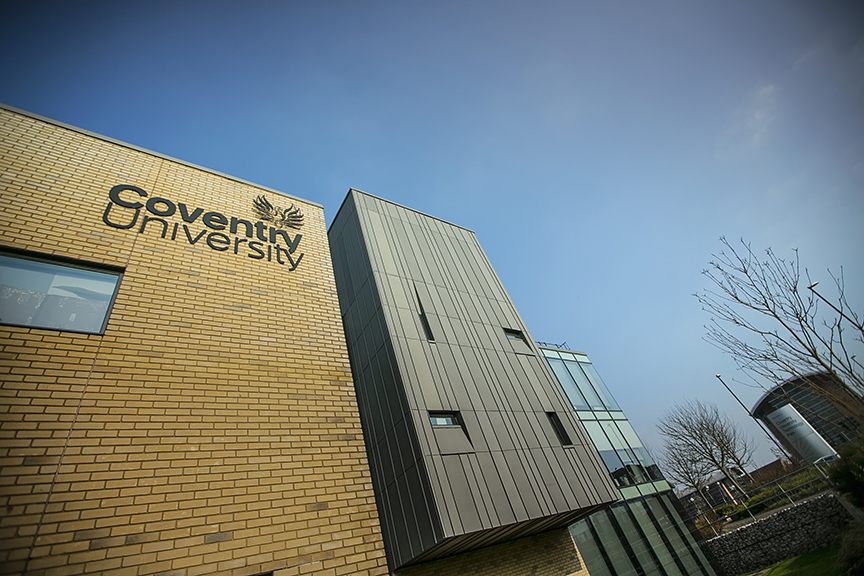
CMD Ltd, the specialist in power distribution solutions and workstation power and ergonomics, has provided under desk and on desk power modules for the refurbishment of three Coventry University research buildings. Located on Coventry University Technology Park, a business park designed to encourage collaboration between the university and knowledge-based businesses, the three buildings are being repurposed as office accommodation for university research teams. The refurbishment...

Read more

Coventry University

10 Tips for Choosing the Right Anti-Corrosion FRP Profiles?

Choosing the right Anti-Corrosion FRP Profiles is essential in various industries, including construction, chemical processing, and marine applications. Corrosion costs the global economy approximately $2.5 trillion annually, emphasizing the importance of effective solutions. With rising demand for durable and sustainable materials, antif-frp profiles have gained prominence. These profiles can significantly extend the lifespan of structures while reducing maintenance costs.

Numerous factors influence the selection of Anti-Corrosion FRP Profiles. Manufacturers often tout their products’ durability and resistance to environmental factors. Yet, not all profiles are created equal. A report from the Global Composites Market indicates that FRP products can decrease corrosion rates by 80% compared to traditional materials. However, poor quality profiles may lead to premature failure and costly repairs. The challenge lies in differentiating between high-performance options and subpar alternatives.

Navigating the diverse market requires careful consideration of specific requirements and conditions. Make informed decisions based on comprehensive analysis and expert recommendations. As industries increasingly prioritize longevity and performance, utilizing the right Anti-Corrosion FRP Profiles can lead to significant advantages. However, overlooking critical factors in material selection could result in serious setbacks.

10 Tips for Choosing the Right Anti-Corrosion FRP Profiles?

Understanding the Basics of Anti-Corrosion FRP Profiles

When selecting anti-corrosion FRP profiles, understanding the materials' properties is crucial. Fiberglass reinforced plastic (FRP) is known for its resistance to harsh environmental conditions. It is widely used in industries such as chemical processing, water treatment, and marine applications. Research indicates that FRP can outperform traditional materials in lifespan by up to 30%.


Corrosion can significantly impact operational efficiency. A report from the National Association of Corrosion Engineers (NACE) states that corrosion costs industries over $2.5 trillion annually. This emphasizes the urgency of using effective anti-corrosion solutions. Evaluating the resin and fiber types in FRP is vital. For instance, vinyl ester resins offer better chemical resistance compared to standard polyester.


It's important to consider the specific application conditions as well. High temperatures and varying pH levels can affect performance. While FRP is generally reliable, manufacturers sometimes do not disclose complete performance data. Exploring third-party testing results can be beneficial. Always prioritize materials that demonstrate proven performance in real-world scenarios.

Evaluating the Chemical Resistance of FRP Materials in Various Environments

When selecting anti-corrosion FRP profiles, it's essential to evaluate the chemical resistance of the materials. Different environments expose materials to various chemicals. Understanding how FRP reacts to these substances can prevent costly failures. Many industries face challenges with corrosive elements, such as in chemical processing or wastewater treatment.

The chemical resistance of FRP can greatly vary based on its composition. Factors like temperature, pressure, and the type of chemical should be considered. Not all FRP is created equal; some may withstand acidic environments, while others can handle alkaline conditions. Testing materials in real-life conditions can be more informative than theoretical assessments.

Additionally, reviewing case studies can provide valuable insights. Results from previous applications can highlight the strengths and weaknesses of specific FRP profiles. It's beneficial to ask questions and seek expert opinions. Understanding the limitations of a chosen material can lead to better decision-making. Not every FRP will be ideal for every application; reflecting on past experiences can guide future selections.

Assessing Mechanical Properties for Enhanced Durability in FRP Profiles

When selecting anti-corrosion FRP profiles, evaluating mechanical properties is crucial for durability. Understanding tensile strength is essential; it determines how well the material resists deformation. Higher tensile strength ensures the profile can withstand heavy loads without failing. Alongside this, compressive strength plays a vital role. A profile must endure pressure without cracking or breaking.

Another important aspect is flexural strength, which indicates a profile's ability to bend without breaking. This property is key in applications where the material experiences bending forces. It's advisable to consult technical specifications and compare values from multiple sources. The optimization of these properties requires a balance; sometimes, higher performance in one area can lead to compromises in another.

Conducting real-world tests can reveal unexpected weaknesses. Laboratory conditions may not reflect actual conditions faced by FRP profiles. It's important to remain skeptical of purely numerical data. Real-world applications often present complexities that metrics alone cannot capture. Engineering professionals should maintain an adaptive mindset when making material choices. This approach enhances the reliability of structural decisions, ultimately leading to safer and longer-lasting installations.

10 Tips for Choosing the Right Anti-Corrosion FRP Profiles

Tip Description Mechanical Property Importance
1. Identify Environment Evaluate the specific environmental conditions such as humidity, temperature, and exposure to chemicals. Chemical Resistance Critical for long-term performance
2. Assess Load Requirements Determine load factors to ensure that the selected profile can withstand operational stress. Tensile Strength Ensures structural integrity
3. Check Impact Resistance Select profiles that can absorb shocks and impacts safely. Impact Strength Prevents catastrophic failure
4. Evaluate Fatigue Resistance Understand the cyclic loading conditions the profile will experience. Fatigue Limit Increases longevity of the profile
5. Confirm Thermal Stability Ensure that the material can maintain its properties under temperature changes. Thermal Conductivity Vital for performance in extreme conditions
6. Review Adhesion Properties Investigate how well the profile bonds with other materials. Adhesion Strength Crucial for hybrid applications
7. Assess Water Absorption Choose profiles with low water absorption rates to prevent weakening. Water Absorption Rate Essential to avoid degradation
8. Ensure UV Stability Select materials that resist degradation from UV exposure. UV Resistance Important for outdoor applications
9. Conduct Cost-Benefit Analysis Assess the economic aspects versus the durability benefits. Cost-Effectiveness Optimizes budget allocation
10. Consult with Experts Engage with professionals to validate selections and gain insights. Expert Opinions Enhances decision-making quality

Analyzing Corrosion Rate Data for Different Anti-Corrosion Treatments

Corrosion is a significant challenge in many industries, particularly in environments with high humidity or exposure to chemicals. Analyzing corrosion rate data helps in selecting the most effective anti-corrosion treatments for fiberglass reinforced plastic (FRP) profiles. For instance, studies indicate that FRP treated with epoxy resins can show a corrosion rate reduction of up to 90% compared to untreated options. This dramatic decline underscores the importance of data-driven decisions.

Some reports suggest that certain coatings can extend the lifespan of FRP profiles by over 15 years. Coatings like polyurethanes offer excellent UV resistance while maintaining structural integrity. However, these benefits come with caveats. Not all applications may benefit equally from these treatments. Sometimes, the coatings may not adhere properly, leading to delamination and accelerated corrosion.

Moreover, some environmental factors can complicate the analysis. For example, exposure to saltwater versus freshwater can yield different corrosion rates, showcasing variations in treatment effectiveness. Enhanced data collection in these settings is vital. Industries must invest in rigorous testing to ensure longevity and reliability of anti-corrosion measures. Understanding these complexities allows for informed choices, balancing performance and cost.

Understanding Cost vs. Performance Relationships in FRP Selection

When selecting anti-corrosion FRP profiles, understanding the cost versus performance relationship is crucial. Properly evaluated materials can save significant expenses over time. Choosing high-performance options may seem costly initially. However, the long-term benefits often outweigh the upfront investment. Cost-effective FRP might lead to frequent replacements, increasing total lifecycle costs.

Performance is not just about durability. Factors like resistance to harsh chemicals and environmental conditions also matter. An adequate understanding of the application helps in decision-making. A profile that performs well in one setting may fail in another. It’s essential to analyze specific operational requirements. The right choice often involves trade-offs between initial costs and performance longevity.

However, many may overlook important details in this process. Inadequate research can result in poor material selection. For instance, not considering temperature variations can lead to unexpected failures. We must remain vigilant about our choices. Data-driven assessments can greatly enhance the selection process. Validating performance claims with real-world applications is imperative. Misjudgments in this area can create headaches down the line. Balancing cost and performance requires careful thought and expertise.