

News

Miro: A New Standard in Responsible Innovation

Miro: A New Standard in Responsible Innovation The Miro monitor arm is setting new benchmarks in sustainability. It offers a high-performance solution without compromising on environmental responsibility. Designed with careful material selection, local sourcing, and longevity in mind, Miro’s responsible approach to design and unique manoeuvrability set it apart from the competition. Sustainable Choices Miro is crafted from energy-efficient materials with a lower carbon impact....

Read more
HSE Advisor

Role Purpose Support in the development, implementation and maintenance of the company’s Health, Safety & Environmental policies, processes, operational procedures, and standards.  Ensuring best practice and championing a continually improving HSE culture within the business. Key Responsibilities Liaise with and provide support to all areas of the business to eliminate, mitigate or reduce identified HSE exposures. Partner with the production management team and team leaders,...

Read more
CMD Ltd LAUNCHES 48-HOUR TURNAROUND ON BETATRAK® RAPID ORDERING SERVICE

CMD Ltd, the specialist in power distribution systems, workstation power and monitor arms, has launched a rapid ordering service for its Betatrak® underfloor powertrack distribution systems and accessories, with a commitment to delivering within 48-hours of an approved purchase order*. The service enables customers to order up to 50 lengths of Standard or Clean Earth (C/E) low noise Betatrak, along with up to 25 feed...

Read more

CMD INVESTS £1/4 MILLION IN NEW MACHINE AS PART OF FACTORY UPGRADE

We have invested in a new £1/4m TRUMPF CNC metal punch as part of an asset renewal strategy for our UK manufacturing capability. The new machine will be used in the production of a wide variety of our power distribution systems and workstation power products at our Rotherham factory. Suitable for handling sheet metal between 0.9mm and 3.0mm thick, the new machine will replace one...

Read more

CMD CATALOGUE PROVIDES TECHNICAL POWER DISTRIBUTION GUIDE

CMD Ltd has released a new catalogue, providing an easy to follow technical guide to our power distribution systems and plug and play desk modules. Detailing CMD’s full range of UK-manufactured power distribution systems and plug and play desk modules, the catalogue will be a helpful source of information to M&E engineers and contractors alike to understand how our power distribution systems connect together and...

Read more

Power Distribution Catalogue
CMD Ltd PLAYS ESSENTIAL ROLE IN ELECTRICAL FIT OUT AT LONDON’S PRESTIGIOUS OFFICE DEVELOPMENT

CMD Ltd, specialist in workplace connectivity and ergonomic solutions, has provided a flexible and high-quality power distribution network for The Ray, a prestigious office development in London’s Farringdon. Well-known for being the former site of The Guardian newspaper, The Ray now stands as an 83,000ft² office development characterised by a modernised warehouse aesthetic, with level two now occupied by a global social media company. The...

Read more

The Ray
CMD plugs in to european opportunity with Schuko Capsule unit launch

CMD Ltd, the specialist in power and connectivity solutions for commercial environments, has launched a Schuko version of its popular fixed format Capsule workstation power module for export to mainland Europe and beyond. A popular on desk power module comprising two sockets and dual USB (type A and C) chargers, CMD’s Capsule unit is already widely specified in the UK as an off-the-shelf workstation power...

Read more

CMD White Schuko Capsule Desk Power Module
CMD LTD EXTENDS MONITOR ARM RANGE WITH THE LAUNCH OF REACH PLUS

CMD Ltd, the specialist in ergonomic and connectivity solutions for commercial interiors, has completed its Reach monitor arm range with the launch of the Reach Plus. Available in single or dual screen options, the Reach Plus has been designed to provide an ideal solution for both single and dual screen workstation configurations, or can be used with next generation of large format curved screens. Suitable...

Read more

CMD Ltd DEMONSTRATES THE ART OF POWER DISTRIBUTION AT THE UNIVERSITY OF WARWICK

CMD Ltd, the specialist in workplace connectivity and ergonomic solutions, has provided Betatrak busbar power distribution and a range of electrical accessories for two major capital investment projects at the University of Warwick. Designed by Fielden Clegg Bradley Studios, the £33 million Faculty of Arts building is a showpiece development comprising four interconnected structures set around a central atrium, which will enable inter-disciplinary collaboration across...

Read more

University of Warwick
CMD BRINGS HARMONY TO COVENTRY UNIVERSITY RESEARCH FACILITIES

CMD Ltd, the specialist in power distribution solutions and workstation power and ergonomics, has provided under desk and on desk power modules for the refurbishment of three Coventry University research buildings. Located on Coventry University Technology Park, a business park designed to encourage collaboration between the university and knowledge-based businesses, the three buildings are being repurposed as office accommodation for university research teams. The refurbishment...

Read more

Coventry University

7 Tips for Buying a Handheld Portable UV Lamp

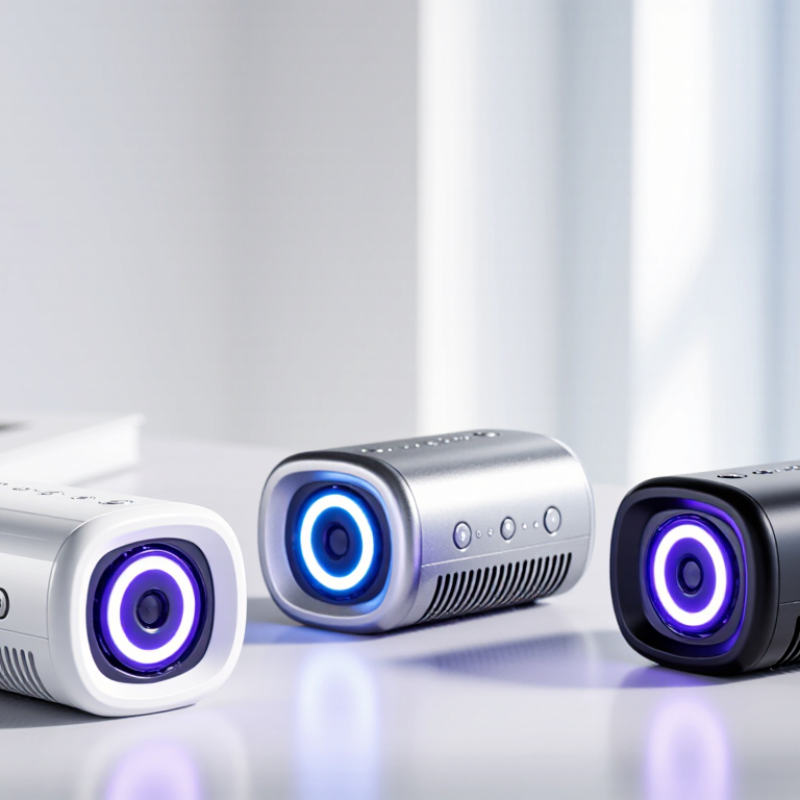
A Handheld Portable Uv Lamp can look reassuring on a product page: a compact body, a bright indicator, and bold claims about cleaning. But appearance is not proof. The important questions are less visible: What wavelength does it emit? What dose reaches the target? How long must the lamp stay in one position? Small details matter.

Industry data needs careful reading, too. Grand View Research’s UV Disinfection Equipment Market report tracks a broad category, not a verified performance ranking of handheld lamps. Its market figures cannot tell you whether one pocket-sized model works better than another. The U.S. Food and Drug Administration warns that UV-C exposure can injure eyes and skin. Treat safety instructions as essential, not fine print. Never point a lamp at people or use it contrary to its manual.

Expert context helps. Columbia University radiologist David J. Brenner studies ultraviolet disinfection. A fair paraphrase of his research is: “UV effectiveness depends on the wavelength and the delivered dose.” That is not a product endorsement. It is a useful buying test. Look for independent test details, clear operating distances, timed exposure guidance, and credible safety controls. A vague “kills germs” label is not enough. Check the evidence.

The best choice may not be the cheapest—or the most powerful-sounding. Compare specifications with the surfaces and routine you actually have in mind. Then pause over one uncomfortable question: can you verify the claims? If not, keep looking.

7 Tips for Buying a Handheld Portable UV Lamp

Identify the UV Lamp Type and Match It to Your Intended Use

A handheld UV lamp is not one universal tool. UVA models, typically around 315–400 nanometers, can reveal fluorescent marks or support compatible resin curing. UVB lamps serve more specialized purposes and require careful handling. UVC lamps are designed for controlled disinfection applications, but exposure can injure eyes and skin. The violet glow alone does not identify a lamp’s wavelength or effectiveness. Check the specifications.

Tips: Match the wavelength to the task, then check the lamp’s stated output. For inspection, test it on a small sample first; some materials fluoresce weakly or not at all. For curing, confirm that your resin responds to that wavelength. For disinfection, follow the device instructions and keep people and pets away from direct exposure. Small details matter.

Look for clear information about wavelength, beam area, operating time, and any required protective measures. A bright lamp is not automatically a suitable one; distance and exposure time can affect results. I would be cautious about vague claims that a lamp “works on everything.” They rarely explain what that means. If the intended task is unclear, compare the lamp’s specifications with guidance from the material or equipment manufacturer before buying. A compact body is convenient, but a secure switch and a stable grip matter when aiming at a small surface.

Identify the UV Lamp Type and Match It to Your Intended Use

UV lamp categories are defined by wavelength. Compare their typical wavelength bands before choosing a handheld lamp.

How to use this chart: UVA lamps are commonly used for fluorescence inspection and UV-A-reactive curing; UVB devices are used for specific phototherapy under medical guidance; and UVC devices are designed for disinfection applications. Wavelength alone does not guarantee effectiveness. UVB and UVC can injure eyes and skin, so follow the device instructions and required safety precautions.

Compare Wavelength, Output, and Effective Coverage

A handheld UV lamp is only useful when its wavelength matches the intended task. UV-A and UV-C are not interchangeable. For surface-treatment claims, check the exact wavelength in nanometers and the manufacturer’s test data. A stated wavelength alone does not prove effectiveness. Small details matter.

Tip: Compare output at a stated distance, not just a headline power figure. Irradiance often falls as the lamp moves farther from a surface, so a reading taken close up may not reflect real use. Look for test conditions, exposure time, and coverage measurements. If those details are missing, comparisons become guesswork.

Effective coverage depends on beam shape, distance, and how evenly the light reaches a surface. A narrow beam may need several overlapping passes across a countertop. Shadows and textured surfaces can leave areas unexposed; UV light does not reliably reach behind objects. Distance changes everything. Check the operating instructions, keep exposure away from eyes and skin, and use only products with clear safety guidance. I would still treat broad coverage claims cautiously unless independent test details support them.

7 Tips for Buying a Handheld Portable UV Lamp - Compare Wavelength, Output, and Effective Coverage

Buying Tip What to Compare Useful Facts Practical Buying Check
1. Match the wavelength to the task Check the specified peak wavelength in nanometers (nm), not just a label such as “UV light.” UVA is approximately 315–400 nm; UVB is 280–315 nm; UVC is 100–280 nm. UVA lamps are commonly used for fluorescence and inspection. Germicidal UV applications use UVC, but effectiveness depends on dose and conditions. Choose a wavelength suited to the intended application. Do not assume a UVA inspection lamp disinfects surfaces.
2. Compare output using the right unit Look for optical output in milliwatts (mW) and, when available, irradiance in milliwatts per square centimeter (mW/cm²) at a stated distance. Optical power describes emitted energy; irradiance describes power received per area. Irradiance changes with distance and beam shape, so output figures without test conditions are difficult to compare. Compare irradiance readings taken at the same distance and under similar measurement conditions.
3. Check the effective coverage Review beam angle, illuminated spot size, and the distance at which the coverage is specified. A wider beam covers a larger area at the same distance but generally spreads the available light over more area. For an idealized beam, spot diameter increases with distance; real beam edges and reflector designs vary. Look for a coverage diagram or measured spot diameter at a stated working distance rather than relying on “wide beam” claims.
4. Evaluate useful performance at your working distance Compare measured irradiance or visibility at the distance you will actually use the lamp. Moving a lamp farther from a target usually reduces irradiance. In an ideal point-source model, it falls approximately with the square of distance, though close-range optics and beam design can change the result. For inspection, check that the target remains clearly visible at your normal distance and under your usual ambient lighting.
5. Consider runtime and power options Check battery type, stated runtime, charging method, and whether performance changes as the battery discharges. Runtime depends on battery capacity, lamp power, operating mode, and battery condition. A runtime figure is most useful when the maker states the mode and test conditions. Choose a rechargeable or replaceable-battery design that suits your usage, and check whether charging can occur safely away from wet work areas.
6. Prioritize UV-specific safety features Check for wavelength and hazard information, a protective lens or shield where appropriate, and clear operating instructions. UV exposure can injure eyes and skin. UVC is particularly hazardous to unprotected eyes and skin; some UV sources may also create other hazards depending on their design and wavelength. Never look directly into a UV source or expose skin unnecessarily. Follow the product instructions and use suitable protective measures for the specified wavelength.
7. Verify specifications and intended use Look for a clearly stated wavelength, output measurement conditions, beam information, and the product’s intended application. UV performance is application-specific. Disinfection, for example, depends on delivered dose, exposure time, distance, shadows, and the target surface; a lamp’s wavelength alone does not establish effectiveness. For any regulated or safety-critical use, verify the specifications and applicable requirements independently instead of relying on broad performance claims.
Safety note: UV lamps can harm eyes and skin. Use a lamp only for its stated purpose, follow its safety instructions, and avoid direct exposure.

Evaluate Safety Controls and Responsible-Use Features

A handheld UV lamp should have safety controls that work without relying on perfect user attention. Look for a shielded design, a timed shutoff, and a switch that prevents accidental activation in a bag. A clear warning label matters. So does a manual explaining the lamp’s wavelength and intended use. Vague claims such as “kills everything” are a reason to pause.

Check whether the device reduces exposure when tilted toward the user or lifted from a surface. Some models include a motion sensor or contact guard, but these features are not a substitute for careful handling. Keep UV light away from eyes and uncovered skin, and never point the lamp at people or pets. Not a small detail. If the instructions are confusing, I would treat that as a real drawback, not a minor inconvenience.

Use the lamp only on suitable, exposed surfaces, following its stated distance and exposure time. Shadows, dust, and textured materials can limit how much light reaches a surface. UV treatment also does not remove grime, so ordinary cleaning may still be needed. Check for credible test information, not just impressive packaging. And remember: a safety feature can fail, or be bypassed by habit. Store the lamp where children cannot turn it on.

Check Portability, Battery Life, and Build Quality

A handheld UV lamp should feel easy to carry without becoming awkward to use. Check its weight, grip, and overall length, especially if you plan to hold it for several minutes. A textured handle can help when your hands are damp, while a protective cap keeps the lamp head from collecting lint in a bag. Weight matters. Look for clear product details about the lamp’s wavelength and intended use; “UV” alone does not tell you what it can reliably do. Avoid assuming that a compact lamp will cover a large area quickly.

Battery life is more useful when the rating reflects actual operating time, not just standby time. Check whether the battery is replaceable or rechargeable, how long charging takes, and whether the charge indicator is easy to read. A low-battery light is a small detail, but it can prevent an interrupted task. Build quality deserves a close look, too: inspect the charging port, switch, seams, and any moving parts for a firm, even fit. A glossy finish can look sturdy without being durable. I’d rather have a plain casing that feels solid than a clever shape with a loose switch. Follow the manufacturer’s safety instructions, and never shine UV light toward eyes or exposed skin.

Review Product Testing, Warranty, and Overall Value

A useful handheld UV lamp should come with clear, relevant test results, not just a polished box. Check the stated wavelength, measured output, and testing distance; performance can change noticeably across a few centimeters. Look for independent test documentation that names the method and conditions. A vague “lab tested” claim tells you little. Ask whether runtime was measured with the supplied battery, since brightness may fall as charge drops. Small details matter.

Tip: Compare the test sheet with the product manual. Check for an automatic shutoff or other safety controls, and follow the maker’s instructions to avoid exposing eyes or skin. Never assume a UV lamp makes every surface safe; results depend on distance, exposure time, and surface shape.

Warranty and overall value deserve equal attention. Read what the warranty covers, how long it lasts, and whether the battery or charger is excluded. Keep the receipt and test the lamp soon after delivery. A longer warranty is useful only if the claim process is clear. Compare replacement battery costs, charging time, and included accessories, not just the checkout price. I’ve seen buyers focus on a low price, then overlook a short return window. That is easy to miss. Choose the lamp whose documented performance, practical support, and expected upkeep fit your actual use.