

News

Miro: A New Standard in Responsible Innovation

Miro: A New Standard in Responsible Innovation The Miro monitor arm is setting new benchmarks in sustainability. It offers a high-performance solution without compromising on environmental responsibility. Designed with careful material selection, local sourcing, and longevity in mind, Miro’s responsible approach to design and unique manoeuvrability set it apart from the competition. Sustainable Choices Miro is crafted from energy-efficient materials with a lower carbon impact....

Read more
HSE Advisor

Role Purpose Support in the development, implementation and maintenance of the company’s Health, Safety & Environmental policies, processes, operational procedures, and standards.  Ensuring best practice and championing a continually improving HSE culture within the business. Key Responsibilities Liaise with and provide support to all areas of the business to eliminate, mitigate or reduce identified HSE exposures. Partner with the production management team and team leaders,...

Read more
CMD Ltd LAUNCHES 48-HOUR TURNAROUND ON BETATRAK® RAPID ORDERING SERVICE

CMD Ltd, the specialist in power distribution systems, workstation power and monitor arms, has launched a rapid ordering service for its Betatrak® underfloor powertrack distribution systems and accessories, with a commitment to delivering within 48-hours of an approved purchase order*. The service enables customers to order up to 50 lengths of Standard or Clean Earth (C/E) low noise Betatrak, along with up to 25 feed...

Read more

CMD INVESTS £1/4 MILLION IN NEW MACHINE AS PART OF FACTORY UPGRADE

We have invested in a new £1/4m TRUMPF CNC metal punch as part of an asset renewal strategy for our UK manufacturing capability. The new machine will be used in the production of a wide variety of our power distribution systems and workstation power products at our Rotherham factory. Suitable for handling sheet metal between 0.9mm and 3.0mm thick, the new machine will replace one...

Read more

CMD CATALOGUE PROVIDES TECHNICAL POWER DISTRIBUTION GUIDE

CMD Ltd has released a new catalogue, providing an easy to follow technical guide to our power distribution systems and plug and play desk modules. Detailing CMD’s full range of UK-manufactured power distribution systems and plug and play desk modules, the catalogue will be a helpful source of information to M&E engineers and contractors alike to understand how our power distribution systems connect together and...

Read more

Power Distribution Catalogue
CMD Ltd PLAYS ESSENTIAL ROLE IN ELECTRICAL FIT OUT AT LONDON’S PRESTIGIOUS OFFICE DEVELOPMENT

CMD Ltd, specialist in workplace connectivity and ergonomic solutions, has provided a flexible and high-quality power distribution network for The Ray, a prestigious office development in London’s Farringdon. Well-known for being the former site of The Guardian newspaper, The Ray now stands as an 83,000ft² office development characterised by a modernised warehouse aesthetic, with level two now occupied by a global social media company. The...

Read more

The Ray
CMD plugs in to european opportunity with Schuko Capsule unit launch

CMD Ltd, the specialist in power and connectivity solutions for commercial environments, has launched a Schuko version of its popular fixed format Capsule workstation power module for export to mainland Europe and beyond. A popular on desk power module comprising two sockets and dual USB (type A and C) chargers, CMD’s Capsule unit is already widely specified in the UK as an off-the-shelf workstation power...

Read more

CMD White Schuko Capsule Desk Power Module
CMD LTD EXTENDS MONITOR ARM RANGE WITH THE LAUNCH OF REACH PLUS

CMD Ltd, the specialist in ergonomic and connectivity solutions for commercial interiors, has completed its Reach monitor arm range with the launch of the Reach Plus. Available in single or dual screen options, the Reach Plus has been designed to provide an ideal solution for both single and dual screen workstation configurations, or can be used with next generation of large format curved screens. Suitable...

Read more

CMD Ltd DEMONSTRATES THE ART OF POWER DISTRIBUTION AT THE UNIVERSITY OF WARWICK

CMD Ltd, the specialist in workplace connectivity and ergonomic solutions, has provided Betatrak busbar power distribution and a range of electrical accessories for two major capital investment projects at the University of Warwick. Designed by Fielden Clegg Bradley Studios, the £33 million Faculty of Arts building is a showpiece development comprising four interconnected structures set around a central atrium, which will enable inter-disciplinary collaboration across...

Read more

University of Warwick
CMD BRINGS HARMONY TO COVENTRY UNIVERSITY RESEARCH FACILITIES

CMD Ltd, the specialist in power distribution solutions and workstation power and ergonomics, has provided under desk and on desk power modules for the refurbishment of three Coventry University research buildings. Located on Coventry University Technology Park, a business park designed to encourage collaboration between the university and knowledge-based businesses, the three buildings are being repurposed as office accommodation for university research teams. The refurbishment...

Read more

Coventry University

What is a Rotary Drilling Rig and How Does It Work?

Rotary Drilling Rigs are vital in the oil and gas industry. They play a significant role in extracting resources from beneath the Earth's surface. According to the International Association of Drilling Contractors, the global drilling industry is expected to grow by 5% over the next five years. This growth is driven by ongoing demand for energy and improvements in drilling technology.

Dr. Emily Jansen, a leading expert in drilling engineering, states, "The Rotary Drilling Rig is the backbone of modern drilling operations." Her insights highlight the importance of these machines in ensuring efficiency and safety in the field. These rigs utilize advanced technology, but many factors can affect their operation, such as geological conditions and equipment maintenance.

While rotary drilling rigs are essential, they are not devoid of challenges. Issues like equipment failure and unexpected geological formations can arise. These factors highlight the need for skilled operators and ongoing training. Continuous improvements in technology and techniques are crucial for better performance and safety standards in the industry.

What is a Rotary Drilling Rig and How Does It Work?

Understanding the Basics of Rotary Drilling Rigs in the Oil and Gas Industry

Rotary drilling rigs play a crucial role in the oil and gas industry. These rigs are specifically designed for the efficient extraction of petroleum and natural gas from deep underground. Understanding how they work requires a look at their core components. The rotating drill bit functions to penetrate rock layers, aided by high-pressure mud. This drilling fluid cools the bit and helps transport drill cuttings to the surface.

Industry reports suggest that the global rotary drilling market was valued at approximately $3.1 billion in 2022. It shows a potential growth rate of 5.2% over the next several years. This reflects the growing demand for oil and gas resources worldwide. However, the efficiency of rotary drilling rigs is not always as high as expected. Some operations face challenges like equipment wear or unexpected geological formations that can slow progress.

Improving drilling efficiency remains a priority. Continuous advancements in technology can aid in real-time data analysis. Enhanced data can lead to better decision-making during drilling operations. Nevertheless, it is essential to balance innovation with cost-effectiveness. Many projects have exceeded budgets due to unexpected technical challenges. A more thorough understanding of these factors can yield better outcomes in future drilling initiatives.

Key Components of a Rotary Drilling Rig and Their Functions

Rotary drilling rigs are essential for various drilling applications, including oil and gas extraction and geological studies. Understanding their key components is crucial for effective operation. The primary element is the drill bit, which pulverizes rock and soil. Typically, bits can penetrate depths up to 30,000 feet, depending on geological conditions. This versatility allows for the exploration of different subsurface environments.

Another vital component is the drill pipe. It connects the rig to the drill bit, transmitting both rotational and downward force. Drill pipes are commonly made from high-strength steel, ensuring durability and resistance to wear. Industry studies indicate that about 20% of drilling failures can be linked to improper pipe usage or maintenance. Regular checks are essential to avoid downtime and maintain safety standards.

The rotary table and motion system play critical roles in ensuring efficient drilling. The rotary table provides the necessary torque to rotate the drill pipe. Meanwhile, the motion system controls the rig's vertical movement, adjusting to precise depths. Research has shown that optimizing these components can enhance drilling efficiency by up to 25%. However, technical complexities remain, and ongoing training is crucial for operators to fully leverage their rig's capabilities.

Operational Mechanism: How Rotary Drilling Works in Depth

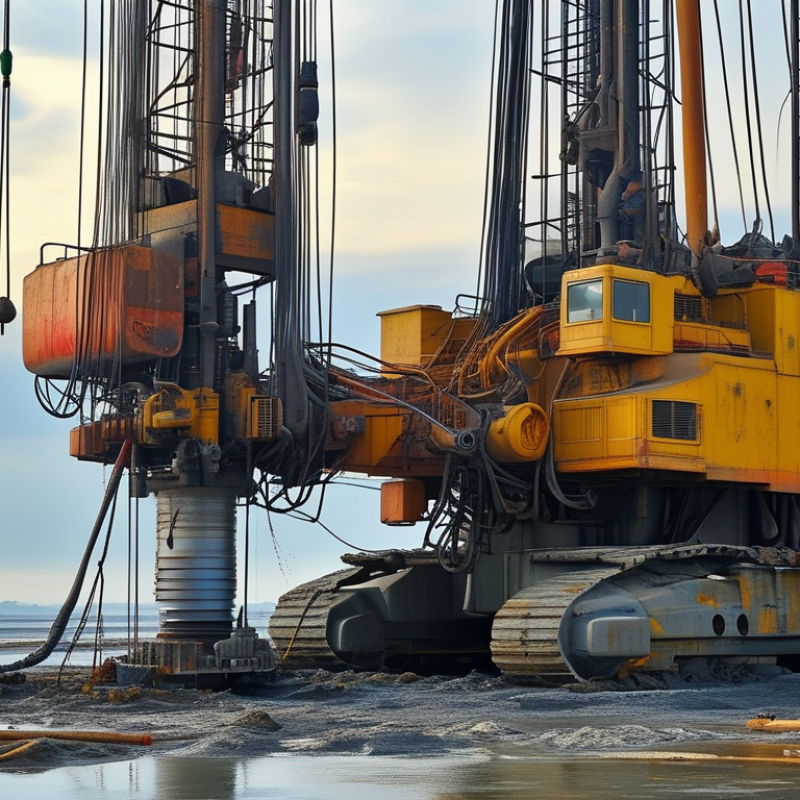
Rotary drilling rigs are essential for exploring and extracting resources from the earth. The operational mechanism involves a rotating drill bit that cuts through rock and soil. This bit is attached to a series of drill pipes, which provide both stability and a means to transport drilling fluid. As the rig rotates, the weight of the drill string aids in penetrating harder materials. The drilling fluid plays a crucial role, cooling the bit and carrying cuttings to the surface.

The design of a rotary drilling rig allows for various depths and angles of drilling. Rig components, like the draw works and the rotary table, work harmoniously to ensure efficient operation. Adjustments may be needed during drilling, often requiring a pause to analyze geological formations. This necessity highlights a common challenge in rotary drilling. Operators must remain vigilant and adapt to unexpected changes. Each drilling site presents unique conditions, demanding a blend of expertise and equipment adjustments for optimal results. Balancing speed and safety in the process is a constant reflection point for teams in the field.

Current Market Trends and Statistics in Rotary Drilling Technology

The rotary drilling technology market is evolving rapidly. With the increasing demand for energy, the use of rotary drilling rigs is becoming more common in various sectors. This includes oil, gas, and even mineral exploration. Recent reports indicate that the global rotary drilling market is expected to grow significantly in the coming years.

Key drivers of this growth include advancements in drilling technologies. Techniques such as automated drilling and real-time data analytics are enhancing efficiency. Operators are now able to drill deeper and more accurately than ever before. However, there are challenges too. High operational costs and environmental concerns often hinder progress. Companies must balance these challenges with the need for innovation.

Market trends also show a shift towards sustainable practices. The industry is exploring eco-friendly drilling methods. While these methods are promising, they require further research and development. It's a work in progress, and many companies are still figuring it out. As the rotary drilling landscape continues to change, staying informed and adaptable will be crucial for all stakeholders.

Safety Standards and Best Practices for Operating Rotary Drilling Rigs

Operating rotary drilling rigs requires strict adherence to safety standards and best practices. According to the International Association of Drilling Contractors, approximately 60% of drilling-related incidents arise from inadequate safety measures. Ensuring that all personnel are aware of their roles and responsibilities is crucial. Training sessions should cover emergency procedures and equipment operation. Regular drills can reinforce knowledge and readiness.

Regular inspections are essential in maintaining the rig’s safety integrity. According to a report from the American Petroleum Institute, around 35% of equipment failures are attributed to poor maintenance. Implementing a robust maintenance schedule can significantly reduce risks. Workers should also wear appropriate personal protective equipment. This simple step minimizes injury potential. Communication among crew members is vital. Using clear signals can prevent misunderstandings and accidents.

Additionally, it's important to assess the operational environment. Weather conditions can greatly affect drilling activities. The Occupational Safety and Health Administration emphasizes the need for constant monitoring of weather updates. In adverse weather, operations should be paused. Reflecting on past incidents can also provide valuable lessons. Analyzing near misses encourages a culture of safety awareness and continuous improvement.

What is a Rotary Drilling Rig and How Does It Work? - Safety Standards and Best Practices for Operating Rotary Drilling Rigs

Aspect Description
Definition A rotary drilling rig is a machine used to drill wells for oil, gas, and water by rotating a drill bit.
Components Includes the drill string, drill bit, motor, mud pumps, and derrick.
Working Principle The drill bit is rotated and pushed downward to break rock formations while drilling fluid is circulated to cool the bit and carry cuttings to the surface.
Safety Standards Follow OSHA regulations and industry standards to ensure worker safety during operation.
Best Practices Regularly inspect equipment, provide proper training, and maintain clear communication among crew members.
Environmental Considerations Implement measures to minimize spills and contamination, and follow local environmental regulations.
Maintenance Conduct routine maintenance checks on hydraulic systems, electrical components, and drilling equipment.