

News

Miro: A New Standard in Responsible Innovation

Miro: A New Standard in Responsible Innovation The Miro monitor arm is setting new benchmarks in sustainability. It offers a high-performance solution without compromising on environmental responsibility. Designed with careful material selection, local sourcing, and longevity in mind, Miro’s responsible approach to design and unique manoeuvrability set it apart from the competition. Sustainable Choices Miro is crafted from energy-efficient materials with a lower carbon impact....

Read more
HSE Advisor

Role Purpose Support in the development, implementation and maintenance of the company’s Health, Safety & Environmental policies, processes, operational procedures, and standards.  Ensuring best practice and championing a continually improving HSE culture within the business. Key Responsibilities Liaise with and provide support to all areas of the business to eliminate, mitigate or reduce identified HSE exposures. Partner with the production management team and team leaders,...

Read more
CMD Ltd LAUNCHES 48-HOUR TURNAROUND ON BETATRAK® RAPID ORDERING SERVICE

CMD Ltd, the specialist in power distribution systems, workstation power and monitor arms, has launched a rapid ordering service for its Betatrak® underfloor powertrack distribution systems and accessories, with a commitment to delivering within 48-hours of an approved purchase order*. The service enables customers to order up to 50 lengths of Standard or Clean Earth (C/E) low noise Betatrak, along with up to 25 feed...

Read more

CMD INVESTS £1/4 MILLION IN NEW MACHINE AS PART OF FACTORY UPGRADE

We have invested in a new £1/4m TRUMPF CNC metal punch as part of an asset renewal strategy for our UK manufacturing capability. The new machine will be used in the production of a wide variety of our power distribution systems and workstation power products at our Rotherham factory. Suitable for handling sheet metal between 0.9mm and 3.0mm thick, the new machine will replace one...

Read more

CMD CATALOGUE PROVIDES TECHNICAL POWER DISTRIBUTION GUIDE

CMD Ltd has released a new catalogue, providing an easy to follow technical guide to our power distribution systems and plug and play desk modules. Detailing CMD’s full range of UK-manufactured power distribution systems and plug and play desk modules, the catalogue will be a helpful source of information to M&E engineers and contractors alike to understand how our power distribution systems connect together and...

Read more

Power Distribution Catalogue
CMD Ltd PLAYS ESSENTIAL ROLE IN ELECTRICAL FIT OUT AT LONDON’S PRESTIGIOUS OFFICE DEVELOPMENT

CMD Ltd, specialist in workplace connectivity and ergonomic solutions, has provided a flexible and high-quality power distribution network for The Ray, a prestigious office development in London’s Farringdon. Well-known for being the former site of The Guardian newspaper, The Ray now stands as an 83,000ft² office development characterised by a modernised warehouse aesthetic, with level two now occupied by a global social media company. The...

Read more

The Ray
CMD plugs in to european opportunity with Schuko Capsule unit launch

CMD Ltd, the specialist in power and connectivity solutions for commercial environments, has launched a Schuko version of its popular fixed format Capsule workstation power module for export to mainland Europe and beyond. A popular on desk power module comprising two sockets and dual USB (type A and C) chargers, CMD’s Capsule unit is already widely specified in the UK as an off-the-shelf workstation power...

Read more

CMD White Schuko Capsule Desk Power Module
CMD LTD EXTENDS MONITOR ARM RANGE WITH THE LAUNCH OF REACH PLUS

CMD Ltd, the specialist in ergonomic and connectivity solutions for commercial interiors, has completed its Reach monitor arm range with the launch of the Reach Plus. Available in single or dual screen options, the Reach Plus has been designed to provide an ideal solution for both single and dual screen workstation configurations, or can be used with next generation of large format curved screens. Suitable...

Read more

CMD Ltd DEMONSTRATES THE ART OF POWER DISTRIBUTION AT THE UNIVERSITY OF WARWICK

CMD Ltd, the specialist in workplace connectivity and ergonomic solutions, has provided Betatrak busbar power distribution and a range of electrical accessories for two major capital investment projects at the University of Warwick. Designed by Fielden Clegg Bradley Studios, the £33 million Faculty of Arts building is a showpiece development comprising four interconnected structures set around a central atrium, which will enable inter-disciplinary collaboration across...

Read more

University of Warwick
CMD BRINGS HARMONY TO COVENTRY UNIVERSITY RESEARCH FACILITIES

CMD Ltd, the specialist in power distribution solutions and workstation power and ergonomics, has provided under desk and on desk power modules for the refurbishment of three Coventry University research buildings. Located on Coventry University Technology Park, a business park designed to encourage collaboration between the university and knowledge-based businesses, the three buildings are being repurposed as office accommodation for university research teams. The refurbishment...

Read more

Coventry University

What is Power Supply Control Board and How Does It Work?

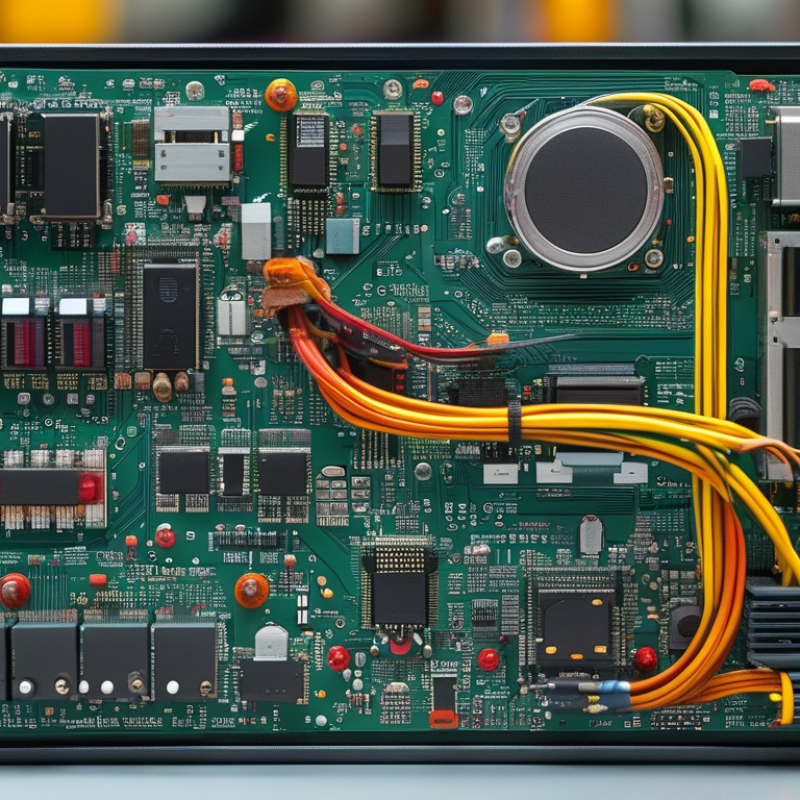
The Power Supply Control Board is a crucial component in electronic systems. It regulates power distribution and ensures reliable operation. Understanding its functions can significantly impact the performance of devices.

This board manages voltage and current levels. It prevents fluctuations that could damage sensitive components. By maintaining stable power, the Power Supply Control Board enhances system longevity. Yet, not all boards are created equal. Factors like design quality and circuitry play roles in reliability.

With advancements in technology, these boards have evolved. Some come with sophisticated monitoring features. Despite this, some still face challenges in real-world applications. Users must consider their specific needs when selecting a board. Recognizing these dynamics is essential for optimal performance.

What is Power Supply Control Board and How Does It Work?

What is a Power Supply Control Board?

A Power Supply Control Board is crucial in regulating electronic devices' power supply. It manages voltage and current flow, ensuring devices receive the proper electrical supply. In a typical electronic device, the control board can prevent overheating and voltage spikes. According to a report by MarketsandMarkets, the global power supply market is expected to reach over $30 billion by 2025. This growth highlights the relevance of efficient power management systems.


The design of a Power Supply Control Board involves several components. These include transformers, capacitors, and voltage regulators. They work together to convert and stabilize power. When these components fail or are improperly configured, devices may malfunction. A study from ResearchAndMarkets indicates that improper power regulation is a leading cause of electronic device failure. This statistic emphasizes the need for precise design and control.


Despite advancements, challenges persist in technology development. Balancing efficiency and cost often leads to compromises. Engineers must evaluate trade-offs when designing these boards. Emerging trends, such as miniaturization, push engineers to innovate continuously. The growing demand for portable devices highlights the necessity for reliable power supply management.

Key Components of a Power Supply Control Board

Power Supply Control Boards (PSCBs) are essential in managing the output of power supplies for various devices. These boards help ensure that voltage and current levels remain stable and within safe limits. Understanding their components can provide insight into their operation.

A PSCB typically comprises several key components. The voltage regulator manages the output voltage, ensuring it matches the required levels for the system. Capacitors store energy and help filter out voltage spikes. Inductors serve to smooth the current flow. Each component plays a vital role in maintaining performance.

Tips: Always check the specifications of the components before assembly. Mismatched parts can lead to inefficiencies.

Another important element is the feedback mechanism. This system monitors the output and adjusts the voltage as needed. It safeguards against overheating and overvoltage conditions. For optimal performance, proper thermal management is required.

Tips: Keep the board clean to prevent dust buildup. This can affect functionality over time.

Understanding these components allows engineers to troubleshoot and optimize power supply designs effectively. Every adjustment can influence overall performance, making it essential to test and validate configurations regularly.

Power Supply Control Board - Efficiency Ratings

How Power Supply Control Boards Regulate Voltage and Current

Power Supply Control Boards are essential components in various electronic systems. They play a critical role in regulating voltage and current. According to a recent report by Research and Markets, the global power supply market is expected to reach $39.4 billion by 2028, highlighting the importance of these systems in modern technology.

These boards utilize a variety of techniques, including pulse-width modulation (PWM) and feedback control loops, to maintain stable output. Voltage regulation ensures devices operate within safe limits, preventing damage. Current regulation prevents overload situations, contributing to system longevity. An imbalance in these controls could lead to device failures, which emphasizes the need for high-quality components.

However, not all boards are created equal. A report by Technavio estimates a 4% drop in efficiency across poorly designed power supply systems. This indicates that businesses must prioritize design quality. Subpar components can result in energy losses, leading to higher operational costs. Investing in reliable boards will pay off in the long run.

What is Power Supply Control Board and How Does It Work?

Parameter Description Typical Values Function
Voltage Regulation Maintaining a consistent output voltage 3.3V, 5V, 12V Prevents device overvoltage
Current Regulation Controlling the output current 1A, 2A, 4A Protects against overheating
Efficiency Ratio of output power to input power > 85% Reduces energy consumption
Protection Features Safety mechanisms to prevent damage Overvoltage, Overcurrent, Short Circuit Enhances reliability
Control Type Method to regulate voltage & current Analog, Digital Determines response efficiency

Common Applications of Power Supply Control Boards

Power supply control boards play a crucial role in modern electronics. They are widely used in various applications, ensuring stable power delivery across devices. According to a recent report by MarketsandMarkets, the global power supply control board market is expected to reach $11.2 billion by 2025, reflecting a steady growth driven by increasing demand in sectors like automotive and consumer electronics.

In automotive applications, these boards help manage power in electric vehicles. They optimize energy use, increasing efficiency and extending battery life. The International Energy Agency predicts that the number of electric cars on the road will surpass 145 million by 2030. This growth will likely intensify the need for advanced power supply control solutions. However, challenges remain in ensuring that these systems are both reliable and cost-effective.

In consumer electronics, power supply boards enable devices to operate efficiently. They are fundamental in smartphones, laptops, and home appliances. The rise of smart devices has increased demand for sophisticated power management. Yet, manufacturers face ongoing hurdles in balancing performance with safety standards. The complex nature of power supply design requires continuous refinement and adaptation to meet evolving industry regulations and user expectations.

Troubleshooting Issues with Power Supply Control Boards

Power supply control boards are crucial components in electronic devices. They regulate voltage and current to ensure optimal performance. However, various issues can arise, leading to malfunctions. Common problems include overheating, failure to power up, or inconsistent output. Effective troubleshooting is key to identifying and resolving these issues.

When faced with a non-responsive power supply board, the first step is to check the connections. Loose or damaged wires can obstruct power flow. Inspecting the components visually can also reveal burnt or damaged capacitors. These are signs of stress or overloading. If you notice any discoloration, it may indicate a failure. Evaluating the circuitry for shorts or breaks is vital. Using a multimeter can help measure continuity and voltage levels, guiding you in diagnosing the fault.

Always remember to follow safety protocols while troubleshooting. Discharge any capacitors before handling to avoid shocks. While some issues may seem straightforward, the complexities of power supply designs can lead to unexpected findings. Keeping a detailed log of symptoms and test results can assist in formulating an effective repair strategy. Reflection on past repairs can provide invaluable insights for future troubleshooting efforts.