

News

Miro: A New Standard in Responsible Innovation

Miro: A New Standard in Responsible Innovation The Miro monitor arm is setting new benchmarks in sustainability. It offers a high-performance solution without compromising on environmental responsibility. Designed with careful material selection, local sourcing, and longevity in mind, Miro’s responsible approach to design and unique manoeuvrability set it apart from the competition. Sustainable Choices Miro is crafted from energy-efficient materials with a lower carbon impact....

Read more
HSE Advisor

Role Purpose Support in the development, implementation and maintenance of the company’s Health, Safety & Environmental policies, processes, operational procedures, and standards.  Ensuring best practice and championing a continually improving HSE culture within the business. Key Responsibilities Liaise with and provide support to all areas of the business to eliminate, mitigate or reduce identified HSE exposures. Partner with the production management team and team leaders,...

Read more
CMD Ltd LAUNCHES 48-HOUR TURNAROUND ON BETATRAK® RAPID ORDERING SERVICE

CMD Ltd, the specialist in power distribution systems, workstation power and monitor arms, has launched a rapid ordering service for its Betatrak® underfloor powertrack distribution systems and accessories, with a commitment to delivering within 48-hours of an approved purchase order*. The service enables customers to order up to 50 lengths of Standard or Clean Earth (C/E) low noise Betatrak, along with up to 25 feed...

Read more

CMD INVESTS £1/4 MILLION IN NEW MACHINE AS PART OF FACTORY UPGRADE

We have invested in a new £1/4m TRUMPF CNC metal punch as part of an asset renewal strategy for our UK manufacturing capability. The new machine will be used in the production of a wide variety of our power distribution systems and workstation power products at our Rotherham factory. Suitable for handling sheet metal between 0.9mm and 3.0mm thick, the new machine will replace one...

Read more

CMD CATALOGUE PROVIDES TECHNICAL POWER DISTRIBUTION GUIDE

CMD Ltd has released a new catalogue, providing an easy to follow technical guide to our power distribution systems and plug and play desk modules. Detailing CMD’s full range of UK-manufactured power distribution systems and plug and play desk modules, the catalogue will be a helpful source of information to M&E engineers and contractors alike to understand how our power distribution systems connect together and...

Read more

Power Distribution Catalogue
CMD Ltd PLAYS ESSENTIAL ROLE IN ELECTRICAL FIT OUT AT LONDON’S PRESTIGIOUS OFFICE DEVELOPMENT

CMD Ltd, specialist in workplace connectivity and ergonomic solutions, has provided a flexible and high-quality power distribution network for The Ray, a prestigious office development in London’s Farringdon. Well-known for being the former site of The Guardian newspaper, The Ray now stands as an 83,000ft² office development characterised by a modernised warehouse aesthetic, with level two now occupied by a global social media company. The...

Read more

The Ray
CMD plugs in to european opportunity with Schuko Capsule unit launch

CMD Ltd, the specialist in power and connectivity solutions for commercial environments, has launched a Schuko version of its popular fixed format Capsule workstation power module for export to mainland Europe and beyond. A popular on desk power module comprising two sockets and dual USB (type A and C) chargers, CMD’s Capsule unit is already widely specified in the UK as an off-the-shelf workstation power...

Read more

CMD White Schuko Capsule Desk Power Module
CMD LTD EXTENDS MONITOR ARM RANGE WITH THE LAUNCH OF REACH PLUS

CMD Ltd, the specialist in ergonomic and connectivity solutions for commercial interiors, has completed its Reach monitor arm range with the launch of the Reach Plus. Available in single or dual screen options, the Reach Plus has been designed to provide an ideal solution for both single and dual screen workstation configurations, or can be used with next generation of large format curved screens. Suitable...

Read more

CMD Ltd DEMONSTRATES THE ART OF POWER DISTRIBUTION AT THE UNIVERSITY OF WARWICK

CMD Ltd, the specialist in workplace connectivity and ergonomic solutions, has provided Betatrak busbar power distribution and a range of electrical accessories for two major capital investment projects at the University of Warwick. Designed by Fielden Clegg Bradley Studios, the £33 million Faculty of Arts building is a showpiece development comprising four interconnected structures set around a central atrium, which will enable inter-disciplinary collaboration across...

Read more

University of Warwick
CMD BRINGS HARMONY TO COVENTRY UNIVERSITY RESEARCH FACILITIES

CMD Ltd, the specialist in power distribution solutions and workstation power and ergonomics, has provided under desk and on desk power modules for the refurbishment of three Coventry University research buildings. Located on Coventry University Technology Park, a business park designed to encourage collaboration between the university and knowledge-based businesses, the three buildings are being repurposed as office accommodation for university research teams. The refurbishment...

Read more

Coventry University

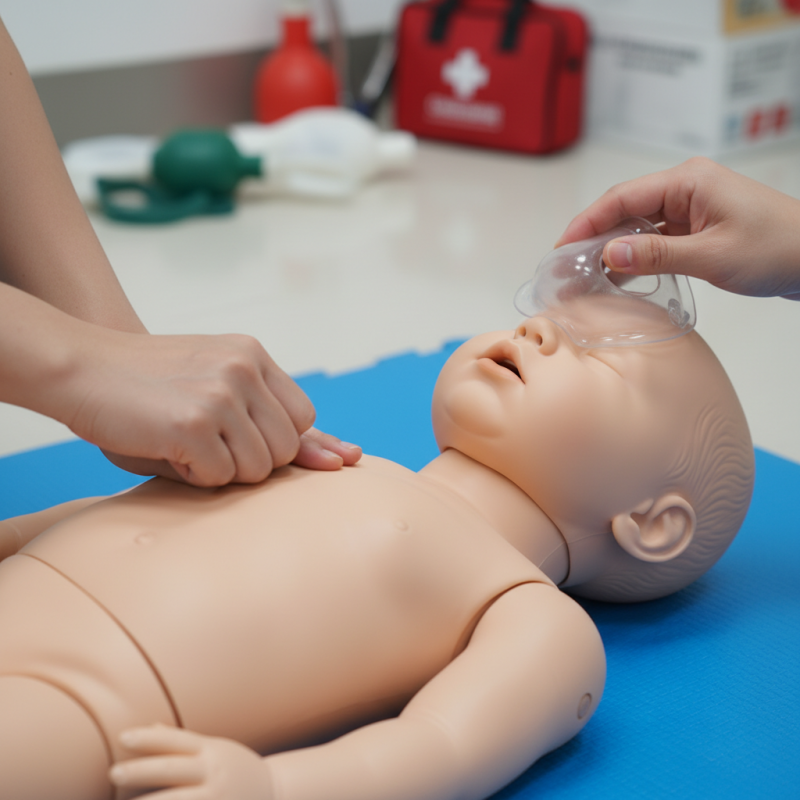
Why Choose Infant Series CPR Training Simulator for Effective Learning?

In today's world, infant CPR training is vital for caregivers. The Infant Series CPR Training Simulator offers a realistic and engaging learning experience. It allows participants to practice life-saving techniques with confidence.

This simulator closely mimics the anatomy and physiology of an infant. With lifelike features, learners can feel the feedback needed to master CPR skills. It builds muscle memory and enhances the comfort level in emergency situations. Many training programs lack adequate hands-on practice, which can lead to gaps in knowledge.

Using the Infant Series CPR Training Simulator highlights the importance of effective learning. However, not all simulators are created equal. Some may fall short in realism or functionality. It is essential to choose a reliable tool that fosters genuine skills. Ultimately, investing in quality training leads to better preparedness during emergencies.

Why Choose Infant Series CPR Training Simulator for Effective Learning?

Benefits of Using Infant CPR Training Simulators for Skills Practice

Infant CPR training simulators are essential tools for effective learning. They provide realistic scenarios that improve skills significantly. These simulators mimic the physical characteristics of an infant, allowing learners to practice techniques crucial for saving lives. The tactile feedback received during practice enhances muscle memory.


One key advantage of using simulators is the confidence they instill in trainees. Practicing on a lifelike model reduces anxiety. This prepares individuals for real-life emergencies. Instructors can offer immediate feedback, helping learners correct their techniques. Simulation offers a safe space for mistakes. Each error becomes a learning opportunity.


Tips for effective practice include focusing on the rhythm of chest compressions. Ensure your hand placement is correct and try different scenarios. This can facilitate better understanding. Always review your performance critically after each session. Reflecting on areas to improve can deepen your skills.

Realistic Scenarios Offered by Infant CPR Training Simulators

Infant CPR training simulators provide lifelike scenarios that enhance learning and retention. They replicate real-life situations for caregivers, fostering a deeper understanding of infant emergencies. Studies show that practical experience improves recall. Participants often retain skills better than through lectures alone. A report from the American Heart Association emphasizes experiential learning's effectiveness. According to their findings, learners apply skills 30% better when using simulation training.

These simulators allow for repeated practice. Caregivers can experience diverse scenarios, such as choking or cardiac arrest. Each scenario challenges the learner, pushing them to think critically under pressure. However, it’s essential to recognize that these simulations are not perfect. Some learners may struggle with a lack of realism. They might not feel the same anxiety as in a real emergency. This discrepancy highlights the need for continual reflection and improvement.

Furthermore, the feedback mechanism within these simulators is vital. Participants often receive real-time analysis of their techniques. This feedback is crucial for growth and skill development. Yet, a gap remains in how learners translate these skills back into real life. Empirical studies suggest a notable variance in performance during actual emergencies. This observation calls for ongoing training and evaluation to bridge the gap between simulated and real-world applications.

Impact of Simulator Training on Learner Confidence and Competence

Simulator training has a profound impact on learner confidence and competence in CPR. According to a study published in the Journal of Emergency Medical Services, 75% of participants reported increased confidence after simulation training. This is crucial in a high-stakes environment, where timely intervention can save lives. The realistic setting provided by infant CPR simulators mimics real-life situations, fostering familiarity and reducing anxiety. By practicing on lifelike dummies, learners gain the muscle memory necessary for effective responses.

Hands-on experience is invaluable. Simulation allows learners to make mistakes in a safe environment. A survey by the American Heart Association revealed that 80% of healthcare professionals felt better prepared after using simulators. This training leads to improved skills retention, which is vital during emergencies. Engaging with simulators enables learners to face challenges and build resilience.

**Tip:** Focus on practice, not just theory. Repeated simulations enhance your instincts.

Moreover, feedback is essential for growth. Instructors can guide learners, highlighting areas for improvement. Consistent practice can alleviate common errors. Encourage peers to offer constructive criticism. By engaging in a culture of feedback, competence rises.

**Tip:** Record your practice sessions. Reviewing your performance can reveal areas that need attention.

Impact of Infant Series CPR Training Simulator on Learner Confidence and Competence

Comparison of Infant CPR Training Simulators with Traditional Methods

Infant CPR training simulators offer a more hands-on approach than traditional methods. The interactive nature fosters better engagement among learners. Participants can practice techniques in real-time, enhancing their muscle memory. Traditional methods often rely on passive learning, leading to gaps in skills. With simulators, trainers can assess performance and provide immediate feedback. This is crucial for grasping essential life-saving skills.

Simulators also create a safe environment for mistakes. In reality, the stakes are high, and errors can have severe consequences. By allowing learners to make mistakes in a controlled setting, they can reflect on their actions and improve. Traditional training often lacks this level of realism. Learners might leave unsure of their capabilities, while simulators boost confidence through practice.

Moreover, simulators replicate a variety of scenarios that traditional methods cannot replicate. Learners can experience different situations, adjusting their responses accordingly. However, it's essential to acknowledge that simulators cannot fully replace human instruction. The importance of real-life demonstrations and anecdotes from experienced trainers remains invaluable. Using simulators alongside traditional methods can yield the most effective learning outcomes.

Essential Features to Look for in Infant CPR Training Simulators

When selecting an infant CPR training simulator, certain essential features stand out. Realism is a key factor. The simulator should closely mimic an actual infant's anatomy, allowing learners to practice with a lifelike model. Features like realistic chest rise, feedback on compression depth, and the correct placement of hands can greatly enhance the learning experience.

Another critical aspect is the feedback system. An effective simulator provides immediate, detailed feedback on performance. This helps learners identify their strengths and weaknesses. Visual indicators can assist learners in perfecting their technique. For instance, a system that measures compression rate can guide them to maintain an ideal tempo during practice.

Durability and ease of use are also important. The simulator should withstand repeated use and be easy to clean. Some trainers may offer additional resources, like instructional videos or online access to updated guidelines. Learners may feel overwhelmed by the information in these resources, making it essential for these tools to be user-friendly and straightforward. This accessibility can bridge the gap between knowledge and practice, although not all simulators achieve this flawlessly.