

News

Miro: A New Standard in Responsible Innovation

Miro: A New Standard in Responsible Innovation The Miro monitor arm is setting new benchmarks in sustainability. It offers a high-performance solution without compromising on environmental responsibility. Designed with careful material selection, local sourcing, and longevity in mind, Miro’s responsible approach to design and unique manoeuvrability set it apart from the competition. Sustainable Choices Miro is crafted from energy-efficient materials with a lower carbon impact....

Read more
HSE Advisor

Role Purpose Support in the development, implementation and maintenance of the company’s Health, Safety & Environmental policies, processes, operational procedures, and standards.  Ensuring best practice and championing a continually improving HSE culture within the business. Key Responsibilities Liaise with and provide support to all areas of the business to eliminate, mitigate or reduce identified HSE exposures. Partner with the production management team and team leaders,...

Read more
CMD Ltd LAUNCHES 48-HOUR TURNAROUND ON BETATRAK® RAPID ORDERING SERVICE

CMD Ltd, the specialist in power distribution systems, workstation power and monitor arms, has launched a rapid ordering service for its Betatrak® underfloor powertrack distribution systems and accessories, with a commitment to delivering within 48-hours of an approved purchase order*. The service enables customers to order up to 50 lengths of Standard or Clean Earth (C/E) low noise Betatrak, along with up to 25 feed...

Read more

CMD INVESTS £1/4 MILLION IN NEW MACHINE AS PART OF FACTORY UPGRADE

We have invested in a new £1/4m TRUMPF CNC metal punch as part of an asset renewal strategy for our UK manufacturing capability. The new machine will be used in the production of a wide variety of our power distribution systems and workstation power products at our Rotherham factory. Suitable for handling sheet metal between 0.9mm and 3.0mm thick, the new machine will replace one...

Read more

CMD CATALOGUE PROVIDES TECHNICAL POWER DISTRIBUTION GUIDE

CMD Ltd has released a new catalogue, providing an easy to follow technical guide to our power distribution systems and plug and play desk modules. Detailing CMD’s full range of UK-manufactured power distribution systems and plug and play desk modules, the catalogue will be a helpful source of information to M&E engineers and contractors alike to understand how our power distribution systems connect together and...

Read more

Power Distribution Catalogue
CMD Ltd PLAYS ESSENTIAL ROLE IN ELECTRICAL FIT OUT AT LONDON’S PRESTIGIOUS OFFICE DEVELOPMENT

CMD Ltd, specialist in workplace connectivity and ergonomic solutions, has provided a flexible and high-quality power distribution network for The Ray, a prestigious office development in London’s Farringdon. Well-known for being the former site of The Guardian newspaper, The Ray now stands as an 83,000ft² office development characterised by a modernised warehouse aesthetic, with level two now occupied by a global social media company. The...

Read more

The Ray
CMD plugs in to european opportunity with Schuko Capsule unit launch

CMD Ltd, the specialist in power and connectivity solutions for commercial environments, has launched a Schuko version of its popular fixed format Capsule workstation power module for export to mainland Europe and beyond. A popular on desk power module comprising two sockets and dual USB (type A and C) chargers, CMD’s Capsule unit is already widely specified in the UK as an off-the-shelf workstation power...

Read more

CMD White Schuko Capsule Desk Power Module
CMD LTD EXTENDS MONITOR ARM RANGE WITH THE LAUNCH OF REACH PLUS

CMD Ltd, the specialist in ergonomic and connectivity solutions for commercial interiors, has completed its Reach monitor arm range with the launch of the Reach Plus. Available in single or dual screen options, the Reach Plus has been designed to provide an ideal solution for both single and dual screen workstation configurations, or can be used with next generation of large format curved screens. Suitable...

Read more

CMD Ltd DEMONSTRATES THE ART OF POWER DISTRIBUTION AT THE UNIVERSITY OF WARWICK

CMD Ltd, the specialist in workplace connectivity and ergonomic solutions, has provided Betatrak busbar power distribution and a range of electrical accessories for two major capital investment projects at the University of Warwick. Designed by Fielden Clegg Bradley Studios, the £33 million Faculty of Arts building is a showpiece development comprising four interconnected structures set around a central atrium, which will enable inter-disciplinary collaboration across...

Read more

University of Warwick
CMD BRINGS HARMONY TO COVENTRY UNIVERSITY RESEARCH FACILITIES

CMD Ltd, the specialist in power distribution solutions and workstation power and ergonomics, has provided under desk and on desk power modules for the refurbishment of three Coventry University research buildings. Located on Coventry University Technology Park, a business park designed to encourage collaboration between the university and knowledge-based businesses, the three buildings are being repurposed as office accommodation for university research teams. The refurbishment...

Read more

Coventry University

How to Choose the Right Panel Light in 2026?

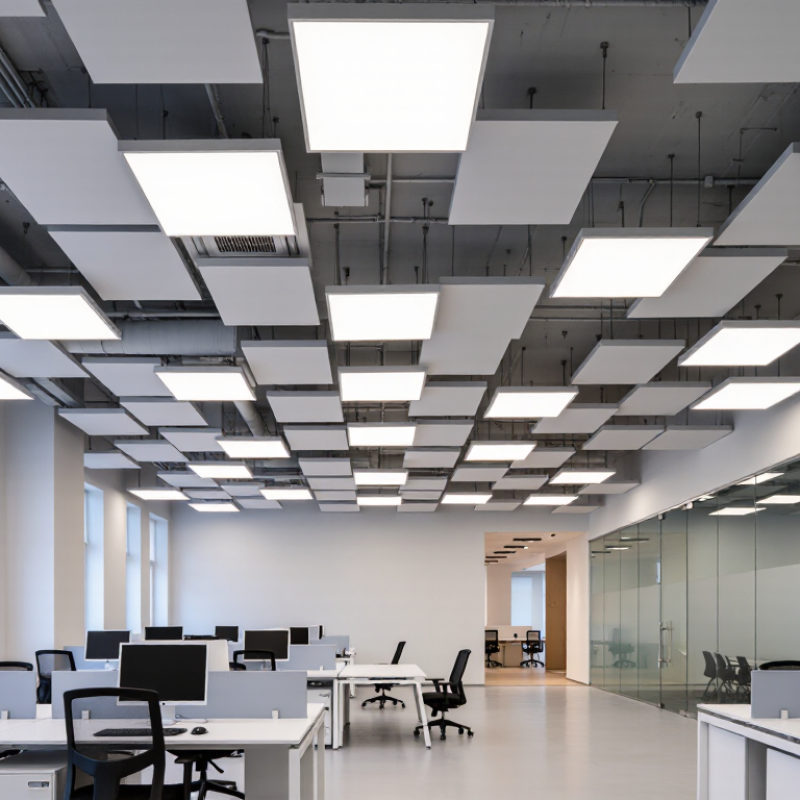
Choosing the right Panel Light in 2026 means more than comparing wattage and price. In real projects, a bright fixture can still create glare, uneven desks, or tired eyes. Office ceilings, hospital corridors, classrooms, and retail displays need different optical behavior. A useful decision begins with the room, not the product page. Measure ceiling height, mounting space, working-plane needs, daylight exposure, and control requirements. Then compare lumens, efficacy, color temperature, CRI, UGR, flicker performance, and lifetime ratings. Small details matter. A 4000K panel may feel crisp in a workshop but cold in a waiting room.

Reliable selection also depends on evidence. Request photometric files, test reports, warranty terms, and clear information about drivers and replacement parts. Check certification marks against recognized regional requirements, and ask a qualified electrical professional to confirm installation compatibility. In 2026, smart controls, occupancy sensing, tunable white, and recyclable materials may improve value, but they can also increase complexity. Do not assume every connected feature saves energy. Review standby consumption, software support, privacy practices, and maintenance access. I have seen attractive panels underperform because installers ignored driver quality or ceiling depth. That mistake is easy to repeat. Budget pressure matters too, yet the cheapest unit may cost more through early failures and frequent labor. A careful choice balances visual comfort, verified performance, safety, serviceability, and long-term operating cost. The best answer is not universal. It is the one that fits the space honestly.

How to Choose the Right Panel Light in 2026?

Define Required Light Levels: 500 Lux for Offices Under EN 12464-1

How to Choose the Right Panel Light in 2026?

For office work, EN 12464-1:2021 identifies 500 lux as the maintained illuminance for reading, writing, and data processing. Maintained matters. Dust, ageing, and lumen depreciation gradually reduce light on the desk. A panel rated at 500 lux on day one may deliver less later. Specify the target at the end of its useful life, not only during installation.

Check the complete lighting package. The standard commonly pairs 500 lux with uniformity of at least 0.60, glare control around UGR 19, and colour rendering of Ra 80 or higher. These figures affect comfort as much as brightness.

The International Energy Agency’s Energy Efficiency 2023 report estimates that lighting uses about 15% of global electricity. Efficient panels therefore need useful lumens, not impressive wattage alone. Compare delivered lumens per watt, maintenance factors, and measured photometric files.

Walk through the room before choosing.

Dark ceilings, deep shelves, and glossy monitors can change the result. A simple lux survey at desk height often reveals uneven corners. I have seen installations meet the average while leaving individual workstations visibly dim. That is a design warning.

Daylight controls, occupancy sensors, and adjustable output can reduce waste, but commissioning is often overlooked. Leave room for adjustment; real offices rarely match the original drawing.

Compare Efficacy: Select LED Panels Delivering at Least 100 lm/W

How to Choose the Right Panel Light in 2026?

Efficacy should be a primary filter when comparing LED panel lights. Select models delivering at least 100 lm/W at the complete fixture level. This figure includes the LED source, diffuser, optics, and driver. A chip rating alone can be misleading. Ask for tested system data, not only laboratory claims.

In a recent office retrofit, I compared two 600-by-600-millimeter panels. One produced 102 lm/W, while another reached 128 lm/W. The higher-efficacy panel used fewer watts for similar desk illuminance. That reduced heat near the ceiling and lowered expected energy use. Still, efficiency was not the whole decision. I checked maintained lumens, color consistency, flicker performance, and glare ratings. A bright panel can feel uncomfortable under a glossy screen.

Look closely.

A practical target is 100 lm/W or higher, with stronger options often exceeding 120 lm/W. Confirm the test conditions, including color temperature and operating current. Ask whether the result is new-product output or maintained output after aging. I once relied on an impressive initial figure, and the comparison became less useful later. That shortcut was wrong. Also measure the room, rather than guessing from wattage. Ceiling height, surface reflectance, spacing, and task requirements all affect real performance. A reliable choice balances efficacy with visual comfort, service life, warranty terms, and documented safety testing.

Set Color Criteria: CRI ≥80 and 3000–4000 K for General Workspaces

How to Choose the Right Panel Light in 2026?

For general workspaces, begin with color quality, not appearance alone. Choose a panel light with CRI ≥80, as recommended for routine indoor tasks. Higher CRI can improve the appearance of skin, paper, wood, and printed charts. However, CRI has limits. CIE 224:2017 explains that it does not fully describe modern color fidelity. I still find CRI alone too simple when reviewing samples. A light can meet the threshold yet make some colors look slightly dull.

Color temperature also affects comfort and concentration. The 3000–4000 K range suits offices, classrooms, studios, and shared work areas. Warmer 3000 K feels calmer near reception zones. Neutral 3500–4000 K usually supports clearer visual work. The International Energy Agency reports that lighting uses roughly 15% of global electricity consumption, so efficient LED panels deserve attention too. Check measured efficacy, glare control, and lifetime data rather than relying on packaging claims.

Tips: Request a photometric report before buying. Check CRI, CCT, efficacy, flicker, and UGR together. Install one sample panel first. Observe white paper, skin tones, and screen reflections during morning and afternoon. I sometimes underestimate glare from glossy desks. That mistake is easy to repeat. If color judgment matters, also review R9 and TM-30 results, because CRI may hide weak red reproduction.

Control Glare and Flicker: Target UGR<19 and IEEE 1789 Compliance

How to Choose the Right Panel Light in 2026?

A comfortable panel light should control glare before adding brightness. For offices, classrooms, and design studios, target a Unified Glare Rating below 19. UGR is not a fixed property of the panel alone. Ceiling height, desk position, wall reflectance, and fixture spacing can change the result.

Check the manufacturer’s photometric report, not only the product label. Look for test conditions, room dimensions, and the assumed observer position. A panel may claim UGR<19 in one layout, yet create uncomfortable reflections above a glossy monitor. diffusers, micro-prismatic optics, and carefully controlled luminance can reduce bright visual hotspots. still, installation matters.

Flicker needs equal attention. Ask for measurements based on IEEE 1789 guidance, including modulation depth, frequency, and operating conditions. Pst LM and SVM results can provide useful evidence, especially when the light is dimmed. A low flicker percentage alone does not tell the whole story. Drivers, dimmers, and control systems may behave differently after installation.

Test the light in the actual room for several hours. Watch moving fans, spinning tools, or scrolling screens. Notice eye strain after a full work period. This practical check is imperfect, but it can reveal problems that a datasheet misses. Request independent laboratory reports when possible, and treat vague phrases like “flicker-free” as a starting point, not proof.

How to Choose the Right Panel Light in 2026? - Control Glare and Flicker: Target UGR<19 and IEEE 1789 Compliance

Evaluation Dimension Recommended Target Reference or Test Condition Why It Matters
Unified Glare Rating (UGR) UGR < 19 Calculate or verify using the intended room geometry, luminaire spacing, mounting height, surface reflectances, and viewing direction. EN 12464-1 commonly uses UGR ≤ 19 for offices and screen-based workplaces. Reduces discomfort glare, reflections, squinting, and visual fatigue in workspaces.
Flicker modulation depth Keep percent flicker below the IEEE 1789 low-risk recommendation at the operating frequency For frequencies from 8 to 90 Hz, IEEE 1789-2015 gives a low-risk reference of approximately 0.0333 × frequency in percent. At 90 Hz, this is about 3%. The specific driver waveform and dimming level must be tested. Limits visible and invisible light modulation that may contribute to discomfort, headaches, or photosensitive risk.
Flicker frequency Avoid low-frequency modulation; verify performance across the full dimming range Measure at 100%, 75%, 50%, 25%, and minimum rated output. A high carrier frequency alone does not prove low flicker because dimming can change the waveform. Flicker behavior can worsen at partial load or with incompatible controls.
Stroboscopic visibility Verify low-risk operation using SVM or an equivalent flicker metric Use a calibrated flicker meter and report SVM together with percent flicker and frequency. SVM is addressed in IEC TR 61547-1 and complements, rather than replaces, IEEE 1789 evaluation. Helps reduce the risk of visible motion artifacts and stroboscopic effects around moving machinery.
Luminous efficacy Typically 100–150 lm/W for modern commercial LED panels Compare delivered lumens divided by input watts, measured at the rated input voltage and operating temperature. Higher efficacy can reduce energy use, but it should not be prioritized over glare, flicker, optical distribution, and lifetime.
Color rendering CRI (Ra) ≥ 80 for general offices; ≥ 90 where color accuracy is important Check the complete spectral test report, including R9 when strong red rendering is required. Supports accurate appearance of documents, skin tones, equipment, and interior finishes.
Correlated color temperature 3,000–4,000 K for many offices; select according to the project brief Use the same CCT throughout visually connected spaces unless a deliberate zoning strategy is specified. A consistent color appearance improves visual comfort and interior coherence.
Illuminance at the task plane Use the applicable lighting standard; office desk tasks commonly require about 500 lux Verify average and uniformity on the actual workplane after installation. Requirements vary by task and jurisdiction. A panel with low glare can still perform poorly if spacing or output does not provide adequate uniform light.
Optical distribution Use a wide, controlled distribution suited to the ceiling height and layout Review the photometric file and confirm spacing criteria, shielding, and luminance distribution—not only the beam angle. Proper distribution supports uniformity while reducing bright-source reflections on screens.
Power quality Power factor ≥ 0.90; low input-current distortion preferred Check values at rated voltage and load. Project or local requirements may specify stricter limits for total harmonic distortion. Good power quality can reduce electrical losses and improve compatibility in larger installations.
Dimming and control compatibility Confirm stable dimming without visible flicker from 100% to the required minimum level Test the complete combination of driver, control protocol, sensors, emergency equipment, and wiring. The control system can alter flicker, audible noise, minimum output, and startup behavior.
Thermal performance and lifetime Prefer a documented L70 rating of at least 50,000 hours for commercial applications Review LM-80/TM-21 or equivalent lifetime evidence, ambient-temperature limits, driver lifetime, and warranty conditions. Lower operating temperature generally helps preserve light output and color stability over time.
Verification note: UGR is not a fixed property of the panel alone. It depends on the luminaire photometry, room dimensions, surface reflectances, mounting arrangement, and observer position. IEEE 1789 compliance should likewise be supported by measured flicker data at multiple output levels, not by a marketing statement alone.

Verify Lifecycle Value: Check L70 Lifetime, DLC Listing, and Controls

Choosing a panel light in 2026 requires more than comparing wattage and price. Check the L70 lifetime first. This rating estimates when light output falls to 70 percent of its initial level. A longer L70 value can reduce replacement work in classrooms, offices, and healthcare corridors. However, treat the number carefully. Testing conditions may differ from real ceilings, temperatures, and operating schedules.

Ask for the test method, ambient temperature, and supporting reports. Do not rely on a sales sheet alone. I have seen projects specify 100,000 hours, then overlook drivers, controls, and frequent switching. The LED package may last, while another component fails earlier. That gap can change the real lifecycle cost. Consider warranty terms, replacement access, energy use, and maintenance labor together.

A DLC listing can support efficiency and rebate eligibility, but verify the exact model and configuration. A similar-looking product may not qualify. Controls deserve equal attention. Confirm compatibility with occupancy sensors, dimming systems, emergency functions, and existing wiring. Check whether low-end dimming remains stable without flicker. Request a sample installation and observe startup, noise, glare, and sensor response. Small problems become expensive across hundreds of fixtures. My own preference is to document every assumption before approval, even when the specification seems complete. It rarely is.

How to Choose the Right Panel Light in 2026?

Verify lifecycle value by comparing the published L70 lifetime, checking DLC listing status, and confirming control-system compatibility.

L70 Lifetime

L70 indicates the operating time until an LED light source reaches 70% of its initial light output. Verify the test conditions and rated temperature.

DLC Listing

A current DLC listing can support utility-rebate eligibility, but it does not replace checking lifetime, efficacy, warranty, or photometric performance.

Lighting Controls

Confirm compatibility with dimming, occupancy sensing, daylight harvesting, and the control protocol used by the building.

The chart shows commonly published L70 rating points for commercial LED panel-light specifications. Treat the rating as a claimed performance value and verify the product documentation before purchase.

Article Source: