

News

Miro: A New Standard in Responsible Innovation

Miro: A New Standard in Responsible Innovation The Miro monitor arm is setting new benchmarks in sustainability. It offers a high-performance solution without compromising on environmental responsibility. Designed with careful material selection, local sourcing, and longevity in mind, Miro’s responsible approach to design and unique manoeuvrability set it apart from the competition. Sustainable Choices Miro is crafted from energy-efficient materials with a lower carbon impact....

Read more
HSE Advisor

Role Purpose Support in the development, implementation and maintenance of the company’s Health, Safety & Environmental policies, processes, operational procedures, and standards.  Ensuring best practice and championing a continually improving HSE culture within the business. Key Responsibilities Liaise with and provide support to all areas of the business to eliminate, mitigate or reduce identified HSE exposures. Partner with the production management team and team leaders,...

Read more
CMD Ltd LAUNCHES 48-HOUR TURNAROUND ON BETATRAK® RAPID ORDERING SERVICE

CMD Ltd, the specialist in power distribution systems, workstation power and monitor arms, has launched a rapid ordering service for its Betatrak® underfloor powertrack distribution systems and accessories, with a commitment to delivering within 48-hours of an approved purchase order*. The service enables customers to order up to 50 lengths of Standard or Clean Earth (C/E) low noise Betatrak, along with up to 25 feed...

Read more

CMD INVESTS £1/4 MILLION IN NEW MACHINE AS PART OF FACTORY UPGRADE

We have invested in a new £1/4m TRUMPF CNC metal punch as part of an asset renewal strategy for our UK manufacturing capability. The new machine will be used in the production of a wide variety of our power distribution systems and workstation power products at our Rotherham factory. Suitable for handling sheet metal between 0.9mm and 3.0mm thick, the new machine will replace one...

Read more

CMD CATALOGUE PROVIDES TECHNICAL POWER DISTRIBUTION GUIDE

CMD Ltd has released a new catalogue, providing an easy to follow technical guide to our power distribution systems and plug and play desk modules. Detailing CMD’s full range of UK-manufactured power distribution systems and plug and play desk modules, the catalogue will be a helpful source of information to M&E engineers and contractors alike to understand how our power distribution systems connect together and...

Read more

Power Distribution Catalogue
CMD Ltd PLAYS ESSENTIAL ROLE IN ELECTRICAL FIT OUT AT LONDON’S PRESTIGIOUS OFFICE DEVELOPMENT

CMD Ltd, specialist in workplace connectivity and ergonomic solutions, has provided a flexible and high-quality power distribution network for The Ray, a prestigious office development in London’s Farringdon. Well-known for being the former site of The Guardian newspaper, The Ray now stands as an 83,000ft² office development characterised by a modernised warehouse aesthetic, with level two now occupied by a global social media company. The...

Read more

The Ray
CMD plugs in to european opportunity with Schuko Capsule unit launch

CMD Ltd, the specialist in power and connectivity solutions for commercial environments, has launched a Schuko version of its popular fixed format Capsule workstation power module for export to mainland Europe and beyond. A popular on desk power module comprising two sockets and dual USB (type A and C) chargers, CMD’s Capsule unit is already widely specified in the UK as an off-the-shelf workstation power...

Read more

CMD White Schuko Capsule Desk Power Module
CMD LTD EXTENDS MONITOR ARM RANGE WITH THE LAUNCH OF REACH PLUS

CMD Ltd, the specialist in ergonomic and connectivity solutions for commercial interiors, has completed its Reach monitor arm range with the launch of the Reach Plus. Available in single or dual screen options, the Reach Plus has been designed to provide an ideal solution for both single and dual screen workstation configurations, or can be used with next generation of large format curved screens. Suitable...

Read more

CMD Ltd DEMONSTRATES THE ART OF POWER DISTRIBUTION AT THE UNIVERSITY OF WARWICK

CMD Ltd, the specialist in workplace connectivity and ergonomic solutions, has provided Betatrak busbar power distribution and a range of electrical accessories for two major capital investment projects at the University of Warwick. Designed by Fielden Clegg Bradley Studios, the £33 million Faculty of Arts building is a showpiece development comprising four interconnected structures set around a central atrium, which will enable inter-disciplinary collaboration across...

Read more

University of Warwick
CMD BRINGS HARMONY TO COVENTRY UNIVERSITY RESEARCH FACILITIES

CMD Ltd, the specialist in power distribution solutions and workstation power and ergonomics, has provided under desk and on desk power modules for the refurbishment of three Coventry University research buildings. Located on Coventry University Technology Park, a business park designed to encourage collaboration between the university and knowledge-based businesses, the three buildings are being repurposed as office accommodation for university research teams. The refurbishment...

Read more

Coventry University

How to Choose the Best CNG Gas Generator Set?

Choosing the right Cng Gas Generator Set is not simply a matter of comparing engine size or purchase price. The decision affects fuel costs, electrical stability, maintenance time, and long-term operating safety. A unit that looks efficient on paper may perform poorly under dusty conditions, unstable gas pressure, or frequent load changes.

“Reliable generation begins with matching the machine to the real operating profile, not the advertised peak rating,” says Michael R. Haines, an independent gas-power systems consultant with more than two decades of field experience. His point deserves attention. Many buyers focus on maximum output, then discover that their facility usually runs at partial load. That mismatch can increase fuel consumption and shorten maintenance intervals.

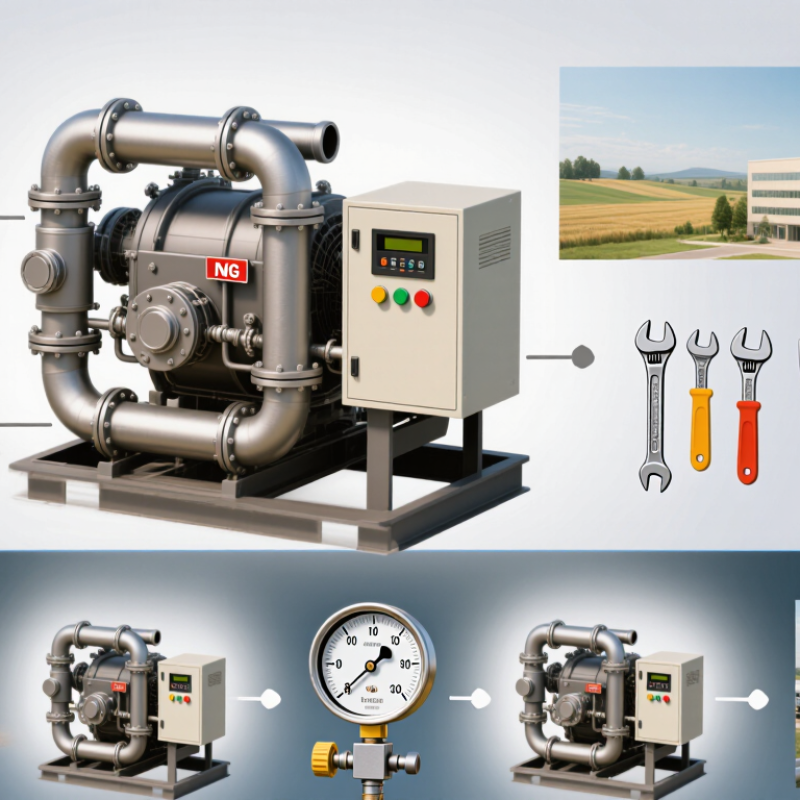
A careful evaluation should examine rated and standby power, methane content, gas pressure, altitude, ambient temperature, and expected daily runtime. Check the alternator, voltage regulation, cooling system, control panel, and emissions documentation. Ask for test records under realistic loads. A showroom demonstration is not enough.

Think about the installation site. Will the generator operate beside workshops, farms, hospitals, or remote pipelines? Is ventilation adequate? Can technicians reach the filters, spark plugs, valves, and control cabinet without dismantling equipment? Small details become expensive problems later.

There is no universal best model. A lower-capacity unit may be wiser for a steady base load. A larger unit may suit sudden demand, but only with proper load management. Specifications can mislead. Real conditions decide performance.

This guide explains how to compare Cng Gas Generator Set options with practical judgment, verified data, and a willingness to question attractive claims.

How to Choose the Best CNG Gas Generator Set?

Define Your Power Requirements and Operating Conditions

How to Choose the Best CNG Gas Generator Set?

Define Your Power Requirements and Operating Conditions

Choosing a CNG gas generator set begins with your actual electrical load, not its advertised output. Record the equipment running during normal hours, peak periods, and emergency starts. Include motors, pumps, compressors, lighting, and control systems. Starting current can briefly exceed running demand by several times. A small error here may cause nuisance shutdowns.

Build a simple load schedule with kilowatts, power factor, starting method, and operating hours. Note which loads are essential. A hospital backup system and a workshop rarely need the same configuration. Measure real consumption when possible. Estimates often look precise but remain assumptions. That deserves a second check.

Operating conditions also shape generator performance. Confirm CNG pressure, gas composition, supply stability, and available pipe capacity. Low pressure can reduce output or interrupt combustion. Record site altitude and seasonal temperatures, especially for outdoor installations. Hot air and high elevations can lower engine performance. Check ventilation, exhaust routing, noise limits, and enclosure requirements. Leave space for maintenance access.

Consider how often the set will run. Continuous operation demands careful attention to cooling, lubrication, service intervals, and fuel quality. Standby units may face long idle periods, so scheduled testing matters. Ask a qualified engineer to review short-circuit capacity, synchronization, grounding, and local installation requirements. The final selection should match measured demand, site realities, and a practical maintenance plan.

Compare CNG Generator Types, Capacities, and Engine Configurations

How to Choose the Best CNG Gas Generator Set?

Choosing a CNG generator starts with the load, not the catalog rating. List essential equipment, motor-starting currents, and future expansion. A 500 kW average load may need a 700 kW set during pump or compressor startup. Measure the load profile for several days. A neat spreadsheet can still mislead.

Compare standby, prime, and continuous-duty generators carefully. Standby units suit occasional outages, while prime models support changing loads over long operating periods. Continuous-duty sets require stronger cooling, lubrication, and control systems. Enclosed sets reduce noise near offices, but open frames simplify inspection and airflow. Site temperature, altitude, ventilation, and gas pressure can reduce actual output.

Engine configuration also changes operating results. Spark-ignited engines are common for CNG because they suit controlled gas combustion. Lean-burn designs can reduce fuel use under steady loads, while stoichiometric engines may offer tighter emissions control. Turbocharged engines provide higher power from smaller packages, but they need clean gas and disciplined maintenance. Inline engines often simplify access. V-type engines can deliver more power within a shorter frame. Neither is automatically better.

Check whether the engine accepts the local gas composition and methane number. Gas quality can vary between supply networks. Confirm pressure stability, regulator capacity, and fuel filtration before purchase. A technician should verify generator response during sudden load changes. This step is often skipped. That is a mistake. Consider parallel operation when loads vary widely, because two smaller sets may run more efficiently than one oversized machine. Allow room for service access, exhaust routing, and safe ventilation.

Evaluate Fuel Efficiency, Emissions, and Total Operating Costs

How to Choose the Best CNG Gas Generator Set?

Evaluate Fuel Efficiency, Emissions, and Total Operating Costs

Choosing a CNG generator starts with your actual load profile, not the rated output alone. Record power demand during quiet nights, production peaks, and weekend shutdowns. A set operating near its efficient load range usually consumes less gas per kilowatt-hour. Ask for fuel consumption data at 25%, 50%, 75%, and 100% load. Test conditions matter, especially at high altitude or in hot weather.

Emissions need careful checking. CNG generally produces fewer particulates and lower nitrogen oxide emissions than many diesel systems. However, methane slip can reduce its climate advantage. Confirm emissions measurements, exhaust treatment requirements, and monitoring procedures before purchase. Local gas pressure also affects performance. A stable supply, suitable regulator, and correctly sized piping can prevent unstable operation and unexpected shutdowns.

Tips: Compare total ownership costs over five years. Include gas, electricity for compression, filters, oil, maintenance labor, installation, noise control, and downtime. Include the ugly costs. A cheaper unit may need frequent service or operate poorly at low loads. Combined heat and power can improve value when hot water is continuously needed. Still, do not assume it will. Check the real heat demand first, then compare measured data with supplier claims. A site visit and an independent technical review are worthwhile.

Check Safety Features, Maintenance Needs, and Control Systems

Choosing the best CNG gas generator set requires more than comparing output ratings. Safety features deserve close attention. Look for automatic gas shutoff, leak detection, emergency stop buttons, and ventilation monitoring. The enclosure should protect operators from hot surfaces and moving parts. During generator-room inspections, I also check whether exhaust pipes are secure and routed away from air intakes. Small installation errors can create serious hazards.

Maintenance needs should be practical, not merely impressive on paper. Ask how often filters, spark plugs, valves, and coolant require inspection. Check whether technicians can reach these parts without removing half the enclosure. Keep a clear service log with operating hours, alarm records, and replaced components. CNG systems need regular leak checks. Never ignore a faint gas smell. A qualified professional should investigate it immediately.

The control system affects daily reliability. Choose a panel that displays pressure, temperature, load, oil status, and fault codes clearly. Remote monitoring can help, but local controls must remain usable during network failures. Test automatic start and shutdown functions under controlled conditions. A checklist helps.

But it is not perfect.

Sensors can drift, and alarms may be misunderstood by inexperienced operators. Training should include realistic fault simulations, not only classroom instructions. Confirm that the control system supports required protection settings and local electrical standards. Before purchase, ask for maintenance access, alarm histories, wiring diagrams, and commissioning procedures. Those details often reveal more than a polished specification sheet.

Assess Supplier Support, Compliance, Warranty, and Long-Term Value

How to Choose the Best CNG Gas Generator Set?

A reliable CNG generator set depends on more than output and purchase price. Assess the supplier’s technical experience, installation guidance, and service response before signing an order. Ask for load calculations, gas pressure requirements, maintenance intervals, and verified performance data. A serious supplier should explain how the unit performs during cold starts, variable loads, and extended operation.

Compliance must match the installation location. Request documentation for electrical safety, emissions, noise limits, pressure systems, and local grid requirements. Confirm that testing covers the complete generator set, not only the engine. Warranty terms also need careful reading. Check coverage for the engine, alternator, control panel, and gas train. Ask who pays for labor, transport, and replacement parts. A fast response sounds useful, but a written service commitment is stronger. Long-term value includes fuel efficiency, spare-parts availability, technician training, and realistic maintenance costs.

Tips: Compare three supplier proposals using the same load profile. Visit an operating installation if possible. Inspect the control panel, cable routing, ventilation, and maintenance access. Ask for a five-year cost estimate. Do not trust impressive numbers without test conditions. A low price may hide weak support. I would still question any warranty with unclear exclusions, even when the equipment looks technically strong. Small details often decide whether the generator remains dependable after the first year.