

News

Miro: A New Standard in Responsible Innovation

Miro: A New Standard in Responsible Innovation The Miro monitor arm is setting new benchmarks in sustainability. It offers a high-performance solution without compromising on environmental responsibility. Designed with careful material selection, local sourcing, and longevity in mind, Miro’s responsible approach to design and unique manoeuvrability set it apart from the competition. Sustainable Choices Miro is crafted from energy-efficient materials with a lower carbon impact....

Read more
HSE Advisor

Role Purpose Support in the development, implementation and maintenance of the company’s Health, Safety & Environmental policies, processes, operational procedures, and standards.  Ensuring best practice and championing a continually improving HSE culture within the business. Key Responsibilities Liaise with and provide support to all areas of the business to eliminate, mitigate or reduce identified HSE exposures. Partner with the production management team and team leaders,...

Read more
CMD Ltd LAUNCHES 48-HOUR TURNAROUND ON BETATRAK® RAPID ORDERING SERVICE

CMD Ltd, the specialist in power distribution systems, workstation power and monitor arms, has launched a rapid ordering service for its Betatrak® underfloor powertrack distribution systems and accessories, with a commitment to delivering within 48-hours of an approved purchase order*. The service enables customers to order up to 50 lengths of Standard or Clean Earth (C/E) low noise Betatrak, along with up to 25 feed...

Read more

CMD INVESTS £1/4 MILLION IN NEW MACHINE AS PART OF FACTORY UPGRADE

We have invested in a new £1/4m TRUMPF CNC metal punch as part of an asset renewal strategy for our UK manufacturing capability. The new machine will be used in the production of a wide variety of our power distribution systems and workstation power products at our Rotherham factory. Suitable for handling sheet metal between 0.9mm and 3.0mm thick, the new machine will replace one...

Read more

CMD CATALOGUE PROVIDES TECHNICAL POWER DISTRIBUTION GUIDE

CMD Ltd has released a new catalogue, providing an easy to follow technical guide to our power distribution systems and plug and play desk modules. Detailing CMD’s full range of UK-manufactured power distribution systems and plug and play desk modules, the catalogue will be a helpful source of information to M&E engineers and contractors alike to understand how our power distribution systems connect together and...

Read more

Power Distribution Catalogue
CMD Ltd PLAYS ESSENTIAL ROLE IN ELECTRICAL FIT OUT AT LONDON’S PRESTIGIOUS OFFICE DEVELOPMENT

CMD Ltd, specialist in workplace connectivity and ergonomic solutions, has provided a flexible and high-quality power distribution network for The Ray, a prestigious office development in London’s Farringdon. Well-known for being the former site of The Guardian newspaper, The Ray now stands as an 83,000ft² office development characterised by a modernised warehouse aesthetic, with level two now occupied by a global social media company. The...

Read more

The Ray
CMD plugs in to european opportunity with Schuko Capsule unit launch

CMD Ltd, the specialist in power and connectivity solutions for commercial environments, has launched a Schuko version of its popular fixed format Capsule workstation power module for export to mainland Europe and beyond. A popular on desk power module comprising two sockets and dual USB (type A and C) chargers, CMD’s Capsule unit is already widely specified in the UK as an off-the-shelf workstation power...

Read more

CMD White Schuko Capsule Desk Power Module
CMD LTD EXTENDS MONITOR ARM RANGE WITH THE LAUNCH OF REACH PLUS

CMD Ltd, the specialist in ergonomic and connectivity solutions for commercial interiors, has completed its Reach monitor arm range with the launch of the Reach Plus. Available in single or dual screen options, the Reach Plus has been designed to provide an ideal solution for both single and dual screen workstation configurations, or can be used with next generation of large format curved screens. Suitable...

Read more

CMD Ltd DEMONSTRATES THE ART OF POWER DISTRIBUTION AT THE UNIVERSITY OF WARWICK

CMD Ltd, the specialist in workplace connectivity and ergonomic solutions, has provided Betatrak busbar power distribution and a range of electrical accessories for two major capital investment projects at the University of Warwick. Designed by Fielden Clegg Bradley Studios, the £33 million Faculty of Arts building is a showpiece development comprising four interconnected structures set around a central atrium, which will enable inter-disciplinary collaboration across...

Read more

University of Warwick
CMD BRINGS HARMONY TO COVENTRY UNIVERSITY RESEARCH FACILITIES

CMD Ltd, the specialist in power distribution solutions and workstation power and ergonomics, has provided under desk and on desk power modules for the refurbishment of three Coventry University research buildings. Located on Coventry University Technology Park, a business park designed to encourage collaboration between the university and knowledge-based businesses, the three buildings are being repurposed as office accommodation for university research teams. The refurbishment...

Read more

Coventry University

China Top Granite Ruler Suppliers How to Choose?

Choosing among China’s top granite ruler suppliers requires more than comparing prices and polished product photos. A granite ruler is a precision reference tool, not simply a heavy stone bar. Its flatness, surface finish, thermal stability, and edge quality can influence inspection results. Buyers should examine the granite grade, dimensions, tolerance data, and calibration method before requesting a quotation. Clear technical drawings matter.

Reliable suppliers usually provide inspection reports, traceable calibration records, and detailed packaging plans. Ask whether calibration follows recognized practices, such as ISO/IEC 17025-supported laboratory procedures. Confirm how the supplier controls lapping, cleaning, temperature, and handling. Even small dust particles can affect contact measurements. Packaging should include rigid support, moisture protection, shock indicators, and a practical lifting solution. Granite is strong, but careless transport can still damage its edges.

Supplier experience deserves close attention. Request production photographs, sample reports, export references, and answers from a qualified technical representative. Do not rely on vague claims like “high precision” without numerical tolerances. A factory may offer an attractive price, yet weaker documentation can create hidden costs later. No supplier is perfect. This guide should not replace an independent inspection when accuracy is critical. Buyers should also compare lead time, after-sales support, replacement policies, and communication quality. A useful supplier explains limitations honestly and recommends suitable specifications instead of overselling. The final decision should balance measurable accuracy, proven manufacturing control, total cost, and dependable service. Look beyond the catalog.

China Top Granite Ruler Suppliers How to Choose?

What Is a Granite Ruler and Why Supplier Selection Matters

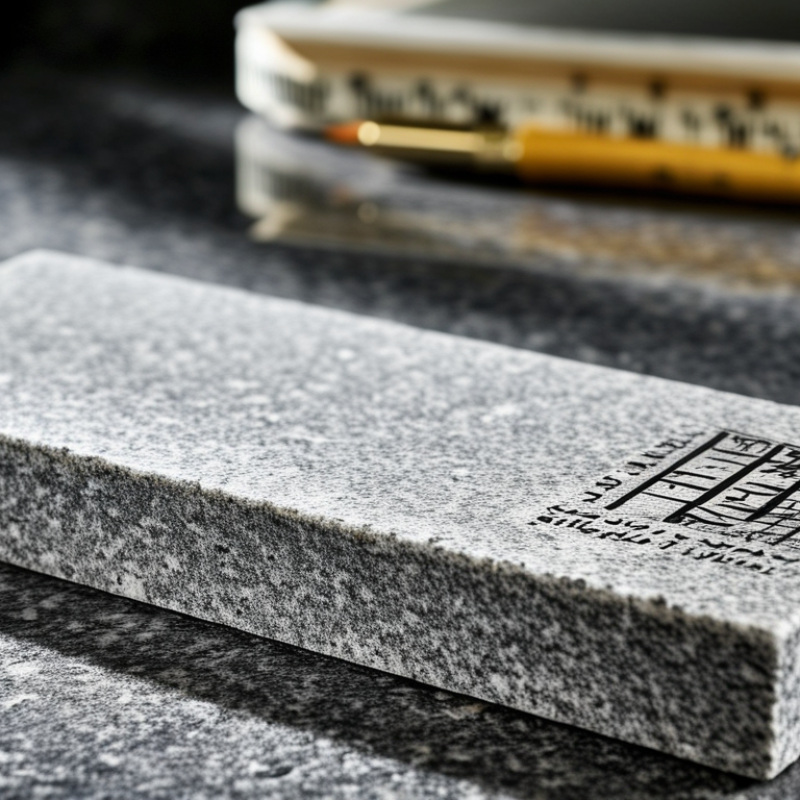
A granite ruler is a precision straightedge used to check flatness, straightness, and surface alignment. Made from stable, dense granite, it resists rust and changes shape slowly during normal workshop use. Its dark surface also makes fine gaps easier to see with light or feeler gauges. However, even good granite can suffer from chips, stains, or uneven support.

Supplier selection matters because accuracy begins before the ruler reaches your inspection table. An experienced supplier should explain granite grade, surface finish, tolerance, size options, and calibration methods clearly. Ask for a traceable calibration report, inspection records, protective packaging, and practical replacement support. In China, capable suppliers may offer custom lengths, lifting holes, and carefully ground edges. Yet a polished catalog is not proof. Request sample data or a video inspection when possible. I have seen buyers focus on price and overlook storage conditions. That mistake can become expensive.

Tips: Compare stated tolerances, not only prices. Check whether the ruler is supported at recommended points during measurement. Confirm packing details, because one small impact can affect a precision edge. Ask how the supplier handles reinspection after delivery. Leave room for doubt. Suppliers that welcome technical questions usually inspire more confidence than those promising perfect results without evidence.

China Top Granite Ruler Suppliers: How to Choose?

What Is a Granite Ruler and Why Supplier Selection Matters

A granite ruler is a precision straightedge used to check flatness, alignment, and straightness. Granite is widely selected because it is wear-resistant, non-magnetic, corrosion-resistant, and dimensionally stable.

The chart compares representative linear thermal expansion coefficients. Lower expansion generally means less dimensional change during temperature variation. When choosing a supplier, verify granite quality, flatness tolerance, calibration traceability, surface finish, edge protection, inspection records, and export packaging.

Data shown are representative engineering values in µm/m·°C; actual values vary by material composition, grade, and manufacturing process.

Key Quality Standards for Evaluating Granite Ruler Suppliers

China Top Granite Ruler Suppliers: How to Choose?

Choosing a granite ruler supplier requires more than comparing prices. The key test is measurable quality. Ask for the granite grade, flatness tolerance, repeatability data, and calibration records. A reliable supplier should explain how technicians inspect each working surface. Look for controlled grinding, stable temperature conditions, and traceable measuring equipment. In practical inspections, a smooth surface can still contain small high spots. Do not judge quality by appearance alone. Some suppliers provide detailed reports, but the report format may need closer review.

Tips: Request a sample inspection report before ordering. Check the stated flatness value, inspection method, instrument accuracy, and calibration date. Confirm whether the certificate matches the exact ruler size and serial number. Ask for photos showing surface finishing and edge protection. Clear answers matter.

Material stability also deserves attention. Dense, fine-grained granite usually resists wear and moisture changes better. However, every stone has natural variation. A careful supplier should disclose acceptable color differences, minor marks, and repair policies. Ask how the ruler is packed for shipment, especially around corners and support points. Poor packaging can damage an excellent product. I have seen buyers focus heavily on price and overlook installation requirements. That choice often creates avoidable measurement errors. Supplier experience, technical documentation, inspection discipline, and responsive after-sales support should be evaluated together. A trial order may reveal weaknesses that brochures never mention.

How to Compare China’s Granite Ruler Manufacturers and Products

Comparing China’s granite ruler manufacturers requires more than checking price and polished appearance. Ask for inspection records, calibration methods, and stone-origin information. ISO 8512-2 and ASME B89.3.7 define important requirements for granite surface plates, including flatness, stability, and working conditions. A serious supplier should identify the tolerance grade, measuring temperature, and inspection equipment. Vague terms such as “high precision” are not enough.

Product comparison should begin with size, thickness, straightness, and edge design. For a 1,000 mm granite ruler, request a documented flatness result in micrometres, not only a catalogue value. Check whether the reading covers the full reference surface.

Ask for repeatability data from at least three measurement points. The International Organization for Standardization stresses traceable measurement systems, while NIST guidance highlights temperature control as a major uncertainty source. Small temperature changes matter.

Experience also exposes weak details. Some samples look excellent but show chipped corners after ordinary packing. Request photos before shipment, wooden-crate specifications, and a sample inspection plan. Compare calibration certificates carefully; an impressive-looking certificate may lack laboratory accreditation or traceability. I would also test one sample before placing a larger order. It costs more initially. That hesitation is useful. A supplier’s response to defects, replacement timing, and technical questions often reveals more than its lowest quotation.

Essential Questions to Ask Before Choosing a Supplier

Choosing a granite ruler supplier in China requires more than comparing prices. Ask which granite grade is used, and request its origin and density data. A stable ruler should resist wear, moisture, and temperature changes. Ask for the flatness tolerance, parallelism, straightness, and surface roughness records. These figures should match your inspection requirements, not just a sales description.

Request a recent inspection report and calibration certificate from a competent laboratory. Confirm whether the certificate identifies the instrument, test method, date, and traceability. Ask how the supplier controls machining, lapping, cleaning, and final inspection. A small sample can reveal chipped edges, uneven polishing, or unclear markings. In my experience, packaging matters too. A heavy granite ruler needs shock-resistant support, moisture protection, and a clear lifting method. One overlooked detail can cause damage before delivery.

Tips: Ask for sample reports, production photos, and a written tolerance sheet. Confirm lead time, replacement terms, and export packaging. Do not accept “high precision” without numbers. It sounds reassuring, but it proves little. I once focused too heavily on surface appearance and neglected calibration history. That was a costly lesson. Leave room for questions about temperature control, storage conditions, and after-sales measurement support. A reliable supplier should answer precisely, admit limitations, and explain what happens when a product fails inspection.

How to Verify Pricing, Customization, Delivery, and After-Sales Support

Choosing a top granite ruler supplier in China requires more than comparing catalog prices. Ask for a written quote covering stone grade, dimensions, flatness, parallelism, packaging, inspection, and shipping terms. A low price may exclude calibration or protective crates. That detail matters.

Request inspection records from an accredited laboratory, and check the certificate’s scope and validity. Ask whether the certificate identifies the ruler’s serial number and actual test results. For customization, send a controlled drawing with tolerances, hole locations, edge treatment, units, and lifting requirements. Approve a technical drawing before production starts. A sample inspection can reveal chipped edges or unclear markings. Do not rely on photographs alone.

Delivery promises should include production time, packing completion, loading date, and agreed trade terms. Ask for crate photos before shipment and confirm who handles damage claims. After-sales support should specify response time, replacement conditions, rework options, and calibration assistance. Keep every approval in writing. A practical mistake is accepting a “standard” tolerance without defining its measurement method. It sounds clear, but it is not. A dependable supplier answers technical questions directly, admits limitations, and provides consistent records from quotation to final inspection.

China Top Granite Ruler Suppliers How to Choose? - How to Verify Pricing, Customization, Delivery, and After-Sales Support

Evaluation Dimension Typical Market Reference What to Request from the Supplier How to Verify Recommended Acceptance Standard
Granite Material Grade Black, pink, red, and gray granite are commonly used for precision measuring tools. Material properties vary by quarry and batch. Granite type, material certificate, density, water absorption, and batch information. Compare the certificate with independent laboratory data or a third-party inspection report. Material specification must match the approved quotation and technical drawing.
Working Surface Flatness Precision grades are commonly specified in micrometres according to the ruler length and applicable inspection standard. Flatness grade, inspection method, reference standard, and full inspection record. Confirm measurement with a calibrated autocollimator, electronic level, or certified reference equipment. Flatness tolerance should be stated numerically; avoid descriptions such as “high precision” without data.
Dimensional Tolerance Overall length, width, height, hole position, and groove dimensions may require separate tolerances. Dimensioned drawing showing tolerances for every critical feature. Use a calibrated coordinate measuring machine, height gauge, or granite inspection equipment. All critical dimensions must be traceable to the approved drawing.
Surface Finish Precision granite surfaces are normally lapped or ground; the required finish depends on the application. Surface-finish requirement, lapping process, edge treatment, and permitted cosmetic marks. Inspect under controlled lighting and verify roughness where a numerical requirement is specified. No chips, cracks, loose particles, deep scratches, or contamination on the working surface.
Customization Capability Common options include non-standard lengths, threaded holes, T-slots, reference marks, supports, and protective packaging. Engineering drawing, tooling charge, sample charge, revision procedure, and change-control process. Request a drawing approval record and a pre-production sample or first-article inspection report. Customization details should be confirmed in writing before production starts.
Minimum Order Quantity Custom granite rulers are often quoted per piece or per project; standard items may have lower order requirements. MOQ, price breaks, sample policy, and whether tooling or setup fees are refundable. Compare the written quotation, proforma invoice, and final commercial terms. All one-time and recurring charges should be listed separately.
Pricing Transparency Price is influenced by granite type, size, precision grade, machining, inspection, packaging, and shipping terms. Itemized pricing for product, customization, inspection, packaging, documentation, and freight. Obtain at least three comparable quotations using the same drawing and delivery terms. Compare total landed cost rather than product price alone.
Sample and First-Article Policy Samples are useful for confirming material appearance, dimensions, surface quality, and packaging. Sample lead time, sample cost, inspection scope, and approval procedure. Measure the sample against the drawing and retain an approved reference sample or inspection record. Mass production should not begin before written sample approval for customized orders.
Production Lead Time Standard products may require a shorter schedule; customized and high-precision items usually need additional machining and inspection time. Production days, inspection days, packaging date, and conditions that may affect the schedule. Request a milestone schedule and compare it with production updates and inspection records. Lead time should be defined from drawing approval or payment receipt, not stated vaguely.
Shipping and Delivery Terms International orders may use EXW, FOB, CIF, or DAP terms. Heavy granite products require reinforced export packaging. Incoterm, port or delivery address, shipping method, gross weight, dimensions, and insurance responsibility. Check the commercial invoice, packing list, bill of lading, and packaging photographs. Delivery responsibility and risk-transfer point must be clearly stated in the purchase contract.
Export Packaging Suitable protection normally includes moisture control, shock absorption, reinforced wooden cases, and lifting instructions. Packaging specification, case dimensions, gross weight, center-of-gravity marking, and handling labels. Review packing photos before shipment and inspect the case and product immediately after arrival. Packaging must protect the working surface and allow safe unloading with suitable lifting equipment.
Quality Inspection Inspection may be performed by the supplier, buyer, or an independent third-party inspection agency. Inspection plan, calibration certificates, test records, sampling method, and nonconformity procedure. Verify calibration validity and request inspection records linked to the actual serial number or order. Critical flatness and dimensional results should be recorded, not only marked as “passed.”
Documentation and Traceability Useful documents include drawings, inspection reports, material certificates, packing lists, and certificates of conformity. Document list, serial-number method, revision control, and record-retention period. Match the serial number, drawing revision, inspection report, and shipping documents. Each customized unit should be traceable to its production and inspection records.
Warranty Coverage Warranty terms commonly address manufacturing defects, dimensional nonconformity, and agreed workmanship issues. Warranty duration, exclusions, evidence requirements, replacement policy, and freight responsibility. Ensure warranty terms are included in the contract rather than relying on informal messages. Coverage should clearly distinguish manufacturing defects from damage caused by misuse or improper handling.
After-Sales Response Effective support should include technical communication, claim review, corrective action, and replacement or repair coordination. Response time, contact channel, claim procedure, corrective-action format, and spare-part or repair options. Test the supplier’s response before ordering by sending technical questions and requesting a sample claim process. Written response target: within 1–2 business days
Supplier Verification A reliable supplier should provide consistent technical information, verifiable business documentation, and clear contractual terms. Business registration details, factory or production-site evidence, references, audit records, and payment details. Use video verification, site audits, third-party inspections, trade-document checks, and bank-account verification. Do not approve a supplier based only on website content, low pricing, or unverified certificates.
Practical selection rule: Compare suppliers using the same technical drawing, precision grade, inspection scope, Incoterm, packaging requirement, and payment conditions. The lowest unit price may not represent the lowest total procurement cost.

Article Source: