

News

Miro: A New Standard in Responsible Innovation

Miro: A New Standard in Responsible Innovation The Miro monitor arm is setting new benchmarks in sustainability. It offers a high-performance solution without compromising on environmental responsibility. Designed with careful material selection, local sourcing, and longevity in mind, Miro’s responsible approach to design and unique manoeuvrability set it apart from the competition. Sustainable Choices Miro is crafted from energy-efficient materials with a lower carbon impact....

Read more
HSE Advisor

Role Purpose Support in the development, implementation and maintenance of the company’s Health, Safety & Environmental policies, processes, operational procedures, and standards.  Ensuring best practice and championing a continually improving HSE culture within the business. Key Responsibilities Liaise with and provide support to all areas of the business to eliminate, mitigate or reduce identified HSE exposures. Partner with the production management team and team leaders,...

Read more
CMD Ltd LAUNCHES 48-HOUR TURNAROUND ON BETATRAK® RAPID ORDERING SERVICE

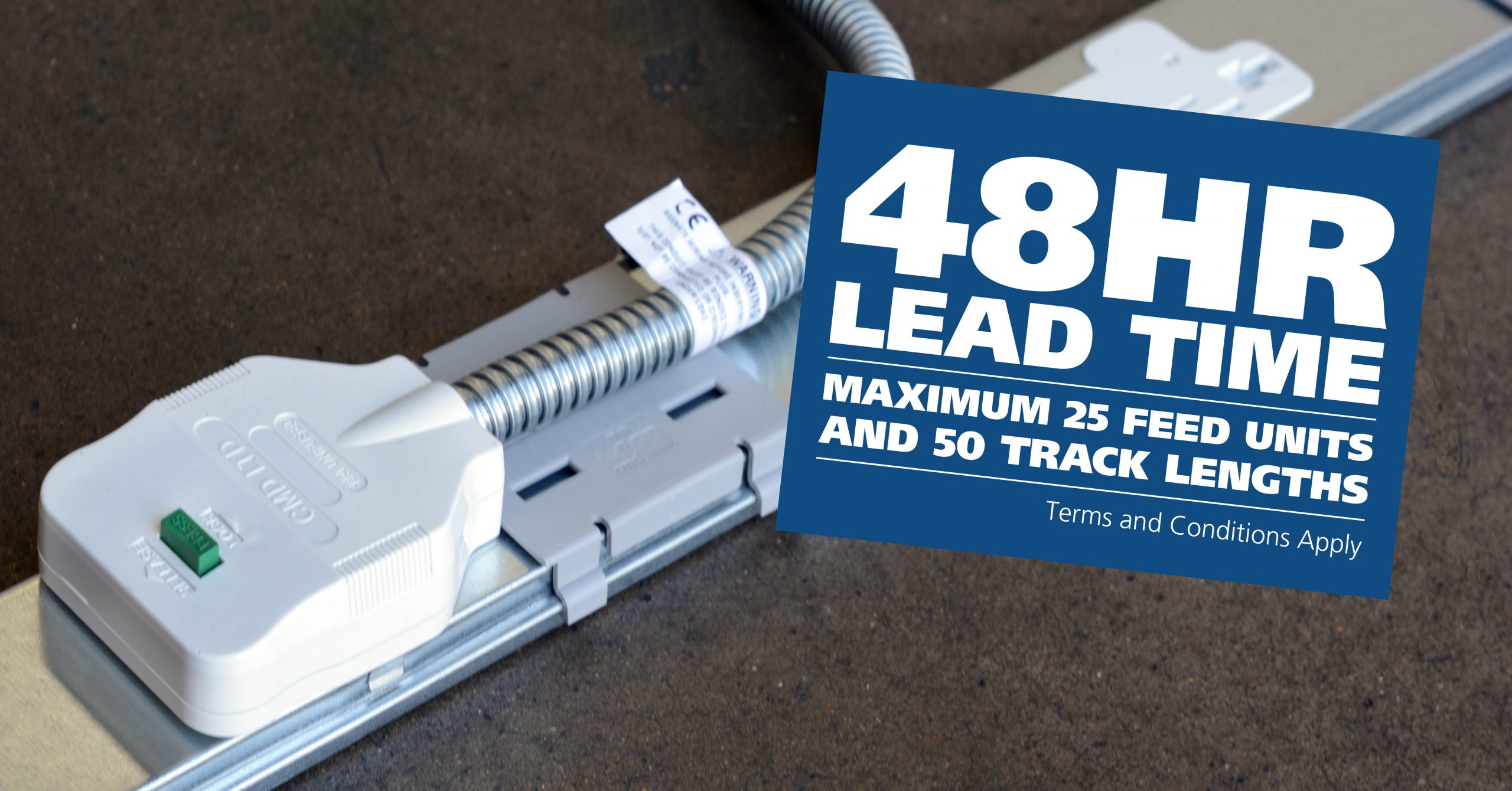
CMD Ltd, the specialist in power distribution systems, workstation power and monitor arms, has launched a rapid ordering service for its Betatrak® underfloor powertrack distribution systems and accessories, with a commitment to delivering within 48-hours of an approved purchase order*. The service enables customers to order up to 50 lengths of Standard or Clean Earth (C/E) low noise Betatrak, along with up to 25 feed...

Read more
CMD INVESTS £1/4 MILLION IN NEW MACHINE AS PART OF FACTORY UPGRADE

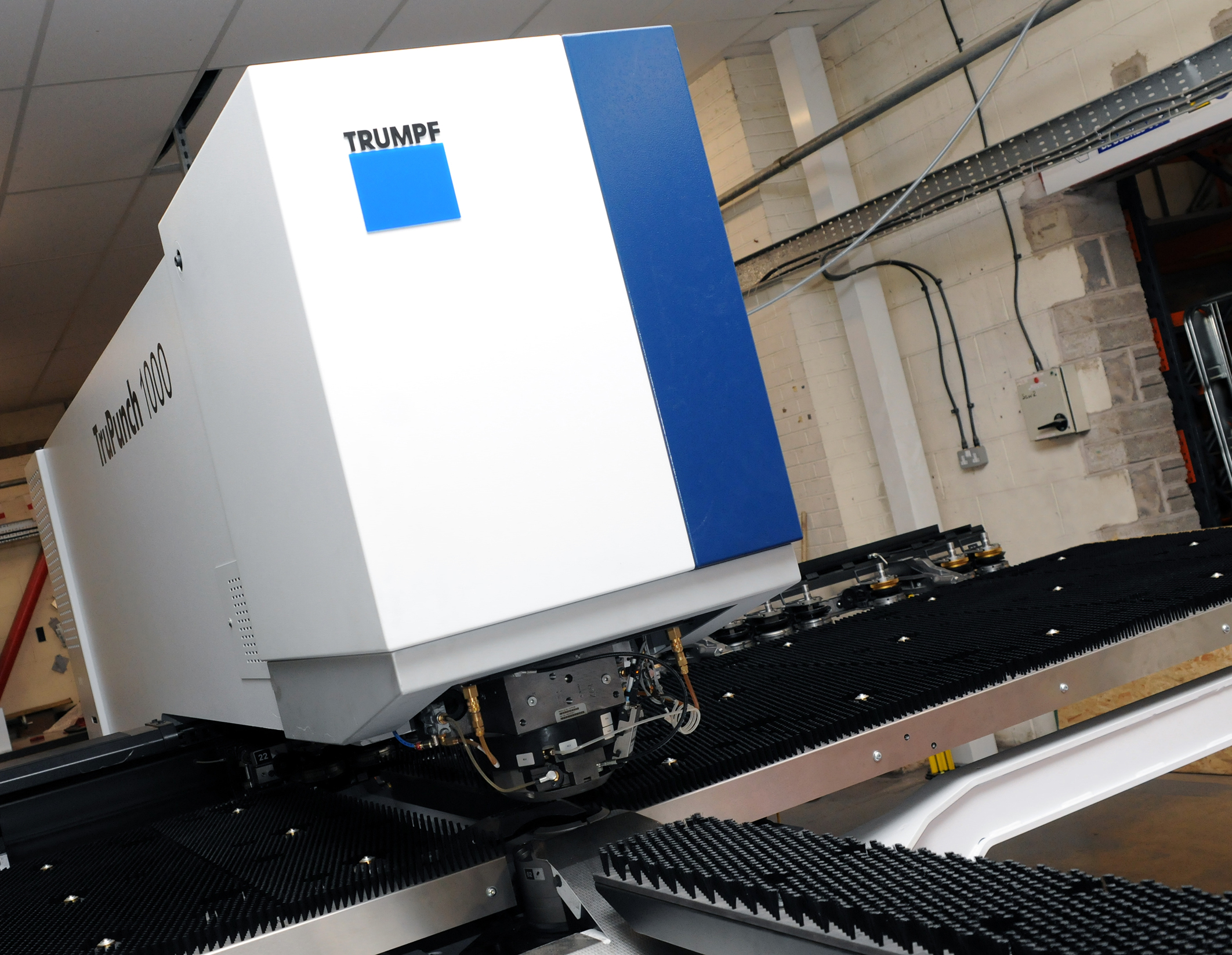
We have invested in a new £1/4m TRUMPF CNC metal punch as part of an asset renewal strategy for our UK manufacturing capability. The new machine will be used in the production of a wide variety of our power distribution systems and workstation power products at our Rotherham factory. Suitable for handling sheet metal between 0.9mm and 3.0mm thick, the new machine will replace one...

Read more
CMD CATALOGUE PROVIDES TECHNICAL POWER DISTRIBUTION GUIDE

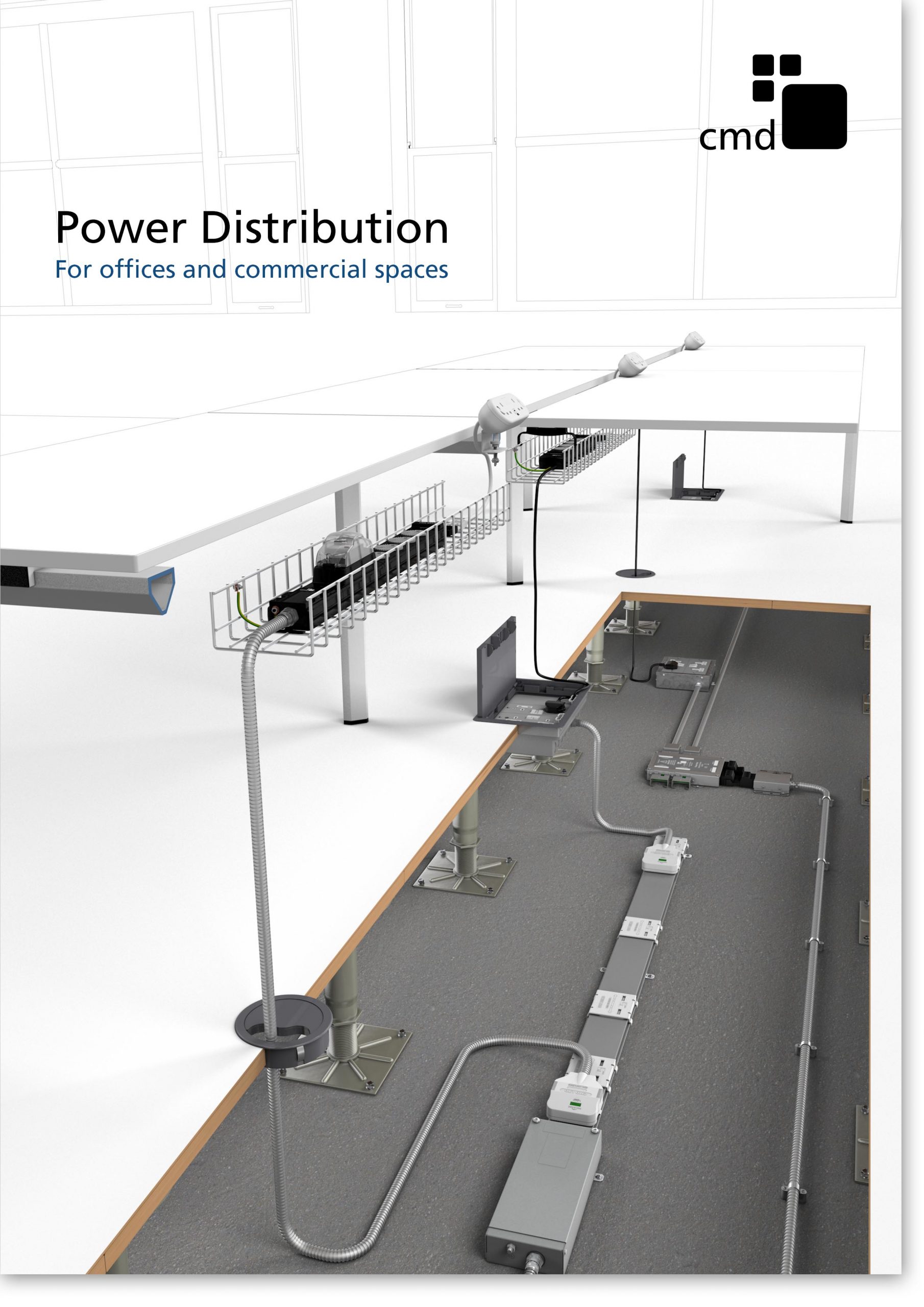
CMD Ltd has released a new catalogue, providing an easy to follow technical guide to our power distribution systems and plug and play desk modules. Detailing CMD’s full range of UK-manufactured power distribution systems and plug and play desk modules, the catalogue will be a helpful source of information to M&E engineers and contractors alike to understand how our power distribution systems connect together and...

Read more
Power Distribution Catalogue
CMD Ltd PLAYS ESSENTIAL ROLE IN ELECTRICAL FIT OUT AT LONDON’S PRESTIGIOUS OFFICE DEVELOPMENT

CMD Ltd, specialist in workplace connectivity and ergonomic solutions, has provided a flexible and high-quality power distribution network for The Ray, a prestigious office development in London’s Farringdon. Well-known for being the former site of The Guardian newspaper, The Ray now stands as an 83,000ft² office development characterised by a modernised warehouse aesthetic, with level two now occupied by a global social media company. The...

Read more

The Ray
CMD plugs in to european opportunity with Schuko Capsule unit launch

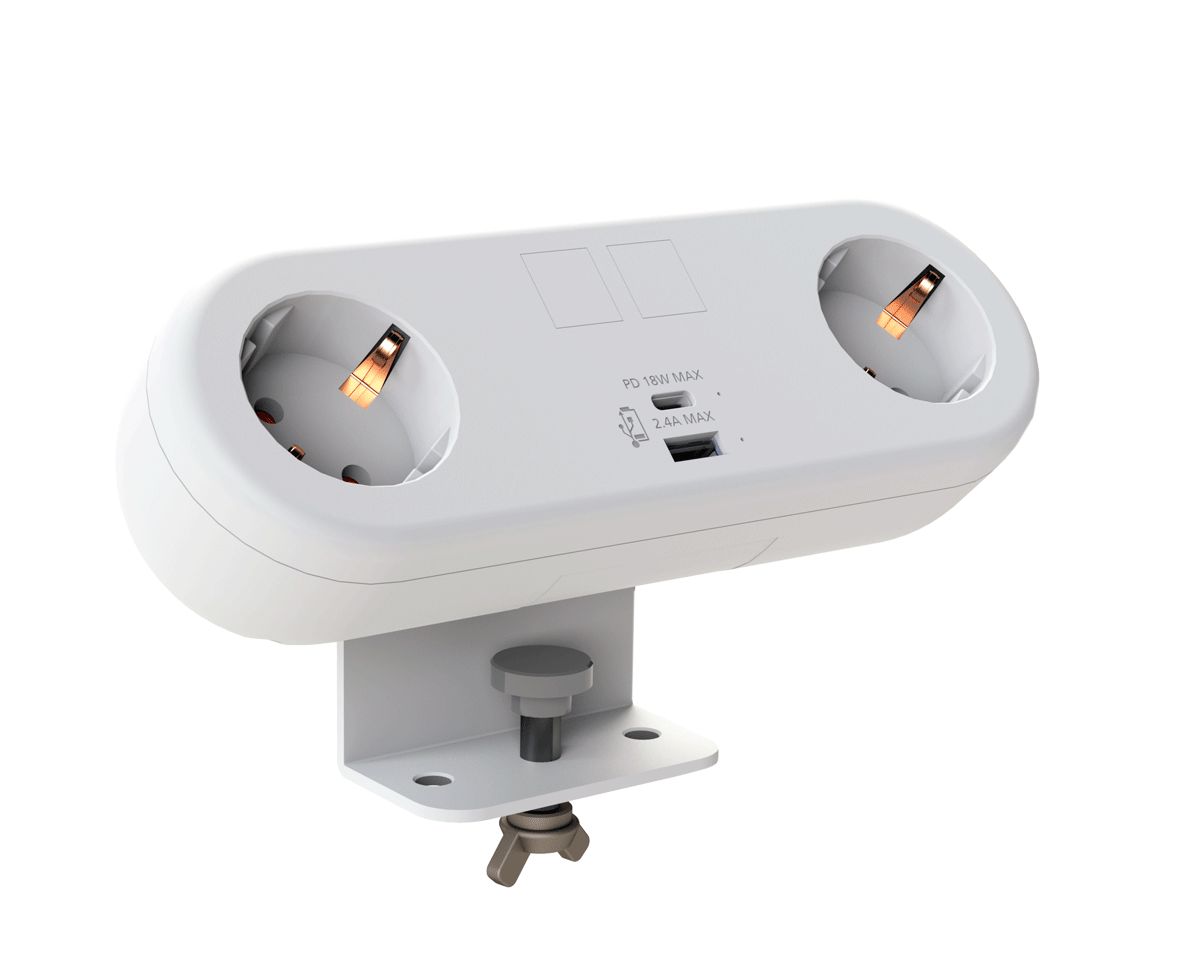
CMD Ltd, the specialist in power and connectivity solutions for commercial environments, has launched a Schuko version of its popular fixed format Capsule workstation power module for export to mainland Europe and beyond. A popular on desk power module comprising two sockets and dual USB (type A and C) chargers, CMD’s Capsule unit is already widely specified in the UK as an off-the-shelf workstation power...

Read more
CMD White Schuko Capsule Desk Power Module
CMD LTD EXTENDS MONITOR ARM RANGE WITH THE LAUNCH OF REACH PLUS

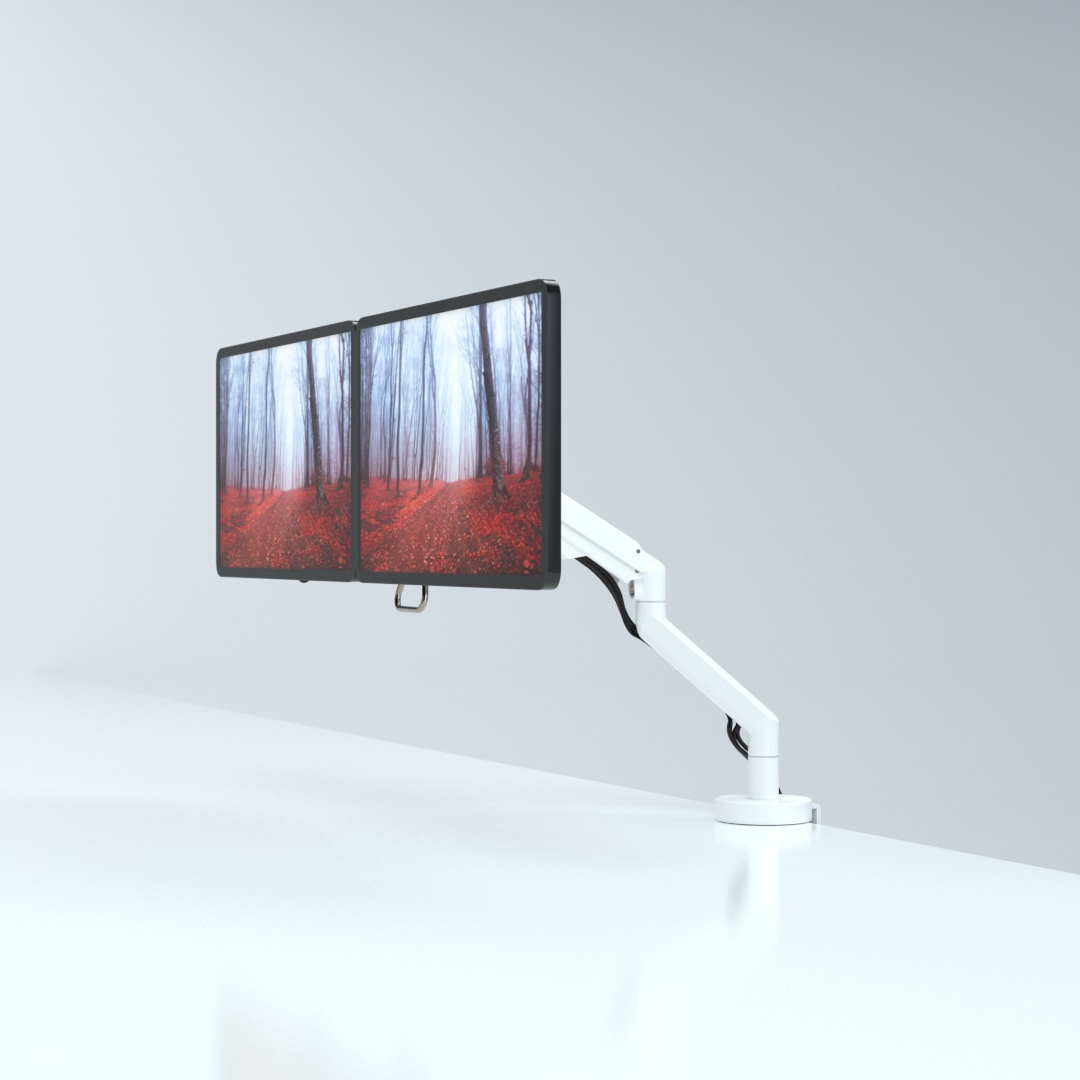
CMD Ltd, the specialist in ergonomic and connectivity solutions for commercial interiors, has completed its Reach monitor arm range with the launch of the Reach Plus. Available in single or dual screen options, the Reach Plus has been designed to provide an ideal solution for both single and dual screen workstation configurations, or can be used with next generation of large format curved screens. Suitable...

Read more
CMD Ltd DEMONSTRATES THE ART OF POWER DISTRIBUTION AT THE UNIVERSITY OF WARWICK

CMD Ltd, the specialist in workplace connectivity and ergonomic solutions, has provided Betatrak busbar power distribution and a range of electrical accessories for two major capital investment projects at the University of Warwick. Designed by Fielden Clegg Bradley Studios, the £33 million Faculty of Arts building is a showpiece development comprising four interconnected structures set around a central atrium, which will enable inter-disciplinary collaboration across...

Read more

University of Warwick
CMD BRINGS HARMONY TO COVENTRY UNIVERSITY RESEARCH FACILITIES

CMD Ltd, the specialist in power distribution solutions and workstation power and ergonomics, has provided under desk and on desk power modules for the refurbishment of three Coventry University research buildings. Located on Coventry University Technology Park, a business park designed to encourage collaboration between the university and knowledge-based businesses, the three buildings are being repurposed as office accommodation for university research teams. The refurbishment...

Read more

Coventry University

How to Choose a Cordless Impact Drill in 2026?

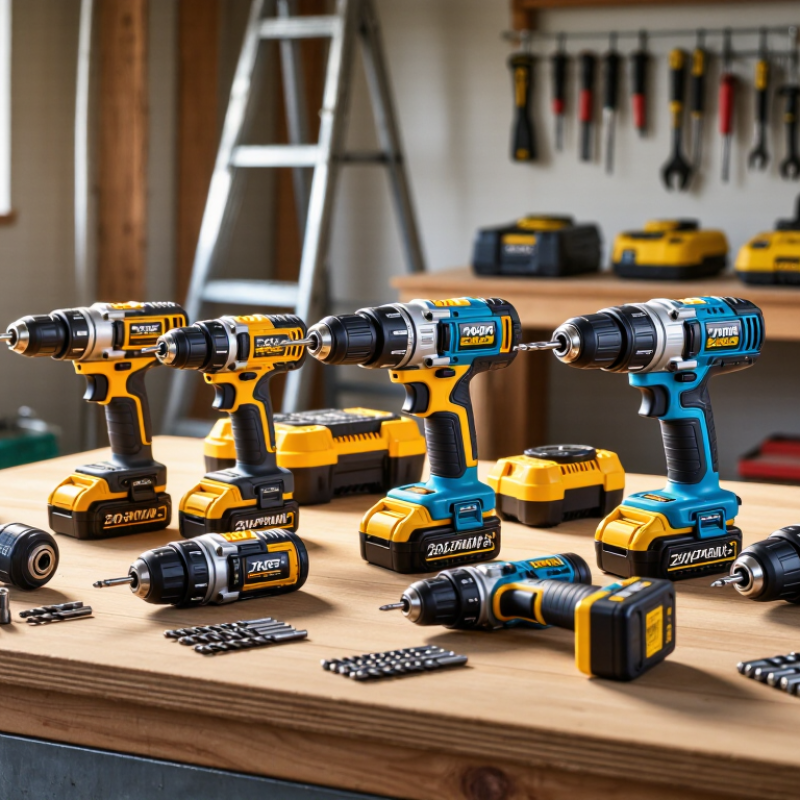
Choosing a Cordless Impact Drill in 2026 requires more than comparing voltage labels. The right tool must match fastening torque, working space, battery demand, and user control. A compact drill may feel comfortable on a ladder. A heavier model may perform better with long structural screws. Neither choice is automatically correct.

Industry data shows why this category deserves careful attention. Grand View Research places the global power tools market at tens of billions of dollars, with cordless equipment driving strong growth through portability and battery improvements. Fortune Business Insights also identifies battery-powered tools as a major force within the expanding power tools sector. However, market reports use different definitions and regional assumptions. Their figures should guide decisions, not replace product testing. That limitation matters.

Real-world details reveal the difference. A 20V battery can add noticeable weight after repeated overhead work. A brushless motor may improve efficiency, but it does not guarantee better ergonomics. Torque ratings can also appear impressive while hiding speed reductions under load. Think carefully. Independent tests, manufacturer specifications, warranty terms, and battery-platform availability deserve equal attention. The U.S. Department of Energy’s battery research emphasizes continuing gains in energy density and efficiency, yet charging time and battery replacement costs remain practical concerns. This guide examines those trade-offs, including impact mechanism strength, vibration, noise, chuck compatibility, safety features, and long-term ownership value. No single cordless impact drill wins every job. That is the uncomfortable truth.

How to Choose a Cordless Impact Drill in 2026?

Understanding Cordless Impact Drill Types and Core Functions

Choosing a cordless impact drill starts with identifying the work, not the advertised torque. An impact driver uses a 1/4-inch hex collet and suits long screws, decking, and light framing. An impact wrench uses a square drive for sockets and larger fasteners. A hammer drill is different; its percussion action helps with masonry. It does not replace an impact driver. This distinction prevents an expensive mismatch. Small detail, big difference.

Look at core functions in practical terms. Variable speed gives control when starting a screw, while impact rate affects response under resistance. Multiple speed settings can protect delicate materials. A brushless motor usually improves efficiency and service life, although performance also depends on battery condition and cooling. Check the torque range, collet size, LED placement, grip balance, and brake response. A compact body matters in cabinets and overhead work. It sounds minor. Your wrist notices.

Battery voltage alone does not tell the full story. Compare amp-hour capacity, charging time, weight, and battery compatibility. Higher torque is not always better; it can strip screw heads or damage soft timber. For routine repairs, moderate torque and controlled speed may be wiser than maximum power. I once focused too much on peak specifications and ignored balance, which made accurate driving harder. Test the trigger gently, listen for harsh vibration, and read the manual’s fastening guidance before buying.

Matching Torque, Speed, and Chuck Size to Your Tasks

Choosing a cordless impact drill in 2026 starts with the fastener, not the advertised voltage. Grand View Research estimated the global power tools market at roughly $36 billion in 2023, showing how crowded this category has become. More choices do not guarantee a better match.

Torque controls stubborn screws and large lag bolts.
For cabinet work, 40–70 Nm usually feels manageable. Heavy framing may need 100 Nm or more. Those figures are practical ranges, not universal rules. Manufacturers measure torque differently, and I have trusted headline numbers too quickly before. Check the tested torque method and include a clutch for delicate surfaces.

Speed shapes control.
Around 0–500 rpm suits driving; 1,500–2,000 rpm helps drilling smaller holes. A two-speed gearbox is more useful than extreme top speed. For masonry, confirm that the tool is an impact hammer drill, not only an impact driver. Chuck size matters too. A 10 mm chuck handles common bits and reduces bulk. A 13 mm chuck accepts larger shanks and better suits demanding drilling. IEC 62841 safety standards provide a useful reference, but they do not replace hands-on testing. Hold the tool with a charged battery, fit your usual bit, and check balance before buying. Small details matter.

Choosing the Right Battery Platform, Voltage, and Runtime

How to Choose a Cordless Impact Drill in 2026?

Choosing the right battery platform matters more than a small price difference. I learned this after buying a tool with limited battery support. The drill worked well, but replacement packs became inconvenient. Choose a platform that offers several compatible tools, chargers, and battery sizes. Check whether future tools match the same voltage family. This can reduce costs over several years.

Voltage and Handling Voltage affects torque, speed, weight, and heat control. Lower-voltage models suit cabinet work, light repairs, and smaller fasteners. Higher-voltage models handle structural screws and repeated drilling more confidently. They also feel heavier after an hour. I once selected maximum power for a simple renovation. My wrist disagreed. That choice was not completely wrong, but it was poorly matched.

Runtime depends on battery capacity, material, bit size, and trigger use. Amp-hours indicate stored capacity, not guaranteed working time. A higher-capacity pack usually runs longer, but adds weight. For overhead work, a smaller pack may feel better. For decking or masonry, keep a charged spare nearby. Cold weather can reduce performance noticeably.

Test the drill with your usual bit and fastener. Watch for heat, slowing speed, and frequent charging. These signs reveal more than advertised runtime figures. Leave some uncertainty. Real job conditions are rarely as tidy as specifications.

Evaluating Ergonomics, Safety Features, and Tool Durability

How to Choose a Cordless Impact Drill in 2026?

A comfortable tool should feel balanced before it feels powerful. Hold it with one hand and check whether the battery pulls your wrist downward. A rubberized grip helps, but shape matters more during long fastening jobs. I prefer a compact body with a centered handle and clearly placed controls. Test the forward and reverse switch with work gloves. Small switches can become frustrating quickly.

Safety features deserve a hands-on check. Look for an electronic brake that stops rotation promptly after releasing the trigger. A trigger lock can prevent accidental starts during transport. Battery protection should limit overheating, overcharging, and deep discharge. Watch the temperature after repeated fastening cycles. Warm is normal. Excessive heat needs attention. Read the manual and verify safety markings required in your region. Marketing claims alone are not enough.

Durability depends on more than a metal housing. Inspect the chuck, gear case, battery contacts, and ventilation openings. These areas collect dust and experience repeated stress. A sturdy tool should show minimal chuck wobble under moderate load. Ask whether replacement batteries and service parts remain available. That detail is often overlooked. I once chose a lighter drill and regretted its weak battery connection after several months. My test was too short. Use the tool on realistic materials, not only a showroom board. A few controlled drops may reveal toughness, but careless testing can damage useful equipment.

How to Choose a Cordless Impact Drill in 2026?

Recommended evaluation weight for ergonomics, safety features, and tool durability.

The 100-point model gives the greatest weight to durability and battery performance because these factors affect service life and working time. Ergonomics considers balance, grip comfort, vibration, and tool weight. Safety includes electronic braking, overload protection, thermal protection, and a secure chuck or bit holder. Use this weighting together with the manufacturer’s verified specifications and relevant safety documentation.

Comparing Models by Budget, Compatibility, and Long-Term Value

How to Choose a Cordless Impact Drill in 2026?

A useful cordless impact drill should match your workload, not just your budget. For occasional shelf installation, a compact model with moderate torque may be enough. Daily framing or deck work demands stronger torque, efficient cooling, and a comfortable grip. I once bought the most powerful option available. It worked well, but its weight became tiring after an hour.

Compatibility affects long-term value more than many buyers expect. Check the battery platform before purchasing. If you already own compatible batteries, a tool-only package can reduce the cost. Also inspect charger availability, battery prices, chuck size, and accessory support. A cheaper drill becomes expensive when replacement batteries are difficult to find. Look for clear torque ratings, a dependable speed trigger, and accessible service information. Specifications can be confusing. Real workshop use matters more.

Tips: Hold the drill before buying. Test its balance with a battery attached. Compare the total three-year cost, including batteries and bits. Choose brushless technology when frequent use justifies the higher price. For light repairs, it may not. Read independent user reports, but question reviews that praise power without mentioning heat, noise, or vibration. My own buying decisions have not always been perfect. A smaller tool might have served me better.

How to Choose a Cordless Impact Drill in 2026? - Comparing Models by Budget, Compatibility, and Long-Term Value

Configuration Typical Street Price
(Tool Only)
Battery Platform Max Torque No-Load Speed Impact Rate Bare Tool Weight Chuck / Bit Interface Best For Long-Term Value
Compact 12 V Impact Driver $80–$140 12 V lithium-ion slide battery 800–1,200 in-lb
(90–136 N·m)
0–3,000 rpm 0–3,900 ipm 1.6–2.0 lb
(0.7–0.9 kg)
1/4-inch hex quick-release Cabinet work, small fasteners, light assembly, overhead tasks High when low weight and occasional use matter more than maximum power
Entry 18 V / 20 V Max Impact Driver $100–$170 18 V nominal or 20 V maximum lithium-ion platform 1,300–1,700 in-lb
(147–192 N·m)
0–2,800 rpm 0–3,500 ipm 2.1–2.8 lb
(1.0–1.3 kg)
1/4-inch hex quick-release General home repair, decking, framing repairs, automotive maintenance Best entry point if the same battery platform supports several future tools
Brushless 18 V / 20 V Max Mid-Torque Driver $150–$240 18 V nominal or 20 V maximum lithium-ion platform 1,700–2,200 in-lb
(192–249 N·m)
0–3,400 rpm 0–4,000 ipm 2.2–3.0 lb
(1.0–1.4 kg)
1/4-inch hex quick-release Frequent construction, long screws, structural wood, repeated daily use Strong balance of power, runtime, service life, and operating cost
High-Torque 18 V / 20 V Max Impact Wrench $220–$380 18 V nominal or 20 V maximum lithium-ion platform 400–900 ft-lb fastening torque
(542–1,220 N·m)
0–2,000 rpm 0–2,400 ipm 4.5–7.5 lb
(2.0–3.4 kg)
1/2-inch square drive with friction ring or pin detent Vehicle lug nuts, heavy equipment, large structural bolts Worth the extra cost only when high fastening torque is regularly required
Compact 18 V / 20 V Max Brushless Driver $170–$260 18 V nominal or 20 V maximum lithium-ion platform 1,500–2,000 in-lb
(170–226 N·m)
0–3,400 rpm 0–4,200 ipm 1.8–2.5 lb
(0.8–1.1 kg)
1/4-inch hex quick-release Professional installation, tight workspaces, repetitive fastening Excellent long-term choice where size, heat control, and daily reliability are priorities
36 V / 40 V Max Heavy-Duty Driver $280–$450 36 V nominal or 40 V maximum lithium-ion platform 2,000–3,000 in-lb
(226–339 N·m)
0–3,000 rpm 0–4,000 ipm 3.0–4.2 lb
(1.4–1.9 kg)
1/4-inch hex quick-release Heavy timber work, commercial installation, large fasteners Potentially high for demanding workloads, but battery and charger costs are usually higher
Buying notes: Torque figures are manufacturer-rated maximum values and are not directly comparable across testing methods. An 18 V nominal battery and a 20 V maximum battery generally refer to the same voltage class measured under different conditions. Confirm battery compatibility within the same platform before purchasing, and budget separately for batteries and chargers when comparing tool-only prices.