

News

Miro: A New Standard in Responsible Innovation

Miro: A New Standard in Responsible Innovation The Miro monitor arm is setting new benchmarks in sustainability. It offers a high-performance solution without compromising on environmental responsibility. Designed with careful material selection, local sourcing, and longevity in mind, Miro’s responsible approach to design and unique manoeuvrability set it apart from the competition. Sustainable Choices Miro is crafted from energy-efficient materials with a lower carbon impact....

Read more
HSE Advisor

Role Purpose Support in the development, implementation and maintenance of the company’s Health, Safety & Environmental policies, processes, operational procedures, and standards.  Ensuring best practice and championing a continually improving HSE culture within the business. Key Responsibilities Liaise with and provide support to all areas of the business to eliminate, mitigate or reduce identified HSE exposures. Partner with the production management team and team leaders,...

Read more
CMD Ltd LAUNCHES 48-HOUR TURNAROUND ON BETATRAK® RAPID ORDERING SERVICE

CMD Ltd, the specialist in power distribution systems, workstation power and monitor arms, has launched a rapid ordering service for its Betatrak® underfloor powertrack distribution systems and accessories, with a commitment to delivering within 48-hours of an approved purchase order*. The service enables customers to order up to 50 lengths of Standard or Clean Earth (C/E) low noise Betatrak, along with up to 25 feed...

Read more

CMD INVESTS £1/4 MILLION IN NEW MACHINE AS PART OF FACTORY UPGRADE

We have invested in a new £1/4m TRUMPF CNC metal punch as part of an asset renewal strategy for our UK manufacturing capability. The new machine will be used in the production of a wide variety of our power distribution systems and workstation power products at our Rotherham factory. Suitable for handling sheet metal between 0.9mm and 3.0mm thick, the new machine will replace one...

Read more

CMD CATALOGUE PROVIDES TECHNICAL POWER DISTRIBUTION GUIDE

CMD Ltd has released a new catalogue, providing an easy to follow technical guide to our power distribution systems and plug and play desk modules. Detailing CMD’s full range of UK-manufactured power distribution systems and plug and play desk modules, the catalogue will be a helpful source of information to M&E engineers and contractors alike to understand how our power distribution systems connect together and...

Read more

Power Distribution Catalogue
CMD Ltd PLAYS ESSENTIAL ROLE IN ELECTRICAL FIT OUT AT LONDON’S PRESTIGIOUS OFFICE DEVELOPMENT

CMD Ltd, specialist in workplace connectivity and ergonomic solutions, has provided a flexible and high-quality power distribution network for The Ray, a prestigious office development in London’s Farringdon. Well-known for being the former site of The Guardian newspaper, The Ray now stands as an 83,000ft² office development characterised by a modernised warehouse aesthetic, with level two now occupied by a global social media company. The...

Read more

The Ray
CMD plugs in to european opportunity with Schuko Capsule unit launch

CMD Ltd, the specialist in power and connectivity solutions for commercial environments, has launched a Schuko version of its popular fixed format Capsule workstation power module for export to mainland Europe and beyond. A popular on desk power module comprising two sockets and dual USB (type A and C) chargers, CMD’s Capsule unit is already widely specified in the UK as an off-the-shelf workstation power...

Read more

CMD White Schuko Capsule Desk Power Module
CMD LTD EXTENDS MONITOR ARM RANGE WITH THE LAUNCH OF REACH PLUS

CMD Ltd, the specialist in ergonomic and connectivity solutions for commercial interiors, has completed its Reach monitor arm range with the launch of the Reach Plus. Available in single or dual screen options, the Reach Plus has been designed to provide an ideal solution for both single and dual screen workstation configurations, or can be used with next generation of large format curved screens. Suitable...

Read more

CMD Ltd DEMONSTRATES THE ART OF POWER DISTRIBUTION AT THE UNIVERSITY OF WARWICK

CMD Ltd, the specialist in workplace connectivity and ergonomic solutions, has provided Betatrak busbar power distribution and a range of electrical accessories for two major capital investment projects at the University of Warwick. Designed by Fielden Clegg Bradley Studios, the £33 million Faculty of Arts building is a showpiece development comprising four interconnected structures set around a central atrium, which will enable inter-disciplinary collaboration across...

Read more

University of Warwick
CMD BRINGS HARMONY TO COVENTRY UNIVERSITY RESEARCH FACILITIES

CMD Ltd, the specialist in power distribution solutions and workstation power and ergonomics, has provided under desk and on desk power modules for the refurbishment of three Coventry University research buildings. Located on Coventry University Technology Park, a business park designed to encourage collaboration between the university and knowledge-based businesses, the three buildings are being repurposed as office accommodation for university research teams. The refurbishment...

Read more

Coventry University

What is Far UVC LEDs and How Do They Work?

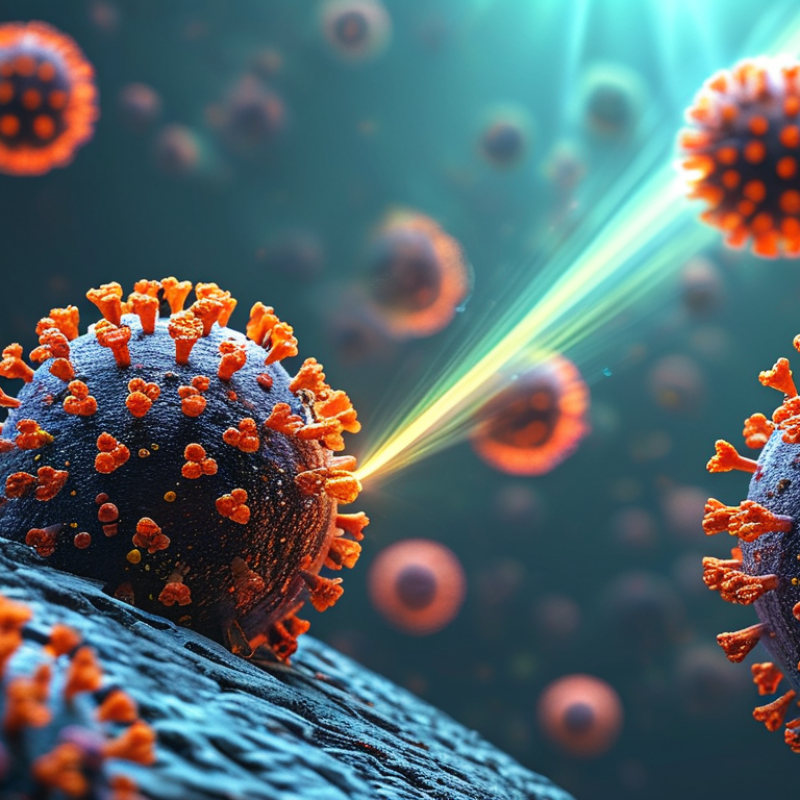
Far Uvc Leds represent a cutting-edge technology in the fight against harmful pathogens. Experts believe these LEDs can change the way we think about disinfection. Dr. John D. W. Bullock, a leader in photonics research, states, "Far UVC LEDs could provide a safer disinfection solution without harming human skin."

The mechanism behind Far UVC LEDs involves emitting ultraviolet light at specific wavelengths that destroy viruses and bacteria. Unlike traditional UV light, Far UVC LEDs operate at wavelengths between 200-280 nm, which can kill pathogens effectively. However, they are safe for human exposure, making them a promising choice for public spaces.

Significant challenges remain in the widespread adoption of this technology. Many researchers are still studying the effectiveness and long-term safety of Far UVC LEDs. The balance between efficacy and safety needs careful consideration. While we see the potential benefits, further investigation is required to address the uncertainties. The journey toward integrating Far UVC LEDs in everyday environments is just beginning, and ongoing research will guide us in this evolving field.

What is Far UVC LEDs and How Do They Work?

What Are Far UVC LEDs? Definition and Overview

Far UVC LEDs represent a significant advancement in the field of ultraviolet (UV) light technology. Unlike traditional UV sources, far UVC LEDs emit light at shorter wavelengths, specifically between 200 to 280 nanometers. This range offers unique benefits for disinfection applications while being less harmful to human health. Far UVC light can effectively inactivate pathogens such as viruses and bacteria without causing skin and eye damage.


Research has shown that far UVC LEDs provide a promising solution for sterilization in public spaces. They can be integrated into lighting systems, effectively sanitizing areas while occupants remain safe. However, further studies are essential to understand long-term exposure effects on various living organisms. Experts continue to investigate the balance between efficacy and safety in practical applications.


The potential is vast, yet the implementation poses challenges. Scaling production for widespread use remains a hurdle. There are also logistical issues surrounding UV exposure in different environments. As far UVC technology evolves, continuous dialogue among scientists, engineers, and public health officials is necessary. Addressing these complexities will enable the responsible use of far UVC LEDs.

The Science Behind Far UVC LEDs: Wavelengths and Mechanism

Far UVC LEDs emit light at wavelengths between 200 and 280 nanometers. This range is effective at deactivating bacteria and viruses. Unlike conventional UV light, Far UVC poses less risk to skin and eyes. It works by altering the DNA and RNA of pathogens. This mechanism prevents them from replicating and causing infections.

The science of Far UVC involves understanding its interaction with cellular structures. Microbial cells absorb Far UVC light. It disrupts their molecular integrity, making them harmless. This germicidal process occurs quickly, often in seconds. However, research is ongoing to determine the safe exposure levels for humans.

Use of Far UVC technology is promising but requires caution. While effective, its long-term impact on health is still uncertain. More studies are needed to validate its safety in public spaces. As experts explore its potential, a balance between efficacy and safety must be maintained. Society benefits from advanced sanitation methods, yet the implications of their use should be thoughtfully examined.

Applications of Far UVC LEDs in Disinfection and Public Health

Far UVC LEDs are emerging as a promising tool in disinfection and public health. These ultraviolet light-emitting diodes operate at wavelengths between 200-280 nanometers. This range is effective at inactivating pathogens, including bacteria and viruses, without harming human skin or eyes.

In healthcare settings, Far UVC LEDs are being tested for use in various environments. Hospitals can integrate these lights into air circulation systems. This can reduce pathogen levels in patient rooms. Schools and public spaces may also benefit from far UVC technology. They can help maintain safer environments during cold and flu seasons.

However, the use of Far UVC LEDs is not without challenges. Research is still ongoing regarding the long-term effects of exposure to these wavelengths. There is a need for careful guidelines to ensure safety. Public acceptance of this technology may take time. Transitioning to these advanced solutions will require education and awareness efforts.

Safety Considerations: Impact of Far UVC on Human Skin and Eyes

Far UVC LEDs represent a groundbreaking technology in the realm of disinfection. They emit ultraviolet light at a wavelength between 200 to 280 nanometers. This range is effective in inactivating pathogens. However, when discussing their safety, especially concerning human skin and eyes, caution is essential.

Research indicates that far UVC light is less harmful than traditional UV light. Studies show that it does not penetrate the outer layer of human skin. This implies a lower risk of skin damage or cancer, making it potentially safer for public spaces. However, the effects on the eyes are still under investigation. Extended exposure may lead to irritation or discomfort. Scientists urge further research to understand long-term implications on eye health.

Awareness of potential risks is crucial. While far UVC technology holds promise, it may not be entirely without dangers. Implementing strict safety guidelines is essential for its widespread use. Users should remain vigilant, as we are still learning about the broader impacts of this innovative light source. In conclusion, responsible application and continued study are necessary to maximize benefits while minimizing risks.

What is Far UVC LEDs and How Do They Work? - Safety Considerations: Impact of Far UVC on Human Skin and Eyes

Parameter Description Safety Levels on Skin Safety Levels on Eyes
Wavelength Far UVC LEDs emit light at wavelengths between 200-280 nm Considered safe for skin exposure Potential for limited impact, further studies needed
Disinfection Efficiency Effective in inactivating bacteria and viruses Safe for prolonged exposure May cause discomfort with extended exposure
Regulatory Standards Meets safety guidelines set forth by health organizations Guided by safety limits on UV radiation Guided by ocular safety limits
Applications Used in hospitals, public transport, and workplaces Safe for environment and personnel No significant risk in standard use conditions

Current Research and Future Prospects for Far UVC Technology

Far UVC technology is an intriguing area of research. Unlike conventional UV light, Far UVC light operates at wavelengths around 200-280 nanometers. It has been shown to effectively kill pathogens while being less harmful to human skin and eyes. This unique characteristic opens up new possibilities for safe disinfection in various environments.

Current research focuses on expanding the applications of Far UVC LEDs. Studies explore their effectiveness in crowded spaces like hospitals and public transportation. The goal is to create safer environments with minimal health risks. However, there are challenges. Understanding the long-term effects of exposure on human tissues is necessary for safe implementation. More studies are needed to fully explore how Far UVC can be deployed effectively.

*Tip: When considering Far UVC technology, think about its applications in your surroundings. Could it help improve air quality in your workplace?*

Researchers are also looking into energy efficiency and the longevity of Far UVC devices. It’s crucial to balance efficacy with practical usage. Investigations are ongoing to refine the optics and output of these LEDs. Innovation could lead to widespread use in everyday life, making spaces cleaner without harming health.

*Tip: Stay informed about the latest research in Far UVC. Understanding the science can help you make informed decisions.*

Far UVC LEDs: Current Research and Future Prospects

This chart illustrates the research output on Far UVC technology over recent years, showcasing the number of publications and patents from 2018 to 2022. The increasing trend indicates a growing interest in Far UVC technology for health and safety applications.

Article Source: