News

Miro: A New Standard in Responsible Innovation

Miro: A New Standard in Responsible Innovation The Miro monitor arm is setting new benchmarks in sustainability. It offers a high-performance solution without compromising on environmental responsibility. Designed with careful material selection, local sourcing, and longevity in mind, Miro’s responsible approach to design and unique manoeuvrability set it apart from the competition. Sustainable Choices Miro is crafted from energy-efficient materials with a lower carbon impact....

Read more
HSE Advisor

Role Purpose Support in the development, implementation and maintenance of the company’s Health, Safety & Environmental policies, processes, operational procedures, and standards.  Ensuring best practice and championing a continually improving HSE culture within the business. Key Responsibilities Liaise with and provide support to all areas of the business to eliminate, mitigate or reduce identified HSE exposures. Partner with the production management team and team leaders,...

Read more
CMD Ltd LAUNCHES 48-HOUR TURNAROUND ON BETATRAK® RAPID ORDERING SERVICE

CMD Ltd, the specialist in power distribution systems, workstation power and monitor arms, has launched a rapid ordering service for its Betatrak® underfloor powertrack distribution systems and accessories, with a commitment to delivering within 48-hours of an approved purchase order*. The service enables customers to order up to 50 lengths of Standard or Clean Earth (C/E) low noise Betatrak, along with up to 25 feed...

Read more
CMD INVESTS £1/4 MILLION IN NEW MACHINE AS PART OF FACTORY UPGRADE

We have invested in a new £1/4m TRUMPF CNC metal punch as part of an asset renewal strategy for our UK manufacturing capability. The new machine will be used in the production of a wide variety of our power distribution systems and workstation power products at our Rotherham factory. Suitable for handling sheet metal between 0.9mm and 3.0mm thick, the new machine will replace one...

Read more
CMD CATALOGUE PROVIDES TECHNICAL POWER DISTRIBUTION GUIDE

CMD Ltd has released a new catalogue, providing an easy to follow technical guide to our power distribution systems and plug and play desk modules. Detailing CMD’s full range of UK-manufactured power distribution systems and plug and play desk modules, the catalogue will be a helpful source of information to M&E engineers and contractors alike to understand how our power distribution systems connect together and...

Read more
Power Distribution Catalogue
CMD Ltd PLAYS ESSENTIAL ROLE IN ELECTRICAL FIT OUT AT LONDON’S PRESTIGIOUS OFFICE DEVELOPMENT

CMD Ltd, specialist in workplace connectivity and ergonomic solutions, has provided a flexible and high-quality power distribution network for The Ray, a prestigious office development in London’s Farringdon. Well-known for being the former site of The Guardian newspaper, The Ray now stands as an 83,000ft² office development characterised by a modernised warehouse aesthetic, with level two now occupied by a global social media company. The...

Read more
The Ray
CMD plugs in to european opportunity with Schuko Capsule unit launch

CMD Ltd, the specialist in power and connectivity solutions for commercial environments, has launched a Schuko version of its popular fixed format Capsule workstation power module for export to mainland Europe and beyond. A popular on desk power module comprising two sockets and dual USB (type A and C) chargers, CMD’s Capsule unit is already widely specified in the UK as an off-the-shelf workstation power...

Read more
CMD White Schuko Capsule Desk Power Module
CMD LTD EXTENDS MONITOR ARM RANGE WITH THE LAUNCH OF REACH PLUS

CMD Ltd, the specialist in ergonomic and connectivity solutions for commercial interiors, has completed its Reach monitor arm range with the launch of the Reach Plus. Available in single or dual screen options, the Reach Plus has been designed to provide an ideal solution for both single and dual screen workstation configurations, or can be used with next generation of large format curved screens. Suitable...

Read more
CMD Ltd DEMONSTRATES THE ART OF POWER DISTRIBUTION AT THE UNIVERSITY OF WARWICK

CMD Ltd, the specialist in workplace connectivity and ergonomic solutions, has provided Betatrak busbar power distribution and a range of electrical accessories for two major capital investment projects at the University of Warwick. Designed by Fielden Clegg Bradley Studios, the £33 million Faculty of Arts building is a showpiece development comprising four interconnected structures set around a central atrium, which will enable inter-disciplinary collaboration across...

Read more
University of Warwick
CMD BRINGS HARMONY TO COVENTRY UNIVERSITY RESEARCH FACILITIES

CMD Ltd, the specialist in power distribution solutions and workstation power and ergonomics, has provided under desk and on desk power modules for the refurbishment of three Coventry University research buildings. Located on Coventry University Technology Park, a business park designed to encourage collaboration between the university and knowledge-based businesses, the three buildings are being repurposed as office accommodation for university research teams. The refurbishment...

Read more
Coventry University

What Is an EV BMS System and How Does It Work?

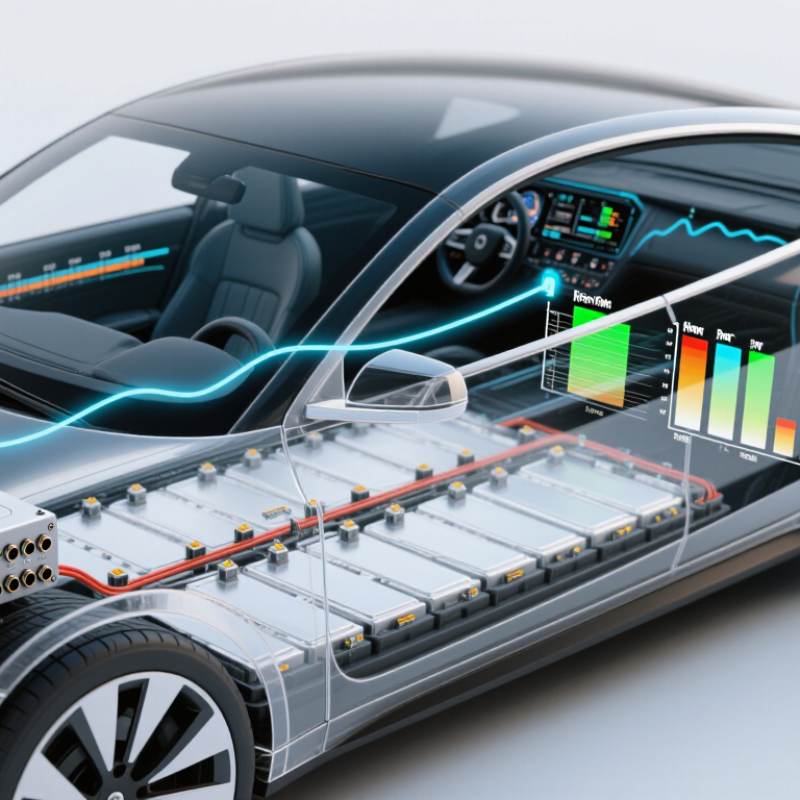
An Ev Bms System is the control center behind an electric vehicle’s battery pack. It monitors cell voltage, temperature, current, and charging conditions in real time. When one cell reaches an unsafe limit, the system can reduce power or open the battery contactors. That response may happen within milliseconds. Small sensors. Serious responsibility.

Battery-management author Davide Andrea describes the BMS simply: “The BMS is the brain of the battery.” The comparison is helpful, although it is not perfect. A brain makes decisions through complex biological networks; an Ev Bms System follows measured data, programmed limits, and safety logic. Its work includes estimating state of charge, tracking battery health, balancing cells, and communicating with the vehicle controller through networks such as CAN.

In practical driving, the BMS is constantly interpreting changing conditions. A cold battery may accept less charging power. A hot module may require cooling before continued acceleration. During fast charging, the system watches every cell, not only the pack’s average voltage. This detail matters because one weak cell can limit the entire battery.

Understanding these functions helps engineers, technicians, and informed drivers judge battery performance more realistically. Range estimates are useful, but they are not perfect. They depend on temperature, driving habits, battery age, and sensor accuracy. Even advanced systems can make conservative decisions. That is not failure. It is often protection working as intended.

What Is an EV BMS System and How Does It Work?

EV BMS Definition and Its Role in Electric Vehicles

An EV battery management system, or BMS, is the electronic control system that supervises a vehicle’s high-voltage battery. It measures cell voltage, temperature, current, and charging status in real time. These readings help the BMS estimate state of charge and state of health. In simple terms, it acts like the battery’s safety coordinator.

It protects the battery during driving, charging, and parking. If one cell becomes too hot or voltage rises too far, the BMS can reduce power or disconnect the battery. It also balances individual cells, preventing small voltage differences from becoming larger over time. In a workshop, technicians may review temperature records after a fast-charge session. A single abnormal reading can reveal a loose connection, damaged sensor, or aging cell.

The BMS also communicates with the vehicle control system. It reports available power, charging limits, and possible faults. This information affects acceleration, regenerative braking, and charging speed. However, its estimates are not perfect. Battery aging, weather, driving style, and sensor accuracy can influence the results. That is why reliable systems need careful calibration, repeated testing, and clear fault records. Small errors matter. A well-designed BMS improves safety and battery life, but it cannot repair damaged cells or remove every operating risk. Engineers must still review real-world data and question unexpected readings.

What Is an EV BMS System and How Does It Work? - EV BMS Definition and Its Role in Electric Vehicles

An Electric Vehicle Battery Management System (EV BMS) is an electronic control system that monitors, protects, balances, and communicates with the battery pack to support safe operation, reliable performance, and longer battery life.

Data Dimension Typical EV BMS Data or Range Function in the Electric Vehicle Important Notes
Battery Pack Voltage Approximately 200–500 V for many conventional EV platforms; higher-voltage architectures may operate around 600–900 V. Measures total pack voltage and helps control charging, discharging, isolation monitoring, and power delivery. The actual voltage depends on cell chemistry, the number of series-connected cells, and the vehicle architecture.
Individual Cell Voltage Lithium-ion cells commonly operate near 3.0–4.2 V; lithium iron phosphate cells commonly operate near 2.5–3.65 V. Allows the BMS to identify overvoltage, undervoltage, imbalance, and abnormal cell behavior. Voltage limits are chemistry-specific and must be set according to the cell manufacturer's safety specifications.
State of Charge (SOC) Reported as 0–100%, representing the estimated remaining usable battery energy. Supports range estimation, power limitation, charging control, and driver information. SOC is estimated using current integration, voltage behavior, temperature, and battery models rather than voltage alone.
State of Health (SOH) Reported as a percentage relative to the battery's original usable capacity or performance. Tracks capacity fade, resistance growth, aging, and the battery's ability to deliver power. SOH generally decreases with calendar aging, repeated cycling, high temperature, and extreme SOC conditions.
Battery Temperature Temperature sensors commonly monitor cells and modules across a broad operating range, often approximately −40°C to 85°C for measurement capability. Controls charging and discharging power, activates cooling or heating, and prevents thermal damage. Permitted operating limits are narrower than sensor measurement limits and vary by cell design and operating condition.
Charge and Discharge Current Measured in amperes; allowable current varies with battery capacity, cell design, temperature, SOC, and vehicle power demand. Calculates SOC, limits charging and regenerative braking, and detects overcurrent or short-circuit conditions. Charging current is often reduced at very low or high temperatures and near a high SOC.
Cell Balancing Passive balancing commonly operates at tens to several hundred milliamperes; active balancing can transfer energy between cells. Reduces differences in cell voltage and SOC so that the weakest cell does not limit the usable pack capacity. Passive balancing dissipates excess energy as heat, while active balancing transfers energy with greater circuit complexity.
Contactor and Pre-Charge Control High-voltage contactors connect or disconnect the battery, while a pre-charge circuit limits inrush current before the main connection. Provides controlled connection of the battery to the inverter, charger, and other high-voltage loads. The BMS normally checks voltage, insulation status, and system conditions before closing the main contactors.
Insulation Monitoring Continuously checks the electrical resistance between the high-voltage battery circuit and the vehicle chassis. Detects leakage paths that could create electric-shock, corrosion, or system-safety risks. Warning and shutdown thresholds depend on pack voltage, applicable safety requirements, and vehicle design.
Power Capability Estimation Calculates available charge and discharge power in kilowatts based on SOC, temperature, voltage, current, and battery condition. Tells the vehicle control system how much acceleration, regenerative braking, or charging power can be safely requested. Power limits may change rapidly during cold starts, high SOC, low SOC, or thermal events.
Thermal Management Interface Coordinates with liquid cooling, air cooling, heaters, pumps, valves, and refrigerant-based systems where equipped. Keeps cells within a suitable temperature range for safety, performance, charging speed, and service life. Uniform temperature distribution is important because cell aging and power capability are temperature-dependent.
Communication and Diagnostics Exchanges data with vehicle controllers, the charger, thermal systems, and diagnostic equipment through automotive communication networks. Reports SOC, SOH, voltage, temperature, power limits, warnings, and fault codes. Communication allows the vehicle to coordinate charging, propulsion, regenerative braking, and safety responses.
Protection Responses Warning, current limitation, charging interruption, contactor opening, and emergency shutdown. Protects against overcharge, over-discharge, overcurrent, overheating, isolation faults, and severe cell imbalance. Protection actions are usually layered so that the system can respond proportionally to the severity of a fault.
BMS Architecture Centralized, modular, or distributed designs are commonly used in EV battery packs. Collects measurements from cell-monitoring circuits and sends coordinated control commands throughout the pack. The selected architecture affects wiring, scalability, serviceability, measurement accuracy, and communication design.
Operating Principle Measure → estimate → compare with limits → control → communicate → record diagnostics. Creates a continuous feedback loop that keeps the battery within safe electrical, thermal, and mechanical operating conditions. The BMS does not generate battery energy; it manages battery operation and coordinates with the vehicle's other control systems.

Note: The ranges shown are representative industry values for explanatory purposes. Exact voltage limits, temperature limits, current ratings, balancing thresholds, and protection strategies vary according to battery chemistry, cell design, pack configuration, and vehicle safety requirements.

Core Components of an EV Battery Management System

What Is an EV BMS System and How Does It Work?

Core Components of an EV Battery Management System

An EV battery management system monitors every cell inside a high-voltage battery pack. The International Energy Agency reported nearly 14 million electric cars were sold worldwide in 2023. That scale makes accurate monitoring increasingly important. Voltage sensors detect cell imbalance, while temperature sensors watch areas near tabs, busbars, and cooling channels. A current sensor measures charge and discharge flow. These readings help the controller estimate state of charge, state of health, and available power.

The central controller runs protection logic and communicates with the vehicle control network. It can open contactors when voltage, current, or temperature reaches unsafe limits. Passive balancing removes small energy differences through resistors. Active balancing can transfer energy between cells, although it adds complexity and cost. The U.S. Department of Energy identifies thermal control, sensing, and battery diagnostics as key areas for improving electric-drive reliability. A BMS also records fault events for service technicians.

No estimate is perfect. State-of-charge calculations can drift after repeated fast charging, especially when cells age unevenly. This is where software quality matters. Redundant measurements, calibrated sensors, and clear fault thresholds reduce uncertainty. The Global Battery Alliance’s battery data work also emphasizes traceability and reliable lifecycle information. A practical BMS needs both precise electronics and disciplined testing under heat, vibration, low charge, and sudden acceleration.

How an EV BMS Monitors Battery Conditions

An EV BMS is the battery pack’s watchkeeper. It measures cell voltage, pack current, and temperature many times each second. These readings reveal imbalance, overheating, deep discharge, and abnormal charging.

14 million The International Energy Agency reported nearly 14 million electric car sales in 2023.
750 GWh It also estimated EV battery demand at about 750 GWh, up 40% year on year.

At that scale, continuous monitoring is essential.

The BMS estimates state of charge from current flow, voltage behavior, temperature, and charging history. It also tracks state of health, showing capacity loss and rising internal resistance.

When one cell crosses a limit, the system can reduce charging current, open contactors, or request cooling. Passive balancing removes excess energy as heat. Active balancing transfers energy between cells.

The U.S. Department of Energy’s vehicle technology reports identify temperature control as a key factor in battery life and safety.

Still, a BMS is not a crystal ball. Sensor errors, aging cells, and cold weather can distort its estimates. That estimate can drift. A dashboard may show 70% charge, while available power falls sharply below freezing.

Technicians should compare logged data with inspection results and test measurements. This remains an area for improvement.

Models need calibration, and alarms need careful human review.

How the BMS Controls Charging, Discharging, and Cell Balance

What Is an EV BMS System and How Does It Work?

How the BMS Controls Charging, Discharging, and Cell Balance

An electric vehicle battery management system, or BMS, acts as the battery pack’s control center. It measures each cell’s voltage, current, and temperature several times per second. These readings help determine the battery’s state of charge and state of health. The IEA’s Global EV Outlook 2025 reported more than 17 million electric car sales in 2024. That growth makes accurate battery supervision increasingly important.

During charging, the BMS communicates with the charger and reduces current when cells approach their voltage limits. It can open high-voltage contactors if temperature or voltage becomes unsafe. During driving, the system limits discharge power when the pack is cold, overheated, or nearly empty. A simple dashboard percentage hides this careful control. Inside the pack, tiny differences between cells can become significant over hundreds of cycles.

Cell balancing

Cell balancing corrects those differences. Passive balancing releases extra energy as heat through resistors. Active balancing transfers energy from stronger cells to weaker ones, although it adds complexity and cost. The U.S. Department of Energy identifies temperature management and voltage monitoring as essential factors in battery safety and durability. Yet no BMS is perfect. Sensor drift, aging connections, and uneven cooling can still reduce accuracy. Real-world testing remains necessary.

Safety Protection, Communication, and BMS Fault Handling

An EV battery management system (BMS) monitors each cell group, temperature sensor, and electrical connection. It protects the battery during charging, driving, and rapid current changes. Inside the pack, the BMS checks voltage differences between cells. It also estimates state of charge and state of health. These estimates are useful, but never perfectly precise.

Safety protection depends on fast decisions. If a cell voltage rises too high, the BMS can stop charging through a contactor. If temperatures increase sharply, it may reduce power or disconnect the pack. It also watches for overcurrent, short circuits, insulation loss, and sensor failures. Physical fuses provide another protection layer. Software alone is not enough.

Communication allows the BMS to share data with the vehicle controller, charger, and service equipment. Messages may include voltage, temperature, available power, and fault status. A communication fault should not be ignored. The vehicle may enter a limited-power mode or refuse to start. Fault handling usually records diagnostic codes and freezes unsafe operating conditions. Technicians can then inspect wiring, connectors, sensors, and contactors before clearing the code. A reset is not a repair. Some faults are difficult to reproduce, especially after vibration or moisture exposure. That is where careful testing matters. The system can still make an incorrect estimate, so measured evidence should guide every repair decision.

EV BMS Fault Handling: Safety Protection and Communication Trace

This representative operating trace shows how an EV battery management system monitors cell voltage, pack current, temperature, and CAN communication during a protection event. At 8 seconds, a high-temperature condition is detected; the BMS limits current, opens the battery contactor, and reports the fault through the vehicle communication network. Voltage and temperature limits vary by battery chemistry and vehicle design.