

News

Miro: A New Standard in Responsible Innovation

Miro: A New Standard in Responsible Innovation The Miro monitor arm is setting new benchmarks in sustainability. It offers a high-performance solution without compromising on environmental responsibility. Designed with careful material selection, local sourcing, and longevity in mind, Miro’s responsible approach to design and unique manoeuvrability set it apart from the competition. Sustainable Choices Miro is crafted from energy-efficient materials with a lower carbon impact....

Read more
HSE Advisor

Role Purpose Support in the development, implementation and maintenance of the company’s Health, Safety & Environmental policies, processes, operational procedures, and standards.  Ensuring best practice and championing a continually improving HSE culture within the business. Key Responsibilities Liaise with and provide support to all areas of the business to eliminate, mitigate or reduce identified HSE exposures. Partner with the production management team and team leaders,...

Read more
CMD Ltd LAUNCHES 48-HOUR TURNAROUND ON BETATRAK® RAPID ORDERING SERVICE

CMD Ltd, the specialist in power distribution systems, workstation power and monitor arms, has launched a rapid ordering service for its Betatrak® underfloor powertrack distribution systems and accessories, with a commitment to delivering within 48-hours of an approved purchase order*. The service enables customers to order up to 50 lengths of Standard or Clean Earth (C/E) low noise Betatrak, along with up to 25 feed...

Read more

CMD INVESTS £1/4 MILLION IN NEW MACHINE AS PART OF FACTORY UPGRADE

We have invested in a new £1/4m TRUMPF CNC metal punch as part of an asset renewal strategy for our UK manufacturing capability. The new machine will be used in the production of a wide variety of our power distribution systems and workstation power products at our Rotherham factory. Suitable for handling sheet metal between 0.9mm and 3.0mm thick, the new machine will replace one...

Read more

CMD CATALOGUE PROVIDES TECHNICAL POWER DISTRIBUTION GUIDE

CMD Ltd has released a new catalogue, providing an easy to follow technical guide to our power distribution systems and plug and play desk modules. Detailing CMD’s full range of UK-manufactured power distribution systems and plug and play desk modules, the catalogue will be a helpful source of information to M&E engineers and contractors alike to understand how our power distribution systems connect together and...

Read more

Power Distribution Catalogue
CMD Ltd PLAYS ESSENTIAL ROLE IN ELECTRICAL FIT OUT AT LONDON’S PRESTIGIOUS OFFICE DEVELOPMENT

CMD Ltd, specialist in workplace connectivity and ergonomic solutions, has provided a flexible and high-quality power distribution network for The Ray, a prestigious office development in London’s Farringdon. Well-known for being the former site of The Guardian newspaper, The Ray now stands as an 83,000ft² office development characterised by a modernised warehouse aesthetic, with level two now occupied by a global social media company. The...

Read more

The Ray
CMD plugs in to european opportunity with Schuko Capsule unit launch

CMD Ltd, the specialist in power and connectivity solutions for commercial environments, has launched a Schuko version of its popular fixed format Capsule workstation power module for export to mainland Europe and beyond. A popular on desk power module comprising two sockets and dual USB (type A and C) chargers, CMD’s Capsule unit is already widely specified in the UK as an off-the-shelf workstation power...

Read more
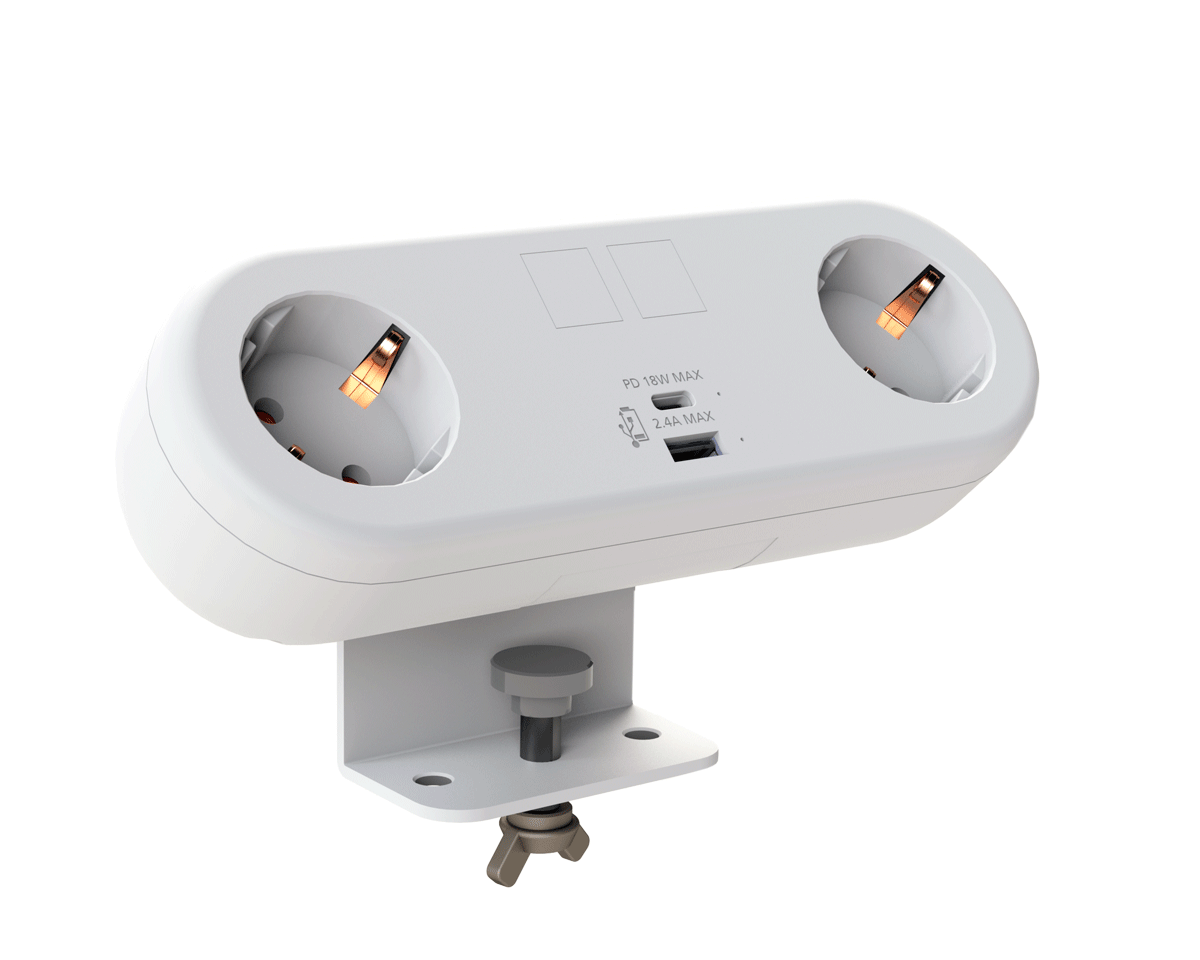
CMD White Schuko Capsule Desk Power Module
CMD LTD EXTENDS MONITOR ARM RANGE WITH THE LAUNCH OF REACH PLUS

CMD Ltd, the specialist in ergonomic and connectivity solutions for commercial interiors, has completed its Reach monitor arm range with the launch of the Reach Plus. Available in single or dual screen options, the Reach Plus has been designed to provide an ideal solution for both single and dual screen workstation configurations, or can be used with next generation of large format curved screens. Suitable...

Read more

CMD Ltd DEMONSTRATES THE ART OF POWER DISTRIBUTION AT THE UNIVERSITY OF WARWICK

CMD Ltd, the specialist in workplace connectivity and ergonomic solutions, has provided Betatrak busbar power distribution and a range of electrical accessories for two major capital investment projects at the University of Warwick. Designed by Fielden Clegg Bradley Studios, the £33 million Faculty of Arts building is a showpiece development comprising four interconnected structures set around a central atrium, which will enable inter-disciplinary collaboration across...

Read more

University of Warwick
CMD BRINGS HARMONY TO COVENTRY UNIVERSITY RESEARCH FACILITIES

CMD Ltd, the specialist in power distribution solutions and workstation power and ergonomics, has provided under desk and on desk power modules for the refurbishment of three Coventry University research buildings. Located on Coventry University Technology Park, a business park designed to encourage collaboration between the university and knowledge-based businesses, the three buildings are being repurposed as office accommodation for university research teams. The refurbishment...

Read more

Coventry University

What is an Electric Capacitor and How Does it Work?

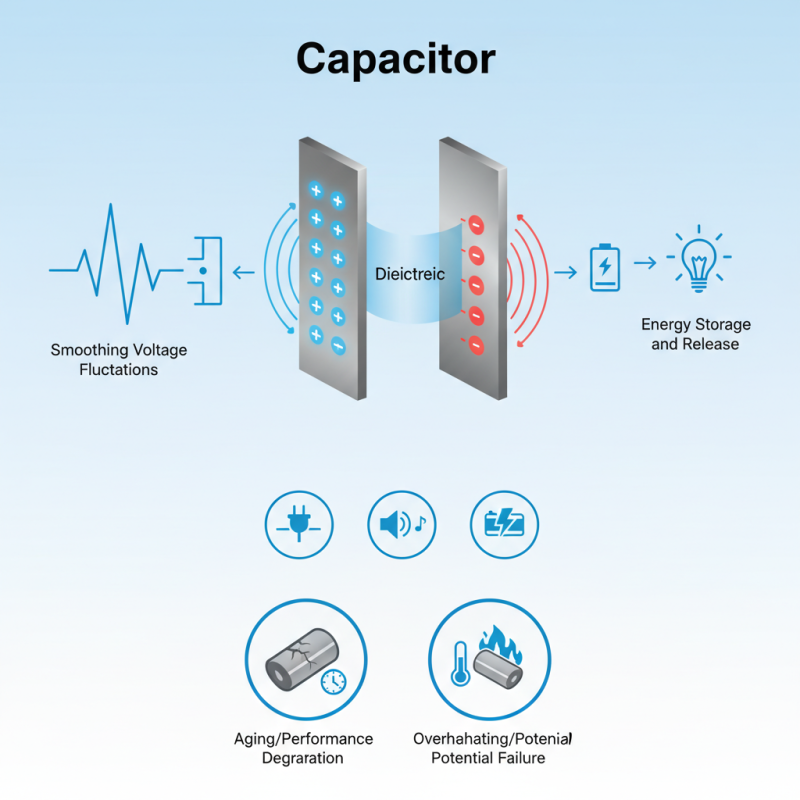
An Electric Capacitor is a crucial component in many electronic devices. Understanding its function helps us appreciate its importance in circuits. At its core, an electric capacitor stores and releases electric energy. This process is essential in smoothing out voltage fluctuations in power supplies.

The construction of an electric capacitor typically involves two conductive plates separated by an insulating material. This separator, or dielectric, allows the capacitor to hold a charge without the plates touching. Knowing how these components interact reveals the significant role capacitors play in filtering and energy storage.

In real-world applications, electric capacitors enhance performance. They stabilize power supplies, improve audio quality, and enable quick bursts of power in devices. Recognizing their contributions helps us understand modern technology's complexities. However, one must reflect on the limitations and potential failures of capacitors, such as aging or overheating. These factors can impact performance and reliability.

What is an Electric Capacitor and How Does it Work?

What is an Electric Capacitor?

An electric capacitor is a crucial component in electronic circuits. It stores electrical energy temporarily and releases it when needed. Capacitors are made of two conductive plates separated by an insulating material called a dielectric. This design allows them to accumulate charge. According to industry reports, the global capacitor market is anticipated to reach $30 billion by 2025, reflecting their importance in various applications.

Capacitors are widely used in power supply circuits, audio equipment, and even computing devices. They can smooth out voltage fluctuations and filter signals. However, selecting the appropriate capacitor for a specific application can be challenging. Factors like capacitance value, voltage rating, and temperature stability should all be considered. Capacitors also come in different types, each with distinct advantages and disadvantages.

Tip: Always check the specifications before purchasing a capacitor. A mismatch can lead to circuit failure.

Another essential aspect is recognizing a capacitor's limits. When a capacitor is overcharged, it can fail, sometimes catastrophically. Proper circuit design and safety measures are imperative to prevent such failures. Understanding the characteristics of various capacitors helps engineers optimize performance and enhance reliability in their designs.

Tip: Regular testing can identify potential issues with capacitors before they affect your systems.

The Basic Components of a Capacitor

A capacitor is a vital electronic component. It stores electrical energy for a short time. The basic components of a capacitor include two conductive plates and a dielectric material. The plates hold opposite charges when voltage is applied. This charge separation creates an electric field.

The conductive plates can be made from various metals. Common choices include aluminum and tantalum. The dielectric material separates these plates and affects the capacitor's performance. Materials like ceramic or plastic are commonly used. The type of dielectric also influences the capacitor's capacitance and voltage rating.

Capacitors come in different shapes and sizes. This variety enables their use in diverse applications. For example, larger capacitors might store energy for power supply smoothing. Smaller capacitors often filter signals in electronic circuits. Despite their importance, capacitors can fail. Understanding their components helps in identifying potential issues. This knowledge is crucial for reliable circuit design and maintenance.

Electric Capacitor Charge and Discharge Cycle

How Capacitors Store Electrical Energy

Capacitors are essential components in electrical circuits. They store energy in an electric field, enabling various applications. Capacitors are used in power supplies, filters, and electronic devices. Understanding how they store energy is crucial for many engineers.

When a capacitor is charged, positive and negative charges build up on its plates. This separation of charge creates an electric field. The amount of energy stored is proportional to the voltage and the capacitance, following the formula: \(E = \frac{1}{2} C V^2\). Reports indicate that the global capacitor market is expected to reach USD 50 billion by 2028, reflecting their growing importance.

**Tip:** Choose capacitors with the right voltage ratings for your application. Underestimating voltage can cause failure.

Capacitors have their limitations. They can leak charge over time. Temperature variations can also affect performance. Studies suggest that high-quality capacitors maintain stability under extreme temperatures better than their lower-quality counterparts.

**Tip:** Regularly check capacitors in critical systems to avoid unexpected failures.

Capacitor Charging and Discharging Process

Capacitors play a crucial role in countless electronic devices. Their primary function is the storage of electrical energy. This capability allows them to maintain voltage levels and smooth out fluctuations in power supply. Understanding the charging and discharging process is essential for utilizing capacitors effectively.

When a capacitor charges, it accumulates energy from an external circuit. The process involves electrons moving towards the positive plate, creating a potential difference. Data from the IEEE Power Electronics Magazine indicates that capacitors can charge to 63% of their maximum voltage in just one time constant. This rapid response time is critical in circuits requiring quick adjustments.

Discharging occurs once the power source is removed. The stored energy flows back into the circuit, often with a delay. Industry studies show that the discharge curve can vary widely depending on the capacitor’s type and its connected load. For instance, electrolytic capacitors can discharge quickly, while ceramic capacitors often release energy more gradually.

Tip: Always consider the capacitor’s voltage rating and ensure it matches your circuit's requirements. An incorrect rating can lead to failure or damage. Additionally, be mindful of discharge times, as they can affect the device's performance.

Another crucial point is that capacitors are not infallible. Over time, they may lose capacitance or develop internal faults. Regular checks and tests can mitigate unexpected failures. Emphasizing preventative maintenance will extend the lifespan of capacitors and enhance overall circuit reliability.

What is an Electric Capacitor and How Does it Work?

Capacitor Type Capacitance (µF) Voltage Rating (V) Charging Time (s) Discharging Time (s)
Ceramic Capacitor 10 50 0.01 0.02
Electrolytic Capacitor 100 25 0.1 0.5
Tantalum Capacitor 47 16 0.05 0.15
Film Capacitor 22 100 0.02 0.1
Supercapacitor 1000 2.7 5 60

Applications of Capacitors in Electronics

Capacitors play a vital role in modern electronics. They store electrical energy and release it when needed. This ability makes them essential in various applications. For instance, they filter noise in power supplies, ensuring clean and stable voltage. Without them, electronic devices could face performance issues.

In timing circuits, capacitors work with resistors to control how long a signal takes to change. This function is key in oscillators and timers. Capacitors also stabilize power supply voltages in devices like computers and smartphones. They help maintain a steady current, enabling efficient operation.

While capacitors are versatile, issues can arise. They can degrade over time or become faulty, impacting circuit performance. Understanding their limitations is crucial for effective use. Proper selection and placement can enhance device reliability. Designers must reflect on these factors during the design process.