

News

Miro: A New Standard in Responsible Innovation

Miro: A New Standard in Responsible Innovation The Miro monitor arm is setting new benchmarks in sustainability. It offers a high-performance solution without compromising on environmental responsibility. Designed with careful material selection, local sourcing, and longevity in mind, Miro’s responsible approach to design and unique manoeuvrability set it apart from the competition. Sustainable Choices Miro is crafted from energy-efficient materials with a lower carbon impact....

Read more
HSE Advisor

Role Purpose Support in the development, implementation and maintenance of the company’s Health, Safety & Environmental policies, processes, operational procedures, and standards.  Ensuring best practice and championing a continually improving HSE culture within the business. Key Responsibilities Liaise with and provide support to all areas of the business to eliminate, mitigate or reduce identified HSE exposures. Partner with the production management team and team leaders,...

Read more
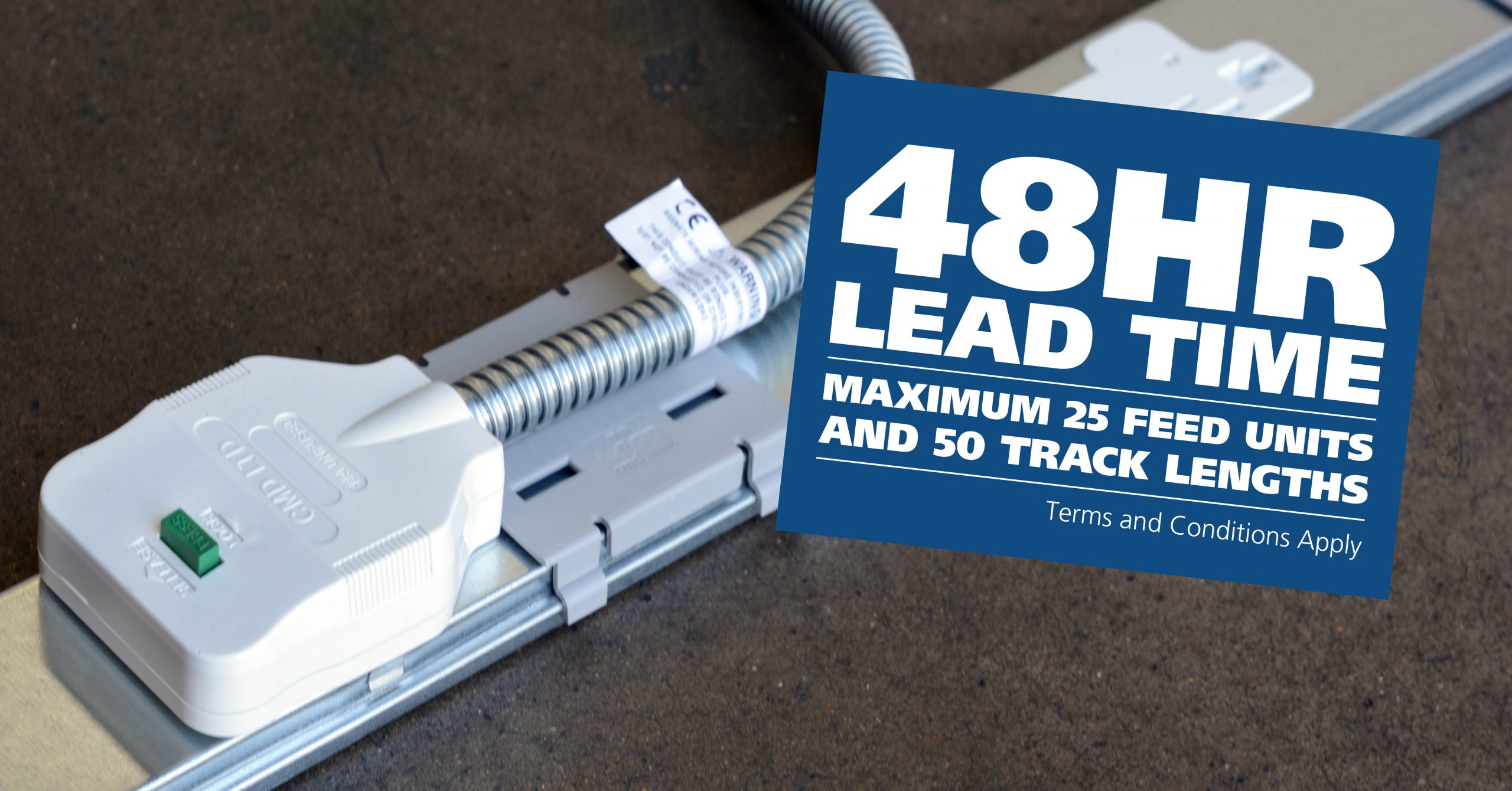
CMD Ltd LAUNCHES 48-HOUR TURNAROUND ON BETATRAK® RAPID ORDERING SERVICE

CMD Ltd, the specialist in power distribution systems, workstation power and monitor arms, has launched a rapid ordering service for its Betatrak® underfloor powertrack distribution systems and accessories, with a commitment to delivering within 48-hours of an approved purchase order*. The service enables customers to order up to 50 lengths of Standard or Clean Earth (C/E) low noise Betatrak, along with up to 25 feed...

Read more
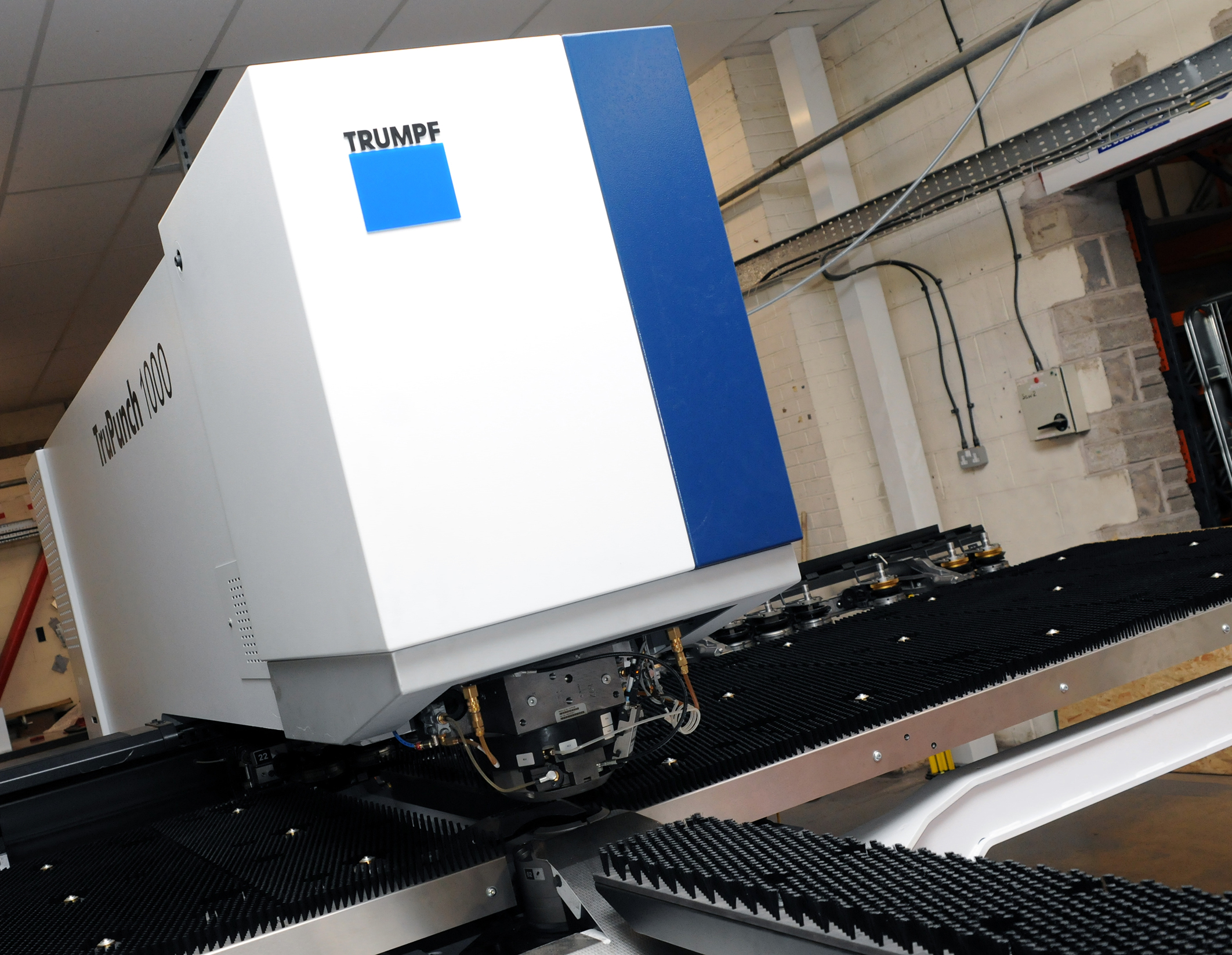
CMD INVESTS £1/4 MILLION IN NEW MACHINE AS PART OF FACTORY UPGRADE

We have invested in a new £1/4m TRUMPF CNC metal punch as part of an asset renewal strategy for our UK manufacturing capability. The new machine will be used in the production of a wide variety of our power distribution systems and workstation power products at our Rotherham factory. Suitable for handling sheet metal between 0.9mm and 3.0mm thick, the new machine will replace one...

Read more
CMD CATALOGUE PROVIDES TECHNICAL POWER DISTRIBUTION GUIDE

CMD Ltd has released a new catalogue, providing an easy to follow technical guide to our power distribution systems and plug and play desk modules. Detailing CMD’s full range of UK-manufactured power distribution systems and plug and play desk modules, the catalogue will be a helpful source of information to M&E engineers and contractors alike to understand how our power distribution systems connect together and...

Read more
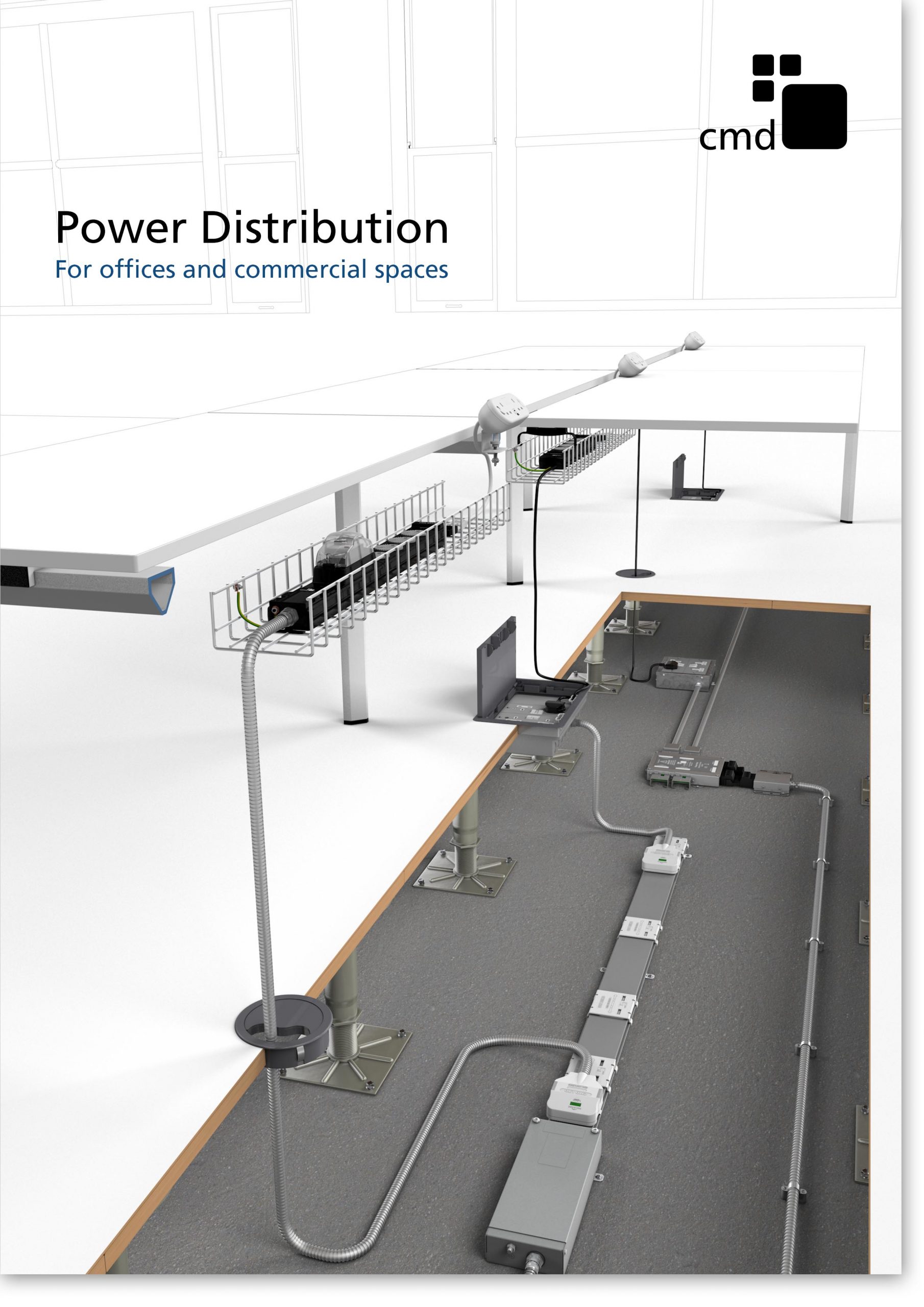
Power Distribution Catalogue
CMD Ltd PLAYS ESSENTIAL ROLE IN ELECTRICAL FIT OUT AT LONDON’S PRESTIGIOUS OFFICE DEVELOPMENT

CMD Ltd, specialist in workplace connectivity and ergonomic solutions, has provided a flexible and high-quality power distribution network for The Ray, a prestigious office development in London’s Farringdon. Well-known for being the former site of The Guardian newspaper, The Ray now stands as an 83,000ft² office development characterised by a modernised warehouse aesthetic, with level two now occupied by a global social media company. The...

Read more

The Ray
CMD plugs in to european opportunity with Schuko Capsule unit launch

CMD Ltd, the specialist in power and connectivity solutions for commercial environments, has launched a Schuko version of its popular fixed format Capsule workstation power module for export to mainland Europe and beyond. A popular on desk power module comprising two sockets and dual USB (type A and C) chargers, CMD’s Capsule unit is already widely specified in the UK as an off-the-shelf workstation power...

Read more
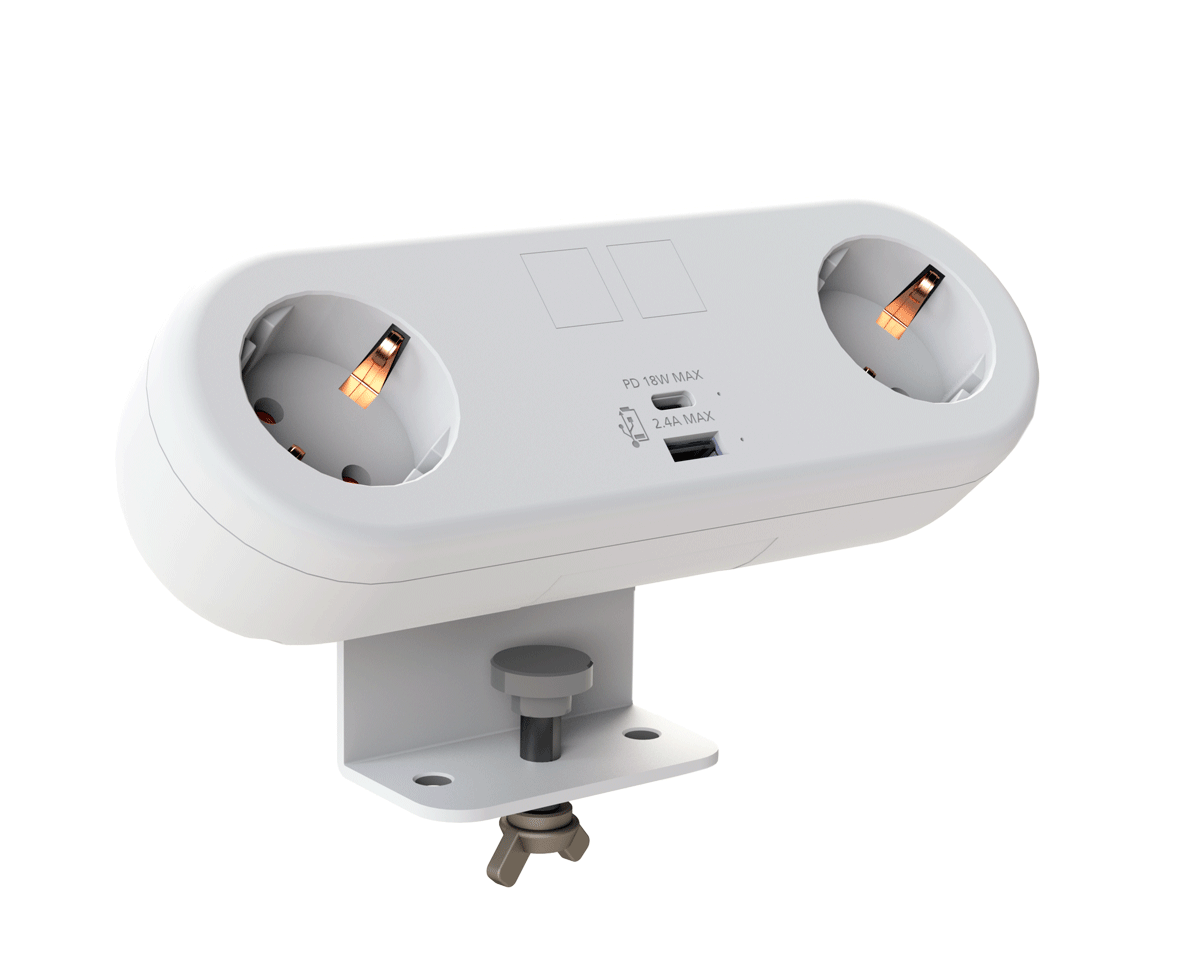
CMD White Schuko Capsule Desk Power Module
CMD LTD EXTENDS MONITOR ARM RANGE WITH THE LAUNCH OF REACH PLUS

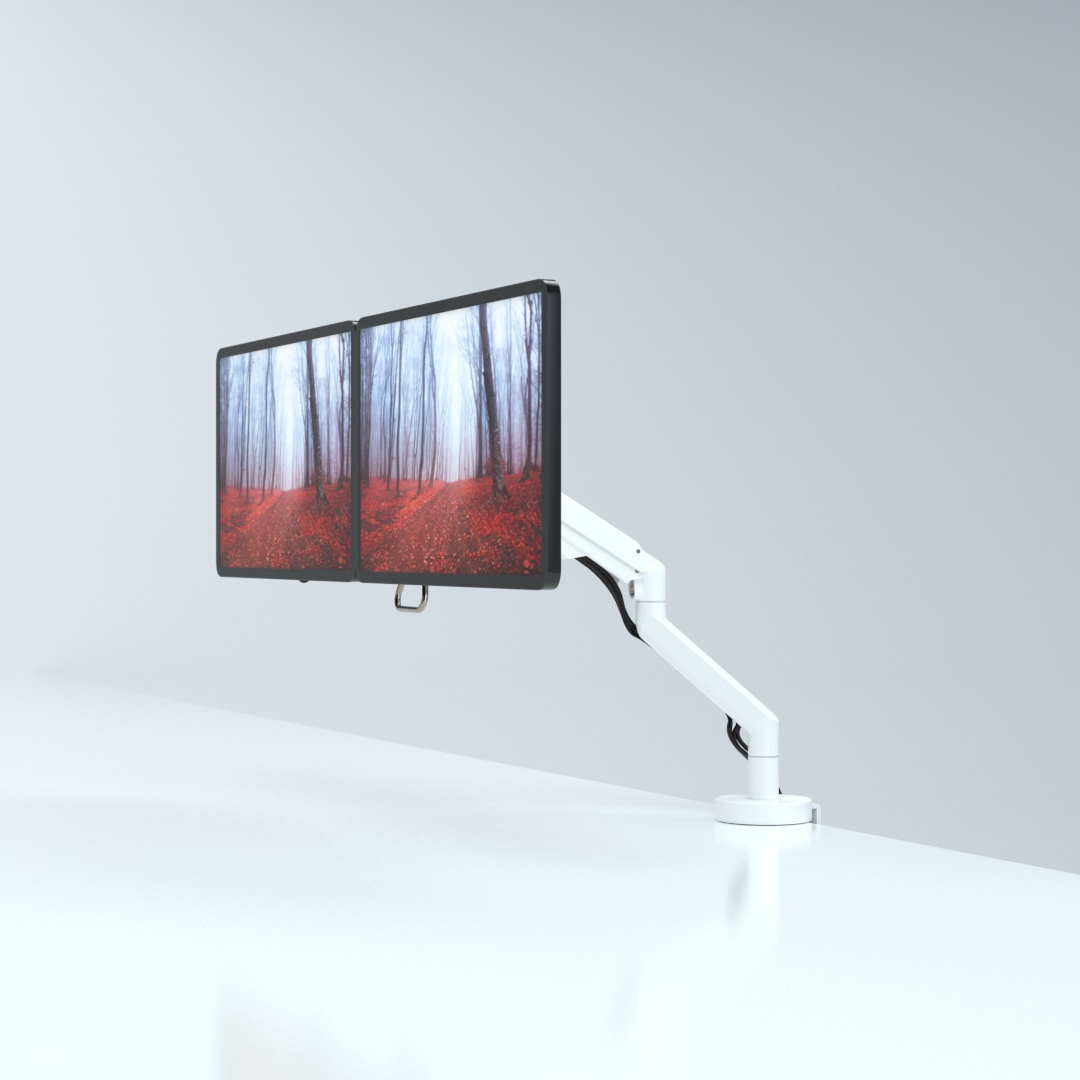
CMD Ltd, the specialist in ergonomic and connectivity solutions for commercial interiors, has completed its Reach monitor arm range with the launch of the Reach Plus. Available in single or dual screen options, the Reach Plus has been designed to provide an ideal solution for both single and dual screen workstation configurations, or can be used with next generation of large format curved screens. Suitable...

Read more
CMD Ltd DEMONSTRATES THE ART OF POWER DISTRIBUTION AT THE UNIVERSITY OF WARWICK

CMD Ltd, the specialist in workplace connectivity and ergonomic solutions, has provided Betatrak busbar power distribution and a range of electrical accessories for two major capital investment projects at the University of Warwick. Designed by Fielden Clegg Bradley Studios, the £33 million Faculty of Arts building is a showpiece development comprising four interconnected structures set around a central atrium, which will enable inter-disciplinary collaboration across...

Read more

University of Warwick
CMD BRINGS HARMONY TO COVENTRY UNIVERSITY RESEARCH FACILITIES

CMD Ltd, the specialist in power distribution solutions and workstation power and ergonomics, has provided under desk and on desk power modules for the refurbishment of three Coventry University research buildings. Located on Coventry University Technology Park, a business park designed to encourage collaboration between the university and knowledge-based businesses, the three buildings are being repurposed as office accommodation for university research teams. The refurbishment...

Read more


Coventry University

How to Effectively Monitor 7 TFT LCD Displays for Quality?

In the fast-evolving world of display technology, effectively monitoring 7 TFT LCD displays is crucial for ensuring quality. Industry expert Dr. Julia Chen, a renowned figure in display technologies, emphasizes, “Quality assurance begins with thorough monitoring.” Her words resonate in many production environments.

Ensuring that each TFT LCD performs optimally requires consistent checks. Color accuracy, brightness, and contrast play significant roles. However, achieving this can be more challenging than anticipated. Each display might exhibit peculiarities that demand individualized attention.

Monitoring these displays isn’t just about numbers. It involves keen observation and actionable insights. Regular calibration is key, but many overlook it. The combination of advanced tools and expert knowledge can transform the quality assurance process. To effectively Monitor 7 Tft Lcd displays, one must embrace both technology and expertise, paving the way for high-quality outcomes.

How to Effectively Monitor 7 TFT LCD Displays for Quality?

Understanding TFT LCD Display Quality Parameters

When monitoring TFT LCD displays, understanding quality parameters is essential. Key aspects include brightness, contrast ratio, and color accuracy. Brightness measures how well a display can perform in different lighting conditions. High brightness is crucial for clear visibility. However, too much brightness can lead to eye strain.

Contrast ratio indicates the difference between the brightest whites and the darkest blacks. A high contrast ratio enhances image depth, making visuals more engaging. Yet, excessive contrast can distort colors, making them appear unnatural. Color accuracy also matters. Displays should reproduce colors as they appear in real life. Inaccurate colors can mislead users, especially in design work.

Regular calibration can improve these parameters. Still, it’s not always a perfect solution. Variations in ambient light can affect how displays look. Ensuring consistent quality can be challenging. Sometimes, user preferences clash with technical specifications. Optimal performance is a continuous process. Monitoring must be adaptable and take user feedback into account.

Establishing a Monitoring System for Multiple Displays

Monitoring multiple TFT LCD displays requires an effective system. Establishing this system can significantly enhance quality control. Begin by assessing the display environment. Ensure adequate lighting and minimize glare. Position displays so that they are easily visible. Clear visibility helps in early detection of issues.

Incorporate tools for consistent monitoring. Use software to track performance metrics. This includes brightness, color accuracy, and response time. Regular calibration is essential. Many overlook this step. Calibration ensures that displays maintain consistency over time. Test each display periodically to catch deviations promptly.

Tips: Create a checklist for daily checks. This list can include visual inspections and functional tests. Document any irregularities immediately. Consider setting alerts for abnormal readings. Engaging the team in monitoring fosters responsibility. Encourage sharing observations. Team discussions can lead to better solutions.

Tools and Techniques for Quality Assessment in TFT LCDs

Monitoring the quality of TFT LCD displays requires precision and effective tools. For a comprehensive assessment, visual inspection, along with automated testing equipment, can reveal common issues like dead pixels or color inconsistencies. According to a report from the International Display Research, over 15% of TFT LCD screens may have minor defects that impact user experience.

Calibration tools are essential. They help ensure that color accuracy remains consistent across multiple displays. Using spectrophotometers and colorimeters can aid in achieving the desired color profiles. Regular monitoring can catch deviations before they become major problems, saving time and cost in the long run.

Tip: Implement automated testing routines. They streamline the process, making it easier to monitor multiple displays at once.

Understanding the metrics for quality assessment is crucial. Metrics such as Contrast Ratio and Response Time can dictate display performance. A poor response time can lead to motion blur, which affects usability. Given industry insights, displays with higher than average response times can see user satisfaction drop by up to 25%. Always utilize specific industry standards when conducting assessments.

Tip: Document findings thoroughly. This practice helps identify recurring issues and refine monitoring processes over time. Regular review can lead to significant quality enhancements.

Data Collection and Analysis for Display Performance

To effectively monitor seven TFT LCD displays, data collection and analysis are crucial. This process involves assessing various performance metrics such as color accuracy, contrast ratios, and response times. Industry standards recommend a color accuracy of at least 95% sRGB for quality displays. Tools like colorimeters and spectrophotometers can measure these parameters to ensure compliance.

Routine analysis using software tools allows for real-time monitoring. Data should be captured continuously to detect any deviations from expected performance. Reports reveal that about 20% of LCDs may not meet ideal specifications, leading to potential customer dissatisfaction. Inconsistent brightness and color shifts can occur over time. It's critical to document these variations meticulously.

Quality issues often arise from various factors, including environmental conditions. For example, temperature fluctuations can affect performance, causing ghosting or thermal drift. Display calibration needs to take these variables into account. While many processes currently exist, ongoing improvements in technology and methodologies are still necessary to achieve optimal monitoring. Emphasizing a proactive approach to data analysis will enhance display performance significantly.

Implementing Regular Maintenance for Optimal Display Quality

Regular maintenance is crucial for the optimal performance of TFT LCD displays. Over time, dust and moisture can accumulate, resulting in diminished image quality. According to industry reports, improper maintenance can lead to display deterioration in as little as six months. Regular checks can extend the lifespan of these displays significantly.

Consider implementing weekly inspections. This will help identify issues like pixel defects early. Use a microfiber cloth for cleaning the screens, as other materials can cause scratches. Ensure the displays remain in a stable environment with controlled temperature and humidity. This is critical; fluctuations can induce screen failures.

Tips: Schedule monthly professional servicing. Professionals can detect hidden problems that casual monitoring might miss. Always keep calibration tools handy. Proper calibration can enhance color accuracy and brightness uniformity. Pay attention to the operating hours of each display. The more hours they run, the more maintenance they require. Regular updates on software can also improve display performance.

Regular maintenance is not just about aesthetics; it’s vital for functionality and longevity. Neglecting these practices may lead to unexpected repairs or total display failure. The cost of catching issues early is far less than replacing entire units.