

News

Miro: A New Standard in Responsible Innovation

Miro: A New Standard in Responsible Innovation The Miro monitor arm is setting new benchmarks in sustainability. It offers a high-performance solution without compromising on environmental responsibility. Designed with careful material selection, local sourcing, and longevity in mind, Miro’s responsible approach to design and unique manoeuvrability set it apart from the competition. Sustainable Choices Miro is crafted from energy-efficient materials with a lower carbon impact....

Read more
HSE Advisor

Role Purpose Support in the development, implementation and maintenance of the company’s Health, Safety & Environmental policies, processes, operational procedures, and standards.  Ensuring best practice and championing a continually improving HSE culture within the business. Key Responsibilities Liaise with and provide support to all areas of the business to eliminate, mitigate or reduce identified HSE exposures. Partner with the production management team and team leaders,...

Read more
CMD Ltd LAUNCHES 48-HOUR TURNAROUND ON BETATRAK® RAPID ORDERING SERVICE

CMD Ltd, the specialist in power distribution systems, workstation power and monitor arms, has launched a rapid ordering service for its Betatrak® underfloor powertrack distribution systems and accessories, with a commitment to delivering within 48-hours of an approved purchase order*. The service enables customers to order up to 50 lengths of Standard or Clean Earth (C/E) low noise Betatrak, along with up to 25 feed...

Read more

CMD INVESTS £1/4 MILLION IN NEW MACHINE AS PART OF FACTORY UPGRADE

We have invested in a new £1/4m TRUMPF CNC metal punch as part of an asset renewal strategy for our UK manufacturing capability. The new machine will be used in the production of a wide variety of our power distribution systems and workstation power products at our Rotherham factory. Suitable for handling sheet metal between 0.9mm and 3.0mm thick, the new machine will replace one...

Read more

CMD CATALOGUE PROVIDES TECHNICAL POWER DISTRIBUTION GUIDE

CMD Ltd has released a new catalogue, providing an easy to follow technical guide to our power distribution systems and plug and play desk modules. Detailing CMD’s full range of UK-manufactured power distribution systems and plug and play desk modules, the catalogue will be a helpful source of information to M&E engineers and contractors alike to understand how our power distribution systems connect together and...

Read more

Power Distribution Catalogue
CMD Ltd PLAYS ESSENTIAL ROLE IN ELECTRICAL FIT OUT AT LONDON’S PRESTIGIOUS OFFICE DEVELOPMENT

CMD Ltd, specialist in workplace connectivity and ergonomic solutions, has provided a flexible and high-quality power distribution network for The Ray, a prestigious office development in London’s Farringdon. Well-known for being the former site of The Guardian newspaper, The Ray now stands as an 83,000ft² office development characterised by a modernised warehouse aesthetic, with level two now occupied by a global social media company. The...

Read more

The Ray
CMD plugs in to european opportunity with Schuko Capsule unit launch

CMD Ltd, the specialist in power and connectivity solutions for commercial environments, has launched a Schuko version of its popular fixed format Capsule workstation power module for export to mainland Europe and beyond. A popular on desk power module comprising two sockets and dual USB (type A and C) chargers, CMD’s Capsule unit is already widely specified in the UK as an off-the-shelf workstation power...

Read more

CMD White Schuko Capsule Desk Power Module
CMD LTD EXTENDS MONITOR ARM RANGE WITH THE LAUNCH OF REACH PLUS

CMD Ltd, the specialist in ergonomic and connectivity solutions for commercial interiors, has completed its Reach monitor arm range with the launch of the Reach Plus. Available in single or dual screen options, the Reach Plus has been designed to provide an ideal solution for both single and dual screen workstation configurations, or can be used with next generation of large format curved screens. Suitable...

Read more

CMD Ltd DEMONSTRATES THE ART OF POWER DISTRIBUTION AT THE UNIVERSITY OF WARWICK

CMD Ltd, the specialist in workplace connectivity and ergonomic solutions, has provided Betatrak busbar power distribution and a range of electrical accessories for two major capital investment projects at the University of Warwick. Designed by Fielden Clegg Bradley Studios, the £33 million Faculty of Arts building is a showpiece development comprising four interconnected structures set around a central atrium, which will enable inter-disciplinary collaboration across...

Read more

University of Warwick
CMD BRINGS HARMONY TO COVENTRY UNIVERSITY RESEARCH FACILITIES

CMD Ltd, the specialist in power distribution solutions and workstation power and ergonomics, has provided under desk and on desk power modules for the refurbishment of three Coventry University research buildings. Located on Coventry University Technology Park, a business park designed to encourage collaboration between the university and knowledge-based businesses, the three buildings are being repurposed as office accommodation for university research teams. The refurbishment...

Read more

Coventry University

What is a Drone Gimbal Camera and How Does it Work?

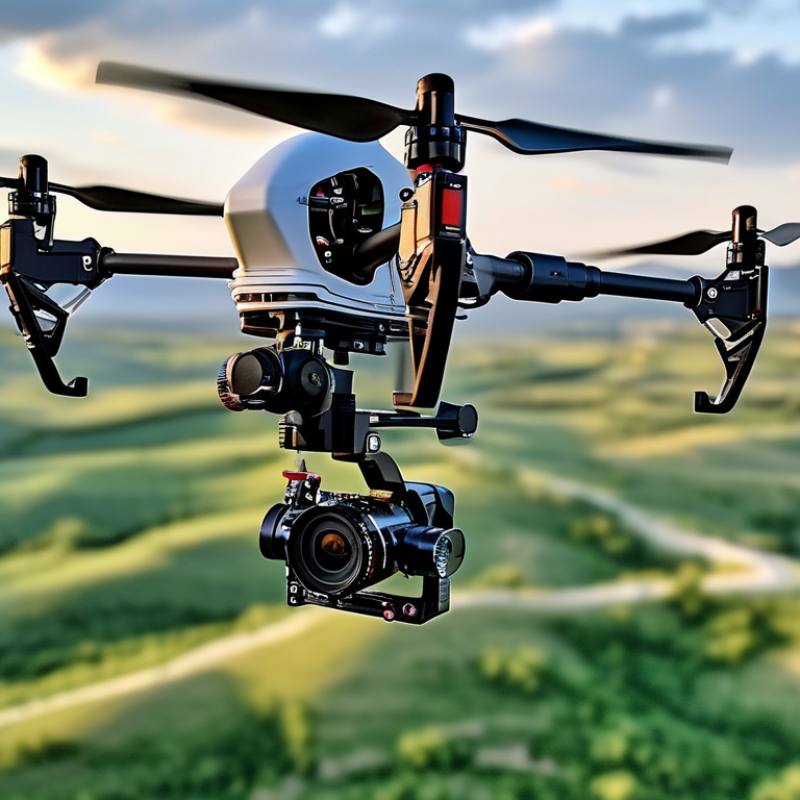
In recent years, the popularity of the Drone Gimbal Camera has surged among filmmakers and photographers. These devices combine aerial technology with advanced stabilization features. They capture smooth and steady footage, even in challenging conditions. A Drone Gimbal Camera minimizes shakes and vibrations, ensuring quality shots during flight.

Understanding how a Drone Gimbal Camera works is essential for anyone looking to enhance their aerial imagery. The gimbal system uses motors and sensors to adjust the camera's position. This allows for fluid motion and clear imagery, which can elevate your work significantly. However, mastering this tool requires practice and a learning curve.

Many users may struggle to achieve optimal results at first. Familiarity with settings and proper techniques takes time. As you explore its capabilities, be prepared for trial and error. The journey to mastering a Drone Gimbal Camera can be rewarding, providing opportunities to capture breathtaking visuals.

What is a Drone Gimbal Camera and How Does it Work?

What is a Drone Gimbal Camera?

A drone gimbal camera is a specialized device designed to stabilize images captured by drones. It typically consists of a motorized platform that allows the camera to move freely in different directions. This movement helps to counteract the drone's vibrations and sudden motions. As a result, the footage appears smooth and professional.

When using a gimbal camera, operators can achieve high-quality video recordings. Even in windy conditions or while making sharp turns, the footage remains steady. These devices often include three-axis stabilization, which adjusts along the roll, pitch, and yaw axes. This advanced technology effectively minimizes any unwanted camera shake during flight.

While gimbal cameras significantly enhance video quality, they can also present challenges. For instance, not all drones are compatible with gimbals, requiring careful selection. Additionally, the added weight of a gimbal can impact the drone's flight time and agility. Users must thus consider their specific needs and the balance between stability and performance.

Key Components of a Drone Gimbal Camera

A drone gimbal camera is a crucial component for capturing stable aerial footage. Understanding its key elements helps in appreciating how it functions. A gimbal typically consists of three main parts: the motors, the control system, and the frame. Each of these elements plays a vital role in stabilizing the camera during flight.

The motors are critical for balancing the camera’s position. They adjust based on the drone's movements, counteracting wind and vibrations. These motors work continuously, creating a smooth flow of video. However, they can sometimes struggle in harsh weather conditions or with sudden movements. The control system communicates with the motors. It uses sensors to detect angles and movements, ensuring the footage remains steady. If the sensors fail or misinterpret movement, the video quality can suffer.

The frame holds everything together, providing structural integrity. It must be lightweight yet durable. Many frames use materials like carbon fiber for strength without adding excess weight. However, a frame that is too fragile may break upon impact, leading to expensive repairs. Understanding these components provides insight into why gimbal cameras are essential for high-quality drone footage.

How a Drone Gimbal Stabilizes Imagery

A drone gimbal camera is essential for capturing smooth and stable footage. The gimbal system consists of motors and sensors that keep the camera steady even when the drone shakes or moves. This stabilization technology is crucial for professional video production and photography. It allows users to shoot high-quality images while flying over uneven terrains or during windy conditions.

When a drone encounters turbulence, the gimbal reacts quickly. It uses gyroscopic sensors to detect unwanted movements. The motors then adjust the camera's position to counteract these shifts. This response is remarkably effective, often achieving results that seem impossible given the drone's motion. However, even the best gimbal systems can have limitations. For example, they may struggle during rapid movements or extreme angles.

Dealing with these challenges requires skill. Understanding the gimbal's behavior can enhance footage quality. Sometimes, operators discover that post-processing is needed to correct imperfections. Occasionally, they may realize that conditions weren’t ideal for shooting. These moments of reflection can lead to better planning and technique in future flights. Embracing these imperfections ultimately contributes to growth in drone piloting skills.

The Benefits of Using a Gimbal Camera on Drones

Using a gimbal camera on drones brings significant advantages, especially in capturing high-quality footage. A gimbal stabilizes the camera. It reduces vibrations and shakes caused by wind, speed, or movement. This results in smoother, more professional-looking videos. Filmmakers and hobbyists both appreciate this improvement.

Imagine flying a drone over stunning landscapes. Without a gimbal, the footage could be shaky and unusable. The gimbal maintains a steady horizon. It keeps the camera level even during rapid turns or dips. This technology is particularly beneficial for aerial photography where clarity is essential.

However, there can be drawbacks. Gimbals add weight to the drone, affecting flight time and handling. If the gimbal fails, the footage may suffer tremendously. It's important to maintain the equipment properly. Regular checks and adjustments can ensure reliability. While gimbals enhance video quality significantly, they also require diligence.

Common Applications of Drone Gimbal Cameras

Drone gimbal cameras have several important applications across various fields. In filmmaking, they help capture stunning aerial shots with smooth motion. The gimbal stabilizes the camera, reducing shakes and vibrations. This enables filmmakers to produce high-quality content with dramatic perspectives. Aerial views provide unique storytelling opportunities that ground-based footage cannot.

In the field of agriculture, farmers use drone gimbal cameras to survey large crop areas. They can easily monitor plant health and detect issues early. This proactive approach saves time and resources. However, interpreting the footage can be challenging. Farmers need to understand the data to make informed decisions. Additionally, drone flight regulations can complicate operations, adding another layer to the process.

Search and rescue missions also benefit from drone gimbal cameras. They facilitate quick assessments of disaster areas. Rescuers can identify survivors or hazards from above. While these drones are effective, missed details can occur. The fast-paced nature of rescues necessitates quick judgments, which aren’t always flawless. Operators must balance speed with thoroughness when interpreting footage.