

News

Miro: A New Standard in Responsible Innovation

Miro: A New Standard in Responsible Innovation The Miro monitor arm is setting new benchmarks in sustainability. It offers a high-performance solution without compromising on environmental responsibility. Designed with careful material selection, local sourcing, and longevity in mind, Miro’s responsible approach to design and unique manoeuvrability set it apart from the competition. Sustainable Choices Miro is crafted from energy-efficient materials with a lower carbon impact....

Read more
HSE Advisor

Role Purpose Support in the development, implementation and maintenance of the company’s Health, Safety & Environmental policies, processes, operational procedures, and standards.  Ensuring best practice and championing a continually improving HSE culture within the business. Key Responsibilities Liaise with and provide support to all areas of the business to eliminate, mitigate or reduce identified HSE exposures. Partner with the production management team and team leaders,...

Read more
CMD Ltd LAUNCHES 48-HOUR TURNAROUND ON BETATRAK® RAPID ORDERING SERVICE

CMD Ltd, the specialist in power distribution systems, workstation power and monitor arms, has launched a rapid ordering service for its Betatrak® underfloor powertrack distribution systems and accessories, with a commitment to delivering within 48-hours of an approved purchase order*. The service enables customers to order up to 50 lengths of Standard or Clean Earth (C/E) low noise Betatrak, along with up to 25 feed...

Read more

CMD INVESTS £1/4 MILLION IN NEW MACHINE AS PART OF FACTORY UPGRADE

We have invested in a new £1/4m TRUMPF CNC metal punch as part of an asset renewal strategy for our UK manufacturing capability. The new machine will be used in the production of a wide variety of our power distribution systems and workstation power products at our Rotherham factory. Suitable for handling sheet metal between 0.9mm and 3.0mm thick, the new machine will replace one...

Read more

CMD CATALOGUE PROVIDES TECHNICAL POWER DISTRIBUTION GUIDE

CMD Ltd has released a new catalogue, providing an easy to follow technical guide to our power distribution systems and plug and play desk modules. Detailing CMD’s full range of UK-manufactured power distribution systems and plug and play desk modules, the catalogue will be a helpful source of information to M&E engineers and contractors alike to understand how our power distribution systems connect together and...

Read more

Power Distribution Catalogue
CMD Ltd PLAYS ESSENTIAL ROLE IN ELECTRICAL FIT OUT AT LONDON’S PRESTIGIOUS OFFICE DEVELOPMENT

CMD Ltd, specialist in workplace connectivity and ergonomic solutions, has provided a flexible and high-quality power distribution network for The Ray, a prestigious office development in London’s Farringdon. Well-known for being the former site of The Guardian newspaper, The Ray now stands as an 83,000ft² office development characterised by a modernised warehouse aesthetic, with level two now occupied by a global social media company. The...

Read more

The Ray
CMD plugs in to european opportunity with Schuko Capsule unit launch

CMD Ltd, the specialist in power and connectivity solutions for commercial environments, has launched a Schuko version of its popular fixed format Capsule workstation power module for export to mainland Europe and beyond. A popular on desk power module comprising two sockets and dual USB (type A and C) chargers, CMD’s Capsule unit is already widely specified in the UK as an off-the-shelf workstation power...

Read more

CMD White Schuko Capsule Desk Power Module
CMD LTD EXTENDS MONITOR ARM RANGE WITH THE LAUNCH OF REACH PLUS

CMD Ltd, the specialist in ergonomic and connectivity solutions for commercial interiors, has completed its Reach monitor arm range with the launch of the Reach Plus. Available in single or dual screen options, the Reach Plus has been designed to provide an ideal solution for both single and dual screen workstation configurations, or can be used with next generation of large format curved screens. Suitable...

Read more

CMD Ltd DEMONSTRATES THE ART OF POWER DISTRIBUTION AT THE UNIVERSITY OF WARWICK

CMD Ltd, the specialist in workplace connectivity and ergonomic solutions, has provided Betatrak busbar power distribution and a range of electrical accessories for two major capital investment projects at the University of Warwick. Designed by Fielden Clegg Bradley Studios, the £33 million Faculty of Arts building is a showpiece development comprising four interconnected structures set around a central atrium, which will enable inter-disciplinary collaboration across...

Read more

University of Warwick
CMD BRINGS HARMONY TO COVENTRY UNIVERSITY RESEARCH FACILITIES

CMD Ltd, the specialist in power distribution solutions and workstation power and ergonomics, has provided under desk and on desk power modules for the refurbishment of three Coventry University research buildings. Located on Coventry University Technology Park, a business park designed to encourage collaboration between the university and knowledge-based businesses, the three buildings are being repurposed as office accommodation for university research teams. The refurbishment...

Read more

Coventry University

How to Choose the Right Wall Mounted Battery Harness?

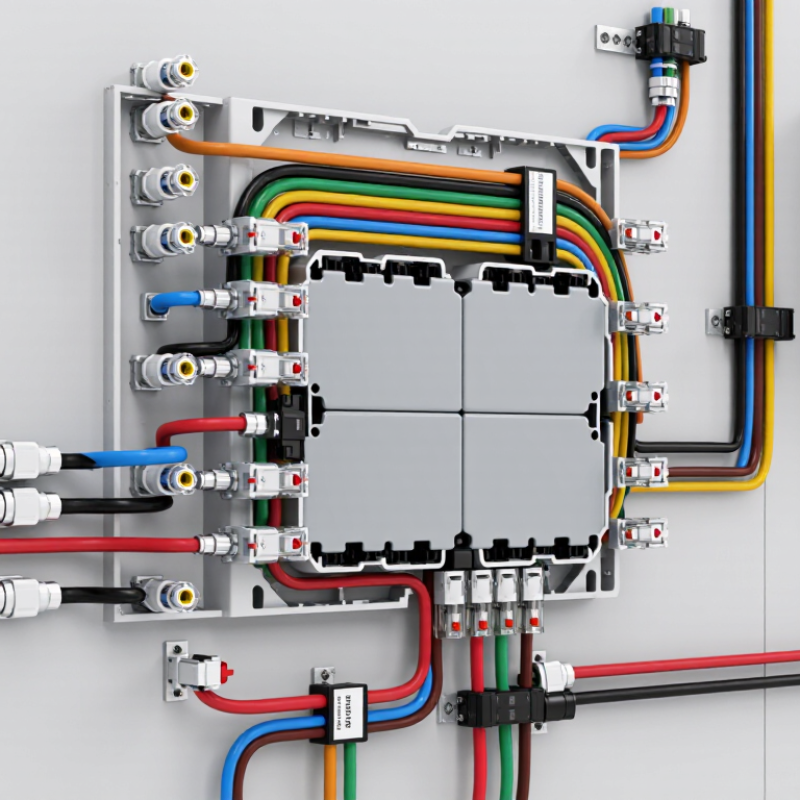
Choosing the right Wall Mounted Battery Harness is more than matching cable colors or connector shapes. The harness carries energy, controls heat, and supports a stable connection between the battery and mounted equipment. A poor choice may create voltage loss, loose terminals, or unnecessary stress on the battery system.

Start with the battery’s voltage, maximum current, connector type, and recommended cable size. Check the manufacturer’s datasheet, not only the product photograph. Measure the cable route, including bends, entry points, and the distance to the inverter or control unit. A few extra centimeters can prevent sharp bends and pulled connectors. Small details matter.

The mounting surface also affects the decision. Damp rooms, dusty workshops, and outdoor enclosures require different insulation and protection levels. Look for suitable strain relief, secure terminal covers, flexible conductors, and materials rated for the expected temperature. Compatibility should be verified with the battery manufacturer or a qualified electrical professional.

A tidy harness is helpful. It is not proof of quality. Some harnesses appear robust but use thin conductors or weak crimping beneath the insulation. That detail is easy to miss. Inspect crimp quality, connector locking, labeling, and cable support before installation. It is also wise to leave room for future inspection and maintenance.

No single harness fits every wall-mounted battery system. The safest selection balances electrical ratings, physical layout, environmental conditions, and manufacturer guidance. This guide explains those choices clearly, while recognizing that real installations can expose assumptions that looked reasonable on paper.

How to Choose the Right Wall Mounted Battery Harness?

Define System Voltage: 12 V, 24 V, 48 V, or High-Voltage Battery Designs

Choosing the right wall mounted battery harness starts with the system voltage. A 12 V design suits small backup systems, access equipment, and compact off-grid loads. At the same power, it draws more current than a 24 V or 48 V system. That means thicker cables, stronger terminals, and greater attention to heat.

A 24 V harness can reduce cable size while remaining practical for medium-duty storage. A 48 V system usually delivers better efficiency for larger inverters and longer operating periods. Check the inverter, battery modules, charger, and battery management system together. Their voltage ranges must overlap.

Do not select a harness by voltage alone. Confirm continuous current, peak current, connector ratings, cable length, insulation, and fuse placement. Short cables still need proper protection.

High-voltage battery designs require stricter planning. Clearances, touch protection, isolation monitoring, and disconnect devices become critical. Installation should follow applicable electrical standards and be handled by qualified personnel.

Never mix connectors from different systems because they look similar. It happens more often than expected. A practical check is simple: read the battery label, measure the intended operating range, and compare it with every connected device. I have seen projects delayed because the nominal voltage matched, but the charging limit did not. Leave room for real conditions, including cold starts, voltage sag, and future expansion.

Size Conductors by Ampacity, Voltage Drop, and IEC 60228 Conductor Classes

How to Choose the Right Wall Mounted Battery Harness?

A wall mounted battery harness must handle current safely without excessive heating. Start by calculating the maximum continuous and intermittent load. Select conductor ampacity above that demand, then adjust for ambient temperature, enclosure conditions, and bundled cables. Do not rely on conductor size alone. Terminal ratings and insulation temperature also matter.

Voltage drop is equally important in battery systems. Measure the complete circuit length, including positive and negative conductors. Use the expected current and conductor resistance to estimate voltage loss. A short harness may tolerate a smaller conductor, while a longer run can require a larger cross-section.

Keep the connection path direct. Loose lugs create heat and unpredictable losses. A voltage drop check at the battery and load is valuable because calculations can miss installation details.

IEC 60228 conductor classes help describe construction and flexibility. Class 1 uses solid conductors, while Class 2 uses stranded conductors with better installation flexibility. Class 5 and Class 6 are more flexible, supporting movement and tight bending areas.

However, flexibility does not automatically mean higher ampacity. Verify the manufacturer’s resistance, insulation rating, and approved termination method. Crimp compatibility is easy to overlook. A harness may meet the current calculation but still fail at an unsuitable terminal.

Recheck the measured cable length, tightening condition, and temperature after installation. A first pass is rarely enough.

Select Insulation for Rated Temperatures from 80°C to 125°C or Higher

How to Choose the Right Wall Mounted Battery Harness?

When selecting a wall mounted battery harness, insulation temperature is a critical decision. Choose materials rated for continuous operation at 80°C, 105°C, 125°C, or higher when heat exposure is uncertain. The rating should exceed the expected cable temperature, not just the room temperature. A battery enclosure can become surprisingly hot near terminals, busbars, or charging components. Measure real conditions when possible. Guessing is risky.

Review the insulation datasheet for continuous and short-term temperature limits. Also check flexibility, abrasion resistance, voltage rating, and resistance to oils or moisture. A 125°C rating does not automatically mean better performance in every installation. Some high-temperature materials become less flexible, making tight bends difficult. Keep the bend radius generous, and prevent the harness from touching sharp metal edges. Small details matter.

During inspection, look for discoloration, cracking, stiffness, or melted surfaces. These signs may indicate overheating or poor routing. Use suitable clamps to reduce vibration around the battery terminals. I have seen neat-looking harnesses fail because heat was concentrated at one connector. That mistake is easy to miss. Confirm terminal temperature, conductor size, and protection requirements together. If the measured temperature approaches the insulation limit, select a higher-rated material or improve ventilation. A little extra margin is usually worth the added cost.

How to Choose the Right Wall Mounted Battery Harness? — Select Insulation for Rated Temperatures from 80°C to 125°C or Higher
Insulation Type Typical Continuous Temperature Rating Typical Short-Term / Emergency Temperature Capability Flexibility and Installation Characteristics Resistance Profile Recommended Use in Wall-Mounted Battery Harnesses Selection Considerations
PVC
Polyvinyl Chloride
80°C to 105°C Often higher for limited durations, depending on the specified cable construction and standard Generally flexible and economical; suitable for fixed routing and moderate bending Good abrasion resistance and moisture resistance; limited performance at elevated temperatures and near some oils or solvents Use the exact cable marking and datasheet rating. Do not select PVC only from the ambient temperature; conductor heating, enclosure heat, and current load must also be considered.
XLPE
Cross-Linked Polyethylene
90°C commonly Typically up to approximately 125°C for short-circuit conditions when permitted by the applicable cable standard Good dimensional stability; usually less soft than PVC and appropriate for organized harness routing Good moisture, chemical, and abrasion resistance; generally improved thermal performance over standard PVC Verify conductor size, allowable ampacity, bend radius, and the specific short-circuit temperature limit stated by the cable manufacturer or governing standard.
ETFE
Ethylene Tetrafluoroethylene
Typically 125°C to 150°C May tolerate higher brief temperatures, subject to the cable design and qualification Thin, tough insulation with good flexibility; useful where space and weight are restricted Excellent resistance to many chemicals, moisture, abrasion, and flame; low dielectric loss Confirm voltage rating, stripping method, crimp compatibility, and minimum bend radius. Thin insulation can require careful protection against sharp edges.
Silicone Rubber 150°C to 200°C Short-term limits can be higher, depending on the construction and qualification Very flexible over a wide temperature range; excellent for vibration, movement, and tight routing Excellent high-temperature and low-temperature performance; good ozone and weather resistance; comparatively lower cut and abrasion resistance than many thermoplastics Use abrasion sleeves, conduit, or edge protection where mechanical damage is possible. Silicone insulation may be more susceptible to tearing or cutting during installation.
FEP
Fluorinated Ethylene Propylene
Typically up to 200°C Higher brief exposure may be possible, but it must be confirmed for the specific cable Thin and relatively flexible; supports compact harness designs Excellent chemical, moisture, flame, and weather resistance; very low friction surface Check termination procedures and mechanical protection. FEP may require more careful handling than thicker, tougher jacket systems.
PTFE
Polytetrafluoroethylene
Typically 200°C to 260°C May withstand higher short-duration exposure depending on the cable construction and certification Good flexibility in small sizes, but can be less mechanically robust than rugged jacketed cable systems Outstanding chemical, temperature, moisture, and dielectric performance; low friction and excellent non-stick properties Provide mechanical protection against cutting, crushing, and sharp bends. Verify termination reliability, creep behavior, voltage rating, and applicable flammability requirements.
Engineering selection rule: Select an insulation system whose certified continuous temperature rating exceeds the highest calculated operating temperature at the harness location. Consider ambient temperature, conductor self-heating, battery charge and discharge current, enclosure heat, connector temperature limits, routing near busbars or power electronics, vibration, bend radius, abrasion, chemicals, flame requirements, and the applicable wiring standard. The temperature values shown are typical industry ranges; the exact rating must be confirmed from the complete cable or harness specification.

Specify Enclosures Using IEC 60529 IP Ratings for Wall-Mounted Installations

How to Choose the Right Wall Mounted Battery Harness?

For a wall-mounted battery harness, the enclosure’s IP rating should match its actual environment. IEC 60529 defines protection against solid particles and water. The first digit covers solids, from 0 to 6. The second covers water, from 0 to 9. An IP65 enclosure is dust-tight and resists water jets. It is not automatically suitable for immersion.

Indoor utility rooms may only need moderate protection, such as IP44, when dust and splashing are limited. Outdoor walls usually demand stronger sealing, often IP65 or higher. However, the rating applies to the complete tested enclosure. Cable glands, connectors, hinges, and mounting surfaces can reduce protection. A small gap around the harness may become a direct path for rain.

Check the installation height, rainfall direction, cleaning methods, and condensation risk before selecting the enclosure. Keep cable entries facing downward where practical. Use correctly sized glands, and avoid sharply bending the harness near the entry point. Field inspections often reveal loose glands after maintenance. That detail is easy to miss. IEC 60529 does not measure corrosion resistance, ultraviolet aging, or impact strength, so those properties need separate verification. I have seen a well-sealed box fail early because its mounting hardware rusted. The IP number looked right, but the installation was not. Examine test documentation, sealing materials, and the enclosure’s condition after assembly.

Validate Terminals and Testing Against UL 486A-486B and IEC 62477-1

How to Choose the Right Wall Mounted Battery Harness?

Battery demand is growing quickly. The IEA’s Global EV Outlook 2024 reports more than 750 GWh of battery demand in 2023. Its Batteries and Secure Energy Transitions report also projects a sixfold increase in global energy storage capacity by 2030. These figures make terminal quality more than a purchasing detail. Small details matter.

Start by confirming conductor size, terminal material, plating, temperature rating, and compression geometry. UL 486A-486B addresses pressure wire connectors, wire connectors, and soldering lugs. It does not automatically certify an entire wall-mounted harness. Check the connector’s approved wire range, tightening torque, and installation method. Then verify crimp height and pull-out performance using controlled samples. Do not guess.

Testing must connect the terminal to the complete equipment design. IEC 62477-1 focuses on safety requirements for power electronic converter systems, including insulation coordination, protective measures, and abnormal operating conditions. A practical qualification plan should include temperature-rise testing, dielectric withstand, insulation resistance, current cycling, vibration, and short-circuit protection reviews. Test clearances under real mounting conditions, not only on a bench.

A polished sample can still fail. I would question any report that omits conductor length, ambient temperature, torque tools, or sampling quantity. UL 486A-486B results should be traced to the exact terminal and conductor combination. IEC 62477-1 evaluation should reflect the installed battery voltage, enclosure, creepage, and clearance. The uncomfortable part is simple: passing one test does not prove the harness is safe everywhere.