

News

Miro: A New Standard in Responsible Innovation

Miro: A New Standard in Responsible Innovation The Miro monitor arm is setting new benchmarks in sustainability. It offers a high-performance solution without compromising on environmental responsibility. Designed with careful material selection, local sourcing, and longevity in mind, Miro’s responsible approach to design and unique manoeuvrability set it apart from the competition. Sustainable Choices Miro is crafted from energy-efficient materials with a lower carbon impact....

Read more
HSE Advisor

Role Purpose Support in the development, implementation and maintenance of the company’s Health, Safety & Environmental policies, processes, operational procedures, and standards.  Ensuring best practice and championing a continually improving HSE culture within the business. Key Responsibilities Liaise with and provide support to all areas of the business to eliminate, mitigate or reduce identified HSE exposures. Partner with the production management team and team leaders,...

Read more
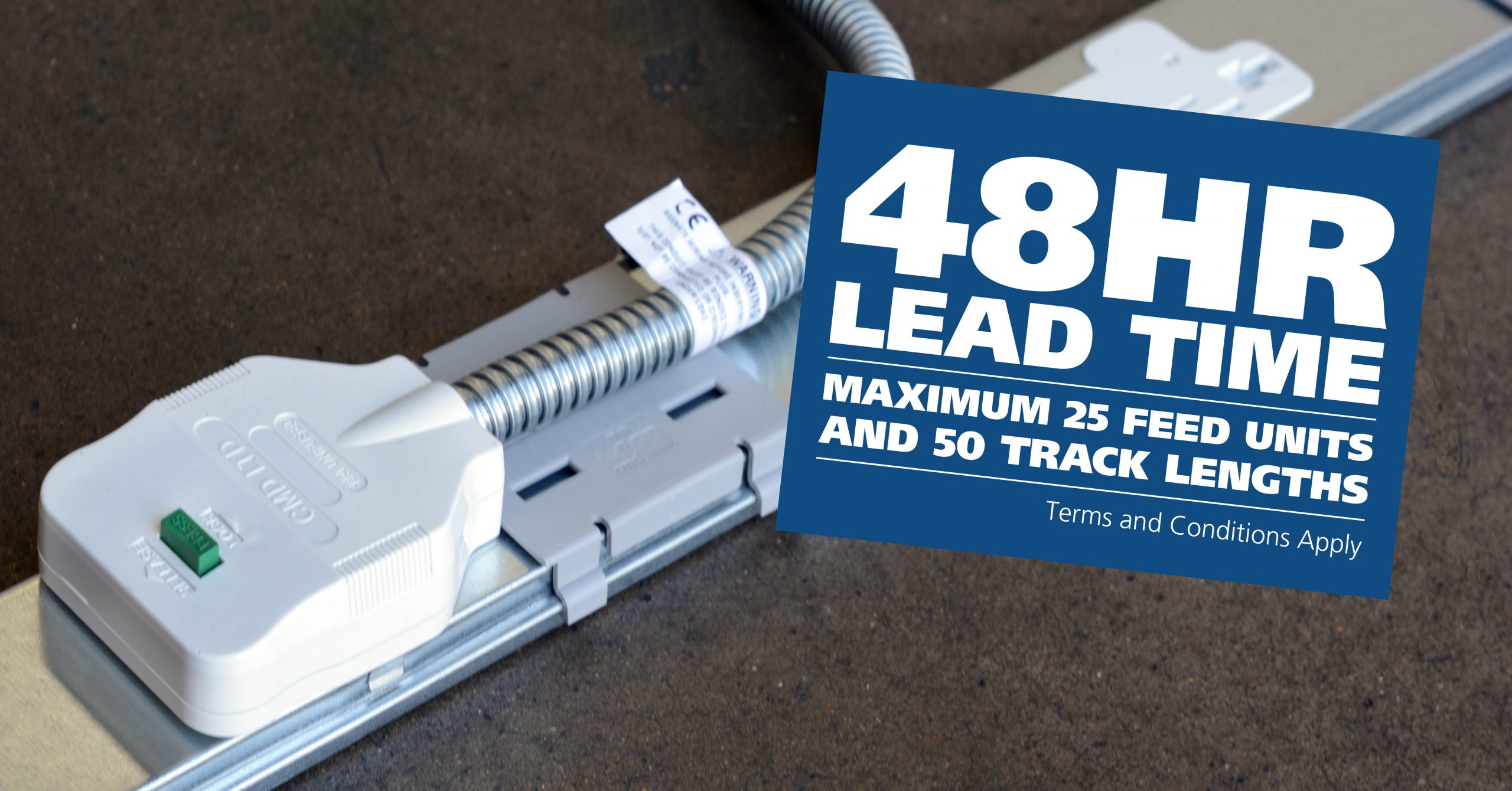
CMD Ltd LAUNCHES 48-HOUR TURNAROUND ON BETATRAK® RAPID ORDERING SERVICE

CMD Ltd, the specialist in power distribution systems, workstation power and monitor arms, has launched a rapid ordering service for its Betatrak® underfloor powertrack distribution systems and accessories, with a commitment to delivering within 48-hours of an approved purchase order*. The service enables customers to order up to 50 lengths of Standard or Clean Earth (C/E) low noise Betatrak, along with up to 25 feed...

Read more
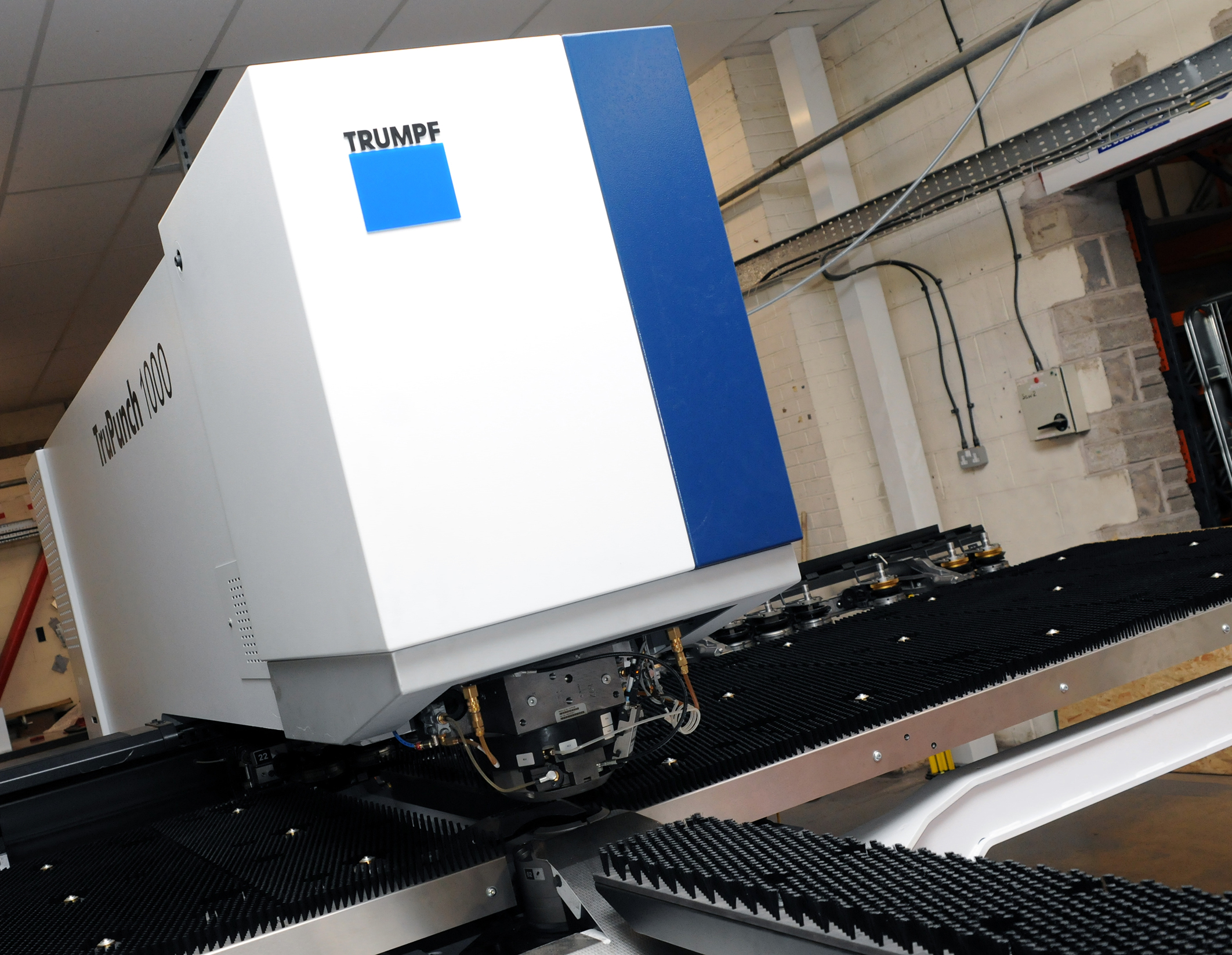
CMD INVESTS £1/4 MILLION IN NEW MACHINE AS PART OF FACTORY UPGRADE

We have invested in a new £1/4m TRUMPF CNC metal punch as part of an asset renewal strategy for our UK manufacturing capability. The new machine will be used in the production of a wide variety of our power distribution systems and workstation power products at our Rotherham factory. Suitable for handling sheet metal between 0.9mm and 3.0mm thick, the new machine will replace one...

Read more
CMD CATALOGUE PROVIDES TECHNICAL POWER DISTRIBUTION GUIDE

CMD Ltd has released a new catalogue, providing an easy to follow technical guide to our power distribution systems and plug and play desk modules. Detailing CMD’s full range of UK-manufactured power distribution systems and plug and play desk modules, the catalogue will be a helpful source of information to M&E engineers and contractors alike to understand how our power distribution systems connect together and...

Read more
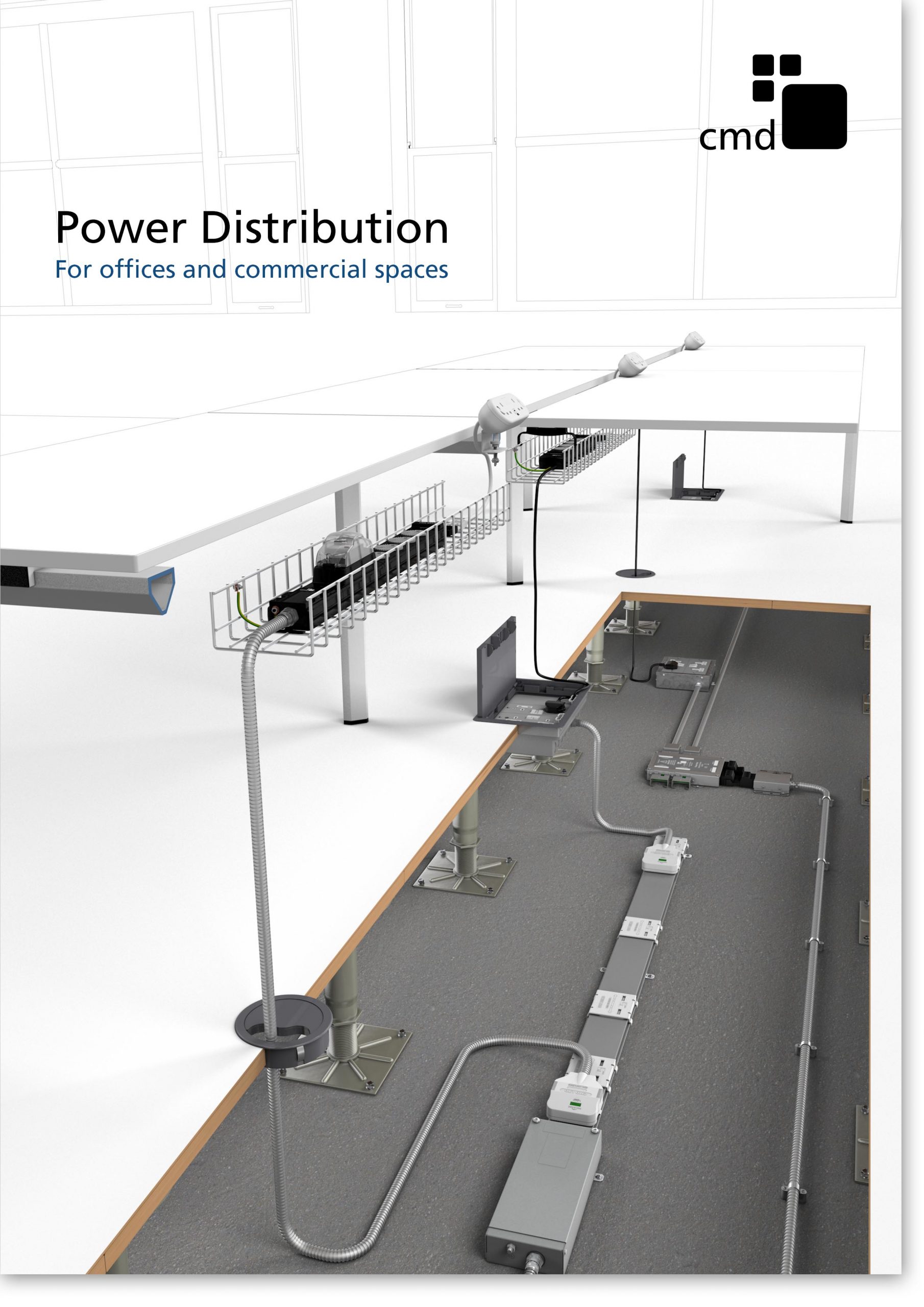
Power Distribution Catalogue
CMD Ltd PLAYS ESSENTIAL ROLE IN ELECTRICAL FIT OUT AT LONDON’S PRESTIGIOUS OFFICE DEVELOPMENT

CMD Ltd, specialist in workplace connectivity and ergonomic solutions, has provided a flexible and high-quality power distribution network for The Ray, a prestigious office development in London’s Farringdon. Well-known for being the former site of The Guardian newspaper, The Ray now stands as an 83,000ft² office development characterised by a modernised warehouse aesthetic, with level two now occupied by a global social media company. The...

Read more

The Ray
CMD plugs in to european opportunity with Schuko Capsule unit launch

CMD Ltd, the specialist in power and connectivity solutions for commercial environments, has launched a Schuko version of its popular fixed format Capsule workstation power module for export to mainland Europe and beyond. A popular on desk power module comprising two sockets and dual USB (type A and C) chargers, CMD’s Capsule unit is already widely specified in the UK as an off-the-shelf workstation power...

Read more
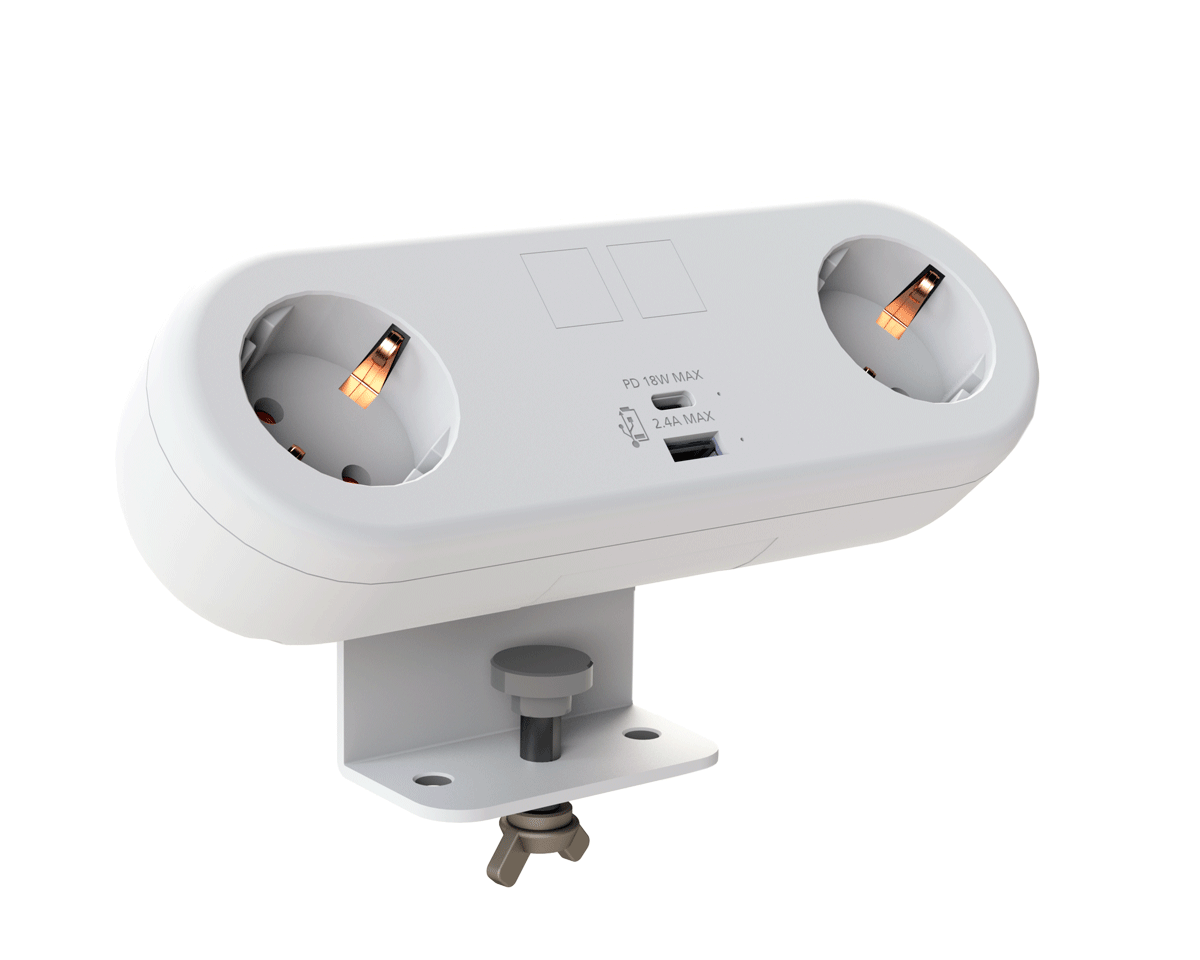
CMD White Schuko Capsule Desk Power Module
CMD LTD EXTENDS MONITOR ARM RANGE WITH THE LAUNCH OF REACH PLUS

CMD Ltd, the specialist in ergonomic and connectivity solutions for commercial interiors, has completed its Reach monitor arm range with the launch of the Reach Plus. Available in single or dual screen options, the Reach Plus has been designed to provide an ideal solution for both single and dual screen workstation configurations, or can be used with next generation of large format curved screens. Suitable...

Read more

CMD Ltd DEMONSTRATES THE ART OF POWER DISTRIBUTION AT THE UNIVERSITY OF WARWICK

CMD Ltd, the specialist in workplace connectivity and ergonomic solutions, has provided Betatrak busbar power distribution and a range of electrical accessories for two major capital investment projects at the University of Warwick. Designed by Fielden Clegg Bradley Studios, the £33 million Faculty of Arts building is a showpiece development comprising four interconnected structures set around a central atrium, which will enable inter-disciplinary collaboration across...

Read more

University of Warwick
CMD BRINGS HARMONY TO COVENTRY UNIVERSITY RESEARCH FACILITIES

CMD Ltd, the specialist in power distribution solutions and workstation power and ergonomics, has provided under desk and on desk power modules for the refurbishment of three Coventry University research buildings. Located on Coventry University Technology Park, a business park designed to encourage collaboration between the university and knowledge-based businesses, the three buildings are being repurposed as office accommodation for university research teams. The refurbishment...

Read more

Coventry University

2026 How to Choose the Right Surge Arrester Device?

Choosing the right Surge Arrester Device is crucial for safeguarding electrical systems. According to the IEEE standards, over 80% of electrical failures are caused by power surges. These surges can arise from lightning strikes or switching operations. A dependable surge arrester can mitigate these risks effectively.

Industry reports show that proper selection of surge arresters significantly reduces equipment damage rates. Many facilities experience unplanned downtime due to inadequate protection. In fact, 60% of companies face severe losses from power disturbances. Selecting an appropriate device involves understanding voltage ratings, energy absorption capacities, and response times.

However, the market presents a variety of options, making decisions challenging. Not all surge arresters are created equal, and some may not fit specific requirements. It's vital to assess your unique needs carefully. Often, companies overlook essential factors, leading to subpar protection. Therefore, understanding the nuances of Surge Arrester Devices will help ensure reliable operation and protect investments.

2026 How to Choose the Right Surge Arrester Device?

Understanding Surge Arresters and Their Importance

Surge arresters play a crucial role in protecting electrical systems from voltage spikes. These sudden surges can occur due to lightning strikes, power outages, or switching operations. Without adequate protection, sensitive equipment can suffer severe damage. Understanding how surge arresters function is vital for both homes and businesses.

When selecting a surge arrester, it’s essential to consider several factors. The device's voltage rating, type, and installation location are key points. For instance, a properly installed arrestor can minimize risks. However, if installed incorrectly, it may not provide the necessary protection. Some users may overlook maintenance, which can lead to a false sense of security.

The importance of surge arresters is evident in their ability to safeguard investments in technology. Many underestimate potential surge damages until it’s too late. Regular evaluations and understanding surge protection needs can prevent costly repairs and downtime. Investing time in learning about these devices can enhance overall electrical safety significantly.

Types of Surge Arresters: An Overview

Surge arresters play a crucial role in protecting electrical systems. Understanding the types of surge arresters available is essential for making informed choices. A common type is the metal oxide varistor (MOV). They are widely used due to their effectiveness in diverting excess voltage. MOVs have a high surge current capacity. However, they can wear out over time, especially if exposed to repeated surges.

Another type is the gas discharge tube (GDT). GDTs are ideal for high-voltage applications. They offer excellent protection but can be slower to respond than MOVs. This delay can be a concern in certain scenarios. Combining MOVs and GDTs may provide a balanced approach. This hybrid method utilizes the advantages of both types.

Finally, we have the silicon avalanche diode (SAD). SADs are known for their rapid response times. They are compact and often used in sensitive electronic devices. However, they may not handle large surges as effectively as MOVs or GDTs. It’s vital to assess the specific needs of your system. Each type of surge arrester has its pros and cons. Consider factors like response time, current capacity, and application. Choosing the right device is not just about protection but also about ensuring reliability in system performance.

2026 How to Choose the Right Surge Arrester Device? - Types of Surge Arresters: An Overview

Type of Surge Arrester Application Voltage Rating Response Time Energy Absorption Capacity
MOV (Metal Oxide Varistor) Residential and Commercial 120/240V < 1 ns 50J
GDT (Gas Discharge Tube) Telecommunications Various < 1 ns 100J
SPDs (Surge Protective Devices) Industrial and Utility 480V < 5 ns 200J
Thermal Fuses PV Systems 600V < 2 ns 150J

Key Factors to Consider When Choosing Surge Arresters

When choosing the right surge arrester device, several key factors come into play. Understanding the voltage rating is crucial. It determines the maximum voltage the device can handle. Manufacturers often recommend a surge arrester rating about 20% higher than the system voltage. Data shows that improperly rated devices can fail, leading to severe damage in critical systems.

Also, consider the energy absorption capability. This capacity is measured in kilo-joules (kJ). High-energy events can generate surges that demand robust protection. Reports indicate that devices with higher ratings can significantly reduce the risk of equipment failure. Another aspect to address is the response time. A fast response is essential to mitigate the impact of transient voltages. Devices with faster response times offer better protection against surge events.

Installation location matters too. Surge arresters must be strategically placed to ensure maximum effectiveness. It is common to find that devices installed closer to vulnerable equipment provide better protection. However, even the best devices, if poorly installed, can underperform. Regular maintenance and testing of surge protection systems should not be overlooked. This practice can identify potential failures before they lead to costly repairs.

2026 Surge Arrester Device Selection: Key Factors Analysis

Installation Best Practices for Surge Arrester Devices

When it comes to installing surge arrester devices, attention to detail matters. Proper installation can significantly enhance the device's effectiveness in protecting electrical systems. Start by selecting the right location. The surge arrester should be close to the equipment it is meant to protect. This minimizes the distance that surges must travel, reducing potential damage.

Ensure that all connections are tight and secure. Loose connections can lead to increased resistance. This can cause overheating and failure of the device. Additionally, grounding is crucial. A well-grounded surge arrester can divert excess energy safely to the ground. Utilize short ground leads to reduce inductance.

Consider environmental factors as well. Moisture and contaminants can impair the functionality of surge arresters. If the device is installed outdoors, weatherproof enclosures may be necessary. Regular inspections are vital, too. Look for signs of wear and corrosion. Sometimes, devices may appear functional but could be less effective. Observing these details can be challenging but essential for reliable protection.

Maintenance and Testing of Surge Arresters for Longevity

Surge arresters play a vital role in protecting electrical equipment from voltage spikes. Regular maintenance is essential for their longevity and performance. A routine inspection can identify potential issues before they escalate. Check for physical damage, corrosion, or signs of wear. These factors can compromise the effectiveness of the device.

Tips: Conduct visual inspections every six months. Look for any irregularities or disconnects. Make note of any changes and address them promptly.

Testing surge arresters requires specific tools and methods. Understanding their ratings and functions is crucial. Use an appropriate testing device to verify their performance. If a surge arrester fails the test, consider replacing it to maintain system safety. Over time, degradation is inevitable due to environmental factors.

Tips: Schedule testing every year. Document the results for future reference. Regular testing helps in timely replacements and avoids unexpected equipment loss. Be proactive in maintenance to ensure continuous protection.